Hot & Cold Thermal Bags, Insulated Mailers & Cold Chain Delivery Packaging

Fertilizer, Pesticide & Agrochemical Packaging

Cleaner, Laundry & Air Care Packaging

Custom Medical Packaging Solutions

Protective Structures, Inserts and Retail Packs

Custom Protein Powder Pouches, Vitamin Stick Packs & Nutrition Bar Bags

Cosmetics, Fragrance and Skincare Packaging

Takeout, Bakery and Beverage Packaging

Kibble, treat & wet food packaging
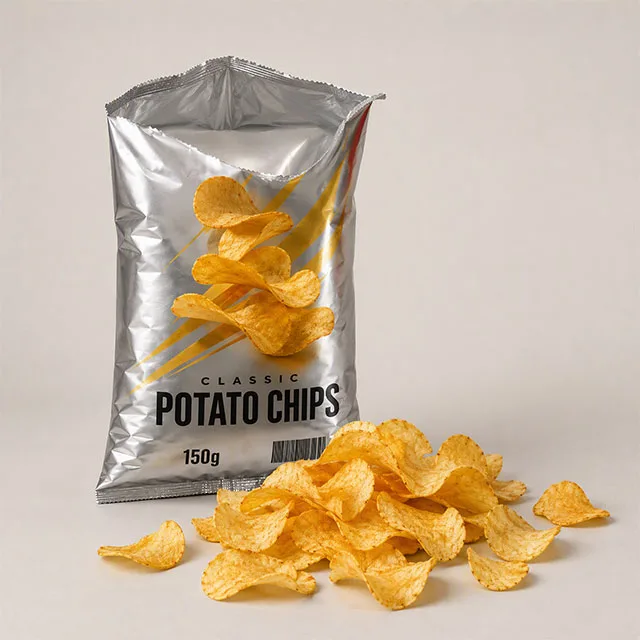
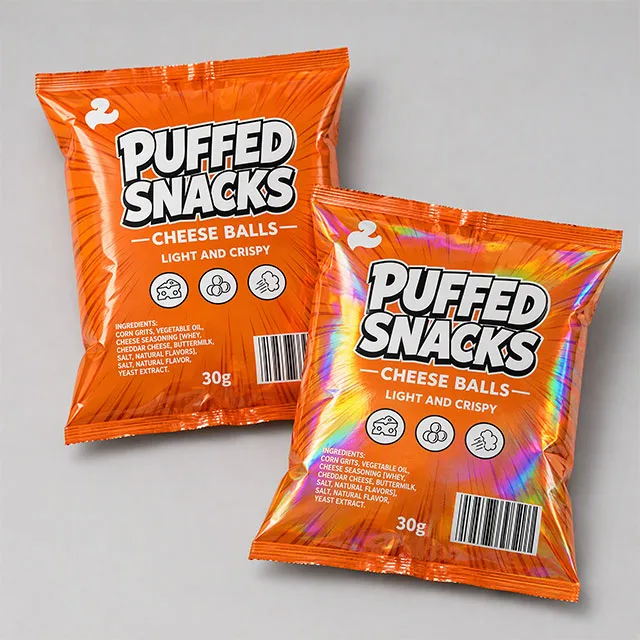
No packaging category better illustrates the marriage of engineering and marketing than the potato chip bag — a product where the package must simultaneously protect one of the most fragile food products in existence from crushing, prevent rancidity of the high-oil content, and compete for consumer attention in the most visually intense aisle of any supermarket. Our Snack Potato Chip Bag achieves all three objectives through a purpose-built combination of material science and package geometry.
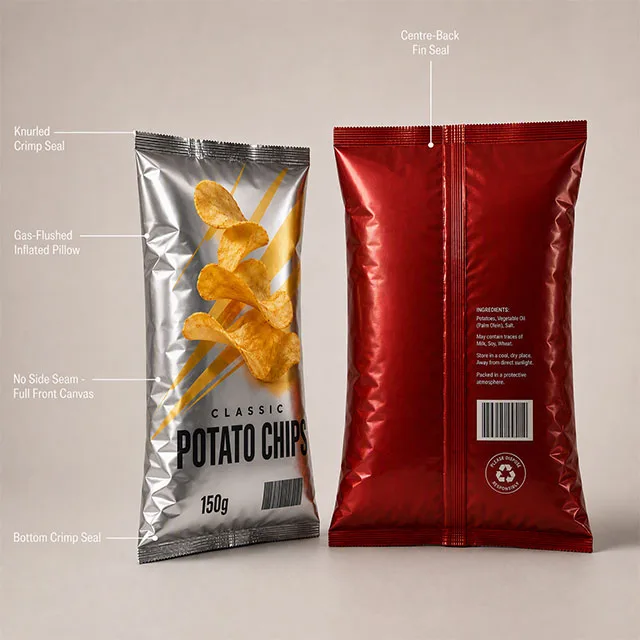
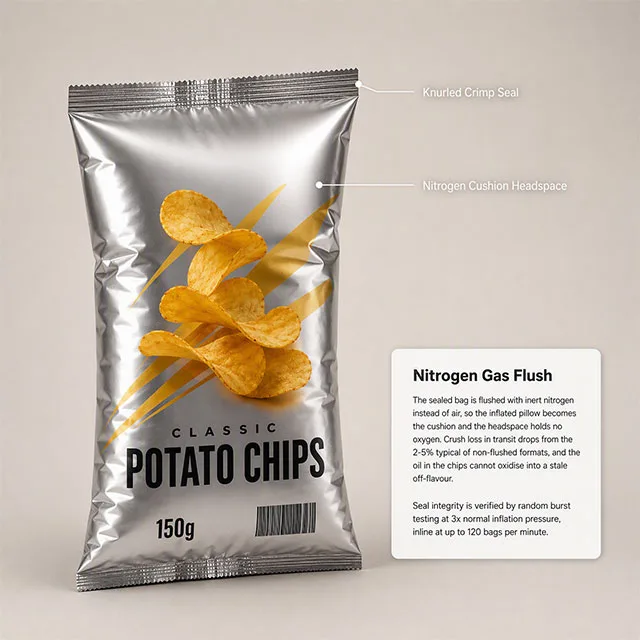
The defining structural feature is nitrogen gas flushing — a process that replaces the ambient air inside the sealed bag (which contains 21% oxygen) with inert nitrogen. This serves a dual purpose: the inflated pillow shape creates a protective air cushion that absorbs impact forces during transport and retail handling, preventing the 2-5% crush-loss rate typical of non-gas-flushed formats. Simultaneously, the oxygen-free internal environment halts the lipid oxidation that causes the stale, cardboard-like off-flavor that consumers instantly recognize as “old chips.”
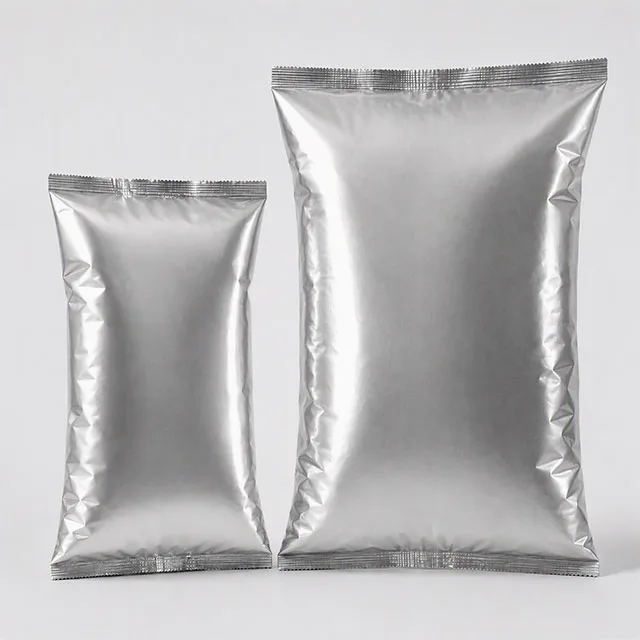
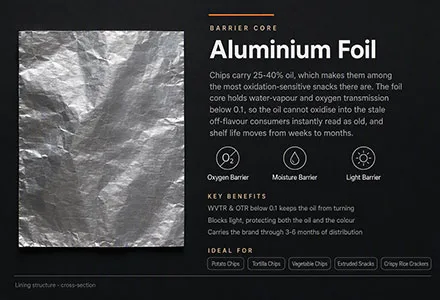
The metallic foil base film is not merely decorative — it provides the near-absolute light and oxygen barrier that potato chips demand. Potato chip oil content ranges from 25-40% depending on frying method, making them among the most oxidation-sensitive snack foods. The aluminum foil laminate delivers WVTR and OTR below 0.1 units, extending shelf life from weeks to months — a critical economic factor for brands distributing through multi-tier retail channels where product can spend 3-6 months in the supply chain before reaching consumers.
The center-back fin seal construction creates an uninterrupted front canvas for the full-bleed, high-impact graphics that drive impulse purchases in the snack aisle — a retail environment where consumers make brand decisions in under 3 seconds. The knurled crimp seal at top and bottom provides a distinctive tactile texture that consumers associate with freshness. Key applications: potato chips, tortilla chips, vegetable chips, extruded snacks, and crispy rice crackers.
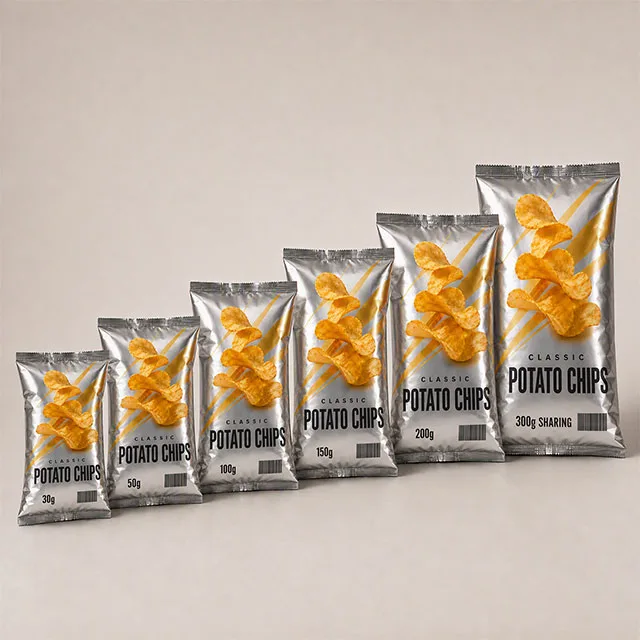
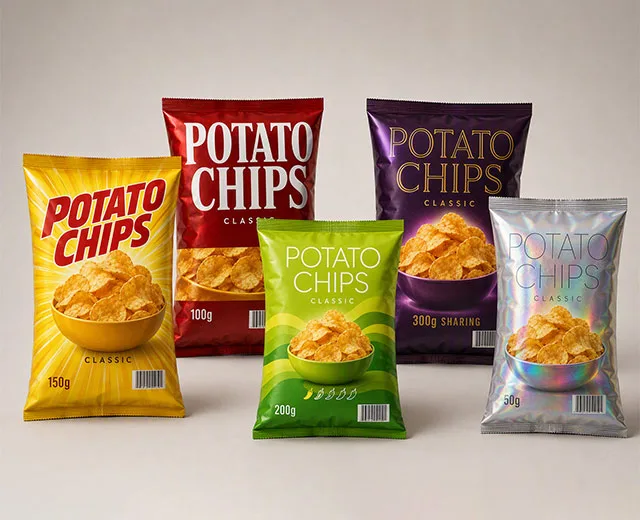
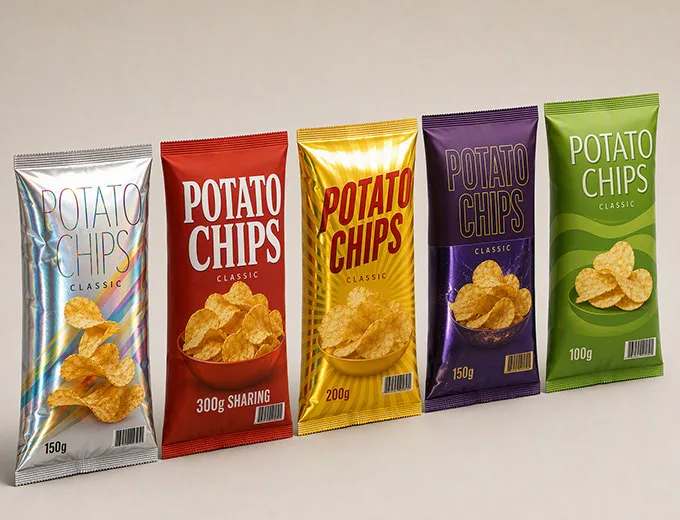
| Color | Size |
| Bright Yellow | 30g |
| Fiery Red | 50g |
| Deep Purple | 100g |
| Lime Green | 150g |
| Metallic Silver | 200g |
| Custom Color Available | 300g Sharing |
| Custom Size Available |
Chip bag printing operates at the intersection of art and physics: the graphics must be explosive enough to trigger impulse purchases in seconds, while the ink and substrate must withstand the internal pressure of gas-flushed inflation and the flex-cracking that occurs when the inflated pillow is compressed during transport.
Our rotogravure process on metallic foil achieves the maximum possible color saturation because the silver foil base reflects light back through translucent ink layers, creating a luminous depth effect that opaque white backgrounds cannot match. This is why premium chip brands universally choose metallic foil substrates — the colors literally glow compared to the same inks on paper-based packaging.
The registered matte-gloss contrast technique is particularly effective on the pillow bag’s curved surface. When a matte background with glossy food photography is printed in precise registration, the curved inflation of the bag creates a subtle 3D pop effect as light catches the glossy image area differently than the matte background. This optical phenomenon — technically called “specular highlight differentiation” — is invisible on flat proofs but remarkably effective on inflated retail bags, and is a technique exclusive to gravure printing due to the cylinder engraving precision required for the effect.
Inline nitrogen flushing occurs during the form-fill-seal process — the bag is formed around the product, flushed with nitrogen, and sealed in a continuous operation at speeds up to 120 bags per minute. The seal integrity is verified through random-sample burst testing at 3x normal inflation pressure as part of ongoing QC.
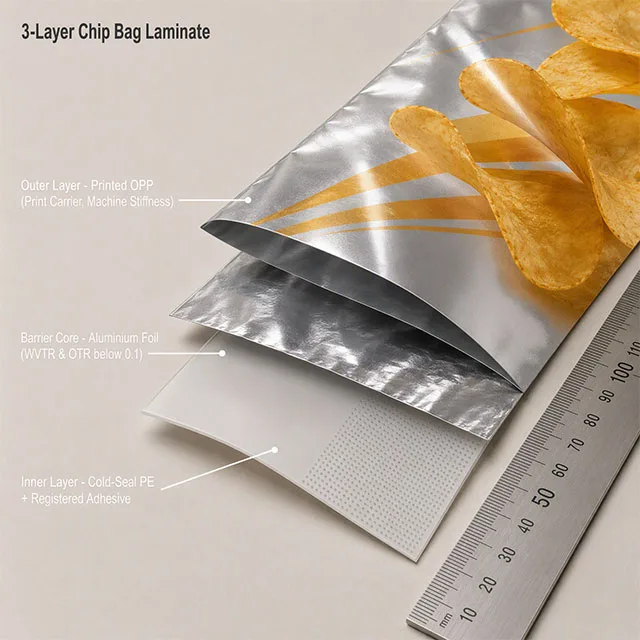
The lining of a chip bag must balance two seemingly contradictory requirements: it must be thin enough to flex with the pillow shape during compression without cracking, yet thick enough to provide a near-absolute barrier against moisture and oxygen. Standard food-grade laminates optimized for one of these properties fail on the other — and failure in chip packaging means product returns, brand damage, and lost retailer relationships.
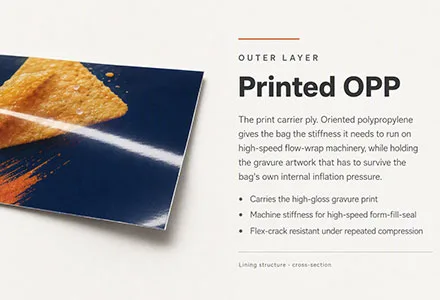
Our solution uses a cold-seal compatible film structure: outer printed OPP (oriented polypropylene), middle aluminum metallization (a vapor-deposited aluminum layer measured in angstroms rather than microns for extreme thinness and flexibility), and inner cold-seal PE with a registered pressure-sensitive adhesive pattern in the seal zones only. The metallization layer provides 99%+ light blocking and barrier performance at a fraction of the thickness and cost of aluminum foil, while the OPP outer layer provides the stiffness required for high-speed flow-wrap machine handling.
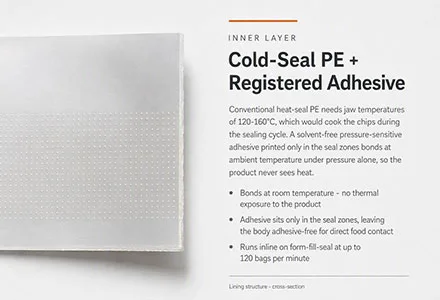
The inner cold-seal PE coating is the critical innovation for chip bags — traditional heat-seal PE requires jaw temperatures of 120-160°C that would cook the chips during the sealing cycle. Cold-seal adhesive bonds under pressure alone at ambient temperature, eliminating any thermal exposure to the fragile product. The adhesive is applied in a precise registered pattern that covers only the seal zones, leaving the body of the bag adhesive-free for direct food contact compliance.
North Side Of Nanyi Road, Shiwan Town Science And Technology Park (10th Floor, Building 1, No. 13)
INQUIRY