Hot & Cold Thermal Bags, Insulated Mailers & Cold Chain Delivery Packaging

Fertilizer, Pesticide & Agrochemical Packaging

Cleaner, Laundry & Air Care Packaging

Custom Medical Packaging Solutions

Protective Structures, Inserts and Retail Packs

Custom Protein Powder Pouches, Vitamin Stick Packs & Nutrition Bar Bags

Cosmetics, Fragrance and Skincare Packaging

Takeout, Bakery and Beverage Packaging

Kibble, treat & wet food packaging
Nuts are among the most challenging products to package in flexible pouches — they combine high oil content (45-75% for most tree nuts) that makes them extremely prone to oxidative rancidity, with a premium price point that makes consumers unforgiving of any quality degradation. In fact, consumer research consistently shows that a single experience of stale or rancid nuts results in permanent brand abandonment for over 60% of consumers — making packaging performance literally an existential issue for nut brands. Our Snack Nut Bag is engineered to meet this challenge.
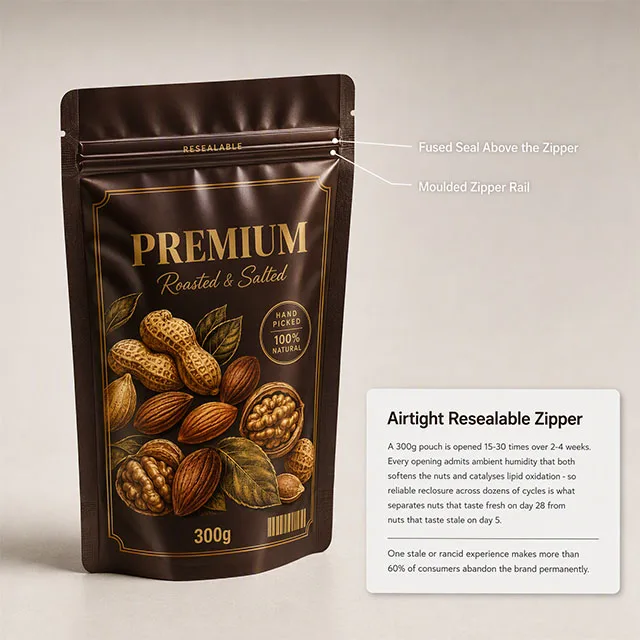
The moisture-proof resealable zipper is not a convenience feature — it is a functional necessity driven by nut consumption behavior. Unlike chips that are typically consumed in a single sitting, nuts are a grazing snack: a 300g bag will be opened 15-30 times over 2-4 weeks. Each opening exposes the remaining nuts to ambient humidity, which initiates two degradation pathways simultaneously — moisture absorption that causes textural softening (loss of crunch), and accelerated lipid oxidation catalyzed by moisture. A zipper that provides reliable reclosure across dozens of use cycles is the difference between nuts that taste fresh on day 28 and nuts that taste stale on day 5.
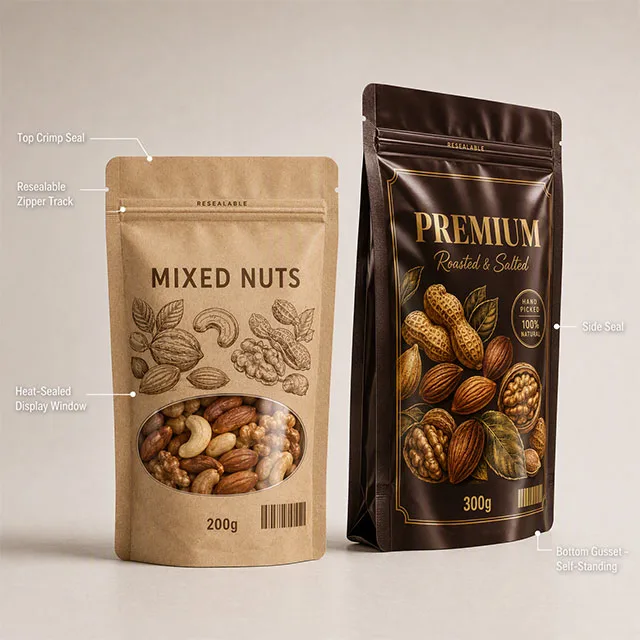
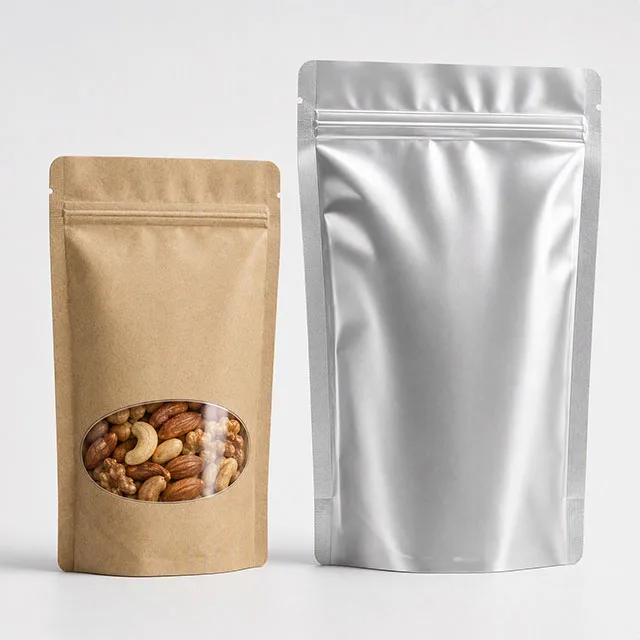
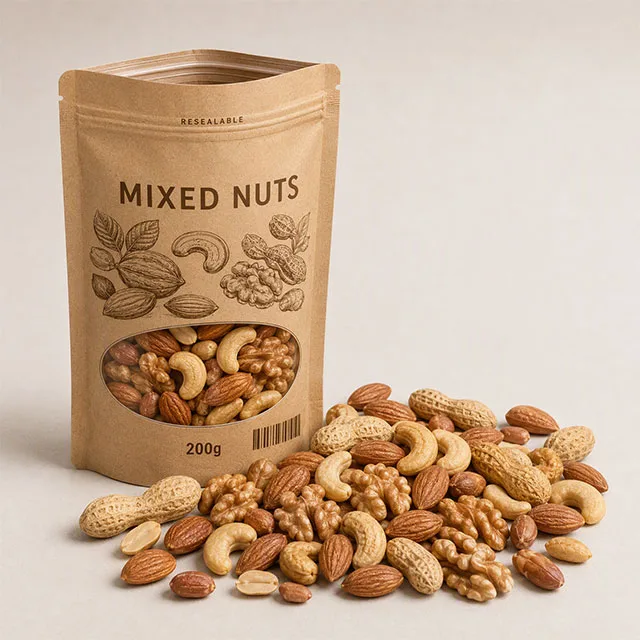
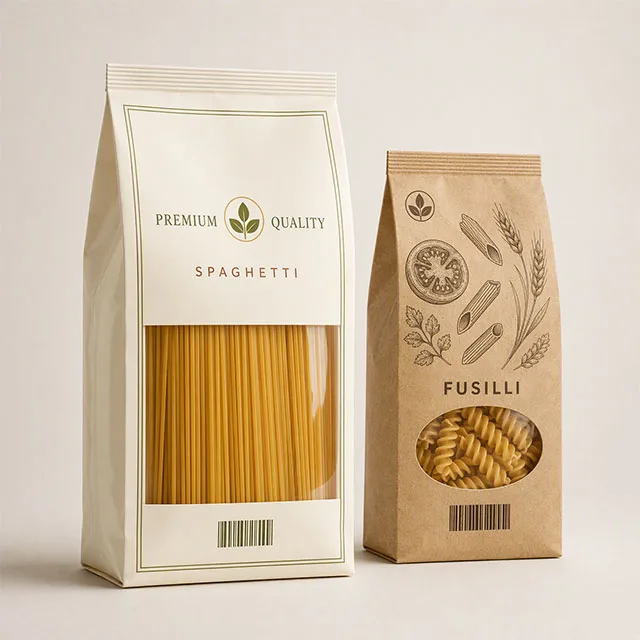
The transparent window — whether die-cut oval on kraft paper or full-clear panel on foil laminate — addresses a purchase barrier unique to nuts: consumers want to visually verify product quality before buying. Nuts are highly variable in appearance (size, color, presence of broken pieces), and a window provides the visual reassurance that converts browser to buyer. Our heat-sealed window film maintains the same barrier performance as the opaque pouch body, so the window does not create a weak point in the moisture protection system.
The kraft paper exterior variant targets the fast-growing “artisanal” and “natural” nut brand segment, where consumers expect packaging to communicate product values through material choices. The natural paper texture and warm brown tones create an immediate visual association with premium, minimally processed nuts — a perceptual link that glossy foil packaging cannot replicate. Key applications: almonds, cashews, peanuts, mixed nuts, pistachios, macadamia nuts, and trail mix blends.
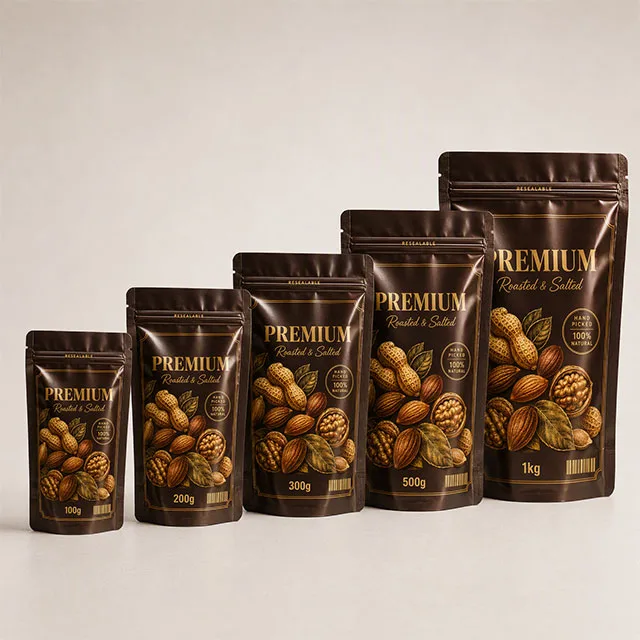
| Color | Size |
| Warm Brown | 100g |
| Dark Gold | 200g |
| Forest Green | 300g |
| Burgundy Red | 500g |
| Natural Kraft | 1kg |
| Custom Color Available | Custom Size Available |
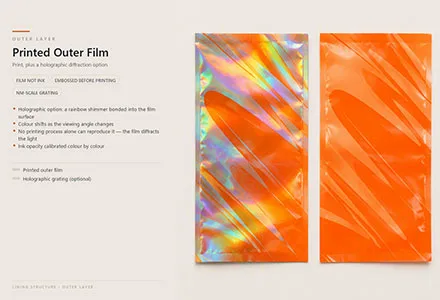
Nut packaging straddles two visual worlds: the “wholesome, natural, artisanal” aesthetic that premium brands cultivate, and the “bold, vibrant, appetite-appealing” graphics that drive impulse purchases in supermarket snack aisles. Our printing approach offers distinct pathways for each brand strategy.
For the artisanal route, we print on natural kraft paper using low-VOC gravure inks that partially absorb into the paper fibers, creating an integrated, organic look. The ink sits slightly within the paper surface rather than floating on top — a visual subtlety that consumers register subconsciously as “authentic” and “craft.” Warm brown nut illustrations and minimal typography complete the premium artisanal aesthetic.
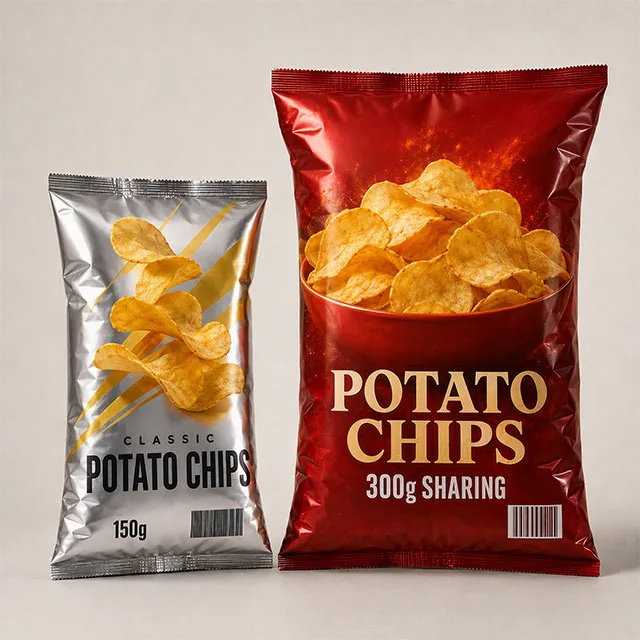
For the mainstream snack aisle route, we deploy full-color rotogravure on high-gloss metallic foil laminate, achieving the maximum visual impact necessary to compete for attention against chips, crackers, and candy. The metallic foil base amplifies warm nut tones (amber, gold, mahogany) to a luminous intensity that paper substrates cannot achieve. Spot gloss accents on nut photography areas create a wet-look freshness cue against a soft-touch matte background — the combination of glossy product imagery on a matte field creates a framing effect that draws the eye directly to the food visual.
Both routes support registered embossing for brands seeking a tactile dimension — raised nut textures that consumers can feel when handling the bag, reinforcing the premium positioning through multiple sensory channels.
The lining of a nut pouch must solve a specific chemical challenge that other snack categories don’t face: nut oils are primarily unsaturated fats that are highly mobile and can migrate through standard PE sealant layers over weeks of contact. This oil migration causes two problems — visible greasy spots on the pouch exterior (cosmetic defect) and seal weakening as oil penetrates the heat-seal bond (structural defect).
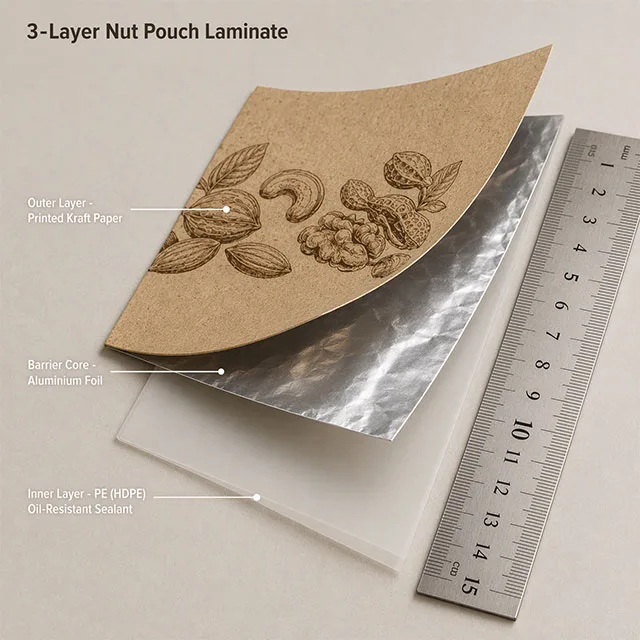
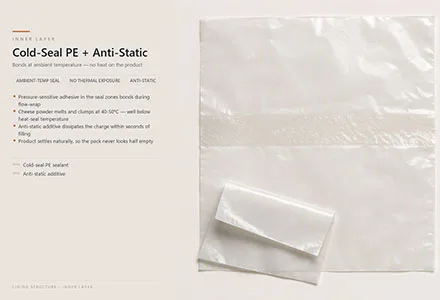
We address this with a specialized oil-resistant sealant layer based on high-density polyethylene (HDPE) rather than the LDPE used in standard food pouches. HDPE has a more tightly packed molecular structure with fewer amorphous regions that oil molecules can penetrate — reducing oil migration by approximately 80% compared to standard LDPE of equivalent thickness. The trade-off is that HDPE requires higher sealing temperatures (140-160°C vs 120-140°C for LDPE), which we manage through extended dwell time rather than elevated temperature to avoid heat exposure to the nuts.
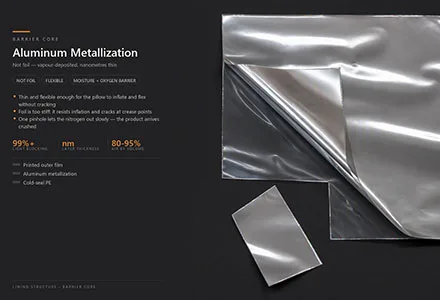
For kraft paper variants, a thin aluminum foil barrier layer is laminated between the outer paper and inner HDPE sealant. This provides the moisture and oxygen barrier that the paper alone cannot deliver, while the kraft exterior maintains the natural brand aesthetic. The aluminum foil also provides complete light blocking — important for nuts stored in transparent containers or near windows, where UV exposure accelerates rancidity.
North Side Of Nanyi Road, Shiwan Town Science And Technology Park (10th Floor, Building 1, No. 13)
INQUIRY