Hot & Cold Thermal Bags, Insulated Mailers & Cold Chain Delivery Packaging

Fertilizer, Pesticide & Agrochemical Packaging

Cleaner, Laundry & Air Care Packaging

Custom Medical Packaging Solutions

Protective Structures, Inserts and Retail Packs

Custom Protein Powder Pouches, Vitamin Stick Packs & Nutrition Bar Bags

Cosmetics, Fragrance and Skincare Packaging

Takeout, Bakery and Beverage Packaging

Kibble, treat & wet food packaging
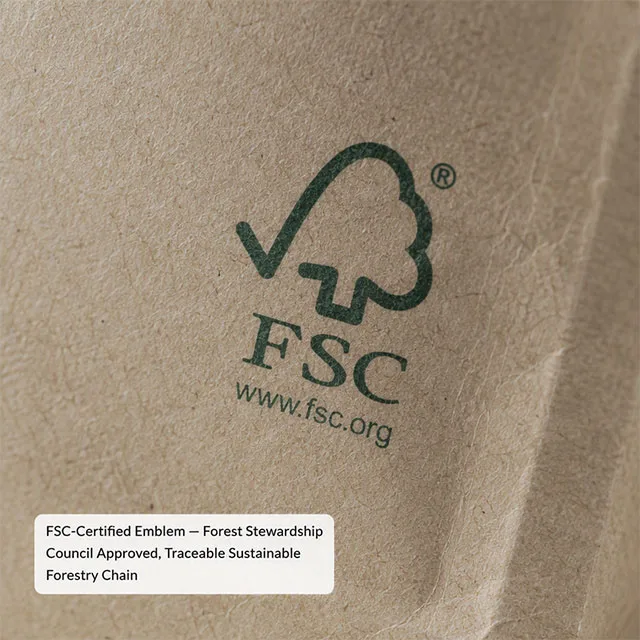
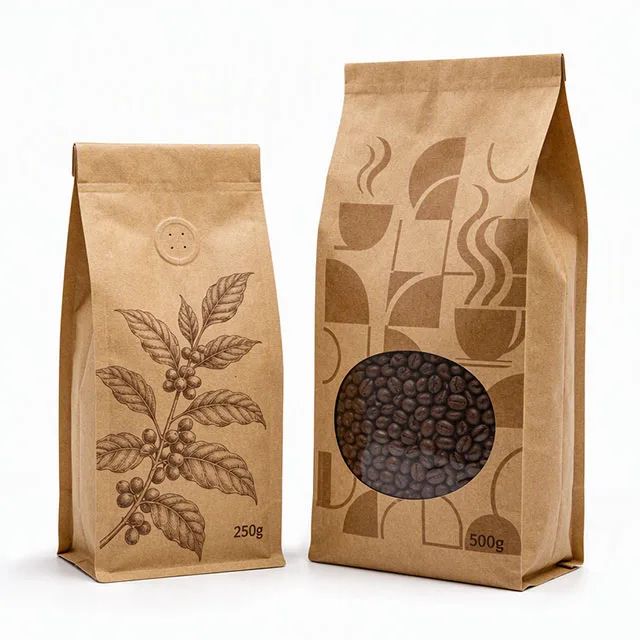
The FSC-certified eco kraft paper bag introduces a dimension to sustainable packaging that goes beyond materials and end-of-life: the traceability of the fiber itself from forest to finished package. FSC (Forest Stewardship Council) chain-of-custody certification provides an unbroken audit trail that verifies the wood fiber used in the paper originated from responsibly managed forests — forests where biodiversity is conserved, where indigenous peoples’ rights are respected, and where harvested areas are regenerated rather than converted to other land uses. This is not a materials claim — it is a supply chain claim, and it requires a fundamentally different approach to sourcing and production documentation.
The FSC chain-of-custody system operates through independently audited certifications at every link in the supply chain: the forest management unit (FSC-FM certified), the pulp mill, the paper mill, the converter, and the printer. At each transfer of ownership, the certified material must be physically segregated or accounted for through a mass-balance system, and each transaction generates documentation that is cross-referenced during annual surveillance audits. When our FSC-certified kraft bag carries the FSC Mix label (the most common certification level for packaging), it means the paper is produced from a mixture of FSC-certified virgin fiber, FSC-controlled wood (verified as not from controversial sources), and/or post-consumer recycled content. The specific mix percentage is documented in the chain-of-custody certificate and is available to our customers upon request.
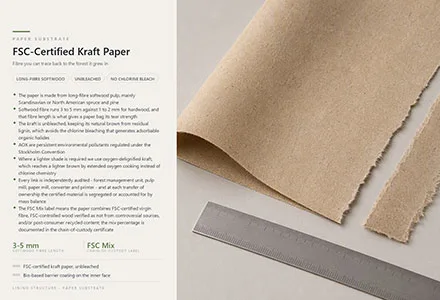
The kraft paper itself is produced from long-fiber softwood pulp — predominantly Scandinavian or North American spruce and pine, selected for fiber length (3-5mm versus 1-2mm for hardwood fibers) that provides the tear strength required for packaging. The unbleached kraft retains its natural brown color from residual lignin, avoiding the chlorine-based bleaching processes that generate adsorbable organic halides (AOX) — a class of persistent environmental pollutants regulated under the Stockholm Convention. Where a lighter shade is requested, we use an oxygen-delignified kraft that achieves a lighter brown through extended oxygen cooking rather than chlorine chemistry, maintaining the environmental integrity of the package.
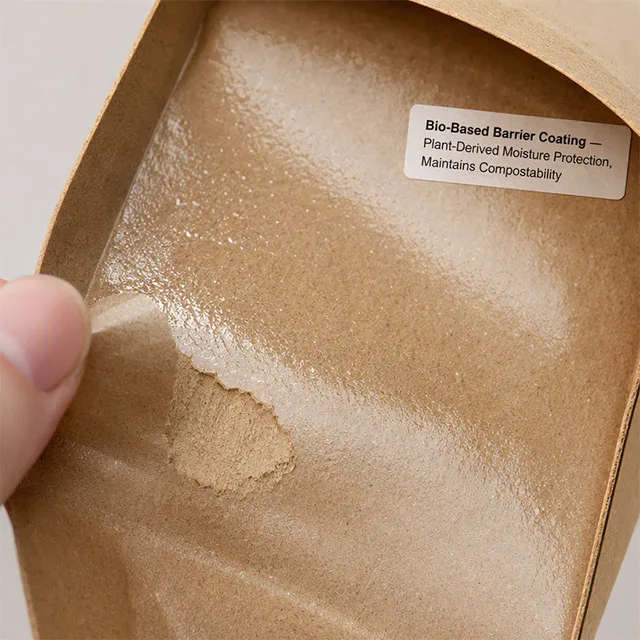
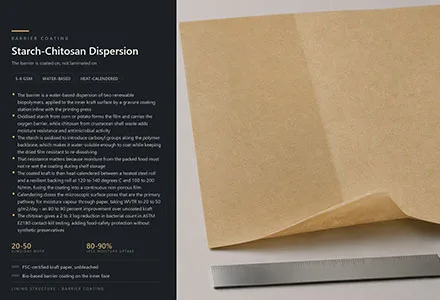
The barrier coating represents the critical innovation that makes a pure kraft paper bag functional for food packaging: a water-based dispersion coating formulated from renewable bio-based polymers (modified starch and chitosan from crustacean shell waste) that, when applied at 5-8 gsm and heat-calendered, creates a continuous film on the kraft surface that reduces WVTR by 80-90% compared to uncoated kraft — sufficient for dry products with 6-12 month shelf life requirements, without introducing a plastic laminate that would compromise recyclability and compostability.
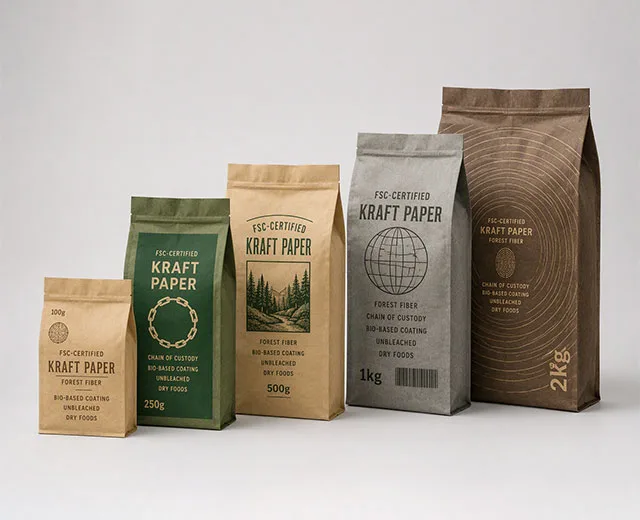
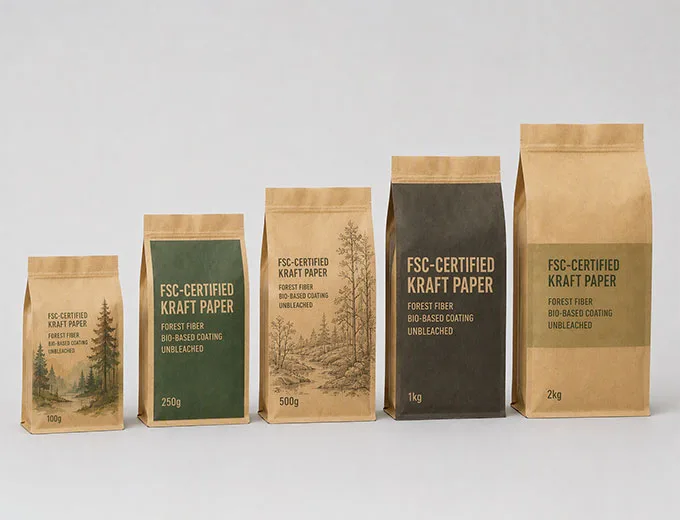
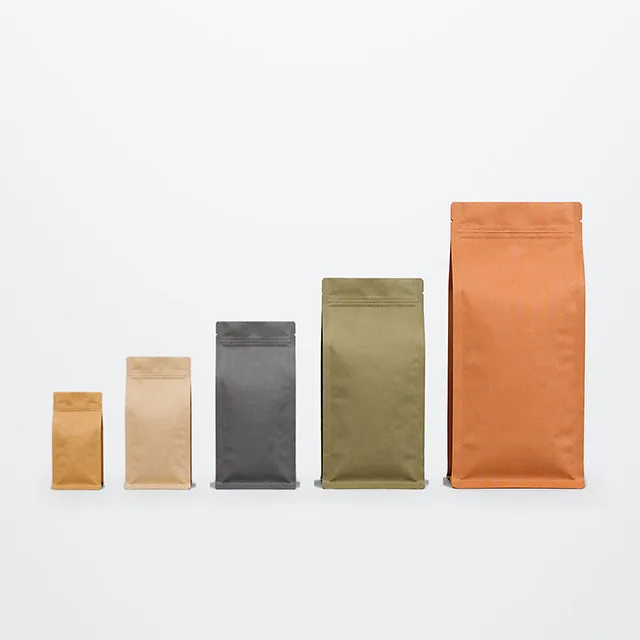
| Color | Size |
| Unbleached Natural | 100g |
| FSC Green | 250g |
| Warm Sand | 500g |
| Slate Grey | 1kg |
| Forest Brown | 2kg |
| Custom Color Available | Custom Size Available |
Printing on FSC-certified kraft paper carries an additional layer of documentation: the ink, coatings, and print process must not compromise the FSC chain-of-custody, and the printed product must still qualify for the FSC label claim. This means every print consumable — inks, varnishes, cleaning solvents — must be documented as “process inputs” in the FSC chain-of-custody system, and any input that constitutes more than a de-minimis percentage of the finished product weight must itself be from a certified or assessed source.
Our flexographic printing on FSC kraft uses water-based inks formulated with pigments that meet the EuPIA (European Printing Ink Association) exclusion policy for heavy metals and are free from cobalt driers, mineral oils, and benzophenone-based photoinitiators — all substances that would disqualify the printed product from certain eco-label certifications beyond FSC, such as the EU Ecolabel and Nordic Swan. The water-based ink carrier is absorbed into the kraft fiber matrix during printing, and the pigment is bound by an acrylic emulsion that cures through water evaporation — a process that generates zero VOC emissions and requires no thermal oxidizer for exhaust treatment.
The visual design language of FSC-certified packaging is governed by the FSC Label Generator — an online tool provided by FSC International that generates the correct logo artwork, license code, and label text for each certified product. Our pre-press workflow includes a dedicated FSC compliance check: the label artwork is verified against the customer’s FSC certificate scope (product type, paper grade, certificate number), the minimum size requirements (10mm for the logo, 5pt for the license code text), and the color contrast requirements (the FSC checkmark-and-tree logo must have sufficient contrast against the background, verified through spectrophotometric measurement). The FSC label is always printed in either black, white, or FSC Green (Pantone 626C or CMYK equivalent), never in other colors — a usage rule enforced by the FSC trademark standard.
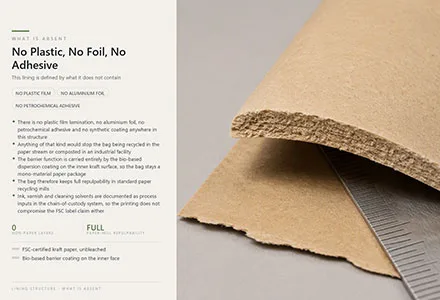
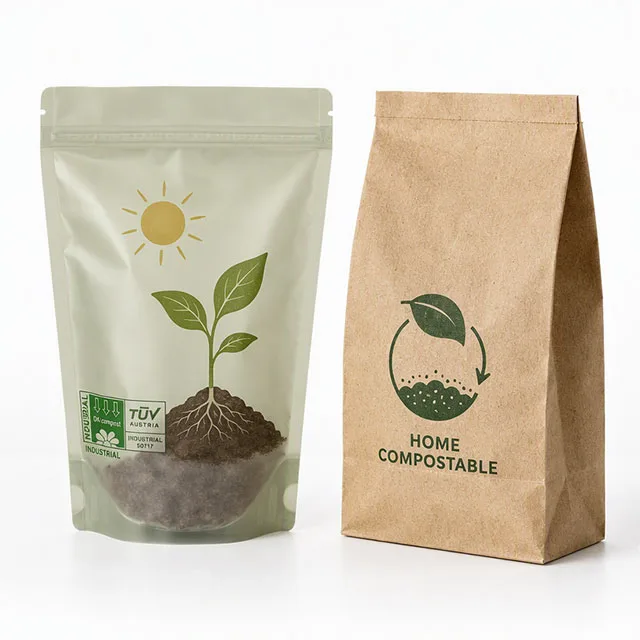
The lining structure of an FSC-certified kraft bag is defined by what is NOT present: there is no plastic film lamination, no aluminum foil, no petrochemical adhesive, and no synthetic coating that would prevent the package from being recycled in the paper stream or composted in an industrial facility. Instead, the barrier function is provided by a bio-based dispersion coating — a water-based suspension of modified biopolymers that is applied to the inner kraft surface using a gravure coating station inline with the printing press.
The coating formulation is based on two synergistic bio-polymers: oxidized starch (from corn or potato) that provides film-forming and oxygen-barrier properties, and chitosan (from crustacean shell waste) that provides antimicrobial activity and moisture resistance. The starch undergoes a controlled oxidation process that introduces carboxyl groups along the polymer backbone, increasing water solubility for coating application while improving the dried film’s resistance to re-dissolution — a critical property because moisture from the packaged food product must not re-wet the coating during shelf storage. The chitosan contributes a secondary benefit: its inherent antimicrobial activity against common food spoilage organisms (measured as a 2-3 log reduction in bacterial count in ASTM E2180 contact-kill testing) provides an additional layer of food safety protection without the use of synthetic preservatives.
The coated kraft is heat-calendered after coating application — passed between a heated steel roll and a resilient backing roll at temperatures of 120-140°C and pressures of 100-200 N/mm. This calendering step fuses the starch-chitosan coating into a continuous, non-porous film, closing the microscopic surface pores that are the primary pathway for moisture vapor transmission through uncoated paper. The resulting WVTR of 20-50 g/m²/day represents an 80-90% improvement over uncoated kraft, bringing the package into the functional range for dry food products while maintaining full repulpability in standard paper recycling mills.
North Side Of Nanyi Road, Shiwan Town Science And Technology Park (10th Floor, Building 1, No. 13)
INQUIRY