Hot & Cold Thermal Bags, Insulated Mailers & Cold Chain Delivery Packaging

Fertilizer, Pesticide & Agrochemical Packaging

Cleaner, Laundry & Air Care Packaging

Custom Medical Packaging Solutions

Protective Structures, Inserts and Retail Packs

Custom Protein Powder Pouches, Vitamin Stick Packs & Nutrition Bar Bags

Cosmetics, Fragrance and Skincare Packaging

Takeout, Bakery and Beverage Packaging

Kibble, treat & wet food packaging
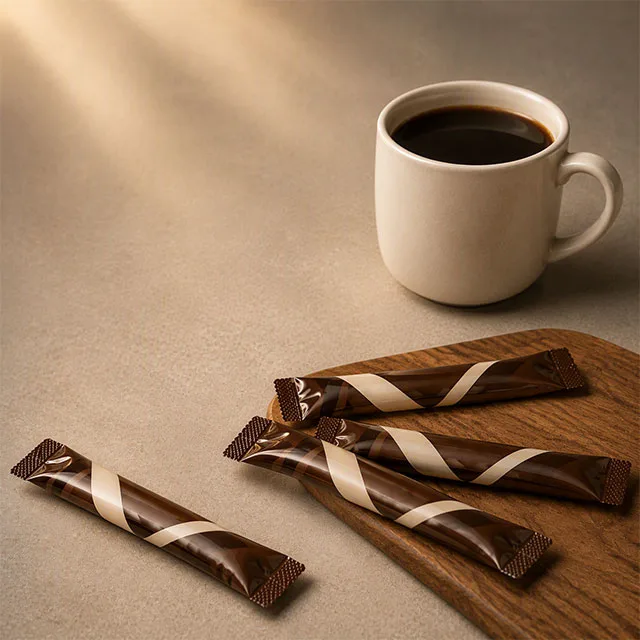
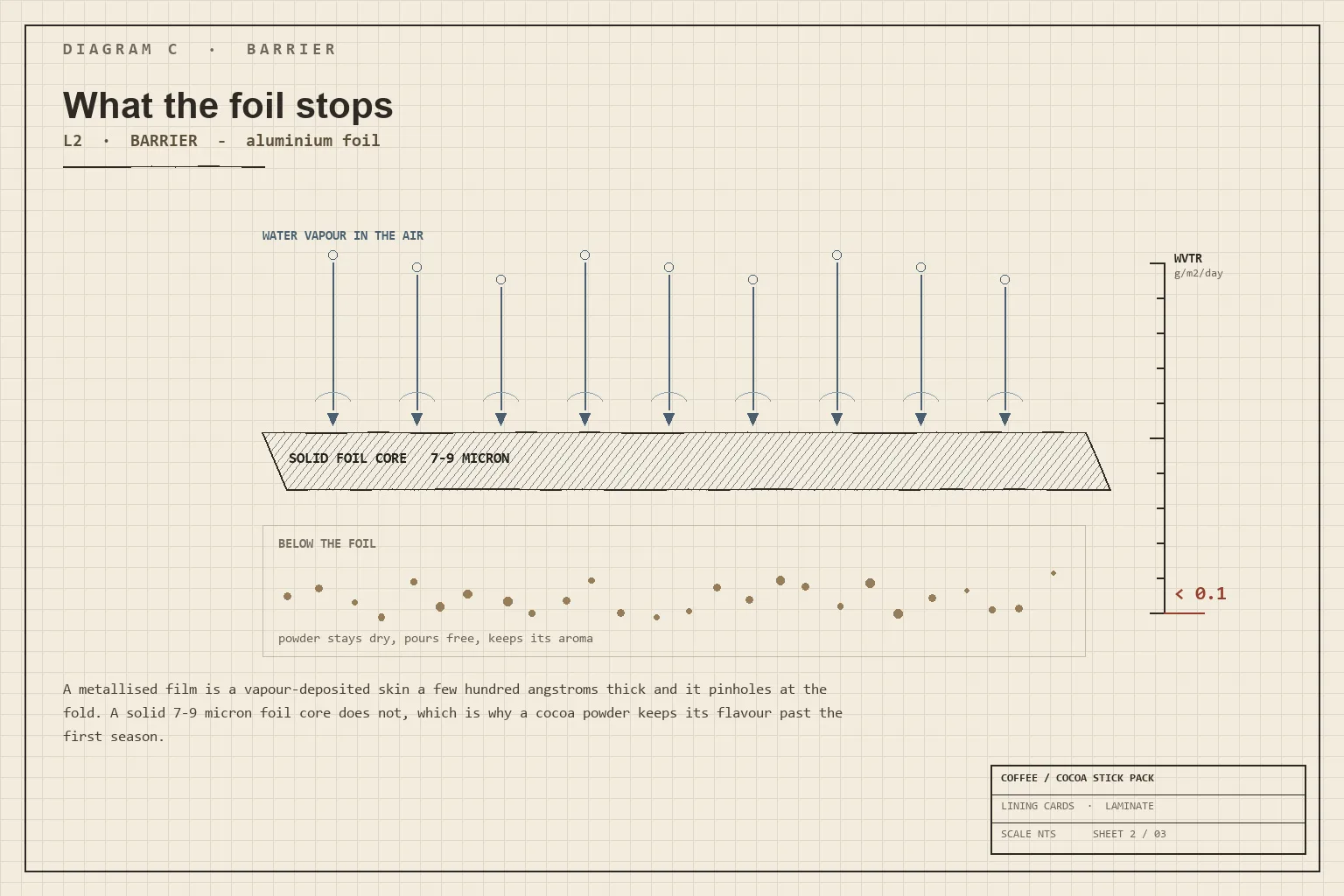
A five-gram stick of instant coffee looks simple until six months in a warehouse decides whether it still pours. Instant coffee and drinking chocolate are both hygroscopic: they pull moisture from the air, cake, and lose the aroma the brand paid to build. This pack answers with a five-layer wall around a seven to nine micron aluminium foil core, holding water vapour transmission below 0.1 g per square metre per day, so the powder sits in a gas-tight pocket instead of a paper envelope. Narrow-web rotogravure prints at ten millimetres without losing four-point type, and the low-seal-initiation PE face closes at a lower jaw temperature, so a high-speed line seals cleanly instead of scorching the film.
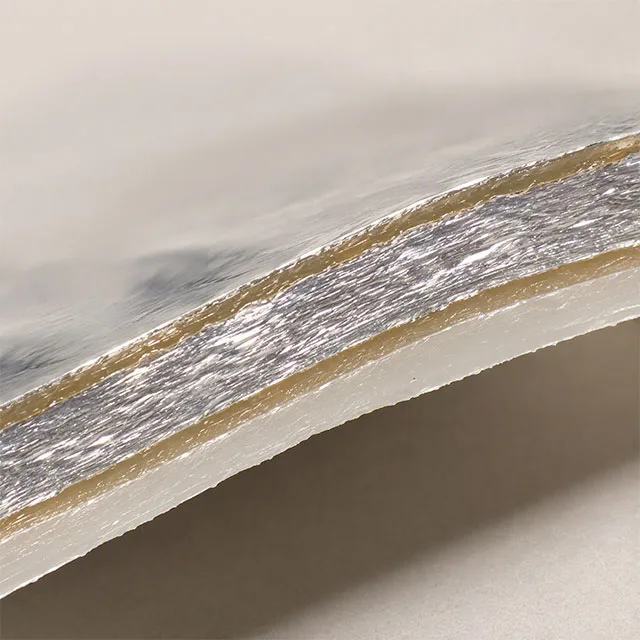
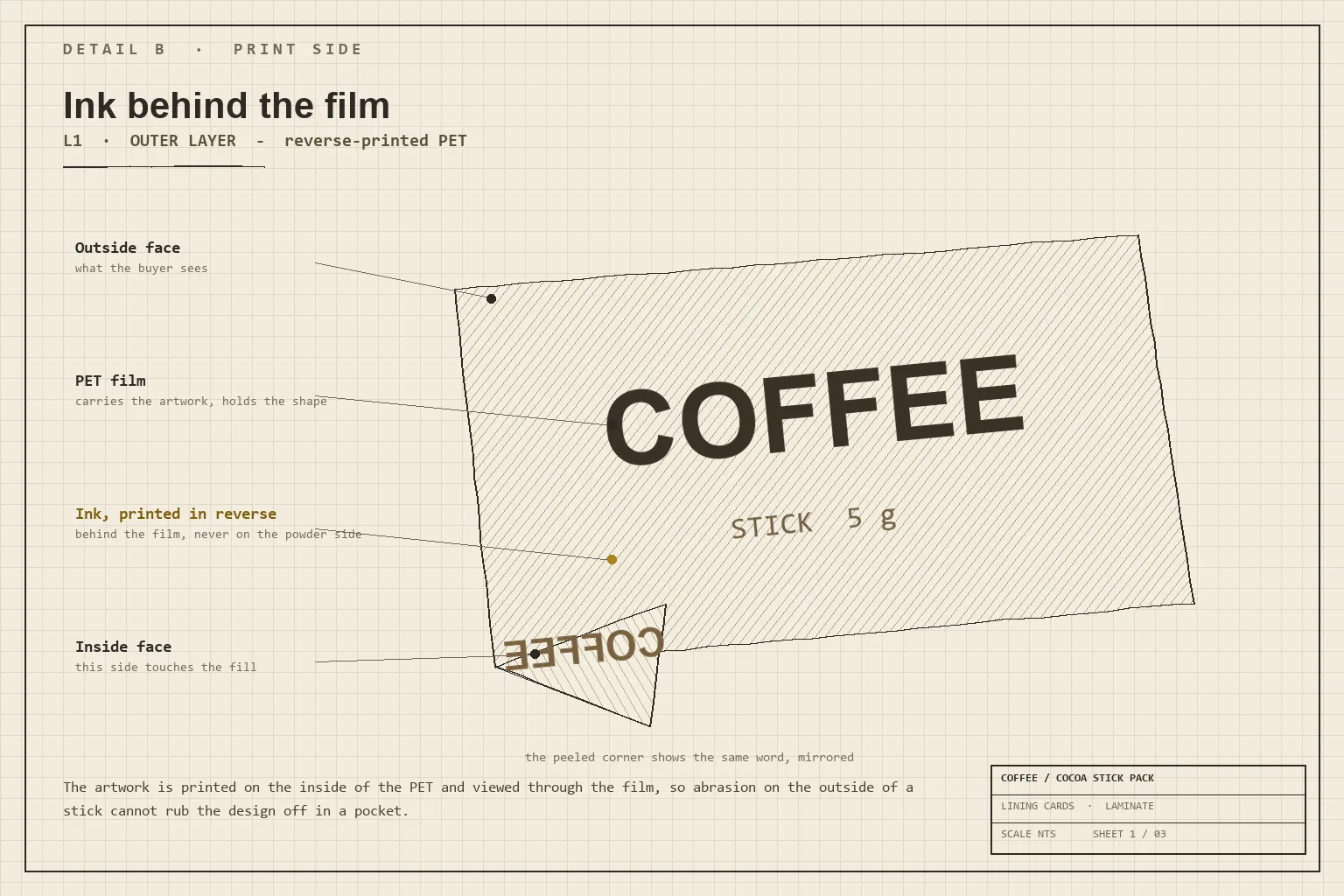
The wall is five layers bonded in one pass. A reverse-printed PET film sits outside and carries the artwork; beneath it a solvent-free adhesive ties the print film to a seven to nine micron aluminium foil core, which is the layer doing the blocking; a second adhesive bonds that core to a low-seal-initiation PE sealant, and the PE is the only surface the powder ever touches. The core is solid aluminium rather than a metallised coating, and that difference shows up as a barrier figure on the specification sheet.
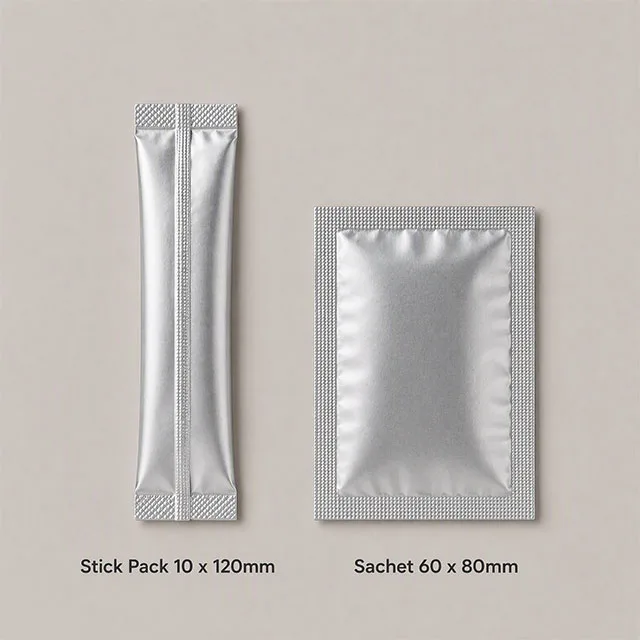
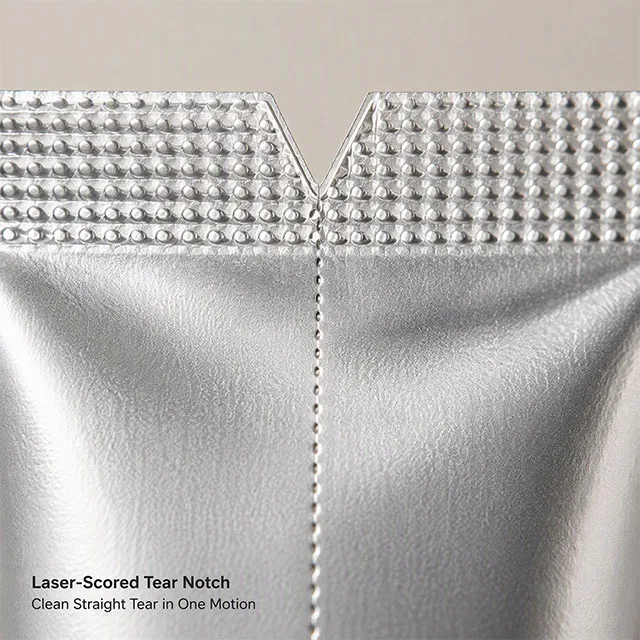
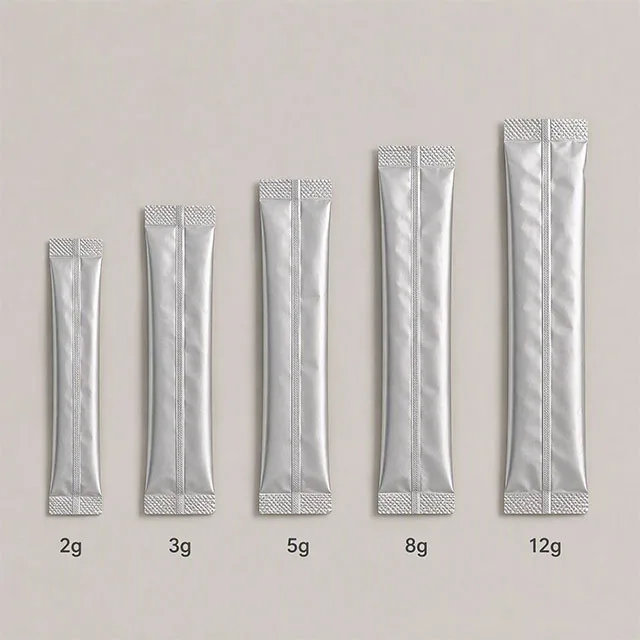
The measurable numbers are these. Water vapour transmission stays below 0.1 g per square metre per day, measured on the finished laminate rather than on the foil alone. Sticks run from two to twelve grams and sachets from ten to fifty grams on the same film, feeding a vertical form-fill-seal line at 400 to 600 packs per minute. The pack closes on a heat seal with a laser-scored notch above it, so it opens without scissors and without tearing into the powder.
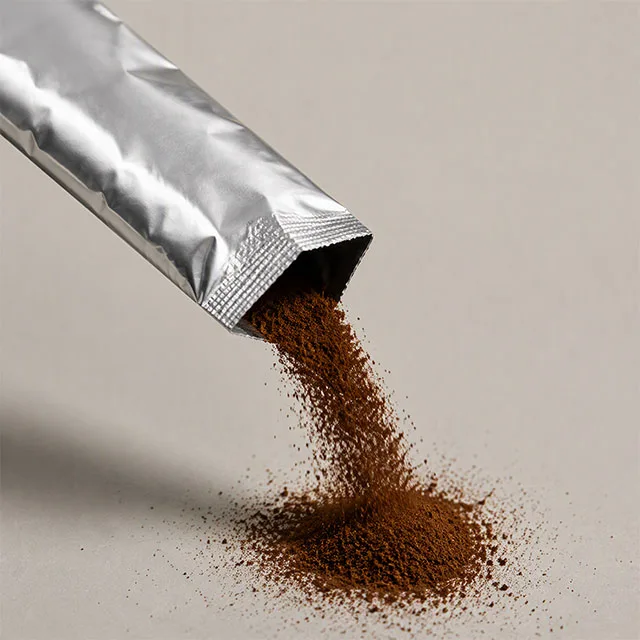
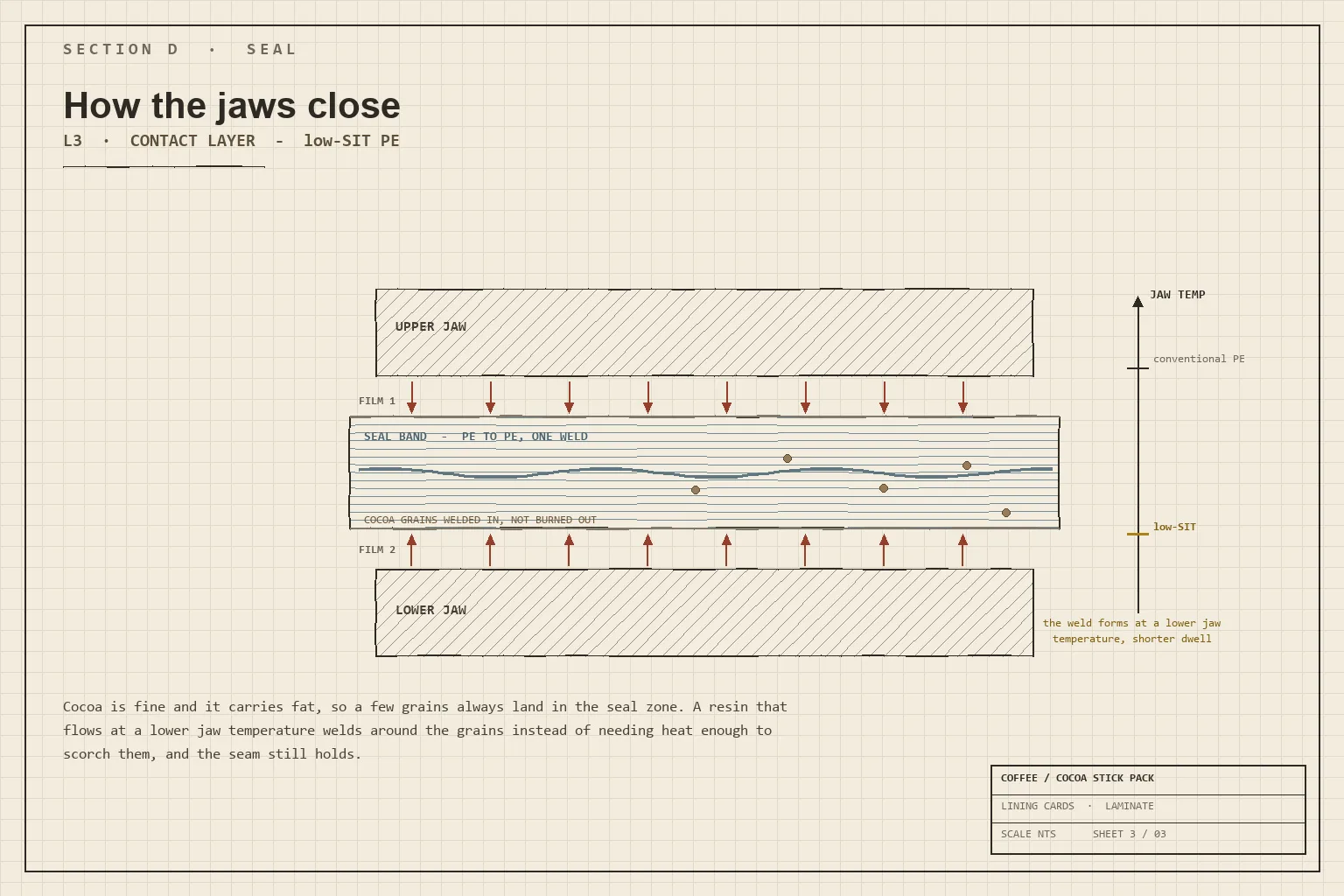
Coffee and cocoa behave differently on the line. Instant coffee is coarse and free-flowing; cocoa is finer, denser and carries its own fat, so dust settles in the seal zone and a jaw running too hot will trap it and leak. The low-seal-initiation resin exists for that: it wets and closes at a lower temperature and a shorter dwell, sealing through light contamination instead of burning a channel through the seam.
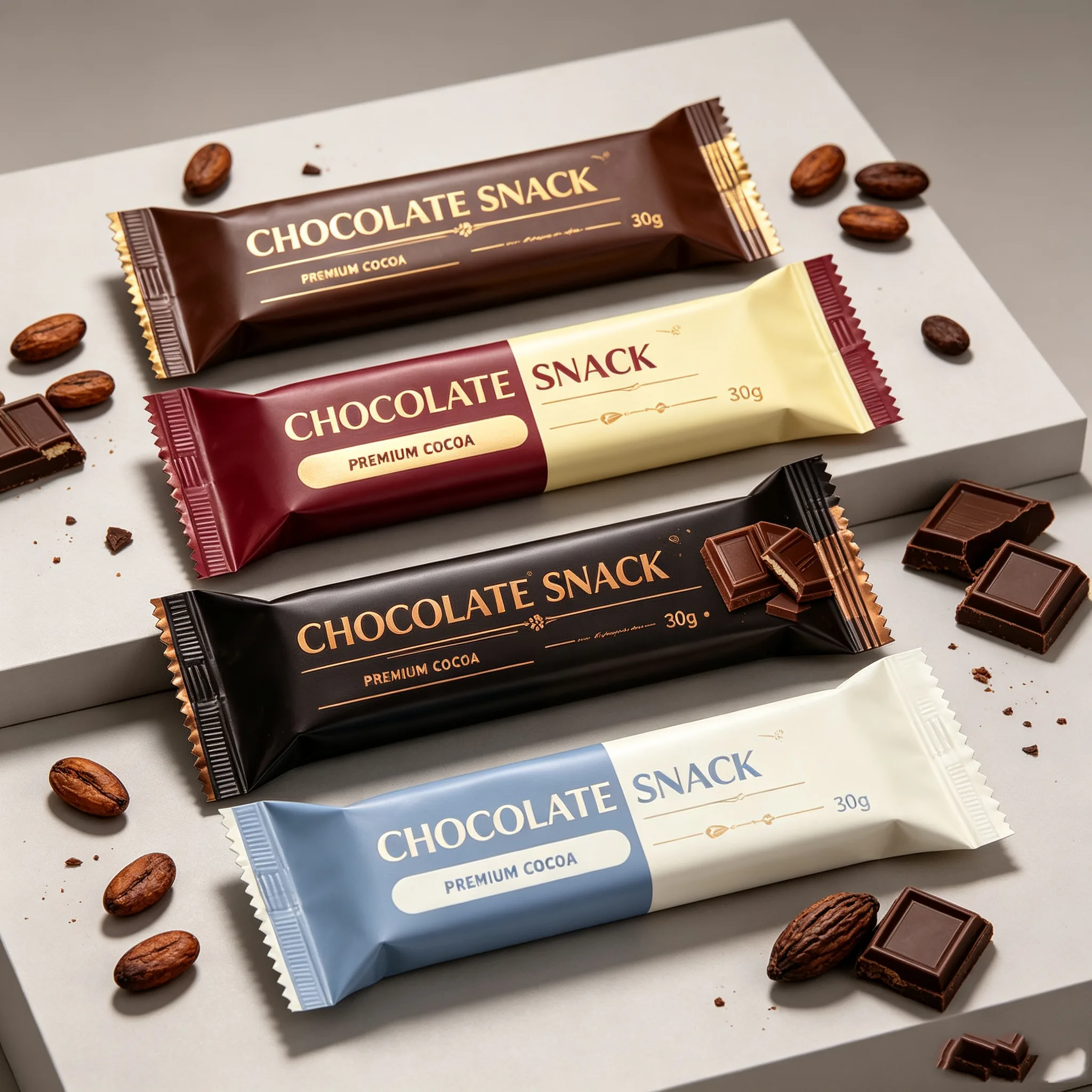
What changes between orders is size, film structure, print and colour. What does not change is the format, because this is a powder pack. It carries instant coffee, drinking chocolate, cocoa blends, creamer, sugar, electrolyte and protein powders, and it carries a thin paste such as chocolate or hazelnut spread only in the wider sachet, never in the ten-millimetre stick. A thirty-gram chocolate bar is a different job on a different film.
| Parameter | Specification |
|---|---|
| Structure | Stick pack 10 x 120 mm / three-side-seal sachet 60 x 80 mm |
| Wall | 5 layers: reverse-printed PET / adhesive / aluminium foil / adhesive / low-SIT PE |
| Foil core | 7-9 micron pure aluminium |
| Barrier | WVTR below 0.1 g/m2/day on the finished laminate |
| Closure | Heat seal, laser-scored tear notch |
| Filling, powder | Stick 2-12 g; sachet 10-50 g |
| Filling, paste | Sachet 60 x 80 mm and above only |
| Line compatibility | 400-600 packs per minute VFFS |
| Narrow-web rotogravure, metal inks | |
| Finishing | Matte overcoat or registered spot gloss on sachet |
| Customization | Size, film structure, print, colour, tear notch position |
A ten-millimetre strip leaves almost no room for a layout, so the print is planned as a vertical sequence rather than a panel. Flavour name and net weight sit where the eye lands when the stick is torn and tipped; the brand mark runs along the length where it stays legible when several sticks stand together; batch, best-before and any statutory wording go to the crimped margin, the one area that can be given up to a seal.
The process is narrow-web rotogravure, chosen for its ability to hold fine detail at small scale rather than for speed alone. Metal inks are laid on the silver base film so a pack picks up light on a shelf; where a solid colour block is wanted, an opaque white goes down first and the colour sits on top, which is why the same artwork can read as metallic in one area and flat in another.
The difficulty is register. Four-point type at this width means a hundredth of a millimetre of drift is visible, and the press runs in line with the filling machine, so colour correction happens while the film is moving at up to 600 packs per minute. Sachets at sixty by eighty millimetres have room for the full finishing set, matte overcoat for a soft touch or registered spot gloss on the logo; the stick keeps to a simpler build because there is no second chance to correct a shifted patch.
Proofing follows the same order every time: a digital proof for layout, a cylinder proof on the actual film for colour and type, then a sealed sample filled with your product and opened by hand. If the four-point line is not sharp on the cylinder proof, the cylinder is re-engraved before the run starts, which is cheaper than sorting printed film afterwards.
The pack is built from a reverse-printed PET outer film, a seven to nine micron aluminium foil core and a low-seal-initiation PE contact layer, joined by solvent-free adhesive. The foil carries the barrier, the PET carries the print, and the PE carries the seal and is the only layer meeting the powder.
Cocoa is the harder test: its fat settles in the seal zone, so a conventional jaw either traps dust and leaks or runs hot enough to burn the seam. The low-SIT face closes earlier and holds; the foil behind keeps moisture out for the pack’s life.
North Side Of Nanyi Road, Shiwan Town Science And Technology Park (10th Floor, Building 1, No. 13)
INQUIRY