Hot & Cold Thermal Bags, Insulated Mailers & Cold Chain Delivery Packaging

Fertilizer, Pesticide & Agrochemical Packaging

Cleaner, Laundry & Air Care Packaging

Custom Medical Packaging Solutions

Protective Structures, Inserts and Retail Packs

Custom Protein Powder Pouches, Vitamin Stick Packs & Nutrition Bar Bags

Cosmetics, Fragrance and Skincare Packaging

Takeout, Bakery and Beverage Packaging

Kibble, treat & wet food packaging
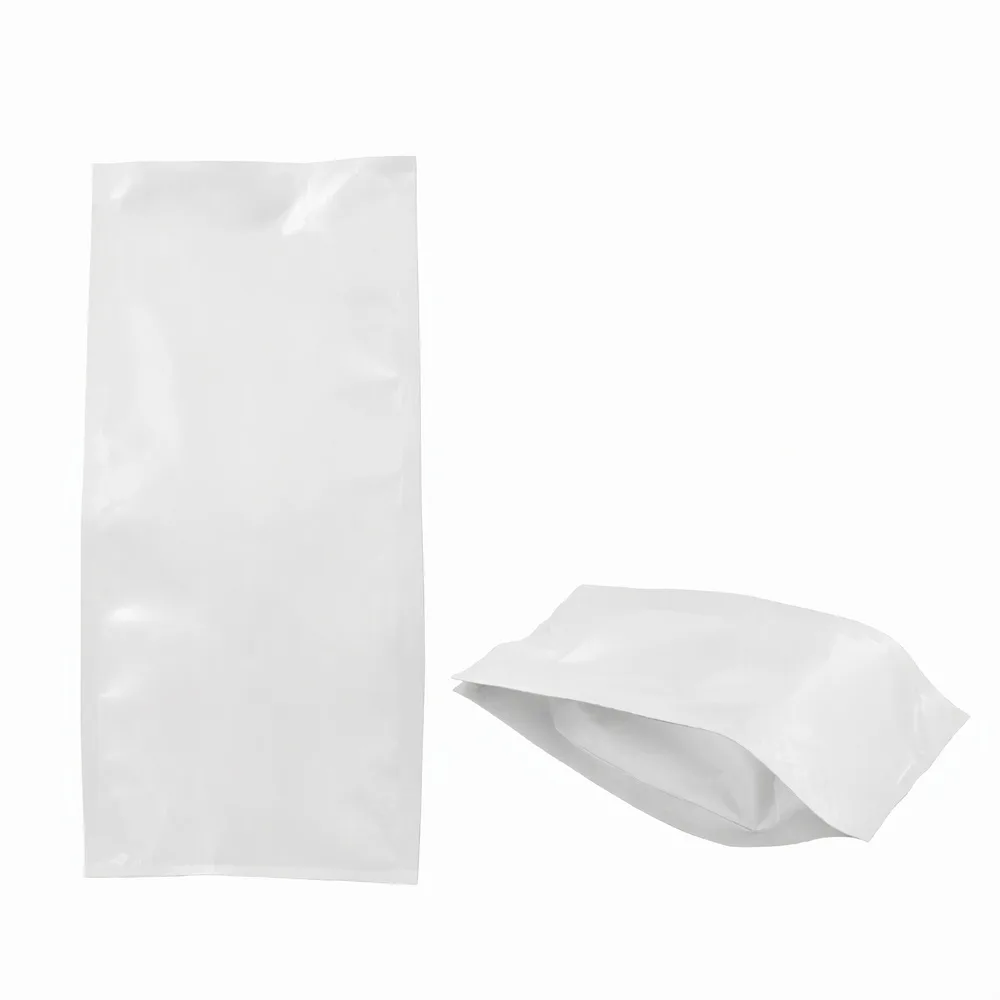
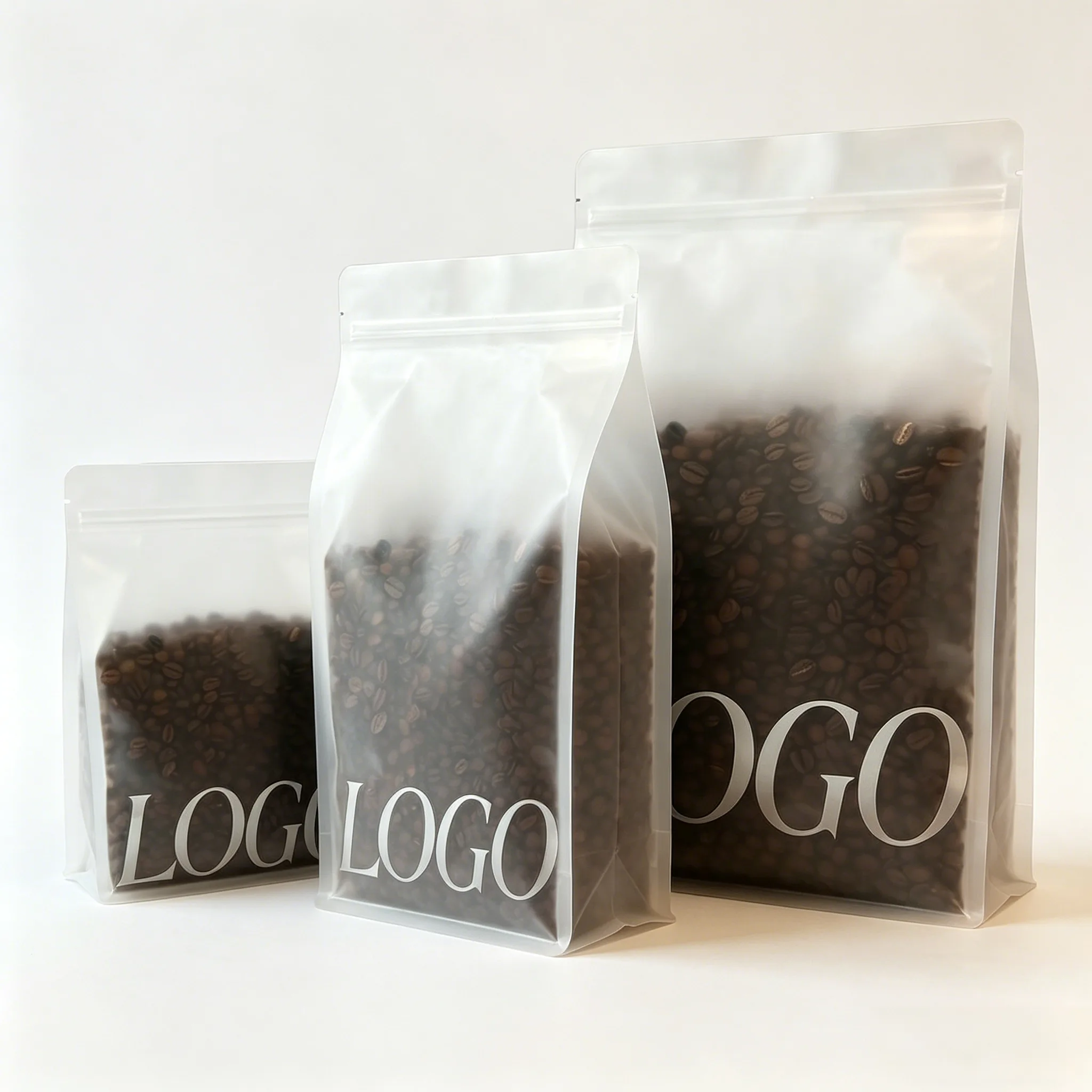
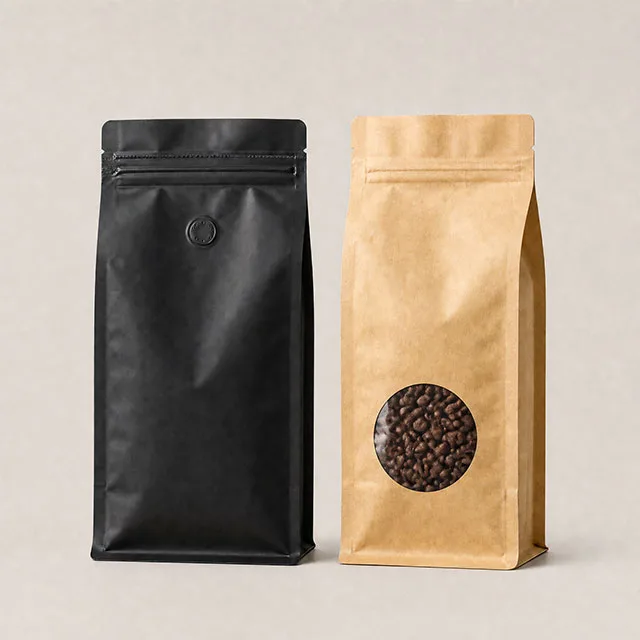
A stand-up coffee pouch built on four seals rather than a block bottom. Two side gussets run down the body and the base folds into a V, so the bag opens into a boat-shaped floor and stands without any rigid insert. PET outside carries the print, metallized VMPET in the middle blocks light and moisture, and PE inside takes the heat seal and touches the coffee. A one-way valve can be fitted under the top seal for freshly roasted beans, and the mouth closes with a single straight heat seal, no zipper. Three stock sizes cover roughly 150 g to 1 kg, which is where this build makes the most sense commercially.
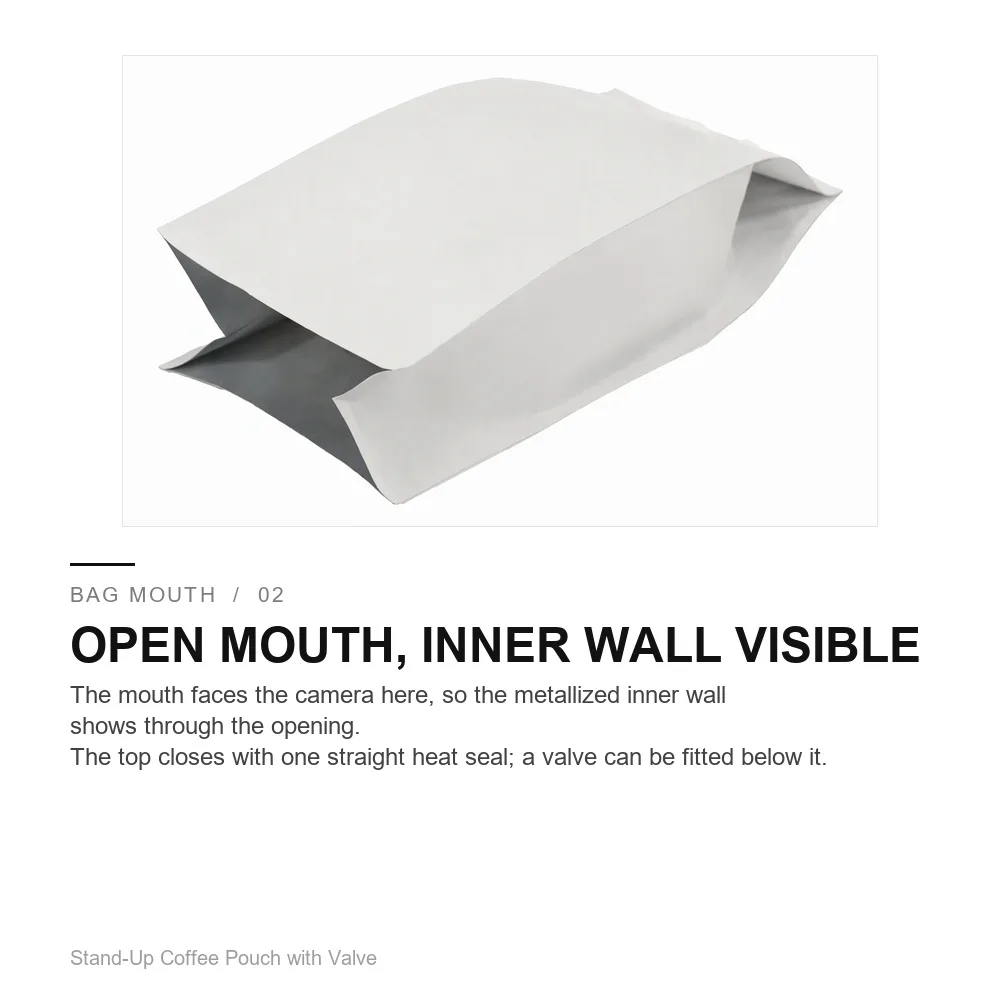
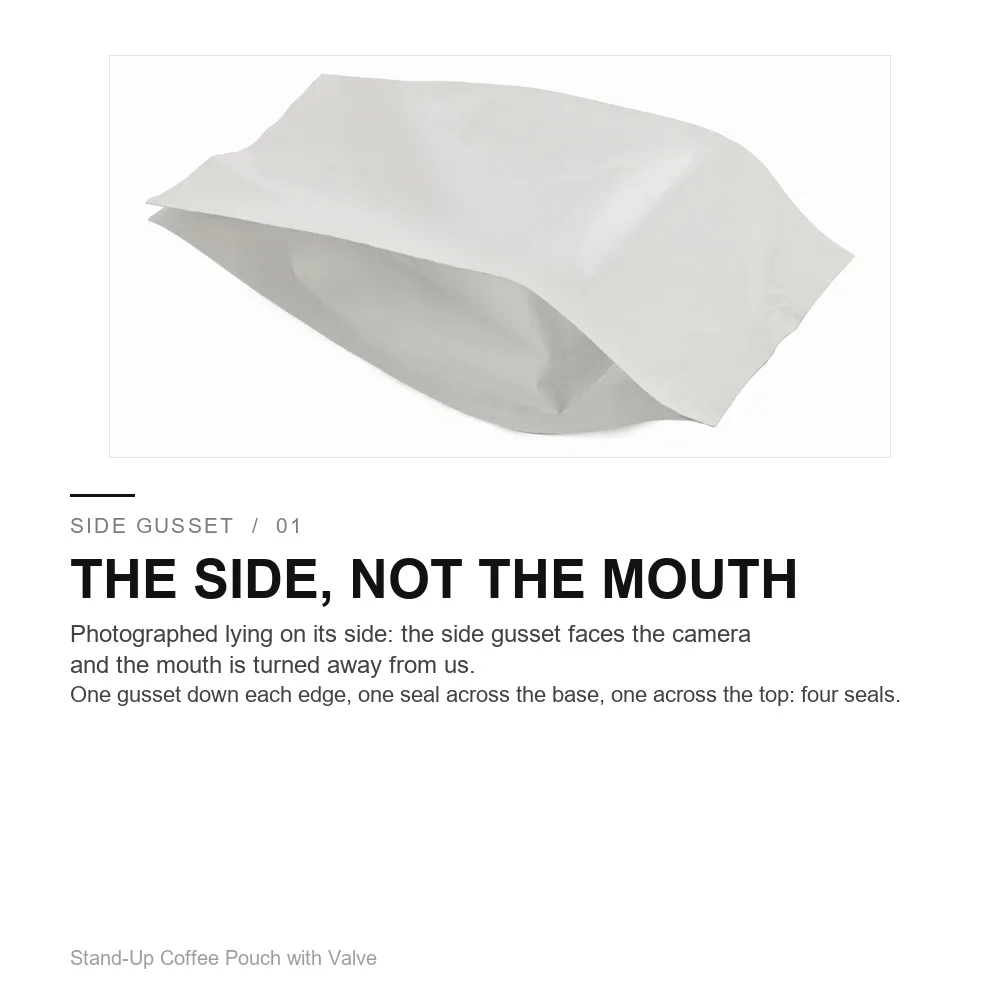
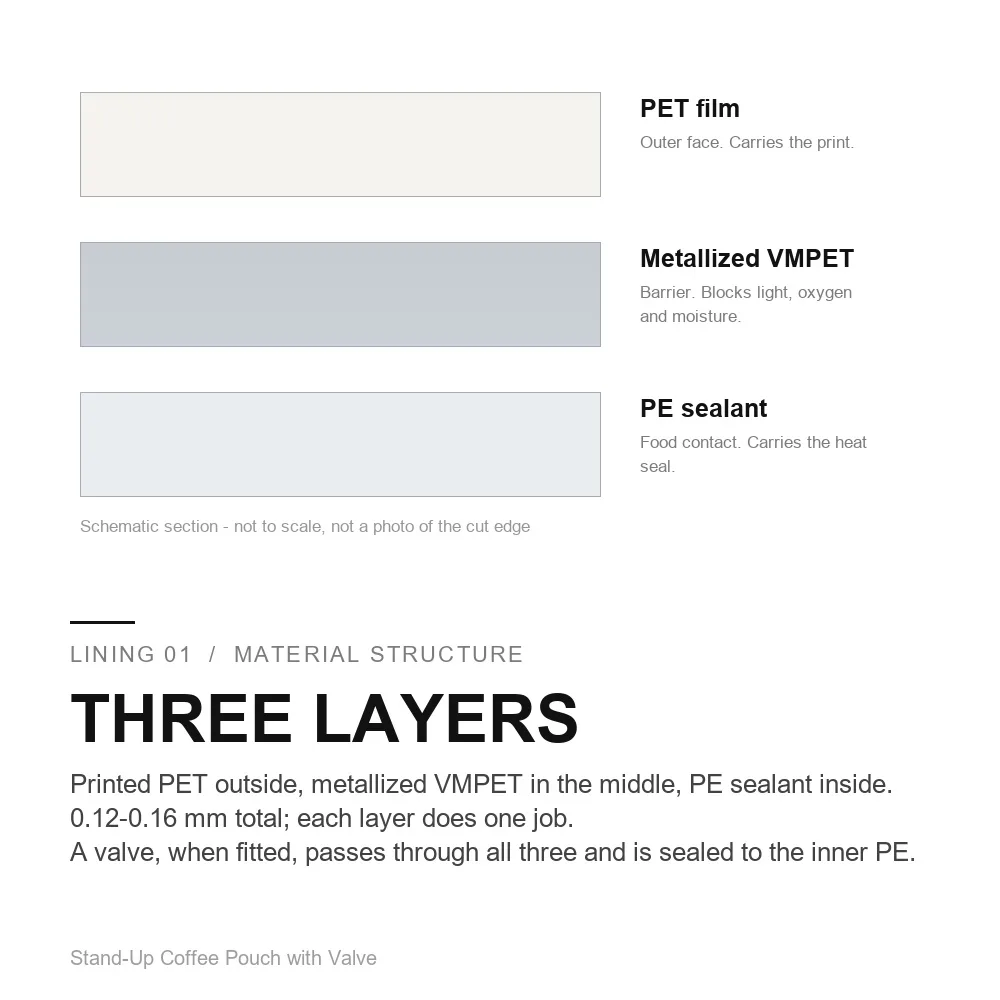
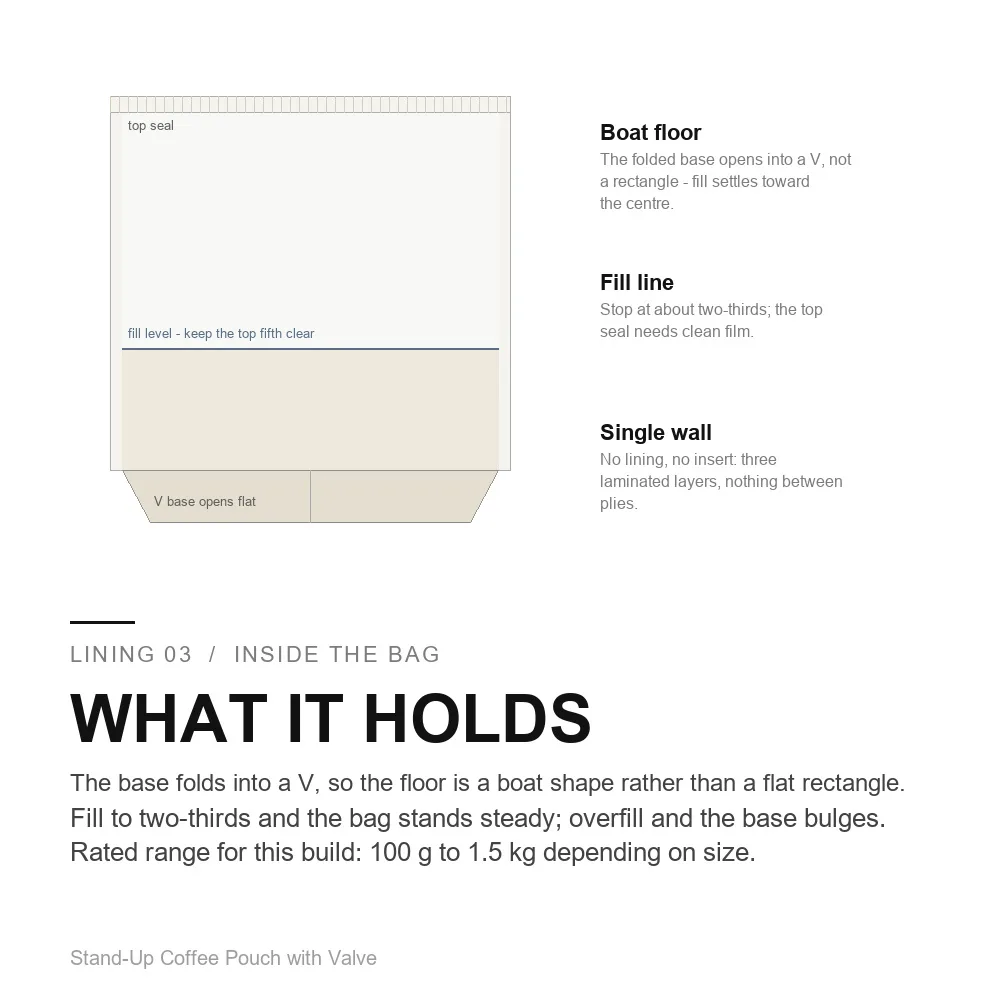
The wall is three layers: PET outside for print, metallized VMPET in the middle, PE sealant inside, 0.12 to 0.16 mm in total. Two side gussets run the full height of the body and the base folds into a V. When the bag is filled, that V opens into a boat-shaped floor, which is what lets it stand on a shelf without an insert, and an insert is exactly what this build is designed to avoid.
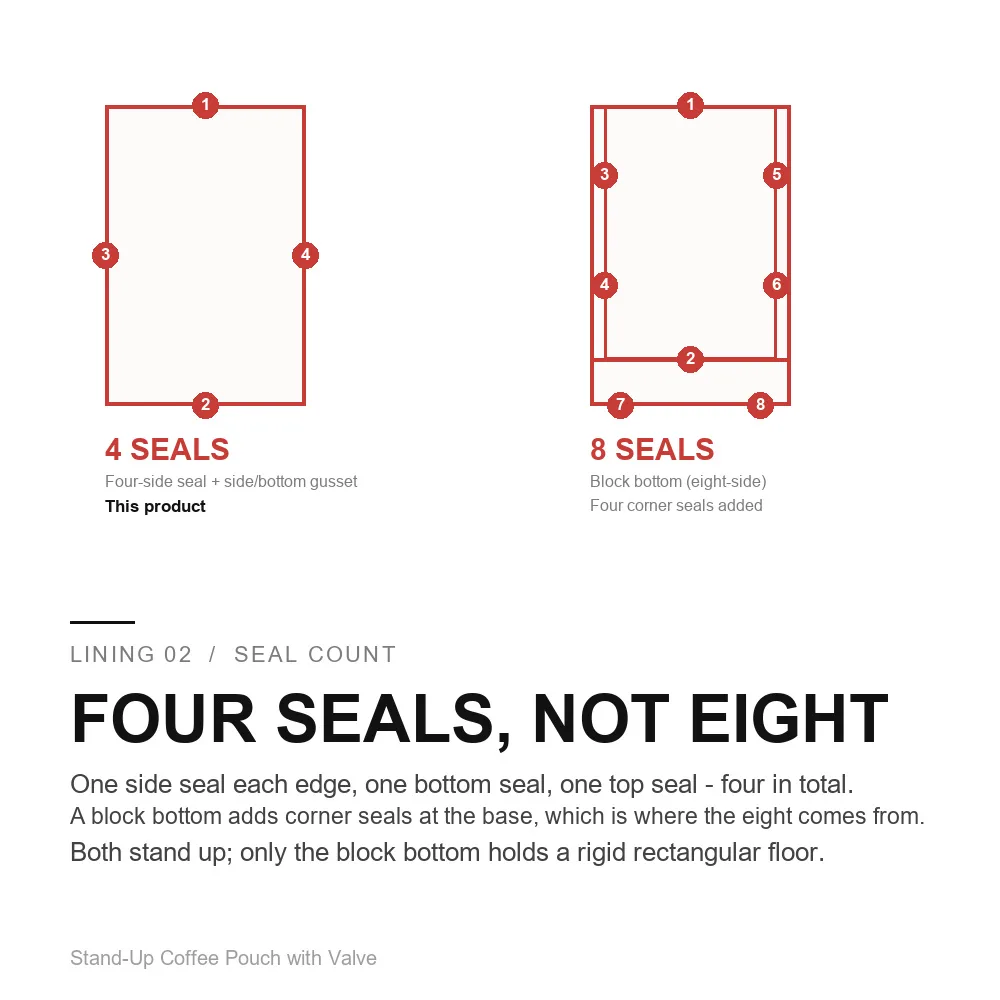
The seal count is four: one down each edge, one across the base, one across the top. A block bottom needs four corner seals on top of that, which is why it costs more and why it holds a rigid rectangle instead of a soft one. Here the floor stays flexible, so the bag asks for a little more care on a filling line but gives the difference back in unit price.
A one-way valve sits under the top seal when the fill needs it, venting carbon dioxide from fresh roast without letting oxygen back in. Ground coffee and rested beans do not need one, so it stays optional rather than standard. The top closes with a straight heat seal and no zipper: simple, cheap, and enough for a bag that is opened once and decanted.
Because everything is printed to order, the artwork is the product. The front panel is a single flat billboard, the back carries copy, barcode and batch code, and the two side gussets stay narrow, because type set across a fold reads badly and disappears into the crease. Custom sizes, valve position and base depth are all open at the artwork stage, and nothing is fixed until the proof is signed.
| Parameter | Specification |
|---|---|
| Structure | Stand-up pouch, four-side seal, side and bottom gusset |
| Seal count | 4 |
| Material | PET / metallized VMPET / PE sealant, 0.12–0.16 mm |
| Valve | One-way degassing valve, optional |
| Closure | Straight heat seal, no zipper |
| Available sizes | 9 x 27 + 5 cm to 13.5 x 41 + 7 cm (outer) |
| Fill range | Approx. 150 g – 1 kg, confirmed on samples |
| Barrier | Metallized — light, oxygen and moisture; below foil laminate |
| Printing | Custom rotogravure or flexo to your artwork |
| Customization | Print / size / colour / valve position / base depth |
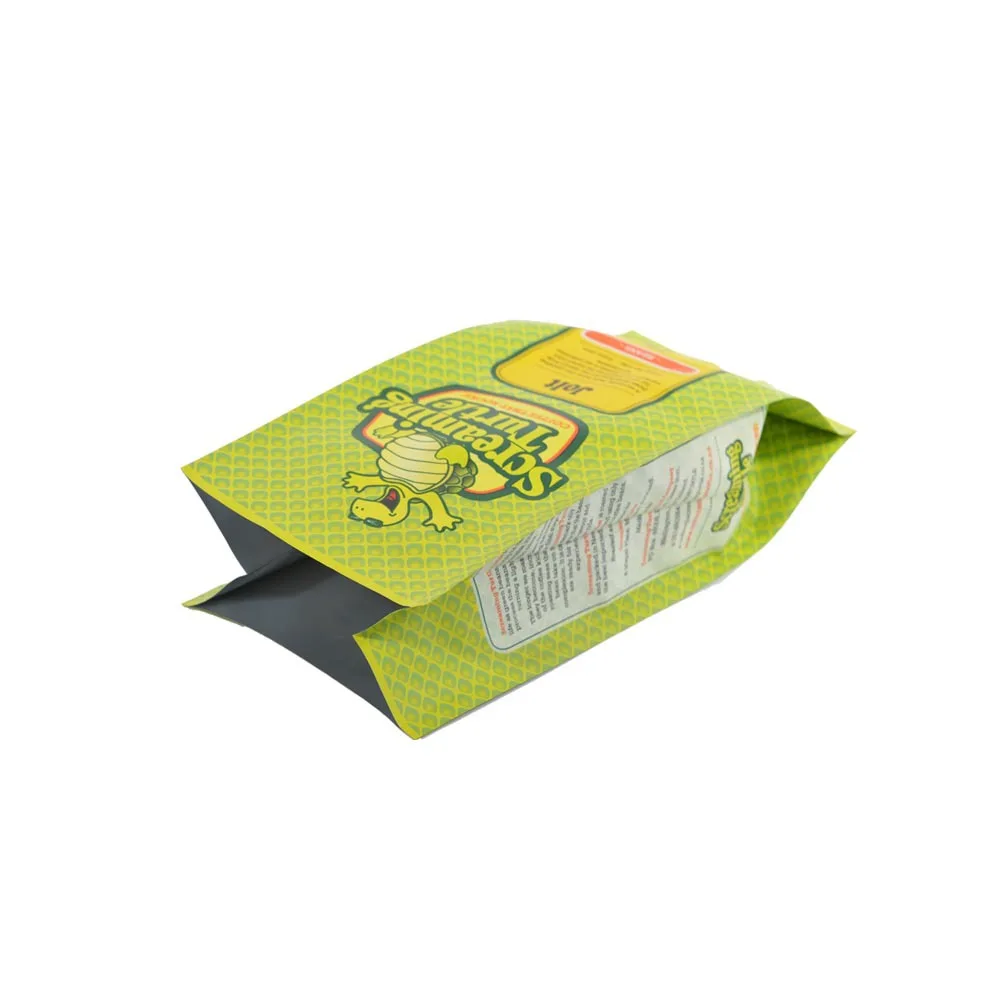
A stand-up pouch is a harder print job than a flat one, because the design has to survive folds. The front panel carries the brand, the back panel takes copy, barcode and batch code, and each side gusset is a narrow vertical strip that folds in and out. Anything that must stay legible is kept off the fold lines and away from the base crease.
The substrate is a printed PET face over metallized VMPET, so colour sits on a smooth film rather than on paper. That holds fine detail and small type well, which is why a photographic design or a dense illustrated pattern is realistic here. Registration across three layers and a gusset is the part that takes experience on press, and where a cheap quote usually shows up as misregistration.
The constraint is the fold itself. A large solid block of colour crossing the side gusset will crack or lighten where the film creases, and a barcode that lands within a few millimetres of a fold can lose its quiet zone. We place barcode, batch and any regulatory block on the flat back panel, and leave the gusset for pattern rather than information.
Proofing settles the rest. We print a proof on the same structure and sign it off before the run, hold colour inside the agreed tolerance, and keep the top seal band and the base fold clear of artwork so no ink sits where the seal has to close. Valve position is marked on the proof rather than assumed from a photo. If the artwork cannot survive a fold, we say so at proof, not after delivery.
There is no lining and no insert in this pouch: the body is a single laminated wall, PET outside, metallized VMPET in the middle, PE inside. Nothing sits between plies, so a leak shows up on the outside rather than hiding in a layer.
The gussets do the structural work, not an added part. Two side gussets and a folded V base let the bag stand and then flatten again for freight, which is the trade against the rigid floor of a block bottom.
North Side Of Nanyi Road, Shiwan Town Science And Technology Park (10th Floor, Building 1, No. 13)
INQUIRY