Hot & Cold Thermal Bags, Insulated Mailers & Cold Chain Delivery Packaging

Fertilizer, Pesticide & Agrochemical Packaging

Cleaner, Laundry & Air Care Packaging

Custom Medical Packaging Solutions

Protective Structures, Inserts and Retail Packs

Custom Protein Powder Pouches, Vitamin Stick Packs & Nutrition Bar Bags

Cosmetics, Fragrance and Skincare Packaging

Takeout, Bakery and Beverage Packaging

Kibble, treat & wet food packaging
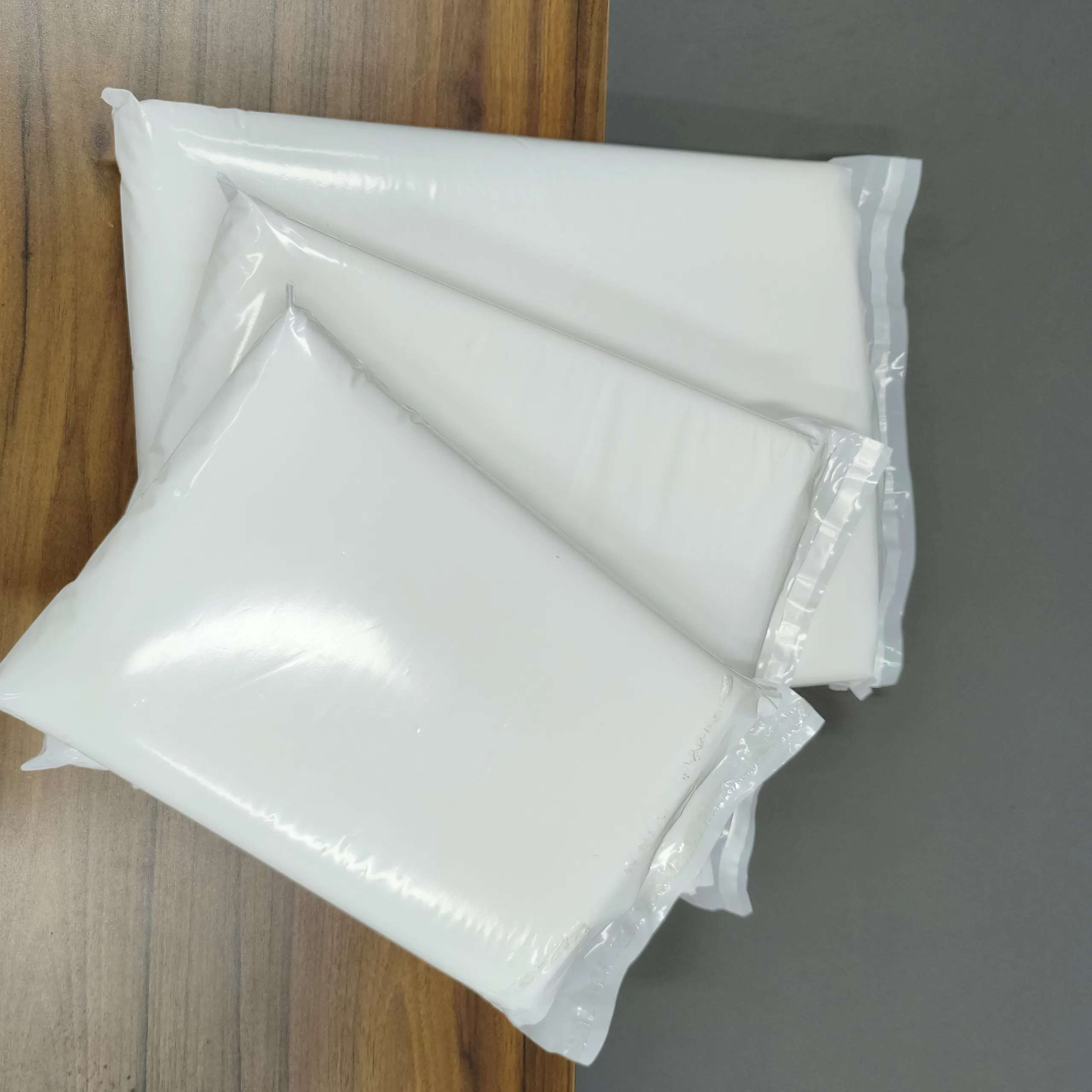
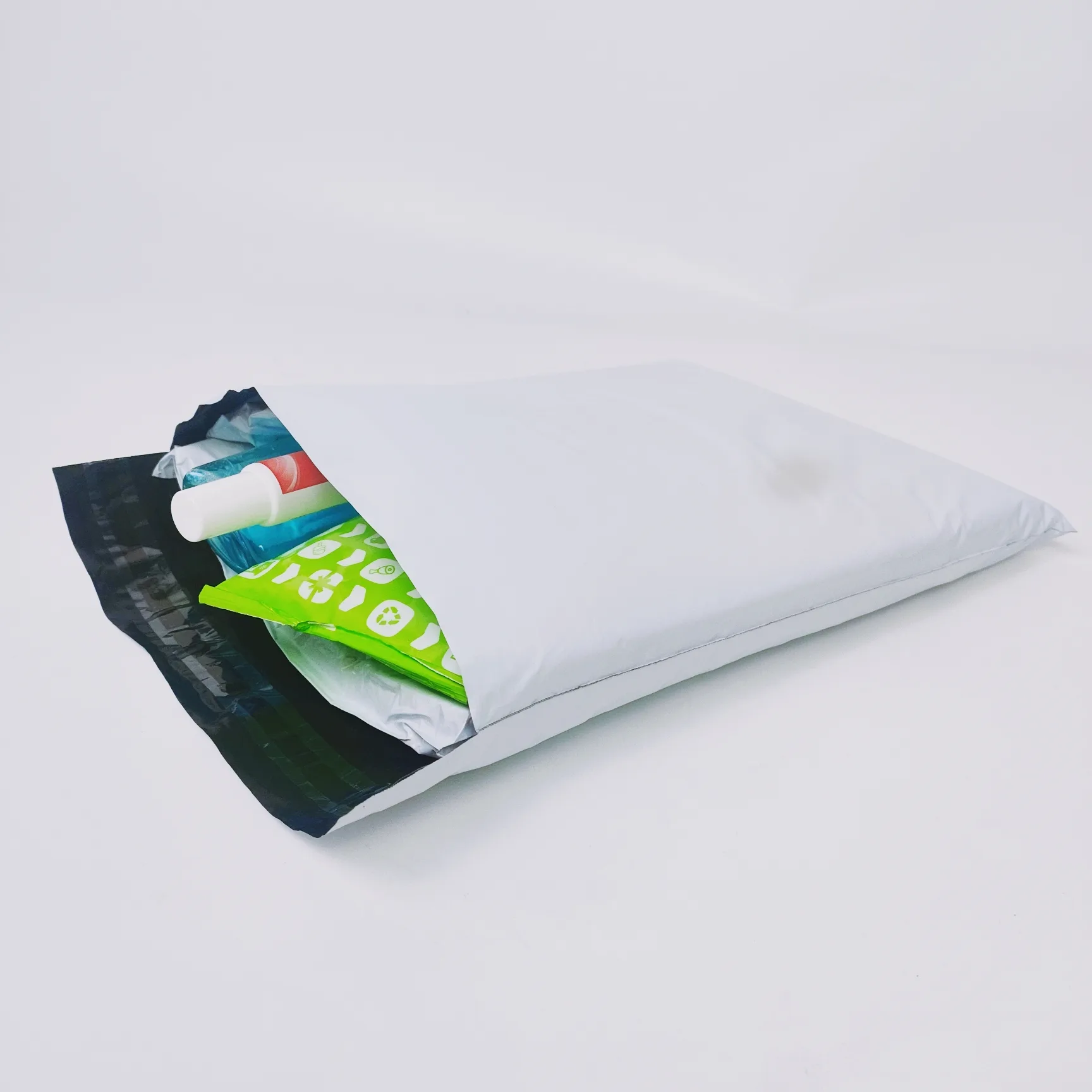
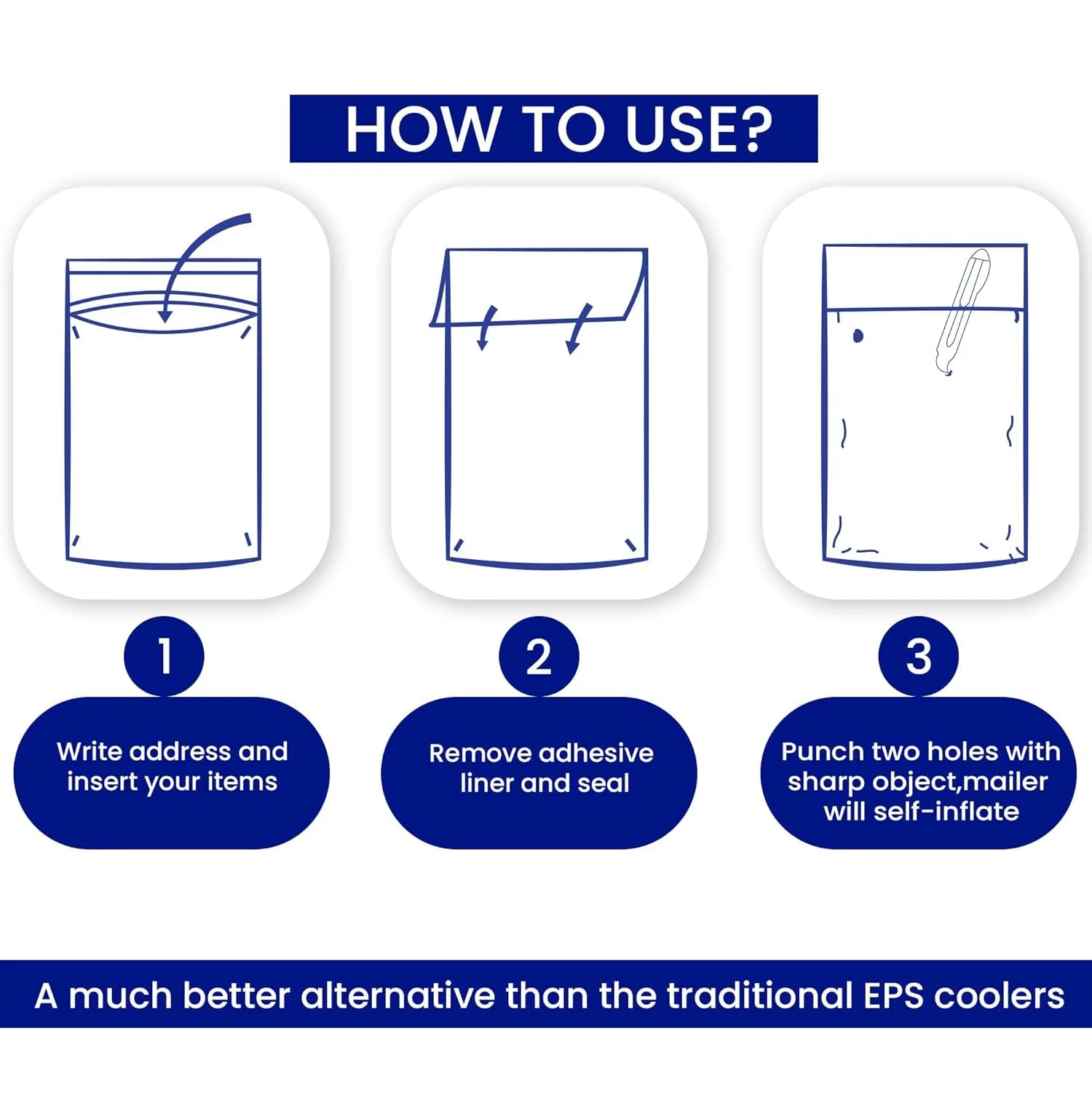
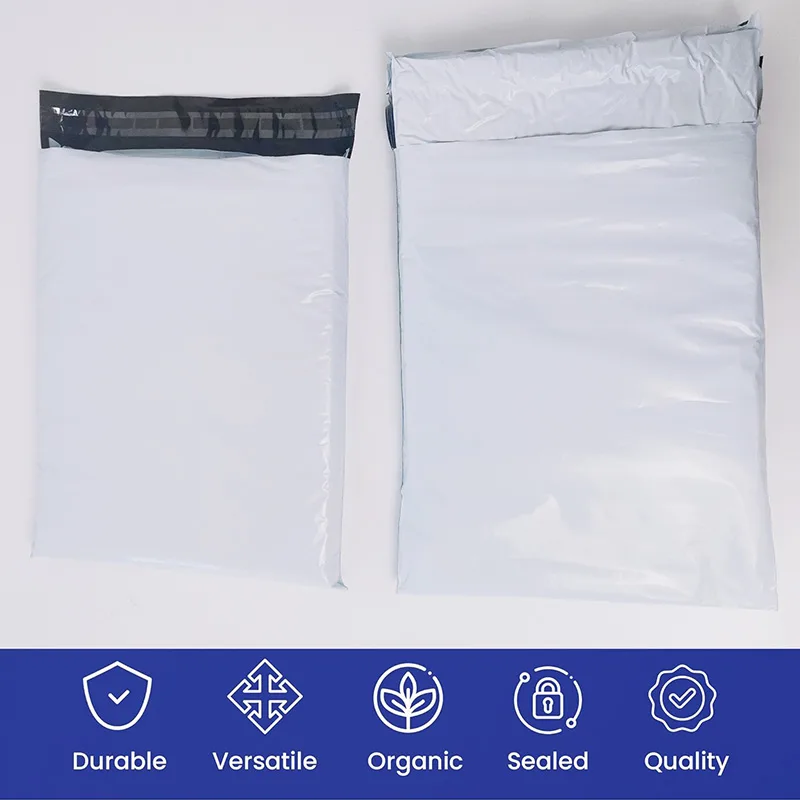
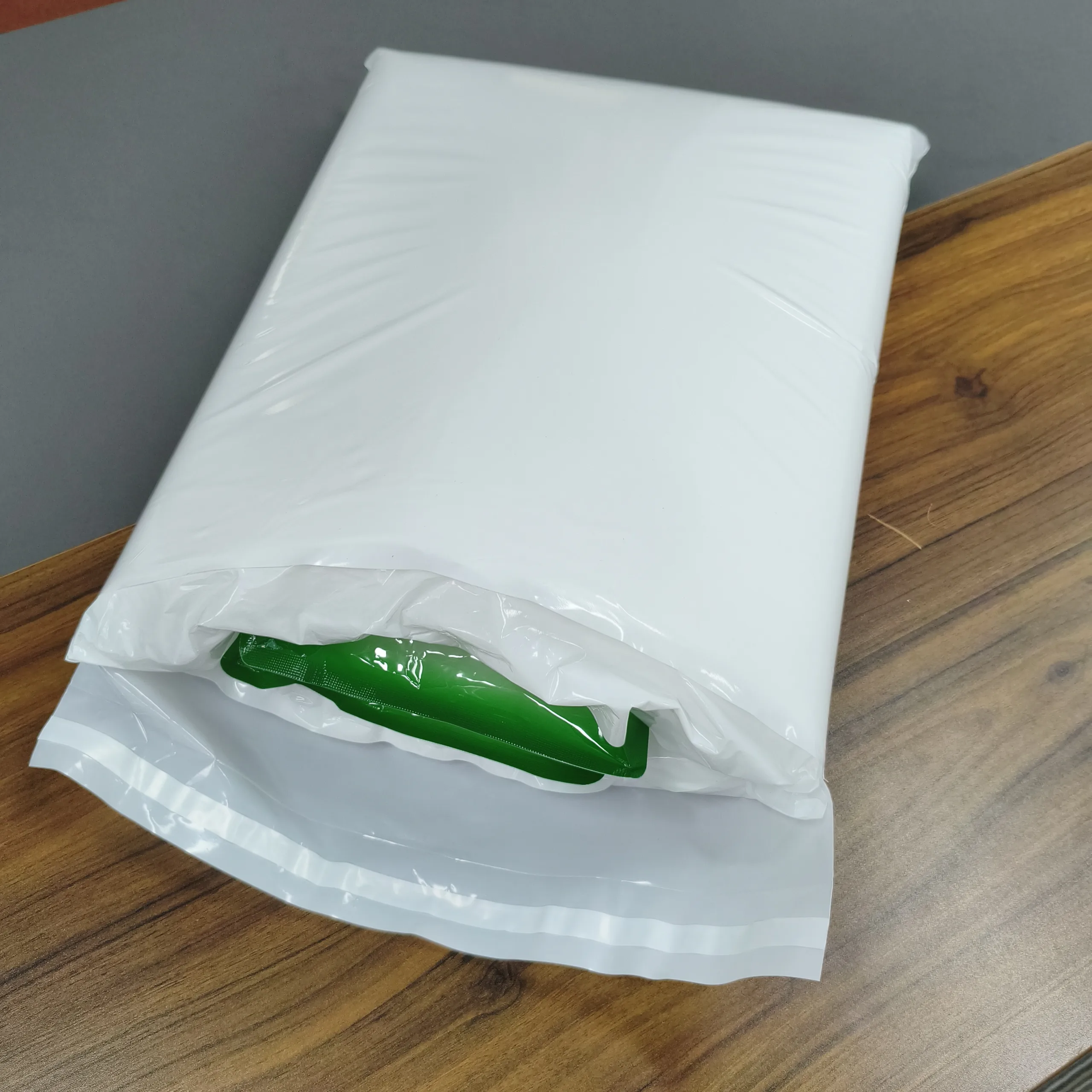
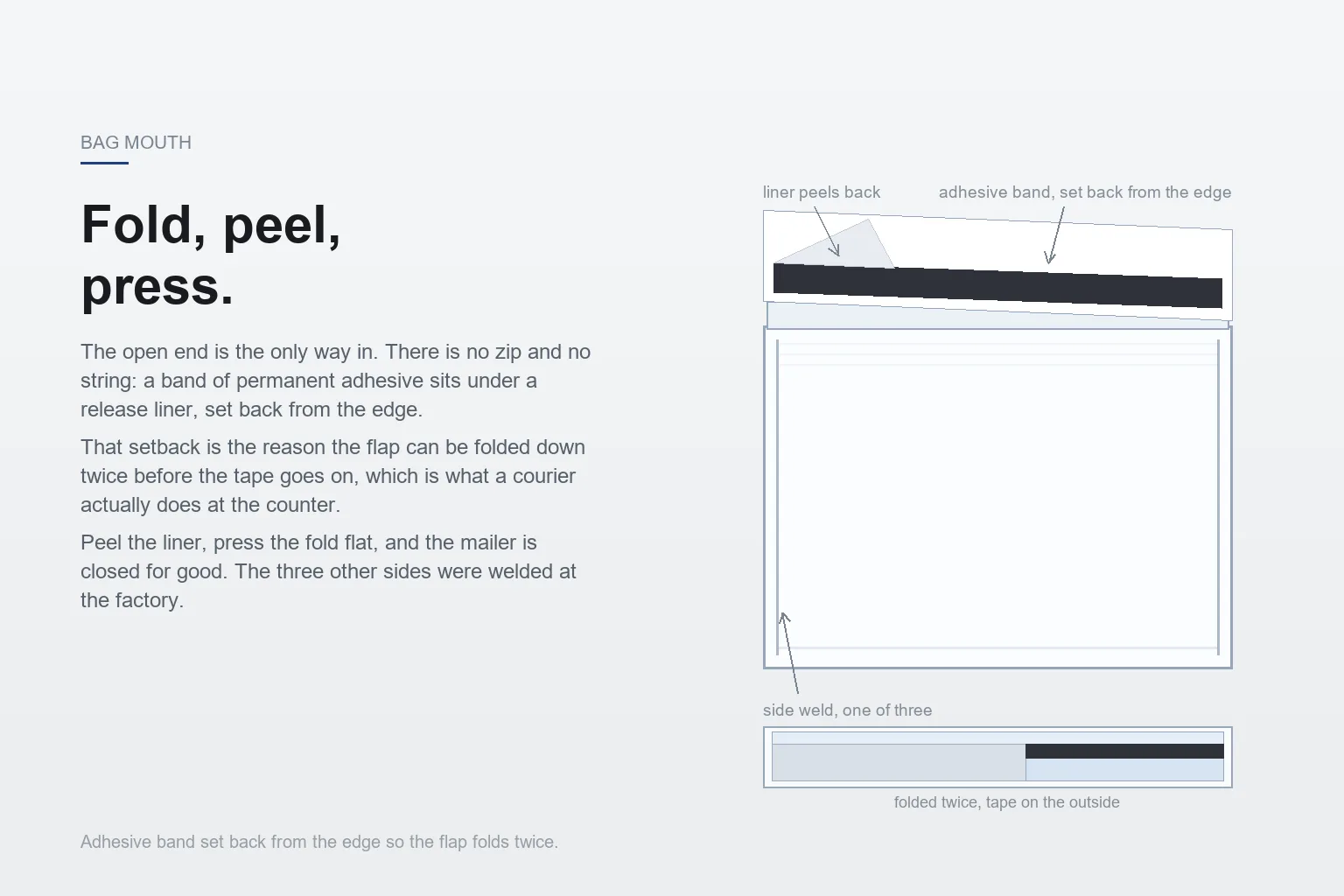
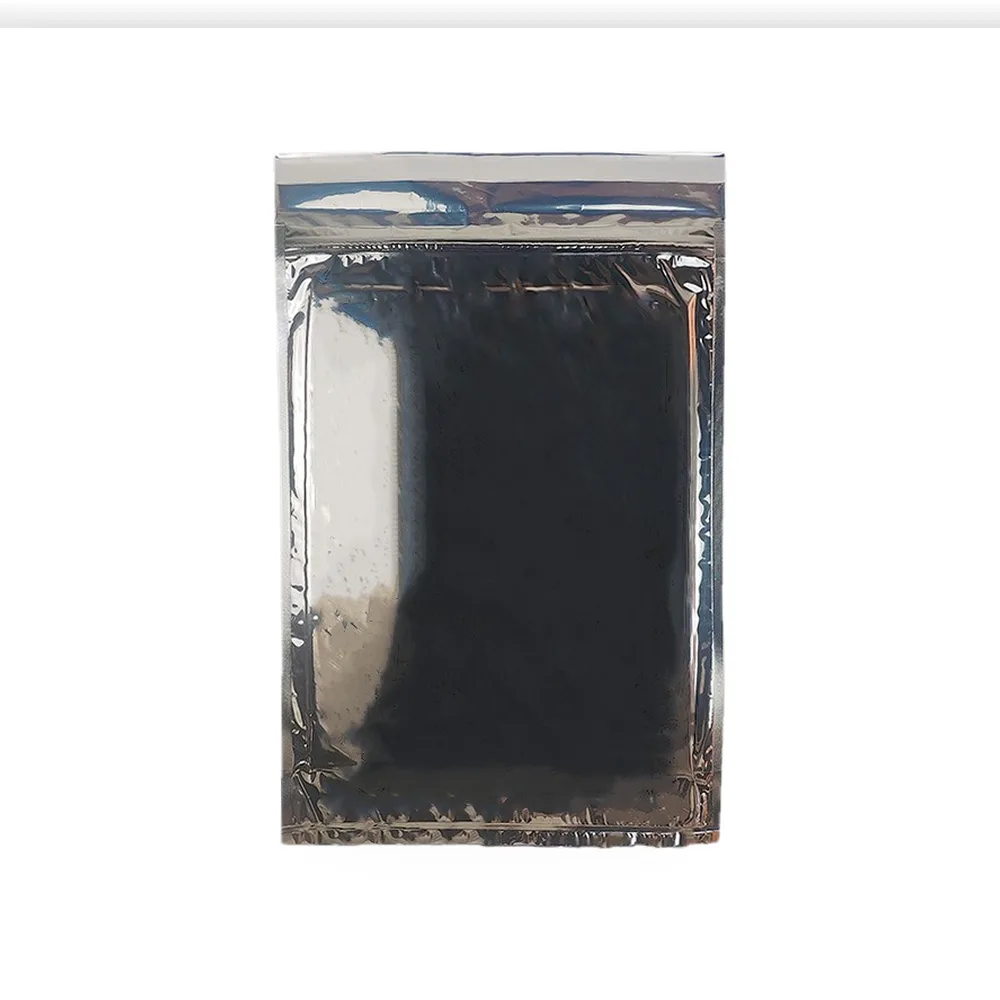
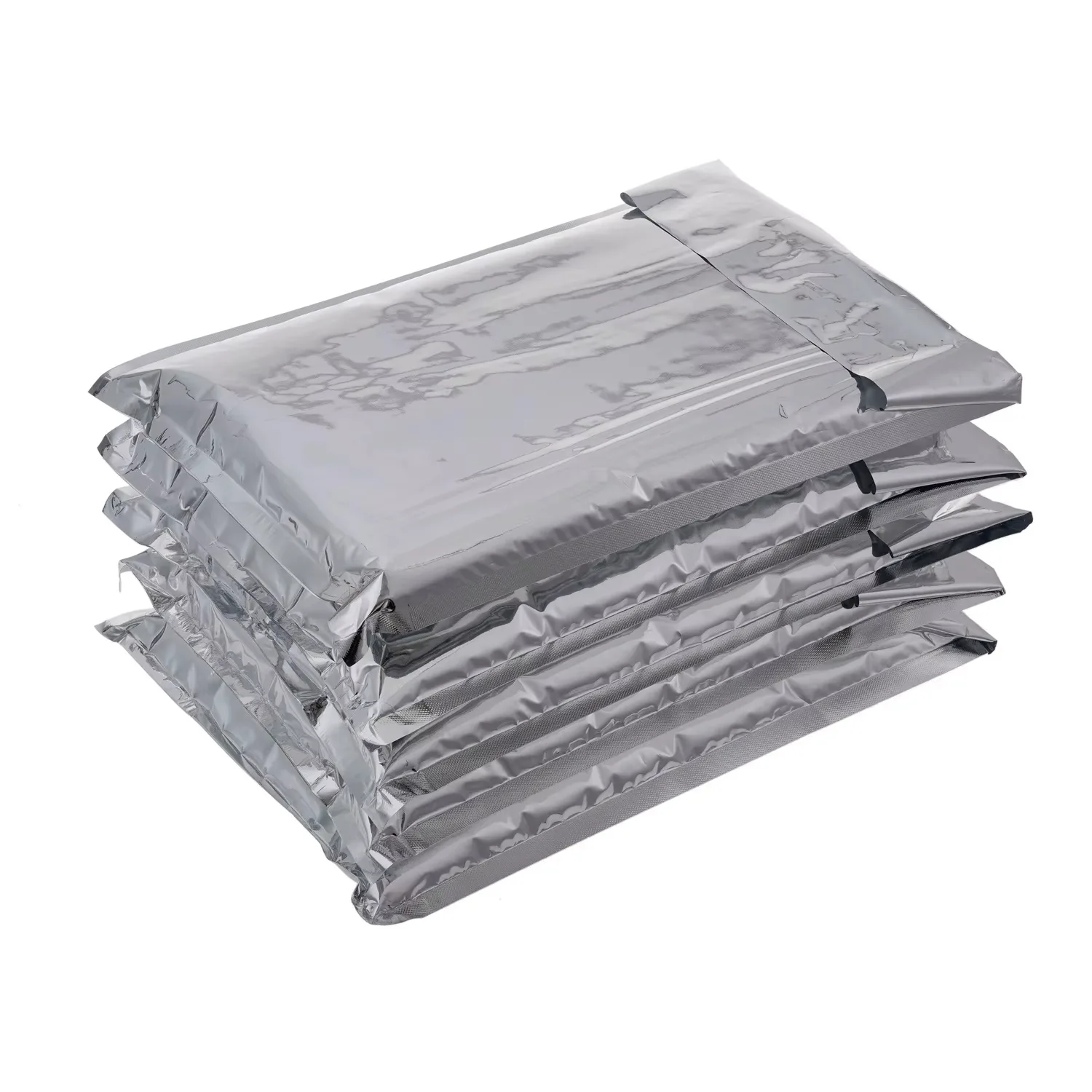
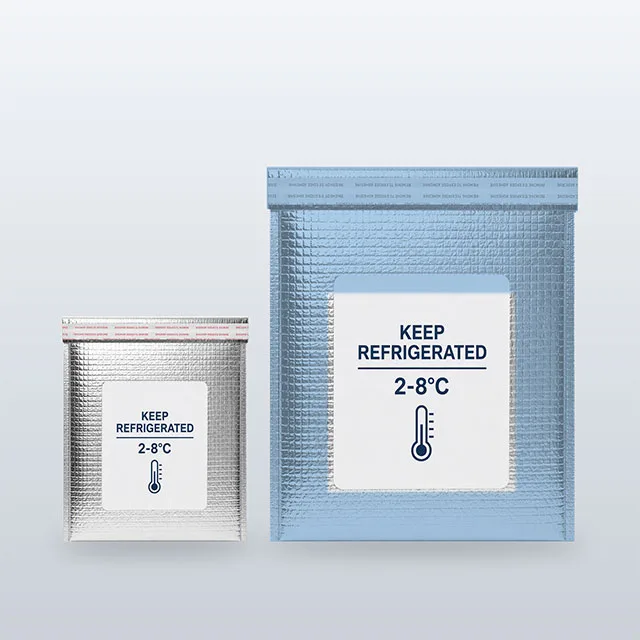
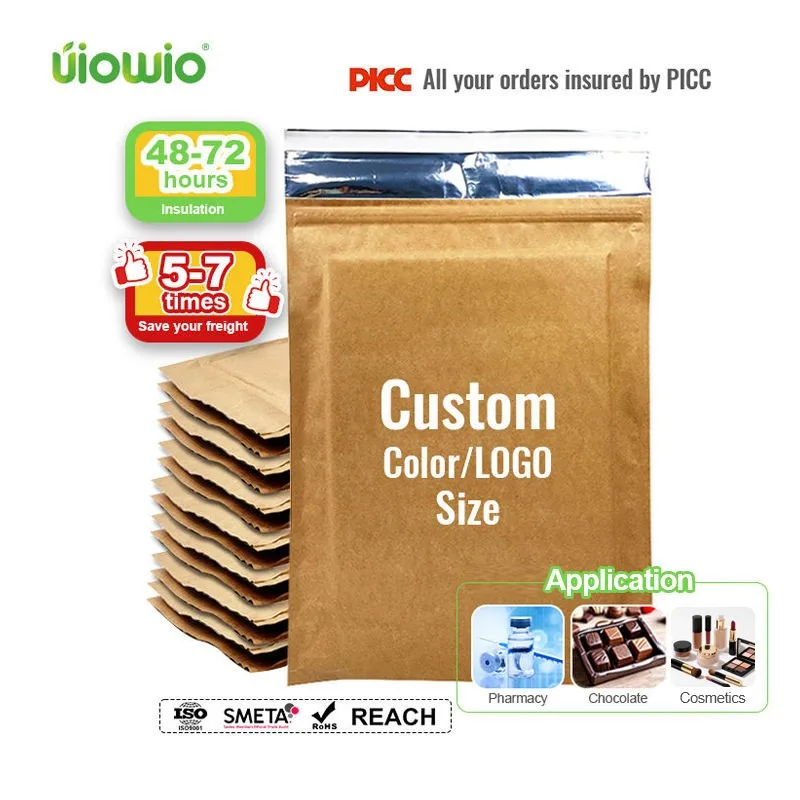
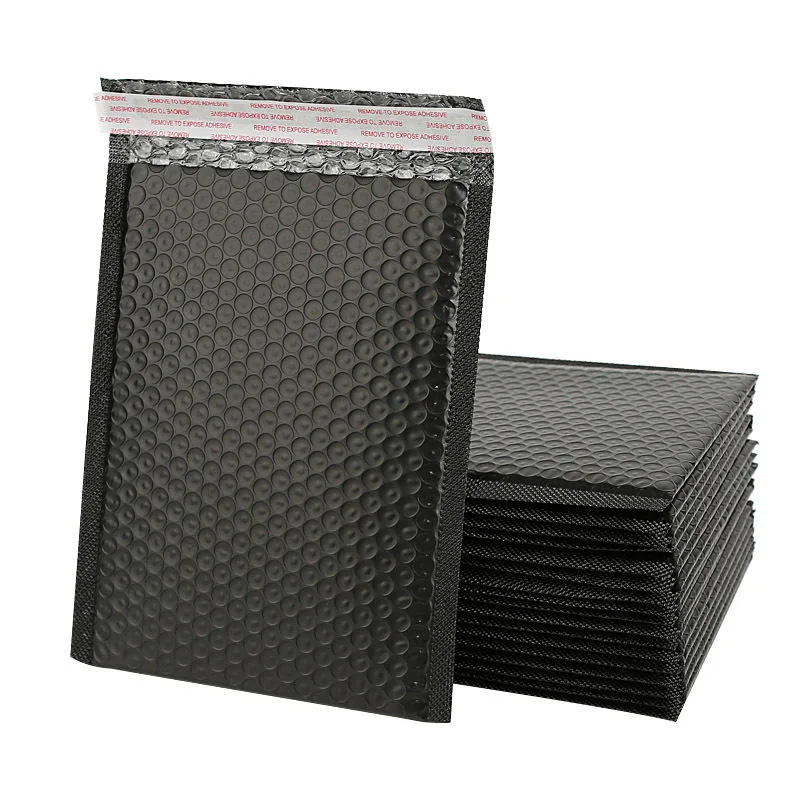
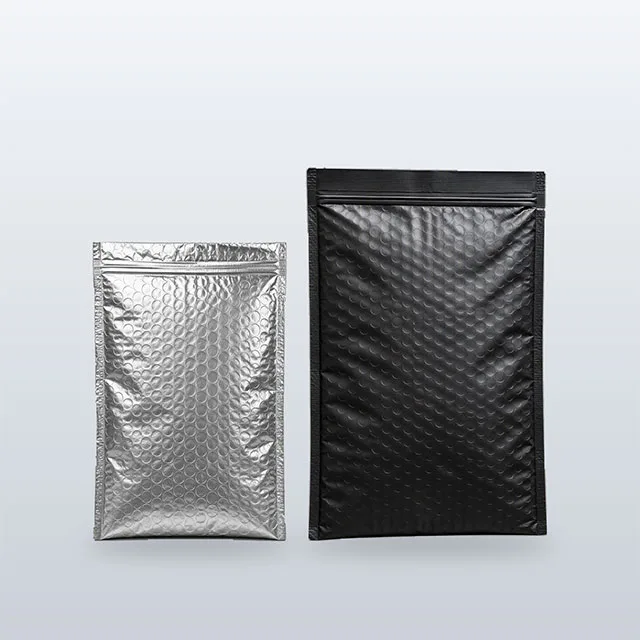
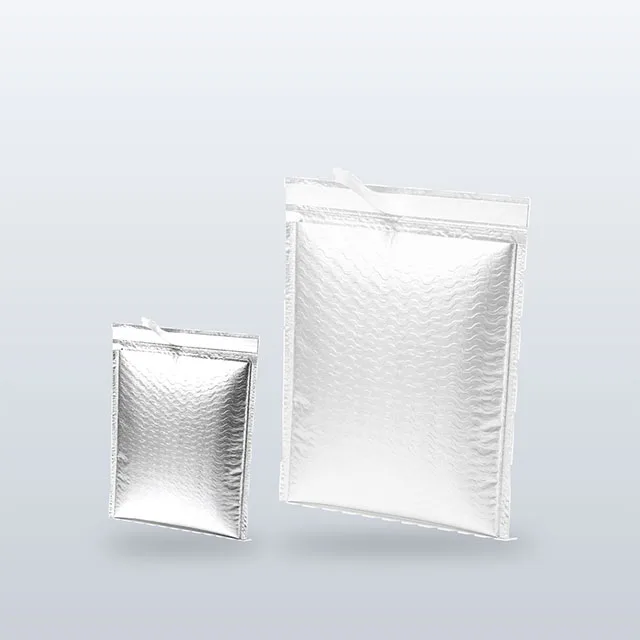
A carton inside a bubble bag still arrives warm. This mailer puts the insulation into the bag itself: a white PE film outside that takes the print, the tape and the address label, and a sponge layer bonded behind it, with three sides welded shut. The fourth side folds over on itself twice and closes on a permanent adhesive band under a release liner, so the seal is a fold rather than a strip of tape somebody has to find at the counter. It ships flat, opens flat on the bench, and takes a carton, a bottle or a strip of blisters without bending them. For cold chain the ice pack goes in beside the goods.
The outside is a white PE film: satin gloss, printable, and smooth enough that a postal label and a strip of packing tape both stay where they are put. It is the face the customer sees first, and it is the layer that takes the scuffing on a sorting belt.
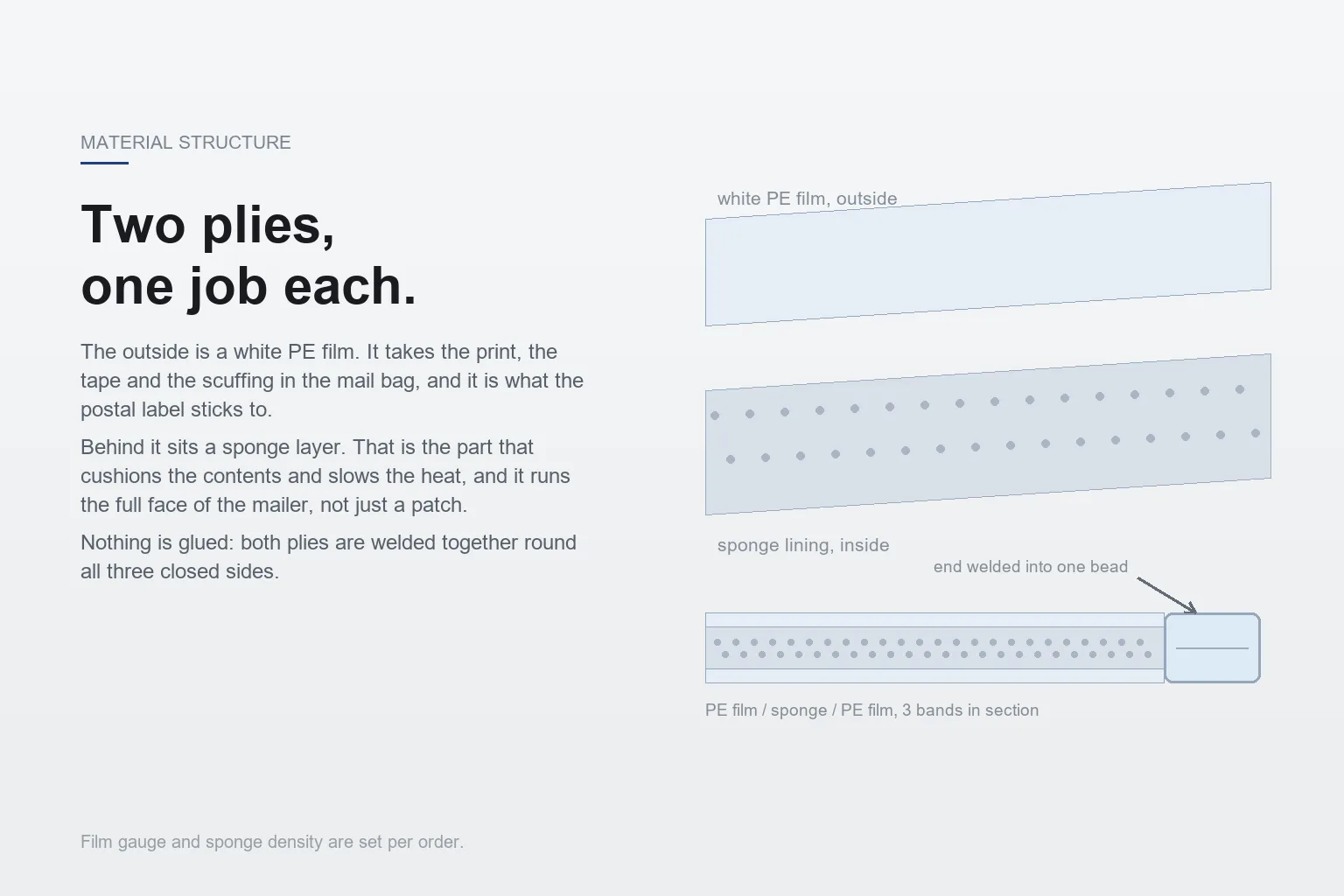
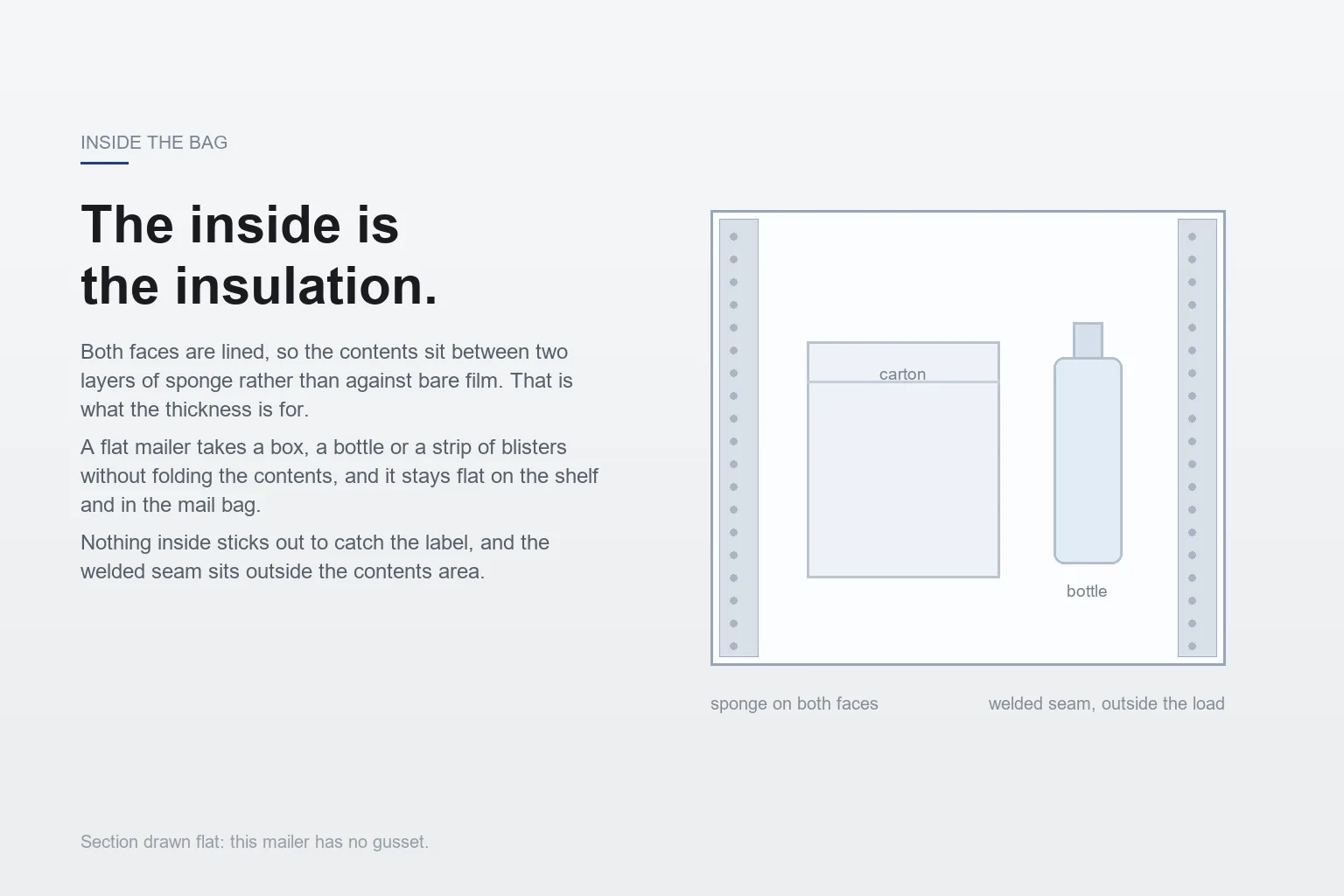
Behind that film sits the sponge layer, and that is where the insulation actually lives. Closed-cell foam holds still air in place, which is why a frozen pack inside the bag loses its cold more slowly than it would in a plain poly mailer. The layer runs the full face of the bag, not a patch in the middle. Where the mailer is welded the foam is pressed flat, so the insulated area ends a few millimetres inside the seam – the seam has to stay thin enough to close.
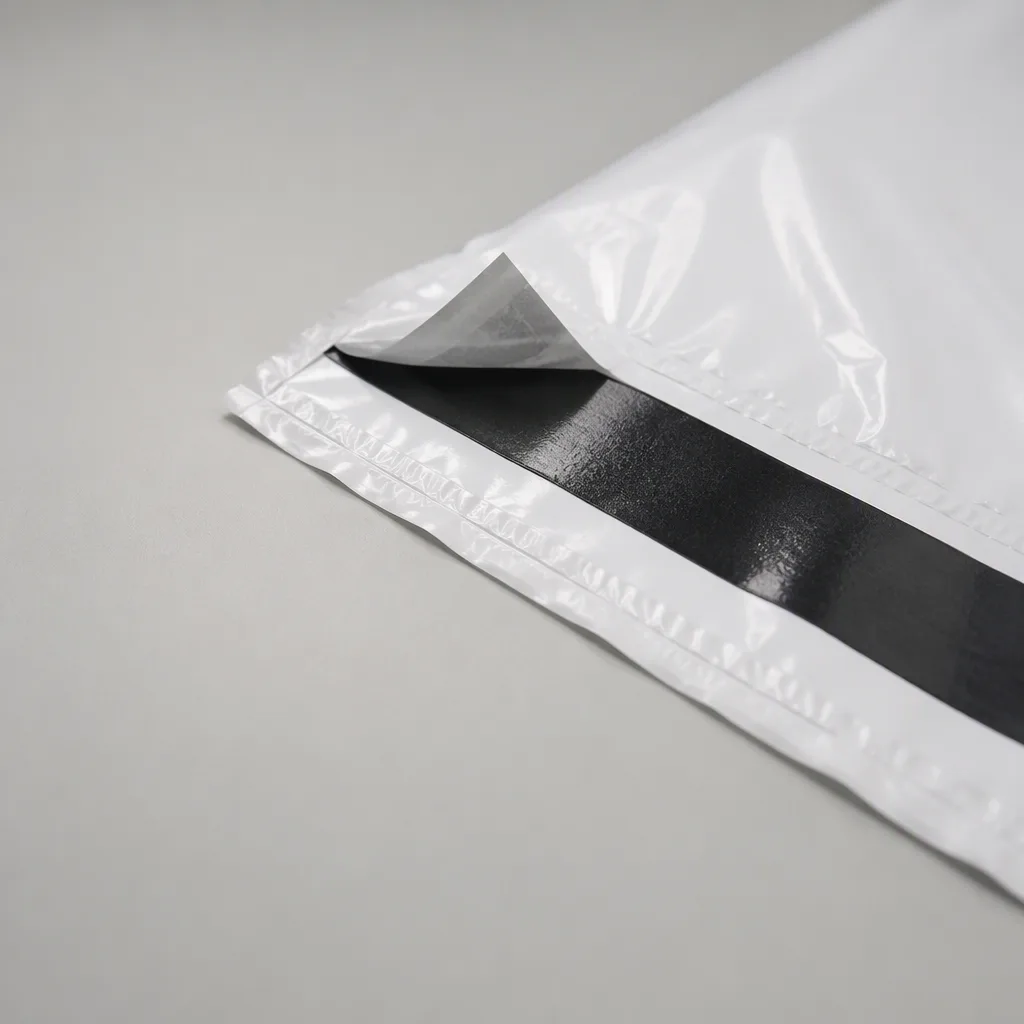
The mouth is the only opening. The flap folds over twice, then the permanent adhesive band under the release liner is pressed down, and the closure is not meant to come open again. Set back from the edge, the band leaves enough film for that double fold, which is what keeps a heavy carton from peeling the seal from the inside.
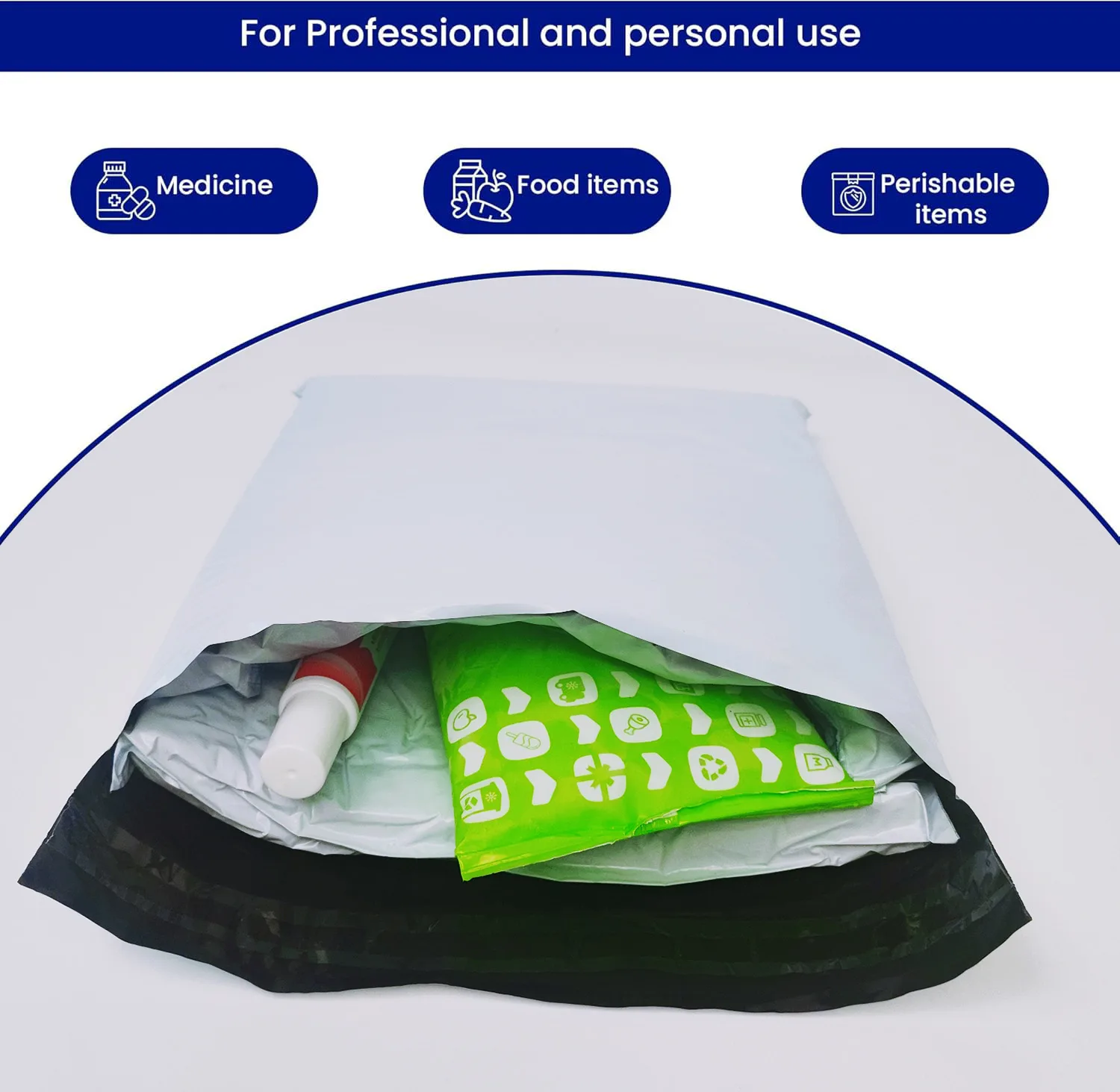
Anything that fits flat goes in: a carton, a bottle laid on its side, a strip of blisters, a folded document pack. The three closed sides are welded, so there is no stitched seam to wick moisture, and the bag stays flat on a shelf until it is used. Opening is by blade at the top: the band is permanent on purpose, so the bag travels one way and is not built to be resealed.
A size list gives you two numbers. See the six lines a thermal mailer specification needs.
| Parameter | Specification |
|---|---|
| Format | Flat mailer, no gusset, three sides welded |
| Outer | White PE film, gauge by order |
| Inner | Sponge foam, closed-cell |
| Closure | Permanent adhesive band, release liner, double-fold flap |
| Sizes | 20 × 28 / 25 × 33 / 30 × 39 / 35 × 45 cm, custom available |
| Colours | White, cool white, black outer |
| Flexo, 1–2 colours, front panel | |
| Use | Medicine, food items, perishables, cold chain with an ice pack |
| Packing | Flat-packed, counted per carton |
| Customization | Size, film gauge, foam density, print, band position |
Because the film is white to begin with, the artwork needs no white underprint: one or two colours go straight onto the surface and read at full strength. That keeps a mailer cheap to print and keeps the ink weight low, which matters on a bag that is folded and handled rather than displayed. Flood coats and long gradients are what usually go wrong on PE: the ink needs a correctly tensioned web, and a heavy lay-down will crack along the fold after a few trips.
Registration is the easy part; the hard part is keeping ink off the joints. The plate leaves a clear margin along all three weld lines and along the adhesive band, because heat that reaches dry ink will craze it and a craze line on a mailer reads as a defect even when the weld is sound.
The band itself is applied after printing, and its position is fixed against the print rather than against the film edge. If the artwork has a border or a rule that runs to the top, the band sits inside that margin so the two never fight for the same few millimetres.
Proofing is done on the finished mailer, not on a flat sheet: the same artwork is checked after welding, after the band is laid, and after a sample has been folded twice and pressed. What has to hold is a print that still reads when the bag is lying flat on a bench with a label half over it. Colour is approved against a retained standard in daylight, and two runs are held side by side before either is packed.
The wall is two materials, not one: a white PE film outside for print, tape and wear, and a closed-cell sponge layer bonded behind it for insulation. The three closed sides are welded, so the joint is one thickness of film rather than a stitched or glued seam, and there is nothing to wick moisture along. The fourth side folds over twice before a permanent adhesive band under a release liner is pressed down, and the band sits back from the edge to leave room for that fold. The mailer is flat: no gusset, so it stacks and ships flat and opens flat on the bench.
North Side Of Nanyi Road, Shiwan Town Science And Technology Park (10th Floor, Building 1, No. 13)
INQUIRY