Hot & Cold Thermal Bags, Insulated Mailers & Cold Chain Delivery Packaging

Fertilizer, Pesticide & Agrochemical Packaging

Cleaner, Laundry & Air Care Packaging

Custom Medical Packaging Solutions

Protective Structures, Inserts and Retail Packs

Custom Protein Powder Pouches, Vitamin Stick Packs & Nutrition Bar Bags

Cosmetics, Fragrance and Skincare Packaging

Takeout, Bakery and Beverage Packaging

Kibble, treat & wet food packaging
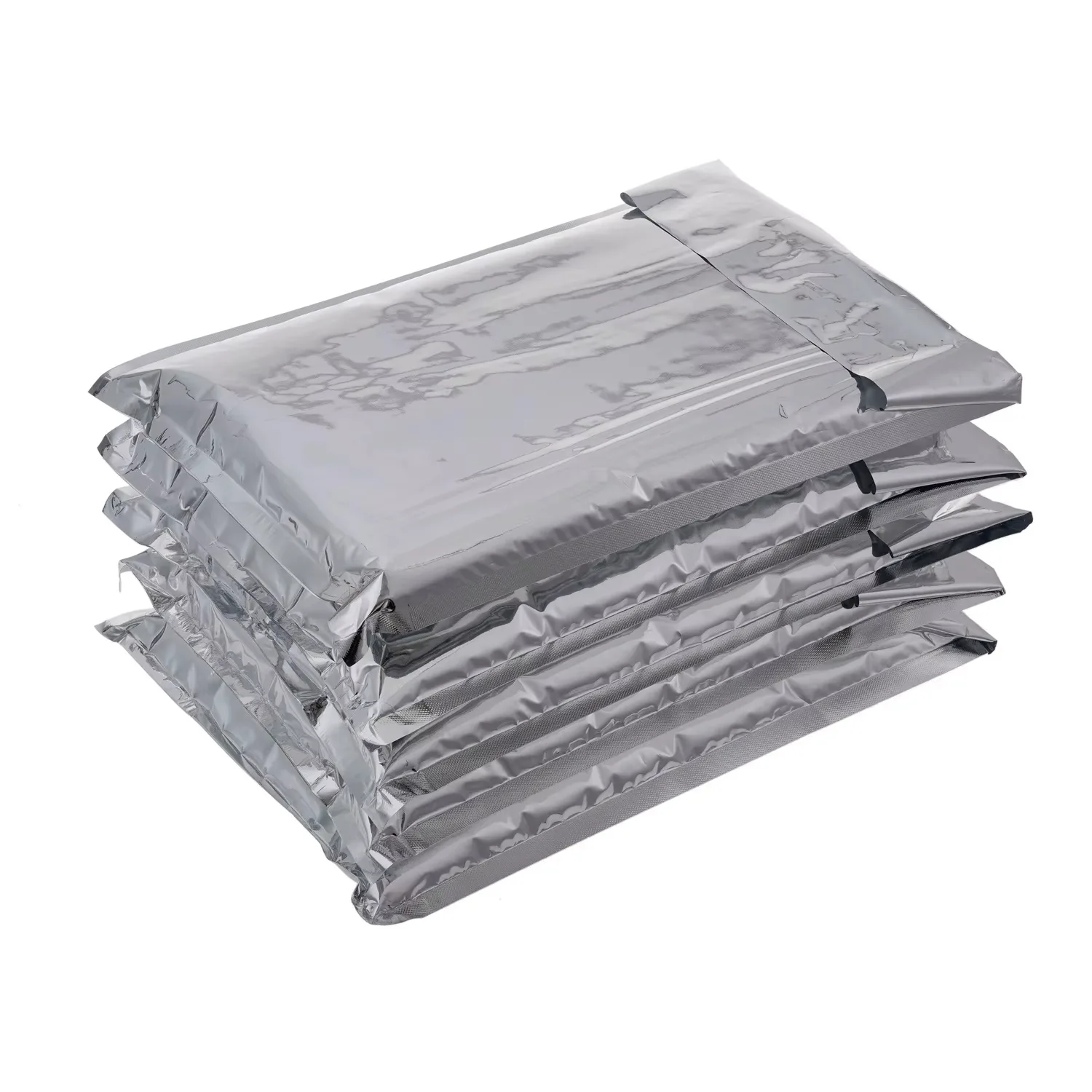
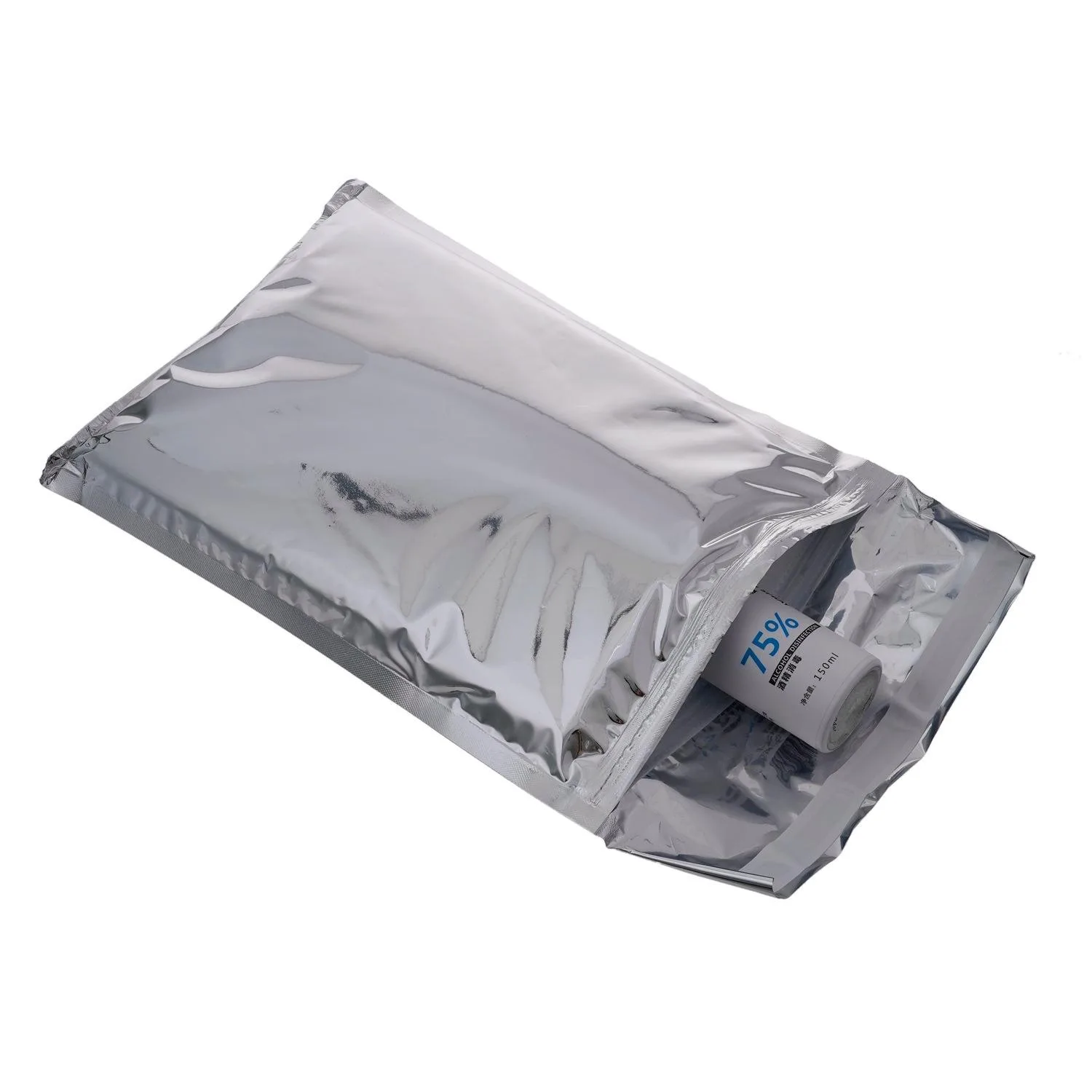
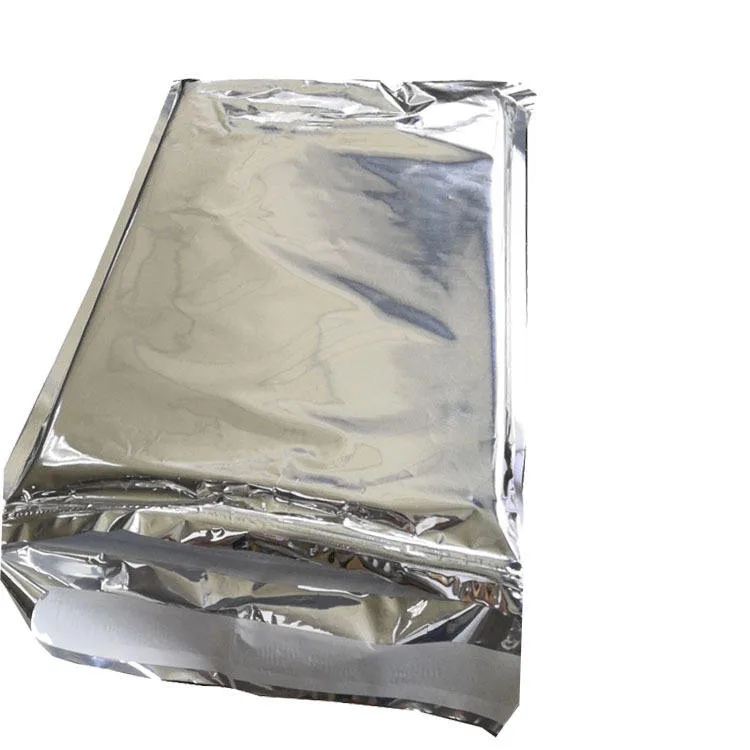
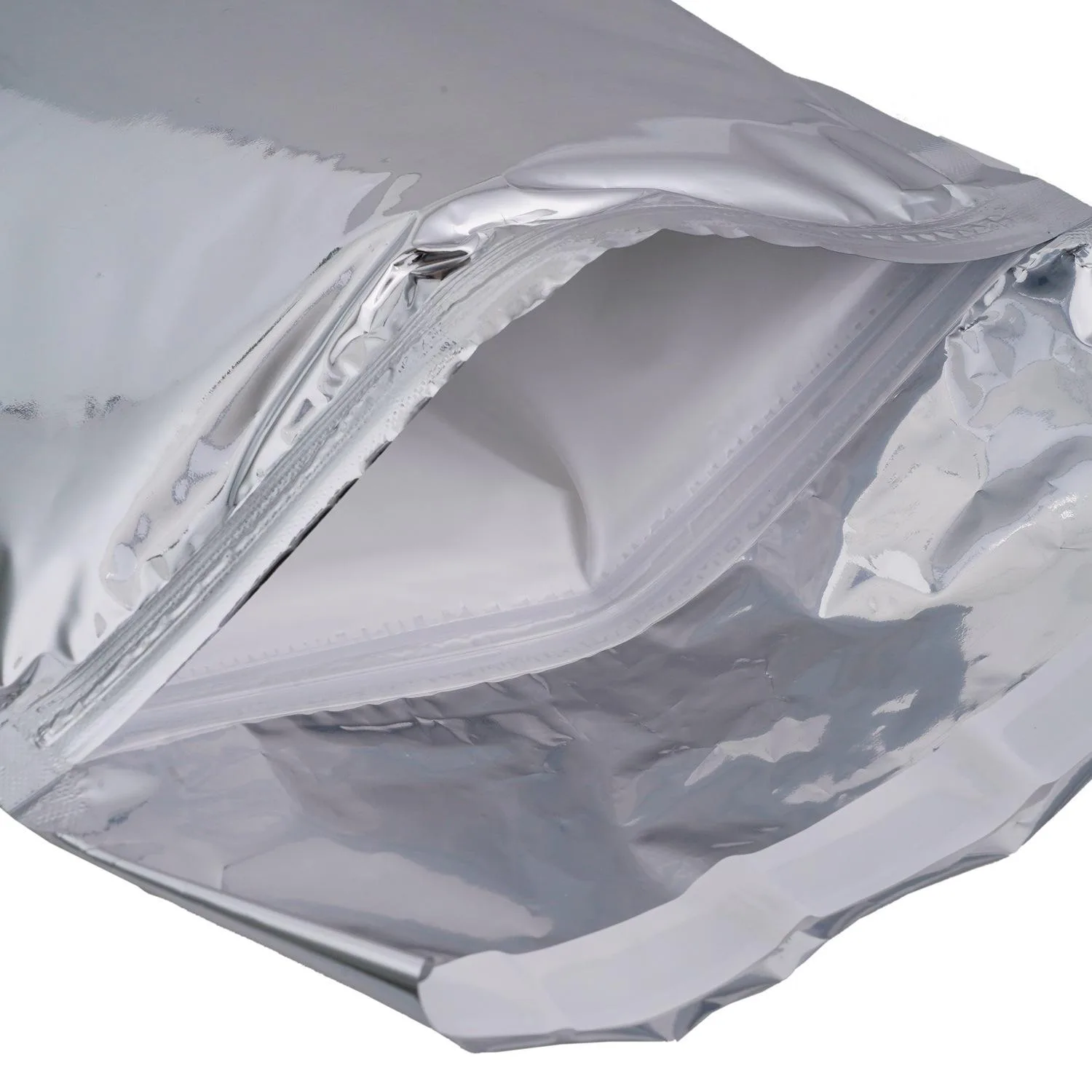
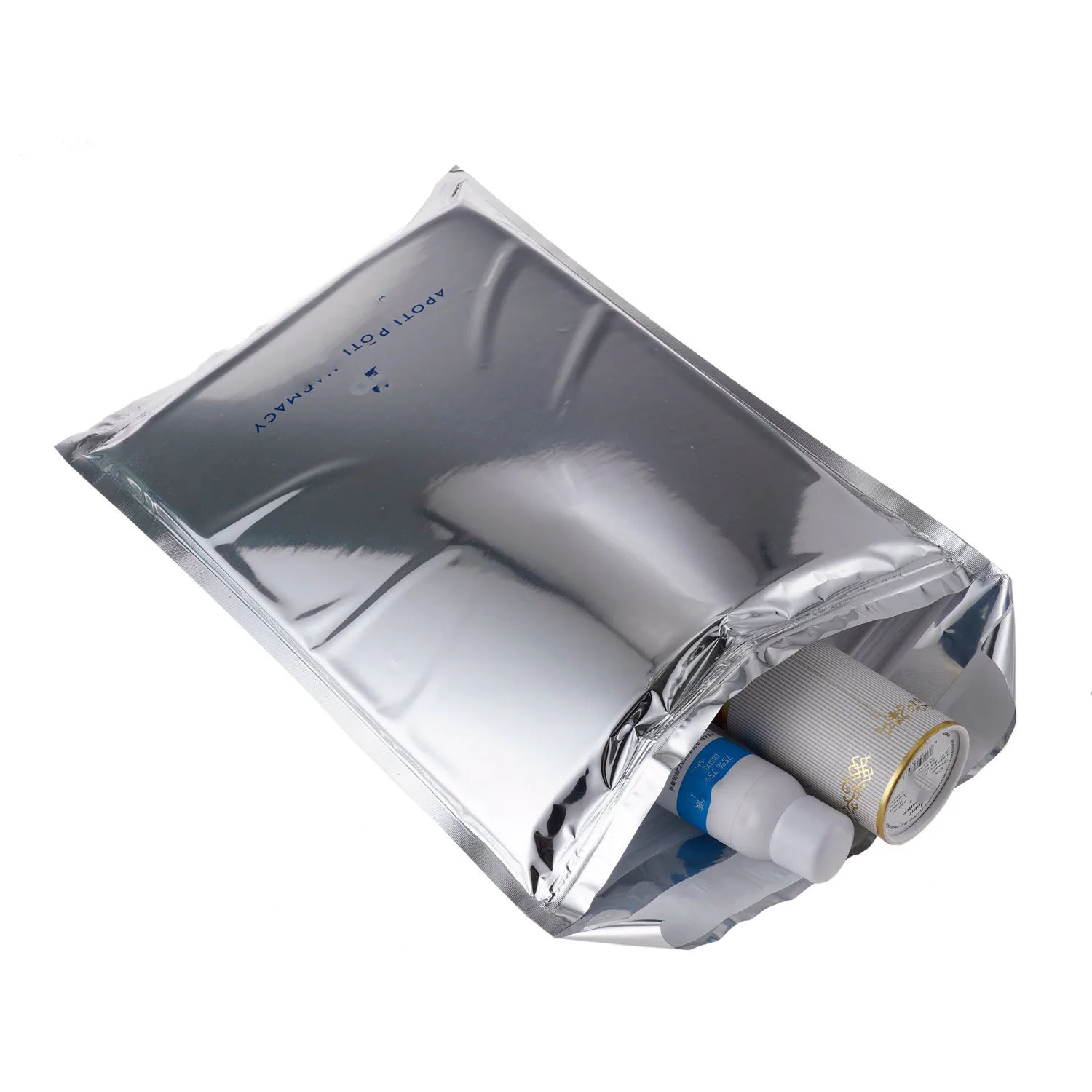
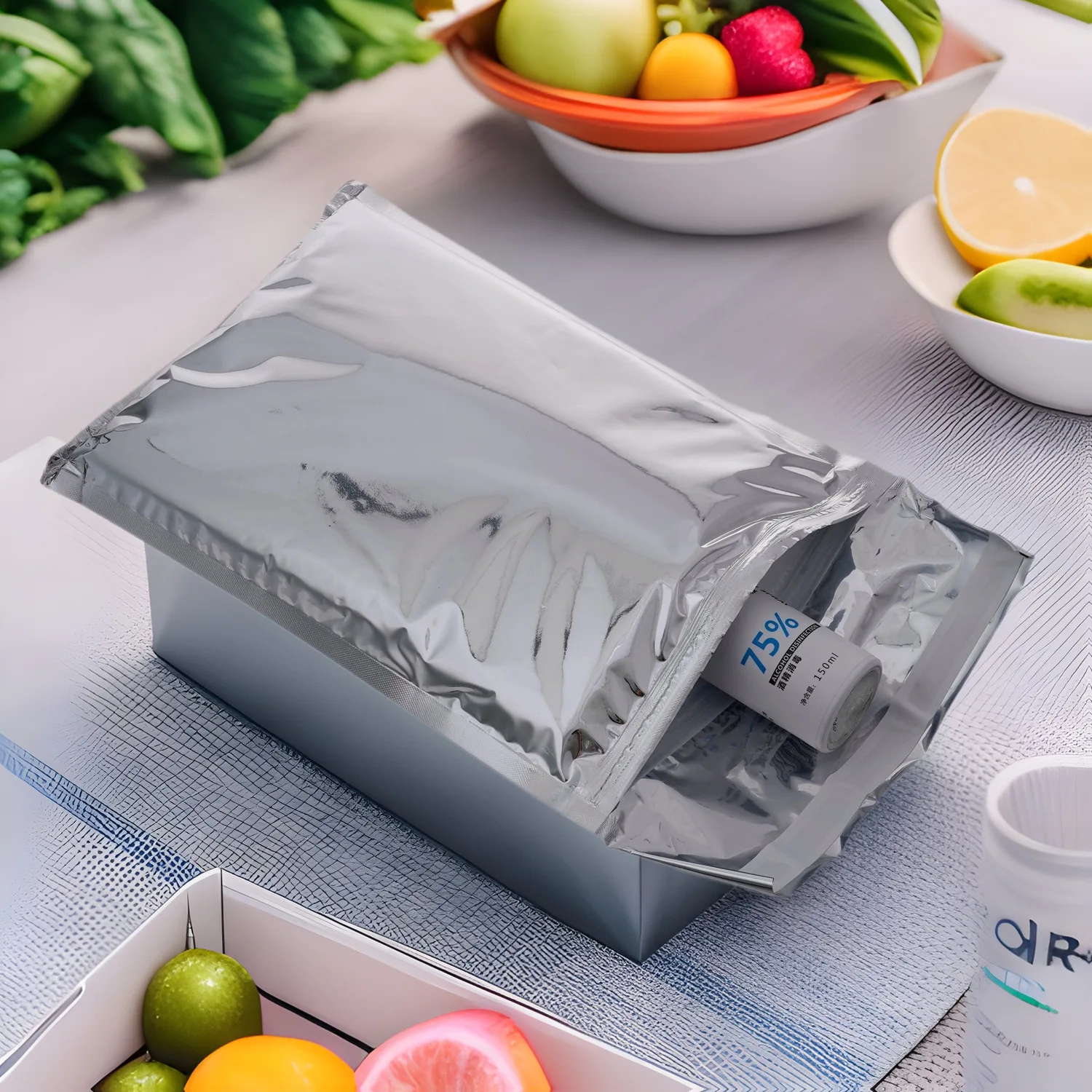
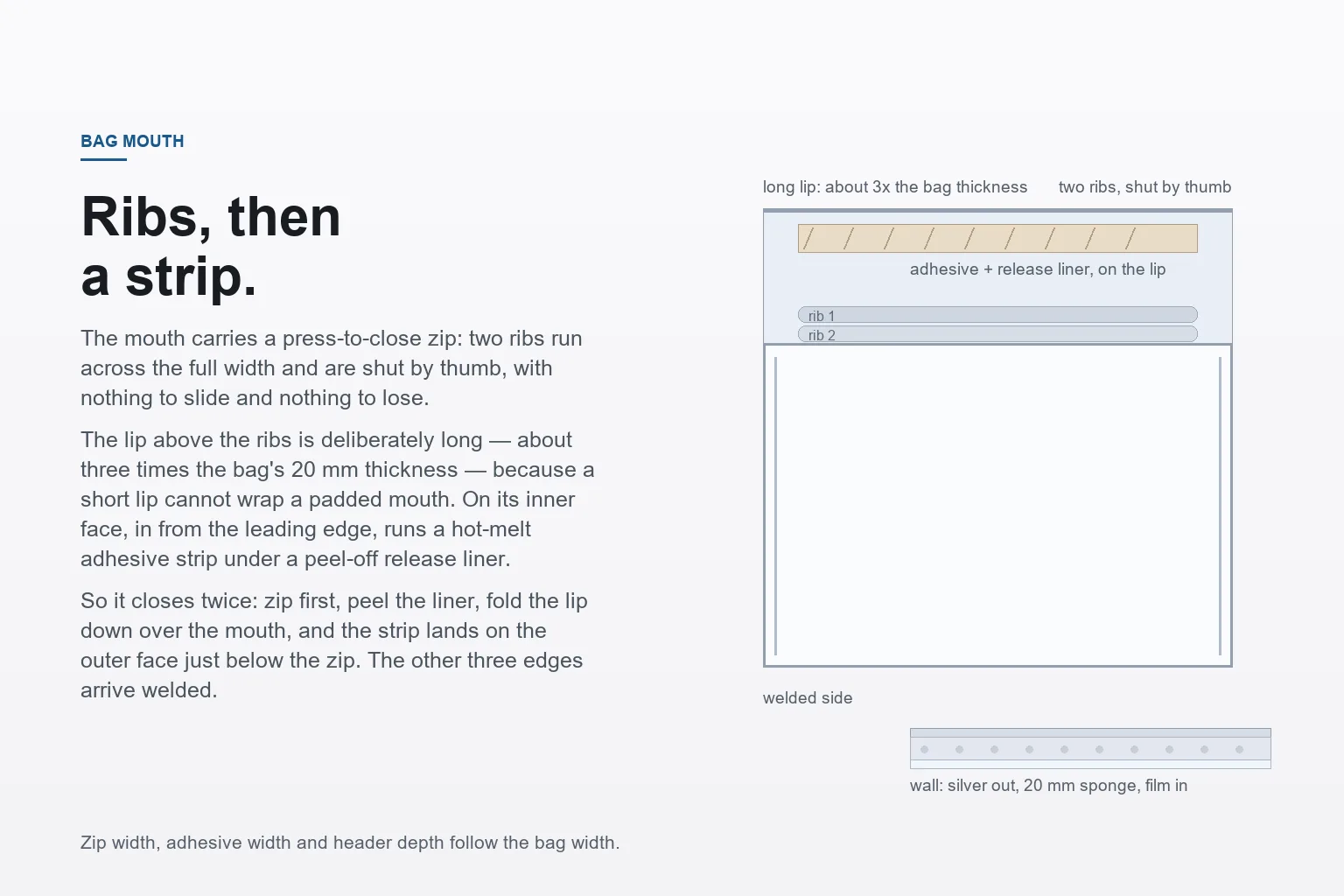
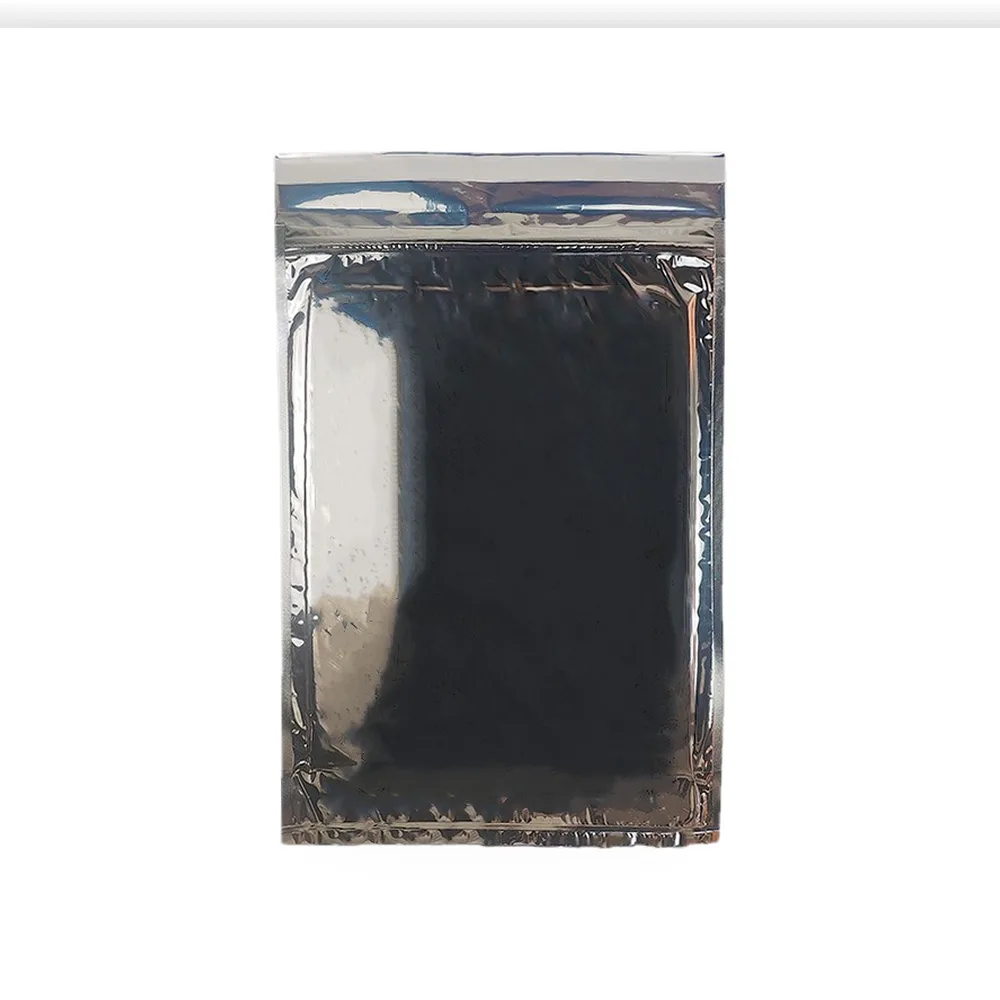
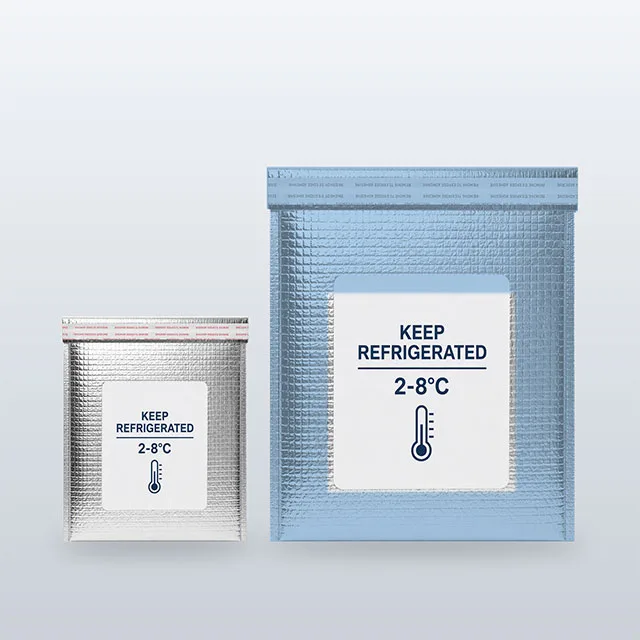
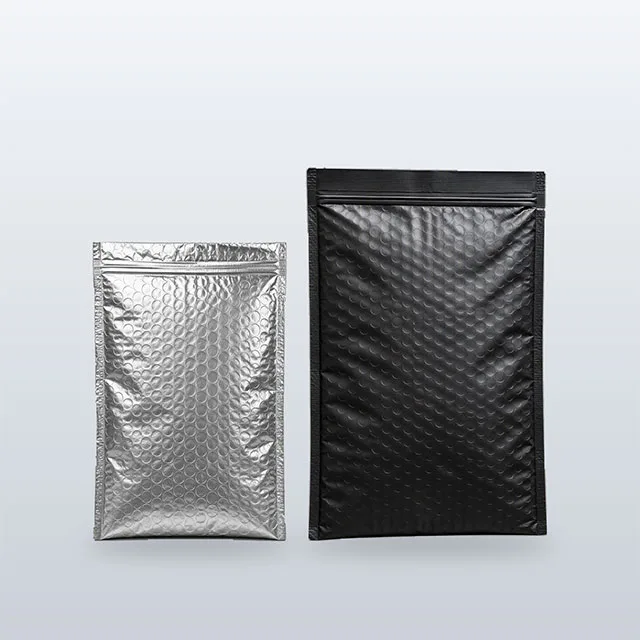
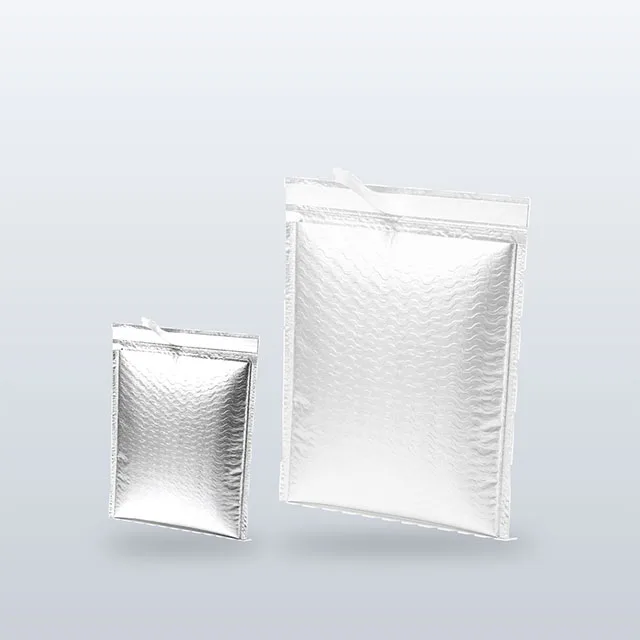
A white mailer with foam in it still lets a cold pack warm up from the outside, because a plain film will not stop radiant heat. This one puts a metallised film on the outside: silver, lightly reflective, and the ply that turns that heat back. Twenty-millimetre sponge in the middle gives the bag its thickness and keeps a frozen pack off the goods. Plain plastic film on the inside faces the load, wipes clean and takes the weld. The mouth closes twice: a two-rib press-to-close zip, and an adhesive strip under a release liner above it, which the flap presses down onto. A courier zips it, peels the liner and folds the flap shut, with no tape and no heat sealer. Everything else arrives welded.
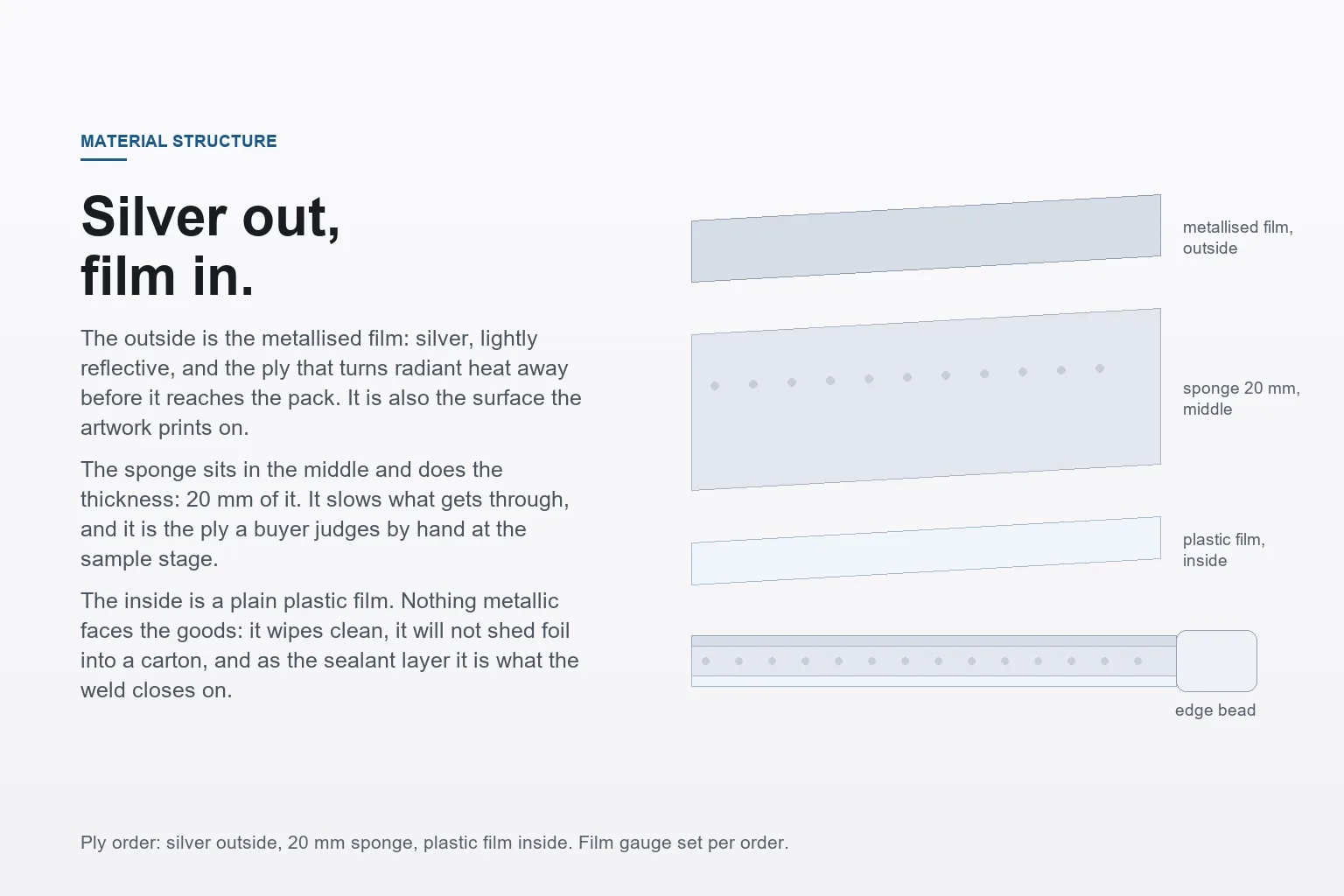
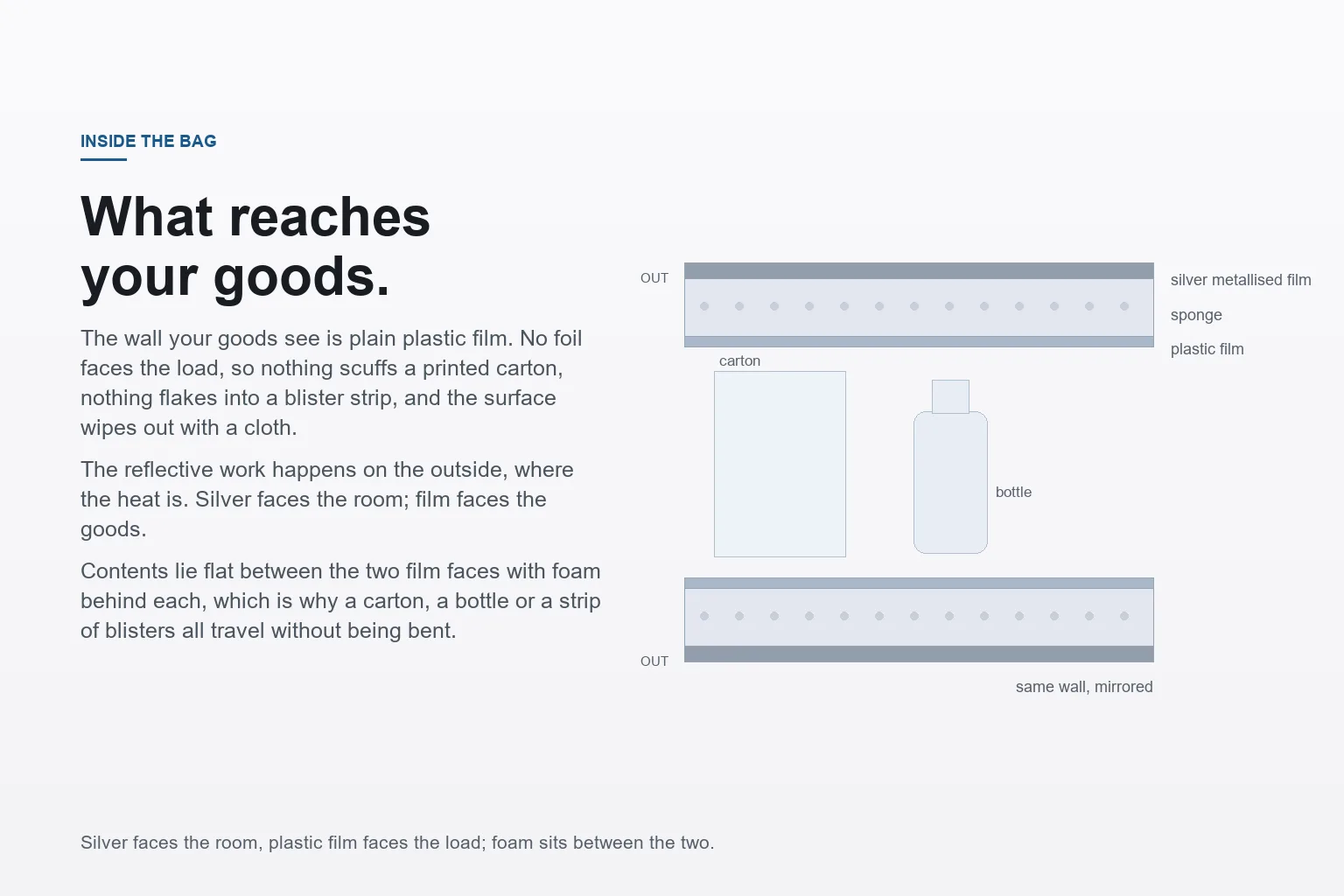
The ply order is the whole difference between this mailer and the foam one below it in the catalogue. Silver metallised film outside, sponge in the middle, plain plastic film inside. Three plies, each doing a different job.
The metallised film faces the room, and that is where it earns its place: a silver surface radiates very little, so on a warm dock it turns heat away instead of soaking it up the way a white PE face does. It is also the panel the artwork prints on, so the reflective layer and the printed layer are one and the same surface. Bright silver and matt silver are not the same bag: the matt grade reflects less, so pick it when the bag must stay readable in a thumbnail.
The sponge in the middle supplies the thickness, and it is 20 mm of it. It slows what gets through, it cushions the load against a knock, and it is the ply a buyer judges by hand before anything is opened. It runs the full face rather than a patch, so a frozen pack presses on foam instead of on a carton. Density is set per order and the 20 mm is standard, which is the grade that comes off a sorting belt without the film creasing at the corner.
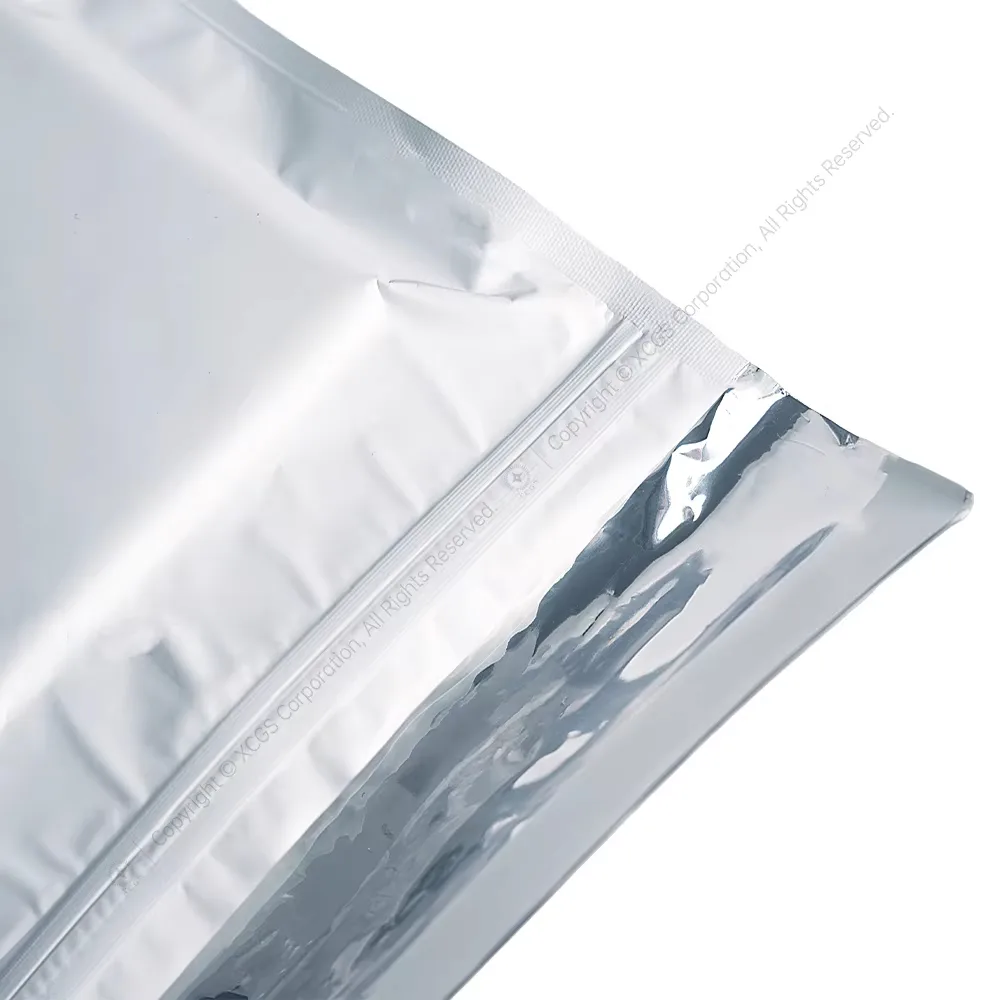
The inside is plain plastic film, not foil. Nothing metallic faces the goods: it wipes clean, cannot scuff a printed carton, and it is the layer the weld closes on. The mouth seals twice: a two-rib zip across the width, and on a lip cut about three times the bag’s thickness, a hot-melt adhesive strip under a peel-off liner that folds down onto the face below the zip. Zip it, peel the liner, press the flap down, and that second seal is what survives a sorting belt. The other three edges arrive welded.
Wondering whether the foam or the foil does the work? Read how a compressed foam mailer holds temperature.
Every welded edge, both closures and the ply order are checkable before you accept a lot. See the four checks to run on a sample bag.
| Parameter | Specification |
|---|---|
| Outer | Metallised film, silver, reflective, print surface |
| Middle | Sponge, 20 mm, full face, not a patch |
| Inner | Plastic (PE) film, sealant layer, wipes clean |
| Closure | Two-rib zip plus peel-and-seal adhesive strip |
| Sealing | Welded on the three closed edges |
| Format | Flat mailer, no gusset, stacks flat |
| Size | S / M / L / XL, W × H, custom cut |
| 1–2 colours on the metallised film, white base where needed | |
| Use | Medicine, chilled food, perishables, samples |
| Customization | Size, sponge density, film gauge, matt silver, print |
Print sits on the outside of the metallised film, which means it is the first thing a buyer sees and the first thing a courier scuffs. A white base coat goes down first wherever the artwork has to read as a colour rather than as silver; leave the base out and the silver shows through, which is sometimes the point and sometimes an unpleasant surprise at approval.
Metallic ink is wasted on this bag. On a metallised surface it changes almost nothing, so artwork is planned as a tint plus white knockouts and the silver does the filling. Two colours is the practical limit before the film starts to look muddy under warehouse light. Deep solids are the other ceiling: a black block on silver reads as dark grey, so brand colours are chosen light or left as knockouts.
The weld is where a printed bag fails. The bar runs within a few millimetres of the artwork, and heat that reaches ink will craze the metallised layer and leave a dull grey line at the seam, so the plate keeps a clear margin along every weld, the zip and the adhesive strip. That margin is drawn into the artwork rather than left to the operator.
Approval is on the finished bag, not on a flat proof. The same artwork is checked after welding, after the zip is set and after the adhesive strip is laid down, filled with a carton, in daylight and then under the strip light a warehouse actually uses. What has to hold is a mark that still reads at arm’s length on a reflective surface.
The outside is a silver metallised film that reflects rather than absorbs, and it is the ply that turns radiant heat back before it reaches the pack. Sponge sits in the middle and gives the bag its thickness. The inside is plain plastic film, so nothing metallic faces the load and the weld closes on the film rather than on foil. The mouth seals twice: a two-rib zip, and on a lip about three times the bag’s thickness, a peel-and-seal adhesive strip under a release liner that folds down onto the face below the zip. Every other edge is welded into one bead.
North Side Of Nanyi Road, Shiwan Town Science And Technology Park (10th Floor, Building 1, No. 13)
INQUIRY