Hot & Cold Thermal Bags, Insulated Mailers & Cold Chain Delivery Packaging

Fertilizer, Pesticide & Agrochemical Packaging

Cleaner, Laundry & Air Care Packaging

Custom Medical Packaging Solutions

Protective Structures, Inserts and Retail Packs

Custom Protein Powder Pouches, Vitamin Stick Packs & Nutrition Bar Bags

Cosmetics, Fragrance and Skincare Packaging

Takeout, Bakery and Beverage Packaging

Kibble, treat & wet food packaging
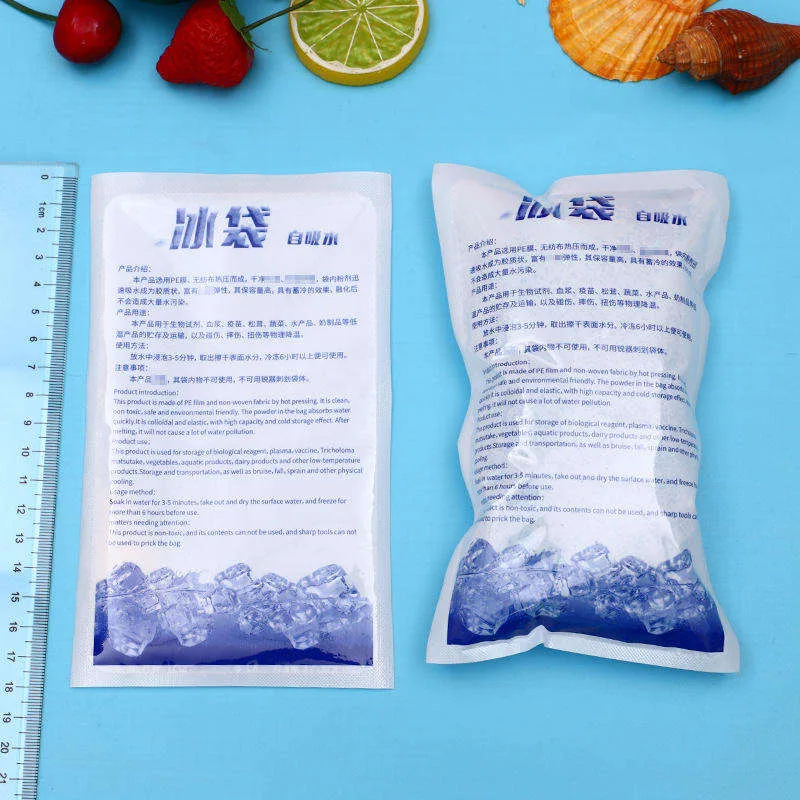
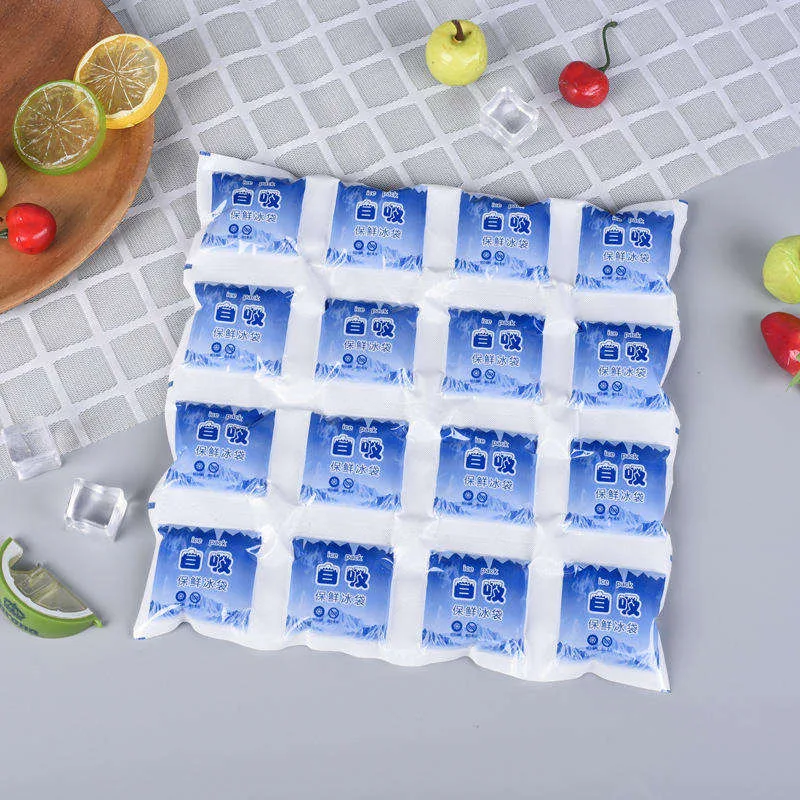
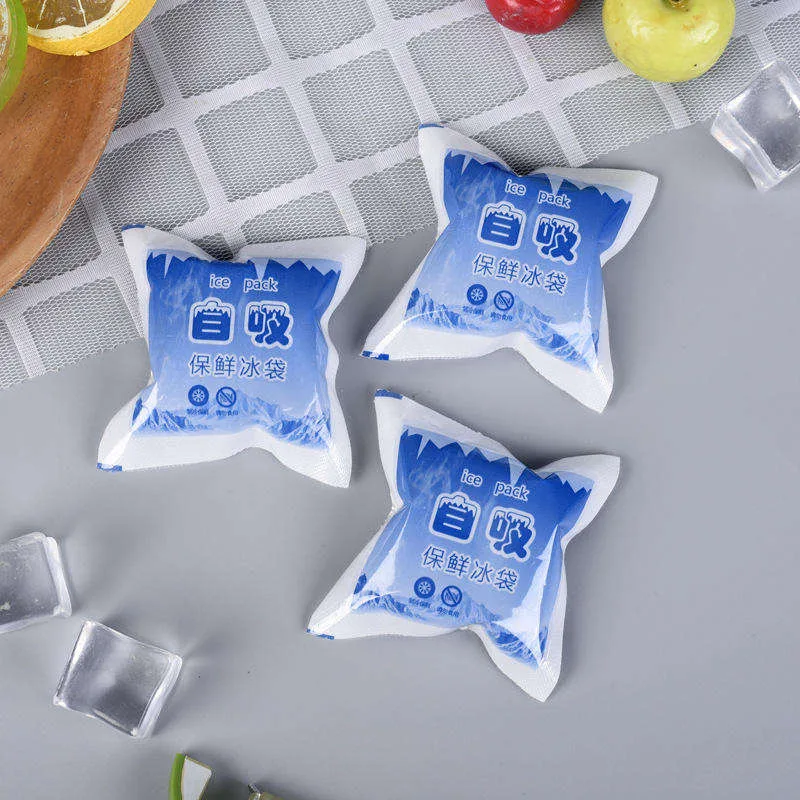
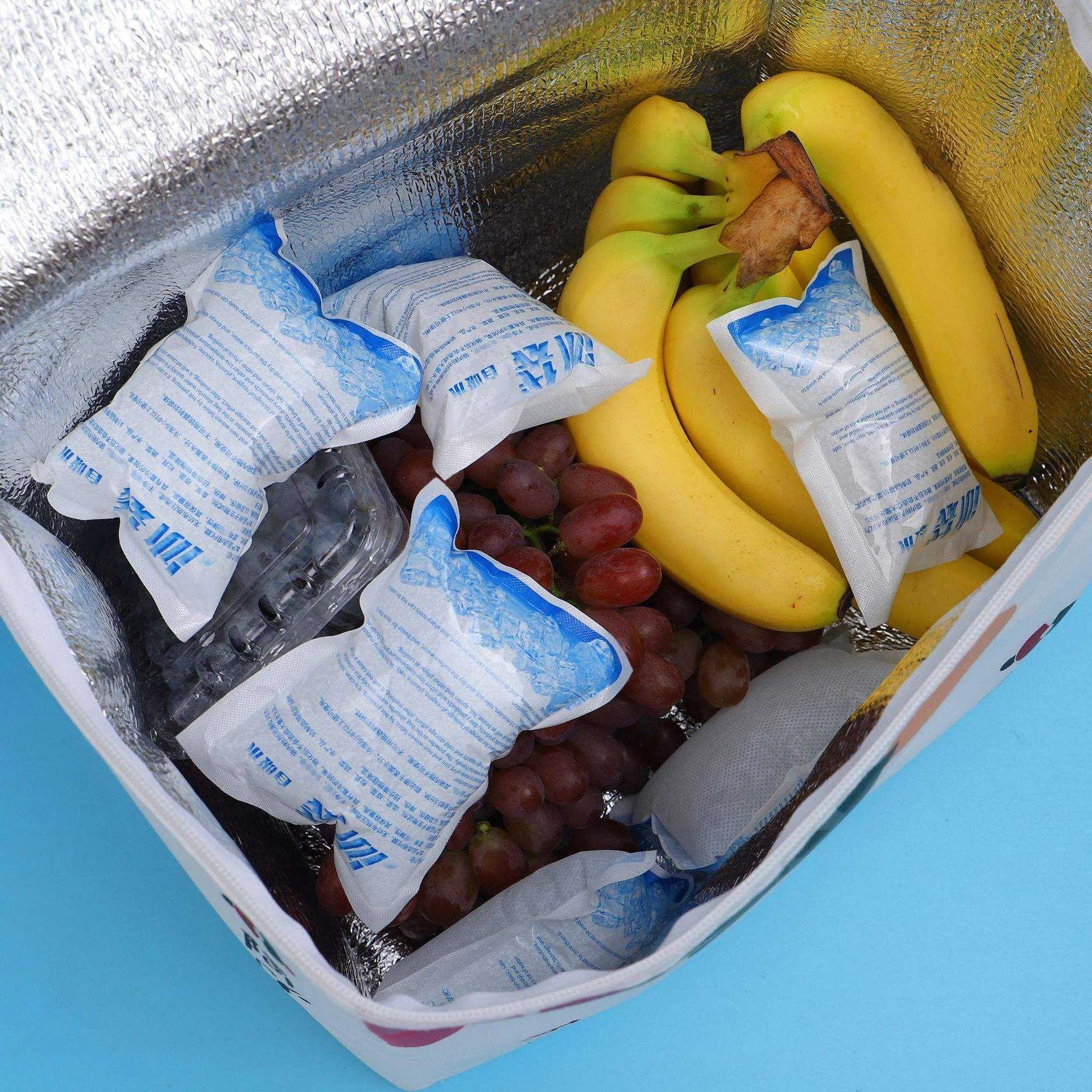
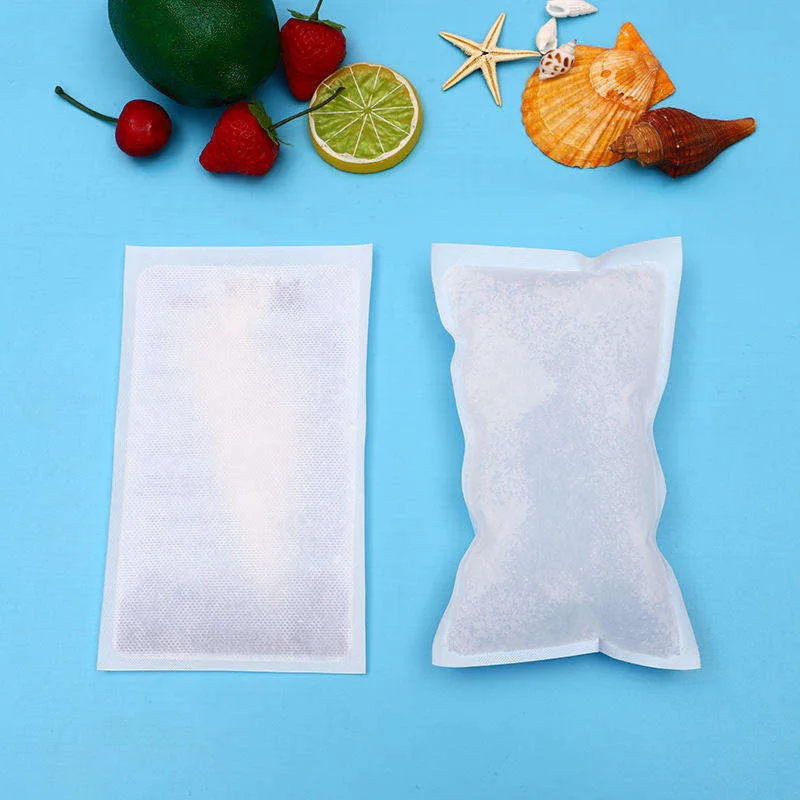
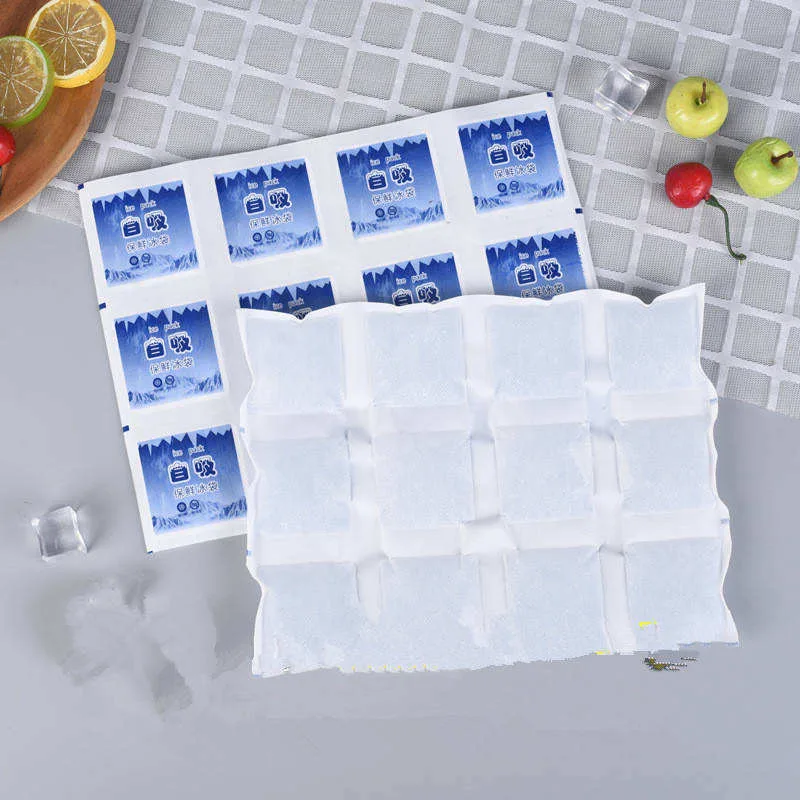
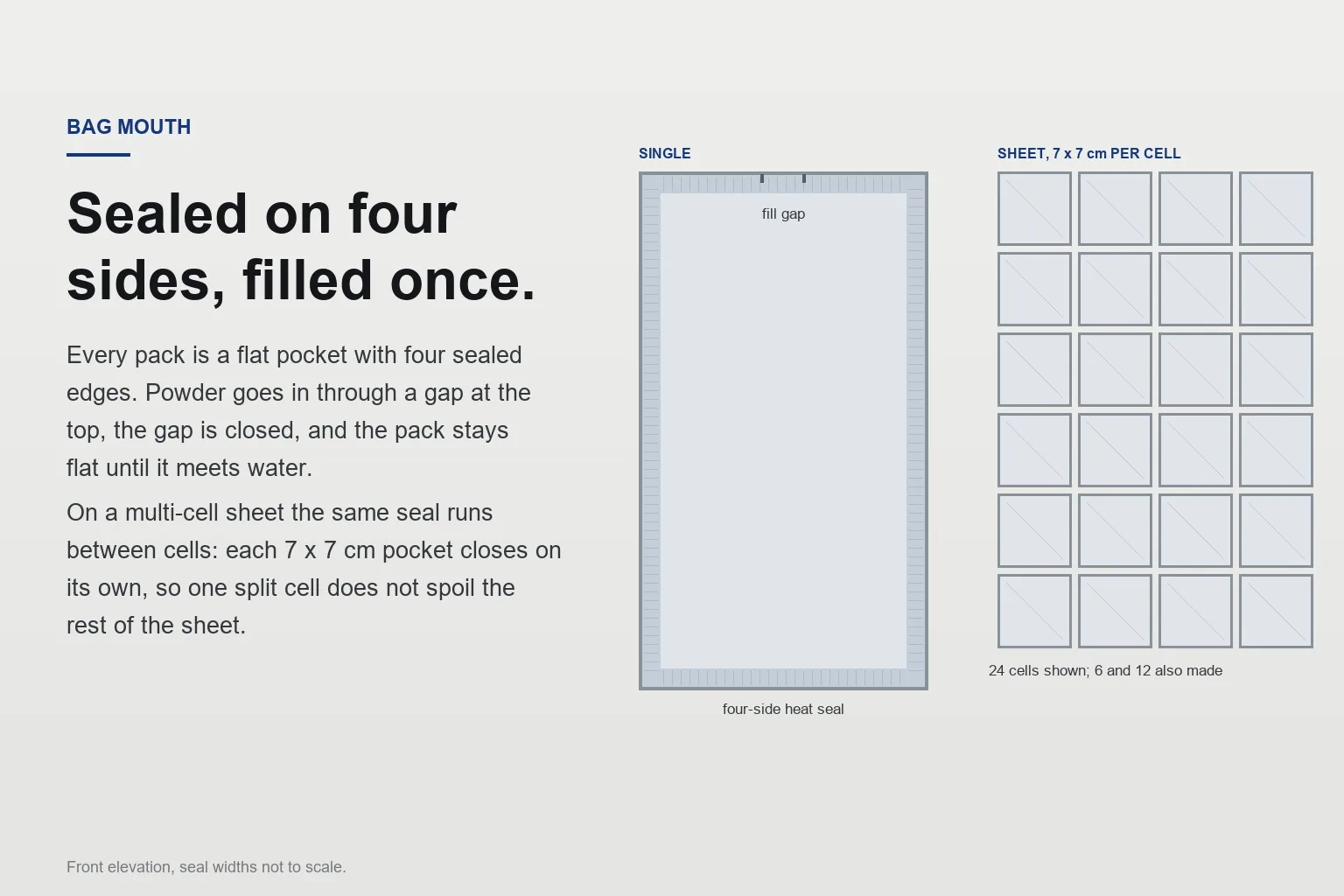
A dry ice pack is mostly air until somebody adds water. This one is a flat sachet of super-absorbent powder: soak it for three to five minutes, dry the surface, freeze it for six hours, and it turns into a solid gel block that holds cold through a delivery run. Because it ships dry, a carton weighs a fraction of what it would with the water already in it – the customer adds the water at their end. Single packs run from 100 to 500 ml; the same pocket repeats six, twelve or twenty-four times across a sheet, each cell 7 x 7 cm and 40 ml, for trays and boxes that need the cold spread evenly rather than in one corner.
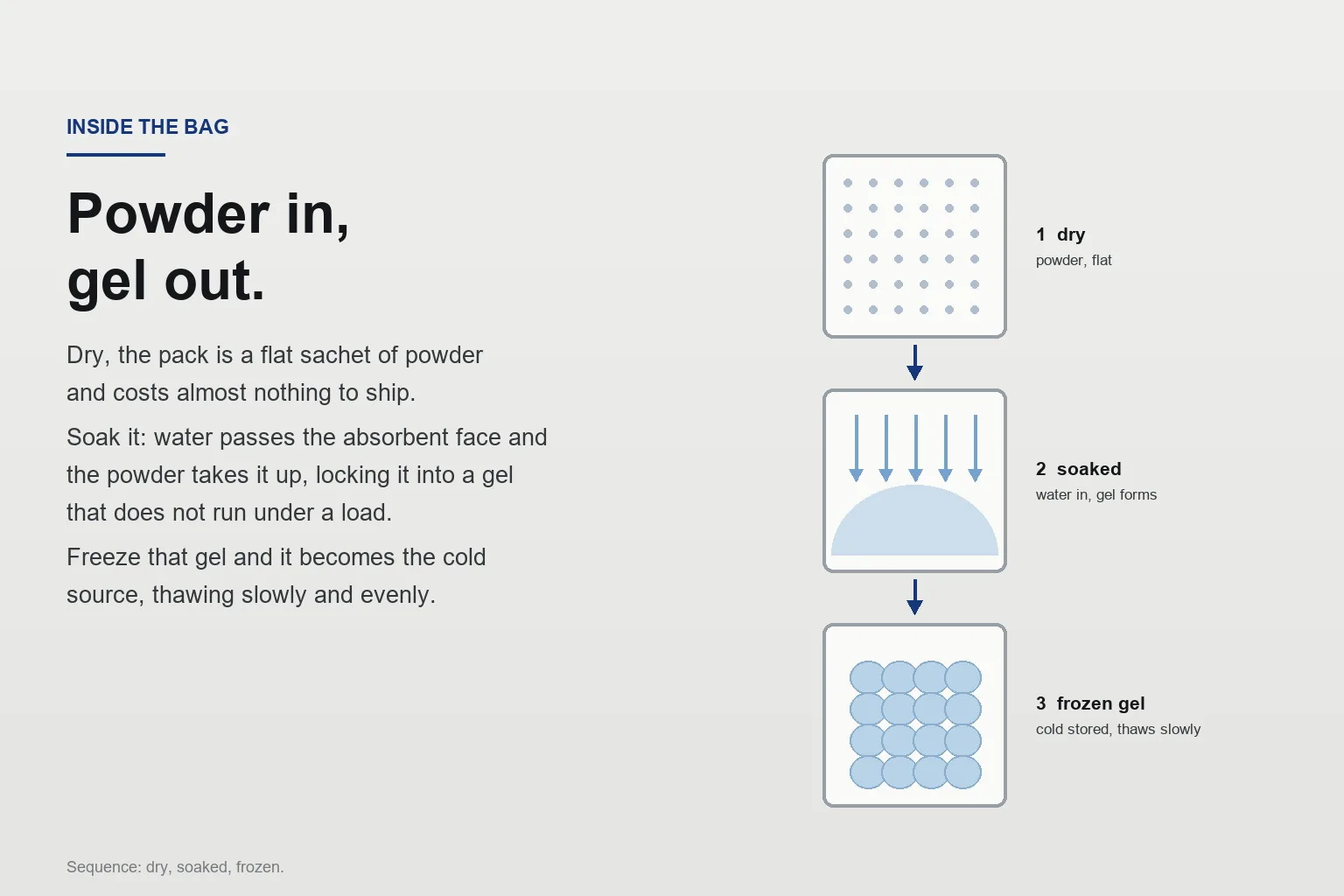
Shipping water is expensive, so this pack ships dry. It leaves the factory as a flat sachet holding a few grams of super-absorbent powder, and the water goes in at the other end: soak for three to five minutes, shake off the surface, freeze for six hours. What arrives in the box is a solid gel block instead of a bag of liquid, which is why a carton costs a fraction of its wet equivalent to move.
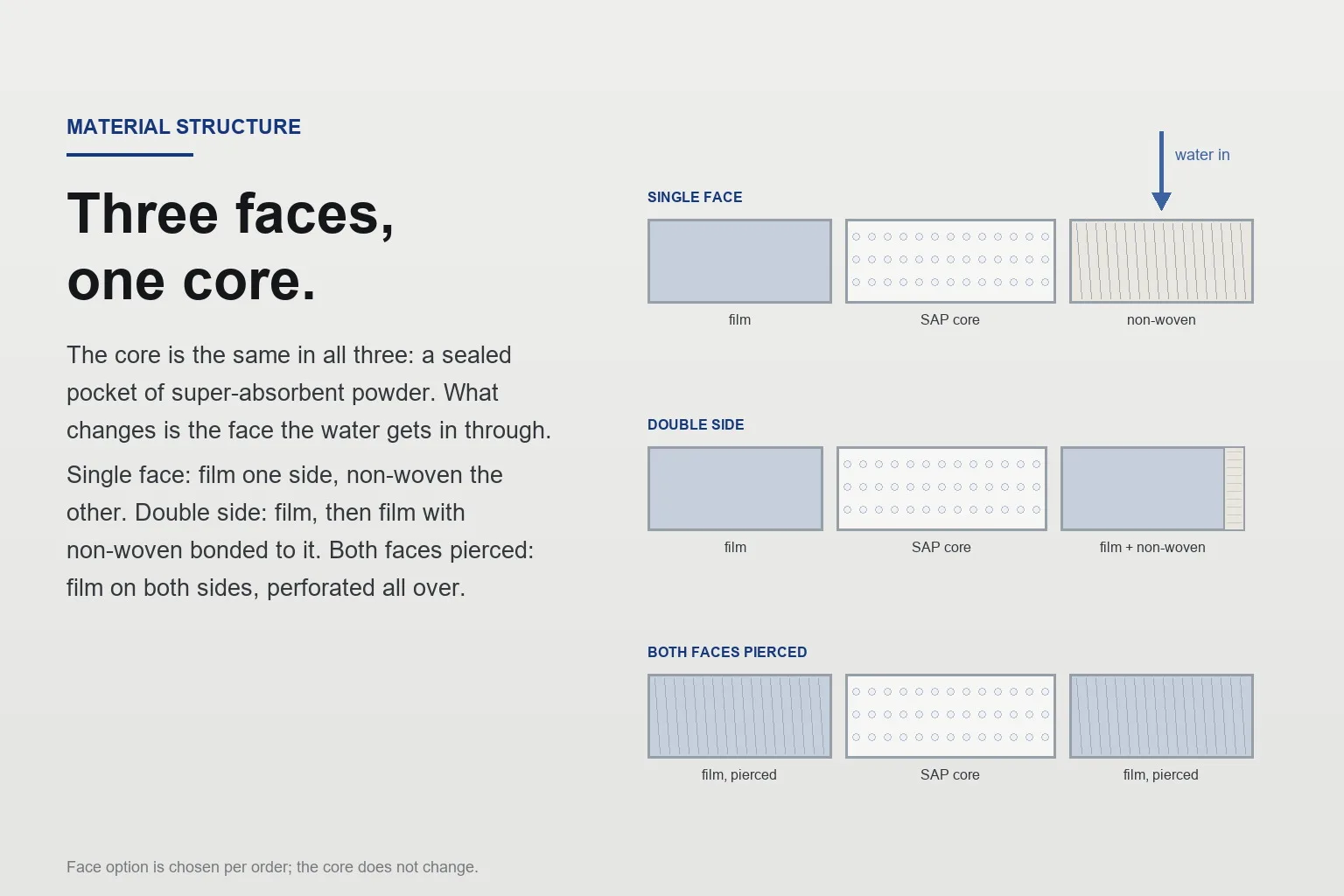
Three faces are offered, and they differ only in where the water enters. The single-face pack puts non-woven on one side and film on the other, so it wets from one face. The double-side build bonds non-woven onto the film, giving a softer face with the same one-way fill. The pierced build keeps film on both sides and perforates it all over, so the pack wets from either side – the one to use when packs are stacked.
The sheet is that same pocket repeated: six, twelve or twenty-four cells at 7 x 7 cm, each holding 40 ml. Every cell is sealed on its own, so a cell that splits does not drain its neighbours, and a sheet can be cut down to the number a box needs. Across a tray of seafood or a crate of fruit, that spreads cold over the whole base instead of putting it all in one corner.
Use is deliberately plain. Soak, dry, freeze, place. No tap, no activator, no plastic clip to lose. The gel stays where it is put and does not slosh, so a pack laid on its side stays on its side, and the same pack can be re-frozen and used again until the film is punctured. The instruction panel is printed with the pack, in whatever language the market needs.
| Parameter | Specification |
|---|---|
| Format | Flat four-side sealed sachet; single pack or multi-cell sheet |
| Single pack | 100 / 180 / 250 / 400 / 500 ml |
| Sheet | 6 / 12 / 24 cells, 7 x 7 cm each, 40 ml per cell |
| Core | Super-absorbent polymer powder |
| Face: single | PE film one side, non-woven the other |
| Face: double side | PE film one side, film bonded to non-woven the other |
| Face: both faces pierced | PE film both sides, needle-perforated |
| Seal | Heat seal on four sides; fill gap closed after dosing |
| Usage | Soak 3-5 minutes, dry the surface, freeze 6 hours before use |
| Up to 6 colours, instruction panel included | |
| Colour | Printed to artwork; blue and white stock design available |
| Packing | Flat and dry, carton count set per size |
| Customization | Size, cell count, face style, print, carton |
Printing runs on the film face, not on the non-woven. Film takes ink by adhesion, so the artwork is set to the film web and the non-woven is laminated afterwards; that keeps the small instruction type sharp, which matters because this is a pack people have to read before they use it.
Dosing is the part that decides whether the pack works. Powder is metered by weight into each pocket, and the dose is set against the water that pocket will take, not against its volume: too little and the gel stays loose, too much and the seal is pushed out when it swells. Dosing rooms run dry and cool, because the powder pulls moisture straight out of the air. A dose set by eye instead of by scale is the most common reason a batch comes back.
Sealing comes after dosing. Four edges close on a heated tool, and on a sheet the same tool runs the channels between cells, so every pocket is finished in one pass. Seal strength is set against the swollen gel rather than the flat pack, since the load on the seam only appears after the water goes in. A channel that is too narrow leaves a cell that will not fill; too wide and the sheet wastes film and powder.
Every batch is checked three ways: weight per pocket, a leak test along the seal, and a soak test where a sample is left in water and watched through a full swell. A pack that weeps at the corner shows up in the soak test and not on the line, which is why the test is run on every batch. Cartons leave flat and dry, with the dosing record inside.
Inside the pack is a sealed pocket of super-absorbent polymer held between a PE film face and a non-woven face. The film keeps the powder dry on the shelf; the non-woven lets water through in three to five minutes, and the gel that forms stays locked in the pocket instead of running. Four heat-sealed edges close it, and on a multi-cell sheet the same seal divides the pack into 7 x 7 cm cells, so a cell that splits does not affect its neighbours.
North Side Of Nanyi Road, Shiwan Town Science And Technology Park (10th Floor, Building 1, No. 13)
INQUIRY