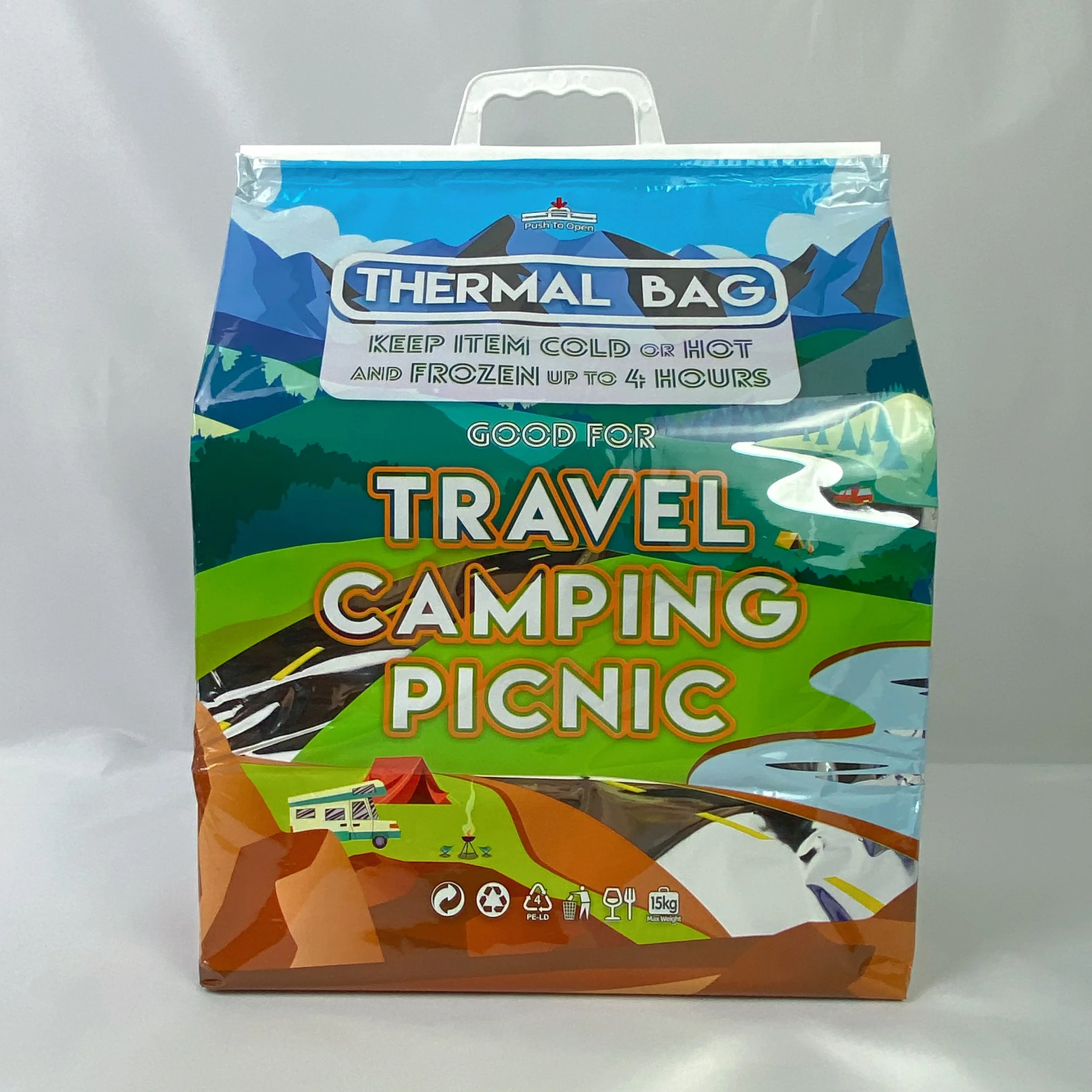
Hot & Cold Thermal Bags, Insulated Mailers & Cold Chain Delivery Packaging

Fertilizer, Pesticide & Agrochemical Packaging

Cleaner, Laundry & Air Care Packaging

Custom Medical Packaging Solutions

Protective Structures, Inserts and Retail Packs

Custom Protein Powder Pouches, Vitamin Stick Packs & Nutrition Bar Bags

Cosmetics, Fragrance and Skincare Packaging

Takeout, Bakery and Beverage Packaging

Kibble, treat & wet food packaging
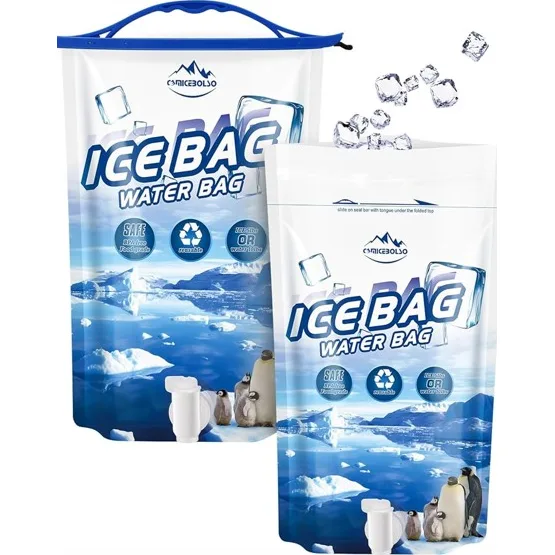
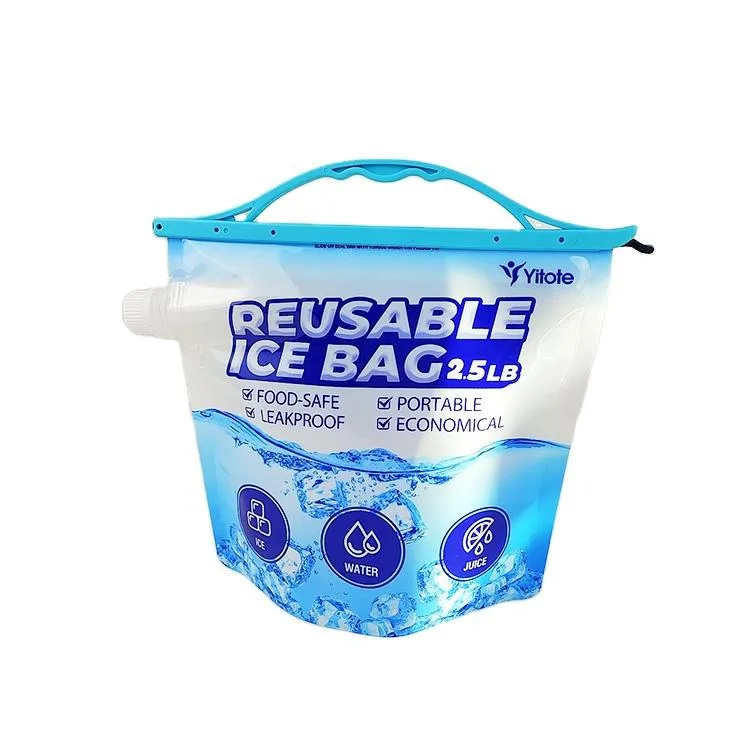
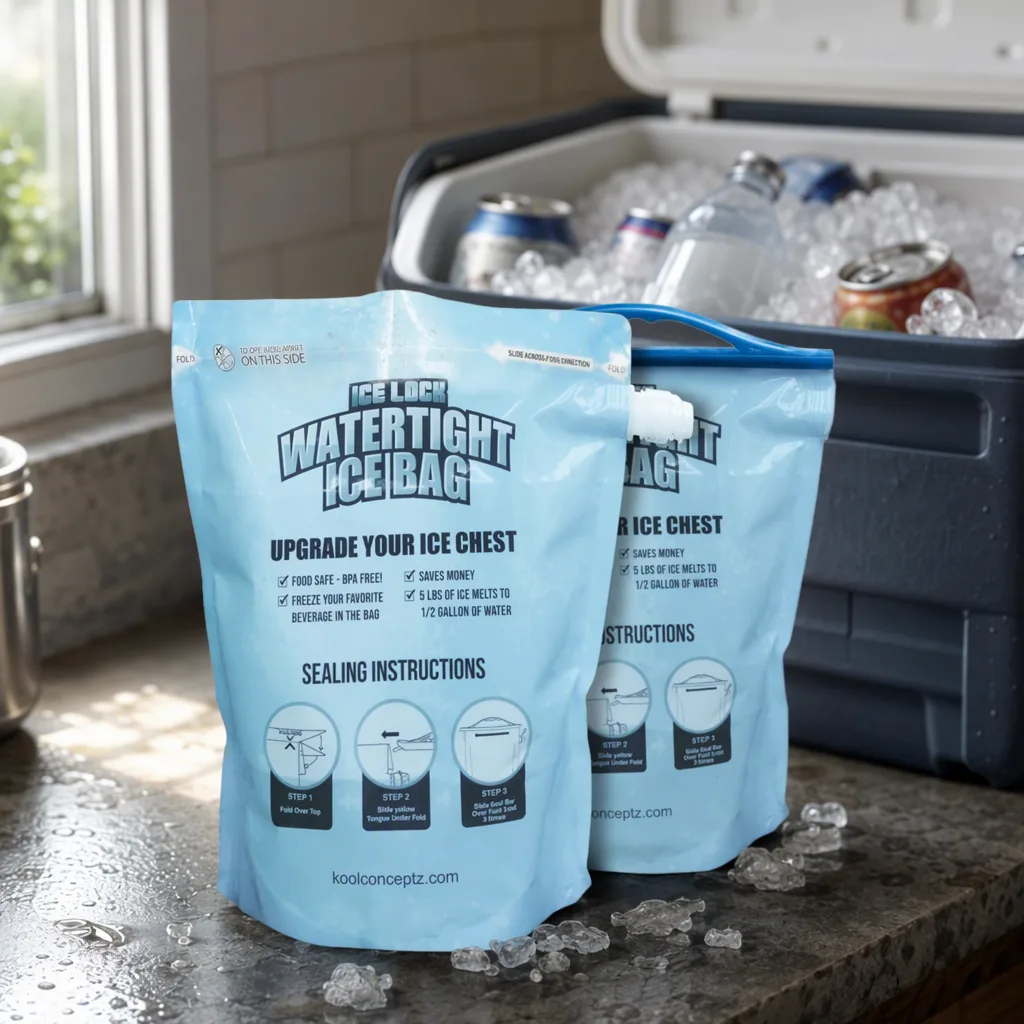
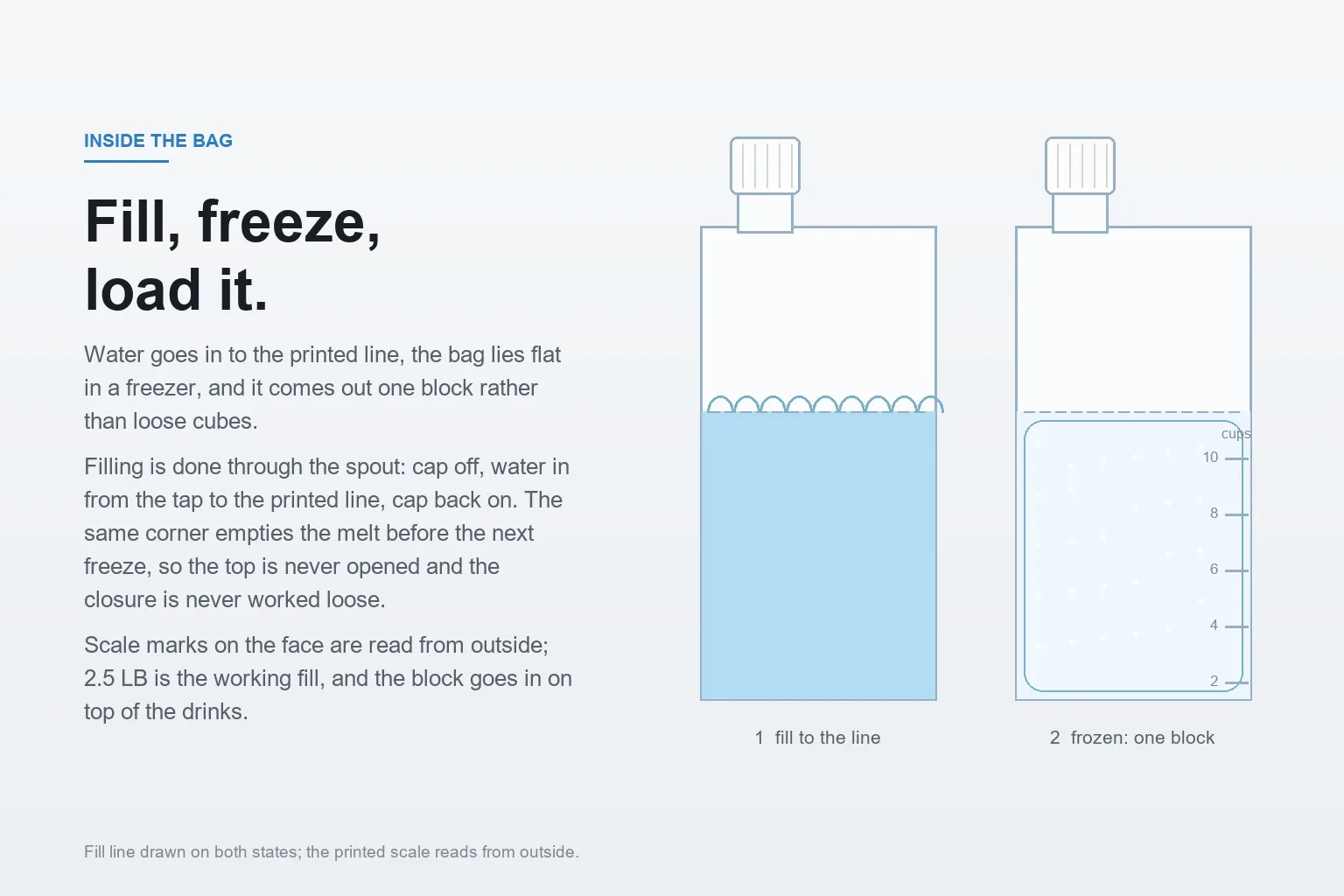
A bag of ice in a cooler is mostly water by lunchtime, and the cooler ends up as a puddle around the bottles. This bag holds the melt instead. Fill it to the printed line through the corner spout, freeze it flat, and it becomes one solid block that goes into the cooler on top of the drinks and gives up its cold slowly. Nothing leaks out to soak the labels. When the block has done its work the bag is still intact, so the water is emptied through the corner spout, the bag is rinsed, and it goes back into the freezer for the next trip.
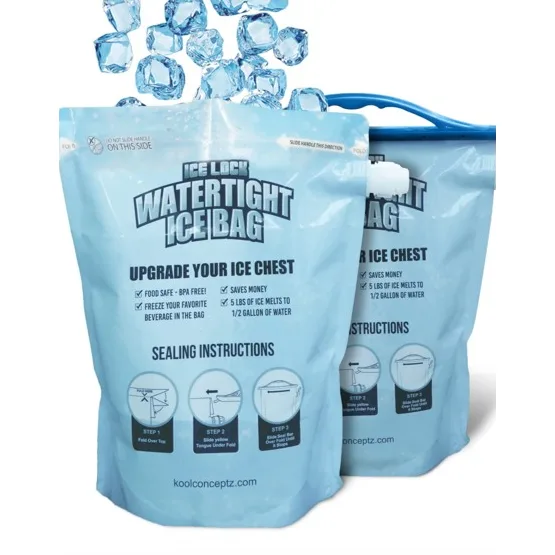
The bag is made to be frozen, not just carried. Water goes in to the printed line, the top is closed, and the whole thing lies flat in a freezer until it is one block that will not slop about. That block then sits in a cooler on top of the bottles and cans and does the cooling itself. Because nothing drains away while it works, the cooler stays dry and the labels stay readable. At the end the bag is emptied, rinsed and frozen again.
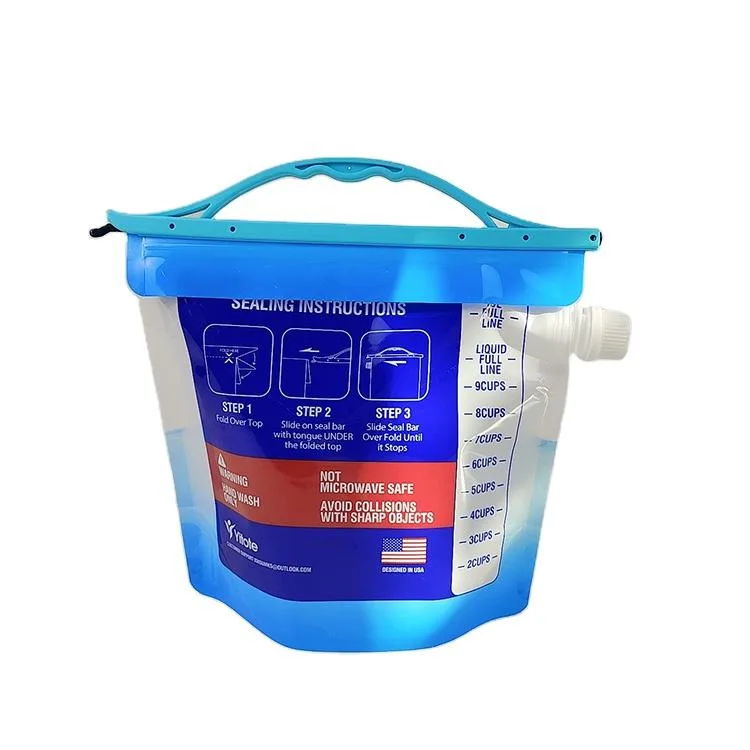
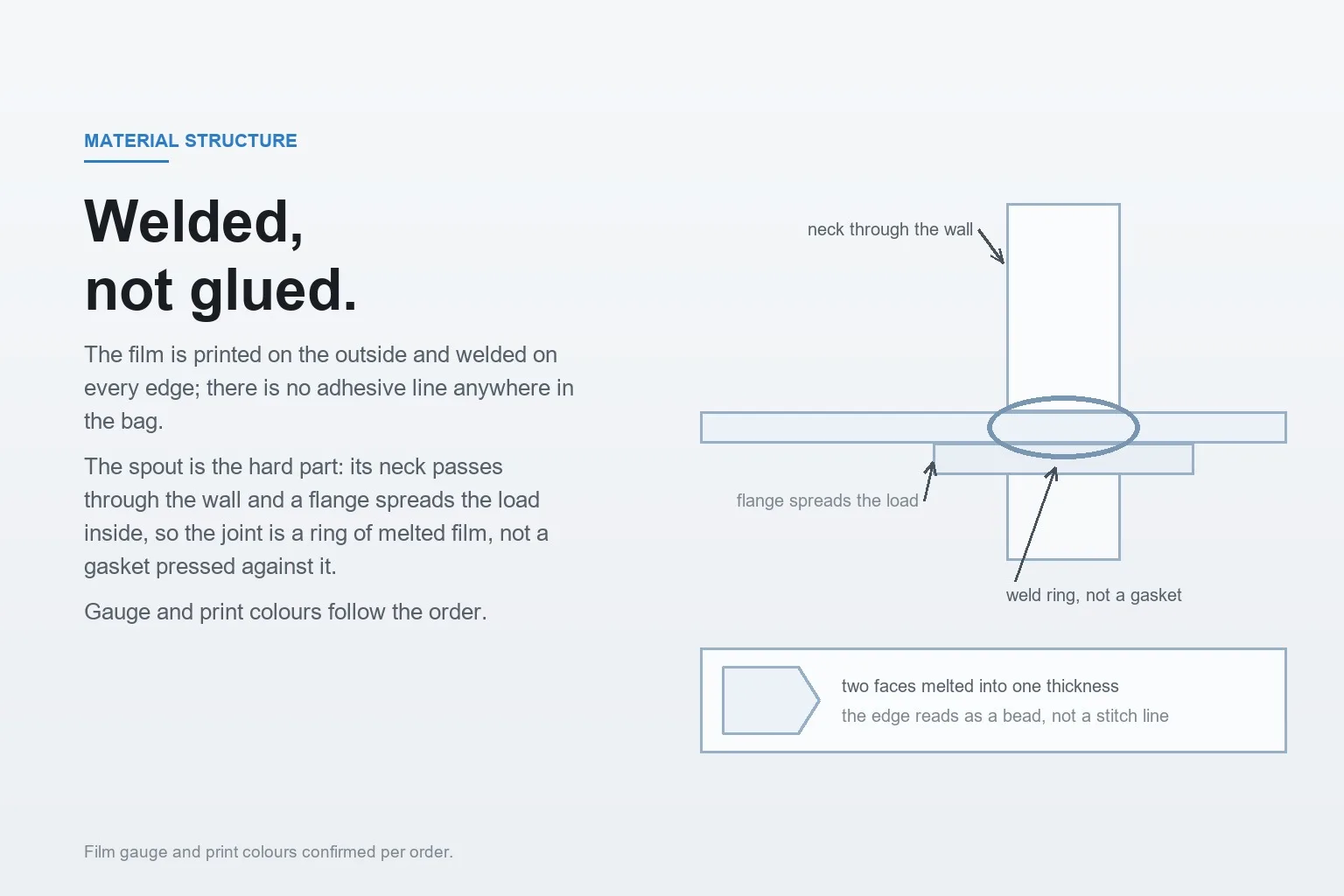
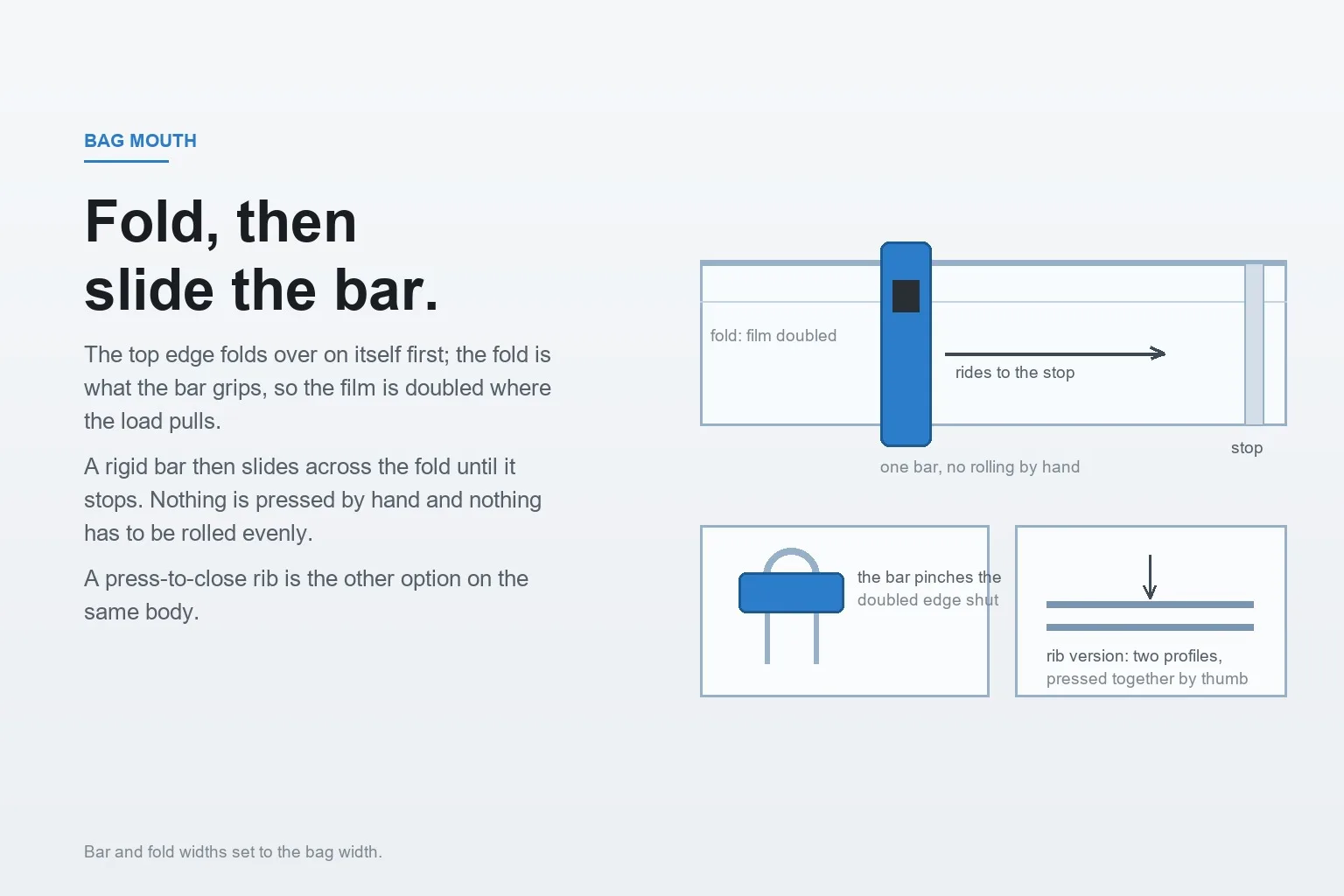
Four things keep that water where it is. The perimeter is welded rather than glued. The top edge folds over on itself, so the film is doubled exactly where a bar grips it. A rigid slide bar then runs across that fold until it stops, which closes the bag evenly without rolling it by hand; the press-to-close rib version does the same job with two profiles and a thumb.
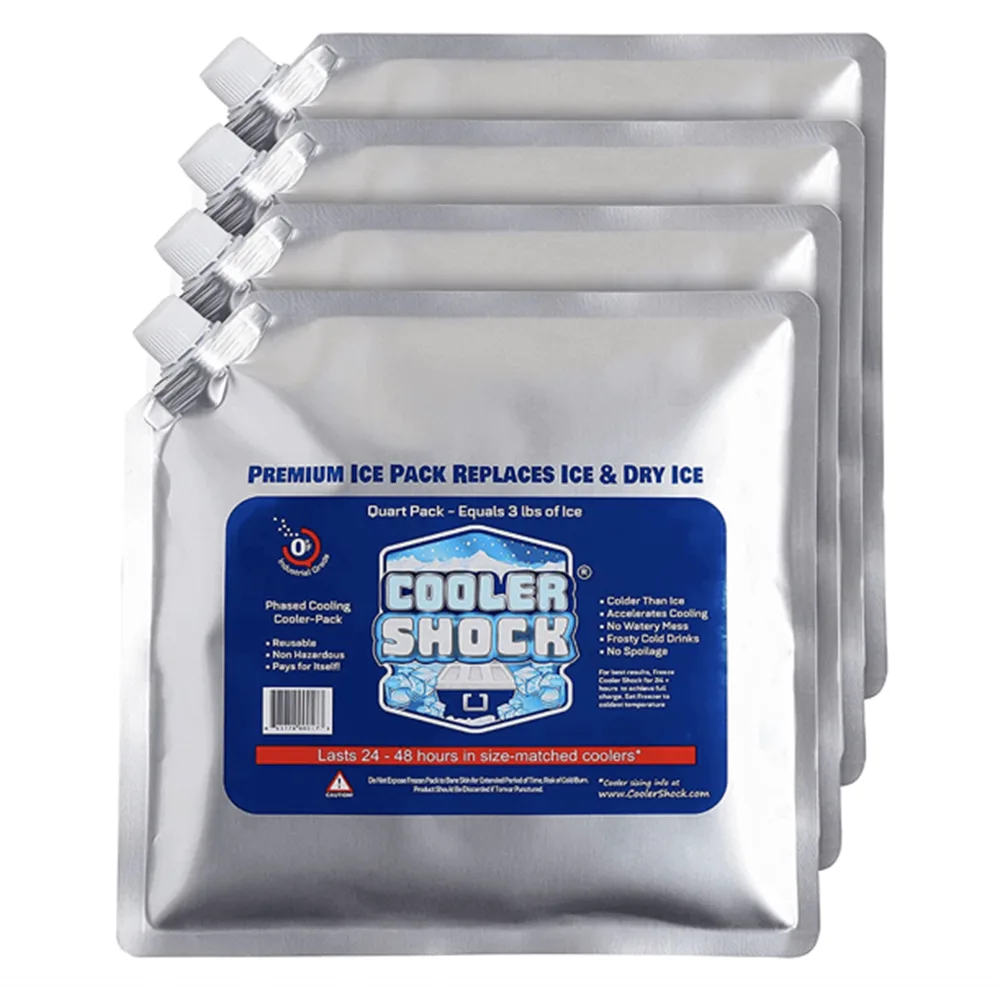
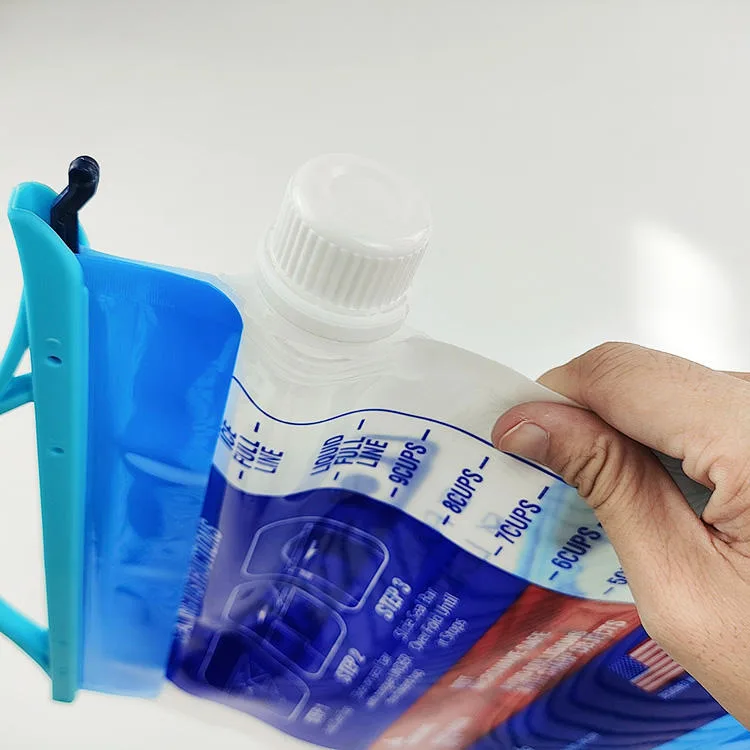
The spout is how the bag gets filled, and that is the main reason it is on the bag at all. Its neck is moulded with a flange and welded straight through the wall in the corner, so there is no separate fitting screwed into a hole. Cap off, hold it under the tap, fill to the printed line, cap on: the top is never opened, and the same corner empties the melt before the next freeze. The scale on the face is read from outside.
Two versions share the same body: with a clip-on rigid handle for carrying a full bag, and without one for packing flat into a cooler. Both take a print on the front – ours carries a light line design and a cup scale, and it can be replaced with your artwork. The bag is not microwave safe and does not want to meet anything sharp, which is printed on it in as many words.
| Parameter | Specification |
|---|---|
| Format | Flat pouch, top-loading, corner spout |
| Film | Food-safe, BPA-free, printed on the face |
| Seams | Heat-welded, perimeter and spout flange |
| Closure | Slide bar over folded top; rib version available |
| Spout | Wide screw cap, moulded neck with flange |
| Handle | Clip-on rigid handle, or none |
| Capacity | 2.5 LB / 5 LB / 10 LB |
| Scale | Cup marks printed on the face |
| 1–3 colours, customer artwork | |
| Reuse | Rinse, dry, re-freeze |
| Packing | Flat-packed, counted per carton |
| Customization | Capacity, closure type, handle, spout, print |
The front of this bag is read at arm’s length in bad light, usually while someone is kneeling over an open cooler, so the artwork has to survive being looked at quickly. Line work and a scale beat a photograph every time: the scale has to stay legible after twenty freeze cycles, and a dense image turns into a dark smear once the bag is full of water.
Printing runs on the film before it is made up. Ink is laid on the outer face and cured at a temperature the film tolerates, because a printed web that stretches during welding will take the register with it. The scale sits close to the top edge, which is the area the fold and the bar will work hardest, so the plate leaves a clear margin there rather than printing into the joint.
Registration is set against the weld, not against the sheet. Position is checked after the perimeter is sealed, after the spout is welded in and after the top is folded, because each of those steps moves the film a little. A design that reads perfectly on the flat web and drifts two millimetres on the finished bag is a design that has to be re-plated.
Colour is the other half of the job. Blue on white is unforgiving: a half-shade difference between two print runs is visible side by side on a shelf, so the ink is matched to a retained standard and checked on the made-up bag, filled with water, under daylight rather than under the press lights. Two runs of the same blue are put side by side before either is packed, because that is how the buyer will see them.
The body is printed food-safe film, welded on every edge; the front carries a light line design and a cup scale so the fill reads from outside. The top edge folds over on itself before a rigid slide bar runs across it and stops, doubling the film exactly where the grip is; a press-to-close rib version shares the same body. The wide screw spout in the corner is the fill point: cap off, water in to the line, cap on. A clip-on handle can be added or left off.
North Side Of Nanyi Road, Shiwan Town Science And Technology Park (10th Floor, Building 1, No. 13)
INQUIRY