Hot & Cold Thermal Bags, Insulated Mailers & Cold Chain Delivery Packaging

Fertilizer, Pesticide & Agrochemical Packaging

Cleaner, Laundry & Air Care Packaging

Custom Medical Packaging Solutions

Protective Structures, Inserts and Retail Packs

Custom Protein Powder Pouches, Vitamin Stick Packs & Nutrition Bar Bags

Cosmetics, Fragrance and Skincare Packaging

Takeout, Bakery and Beverage Packaging

Kibble, treat & wet food packaging
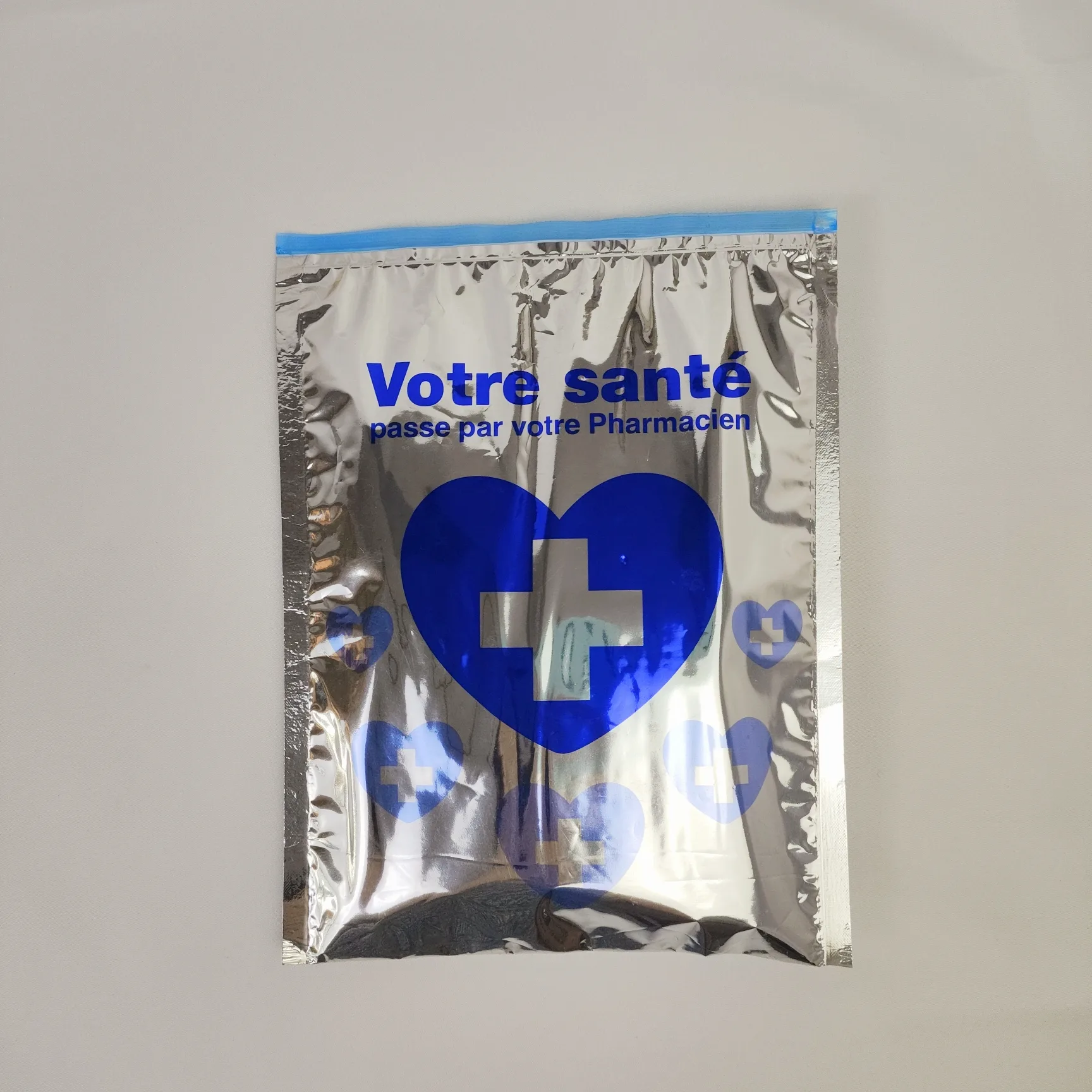
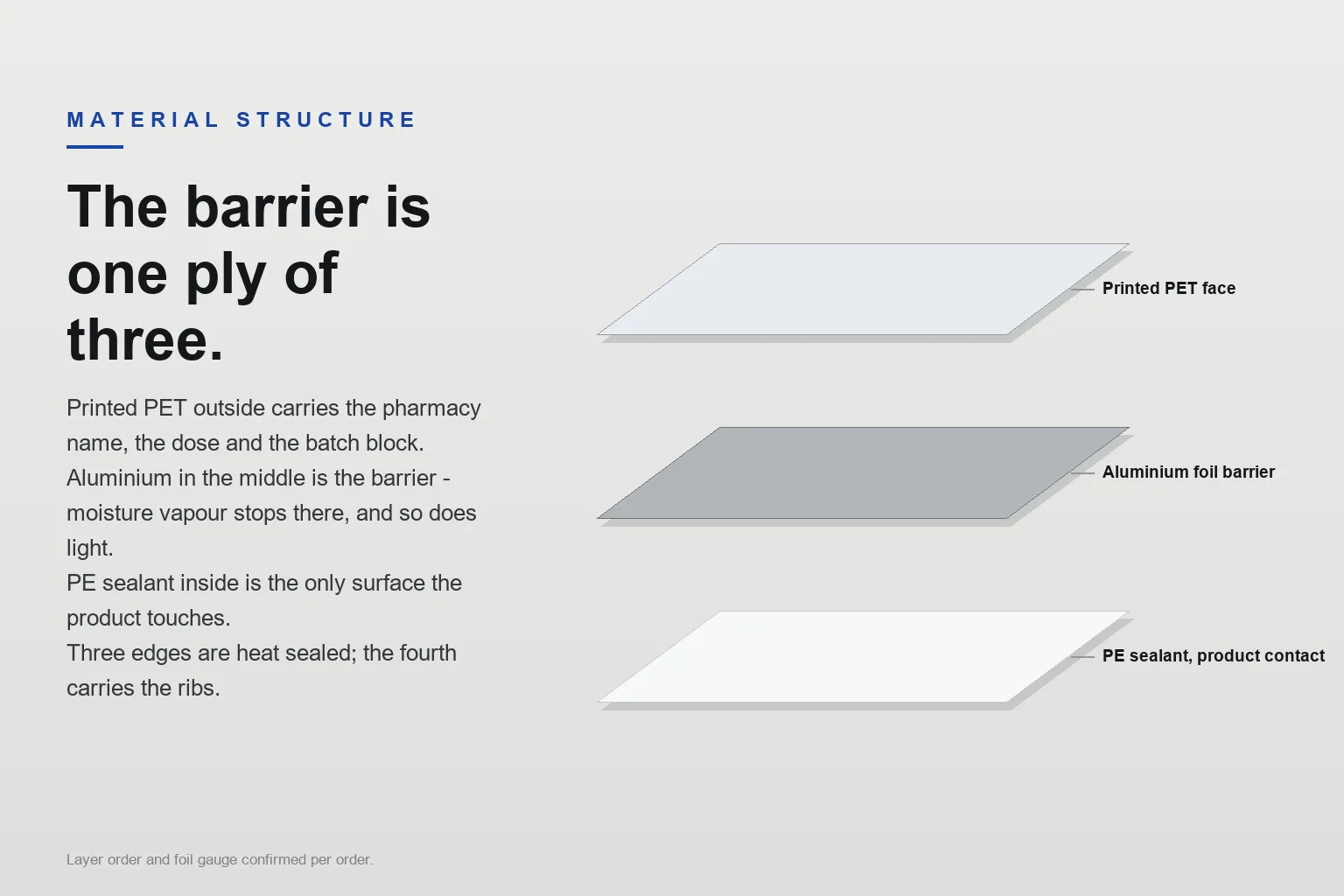
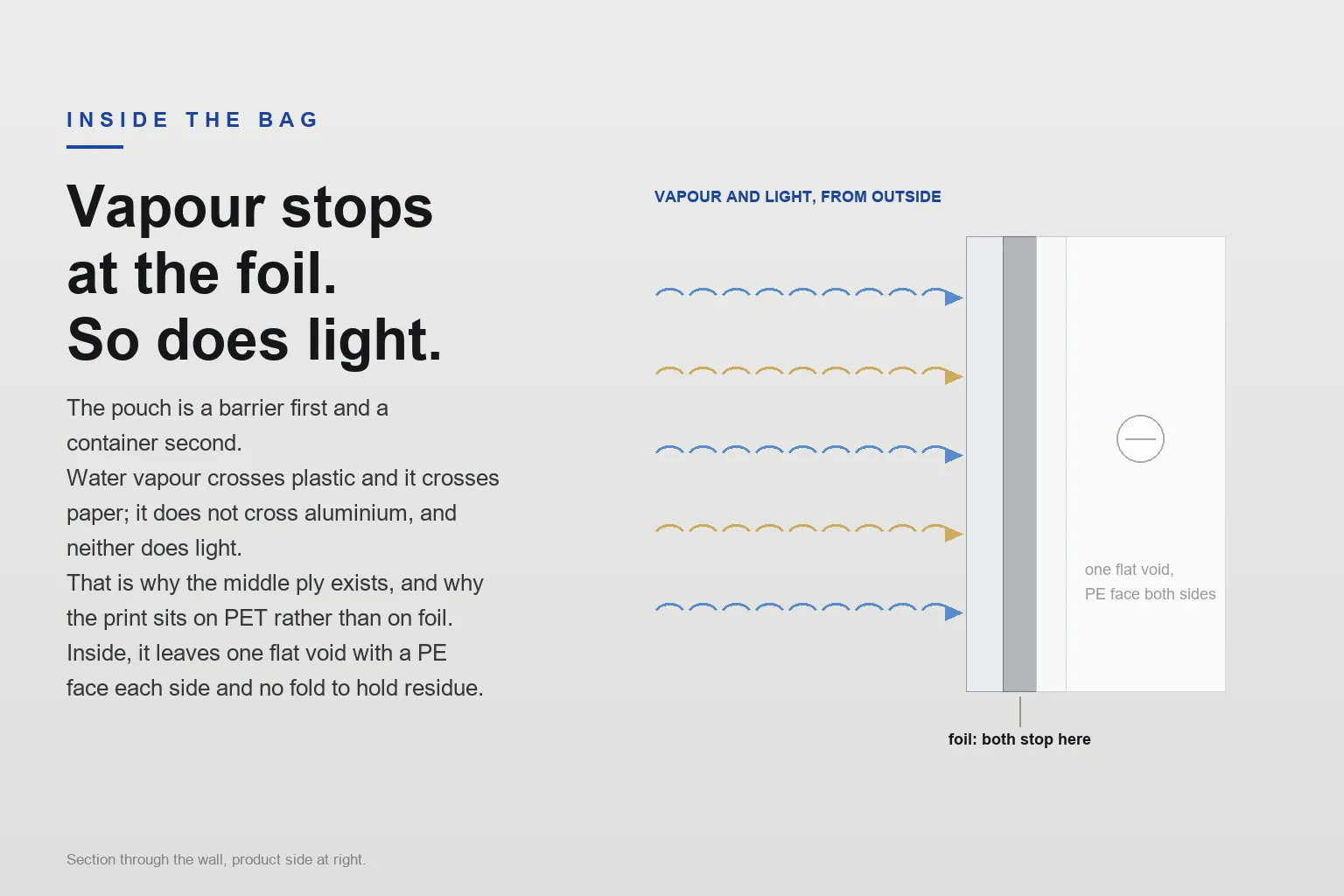
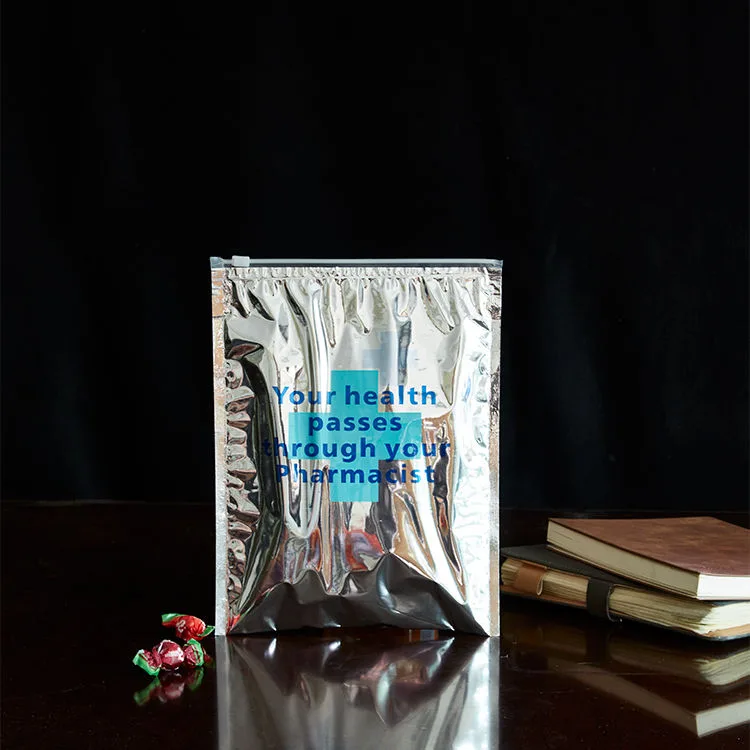
A Pharmaceutical Pouch Packaging solution is a barrier before it is a bag. What it stops is not heat but water vapour and light, and the ply that does that work is the aluminium in the middle. In this Pharmaceutical Aluminum Foil Pouch, vapour can cross plastic and paper, but it does not cross foil, and neither does ultraviolet light. Everything else in the build protects that one ply – the PET face outside carries the print, while the PE face inside provides a surface for heat sealing and an inert contact layer for the tablets. This makes it suitable for Moisture Barrier Packaging for Pharmaceuticals.
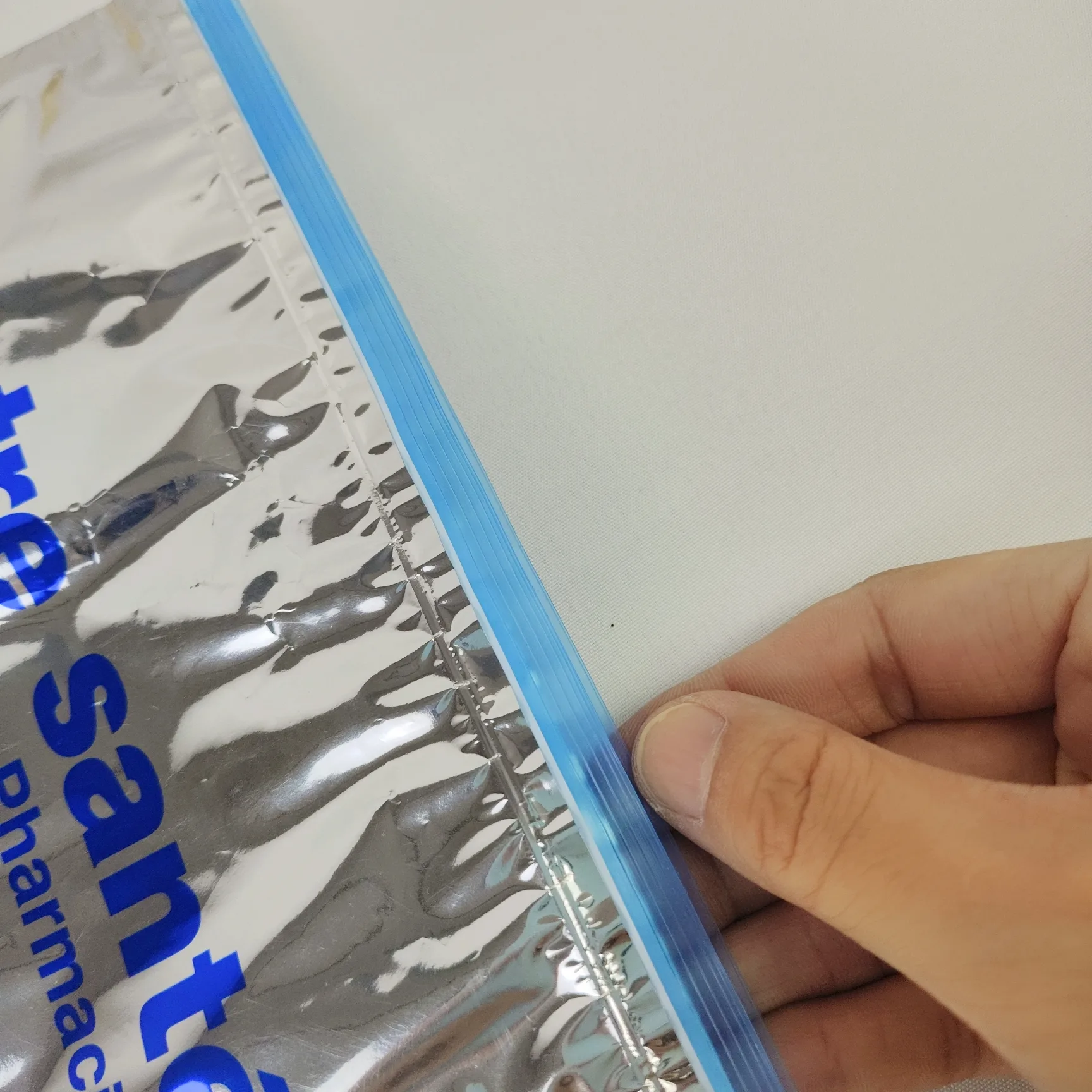
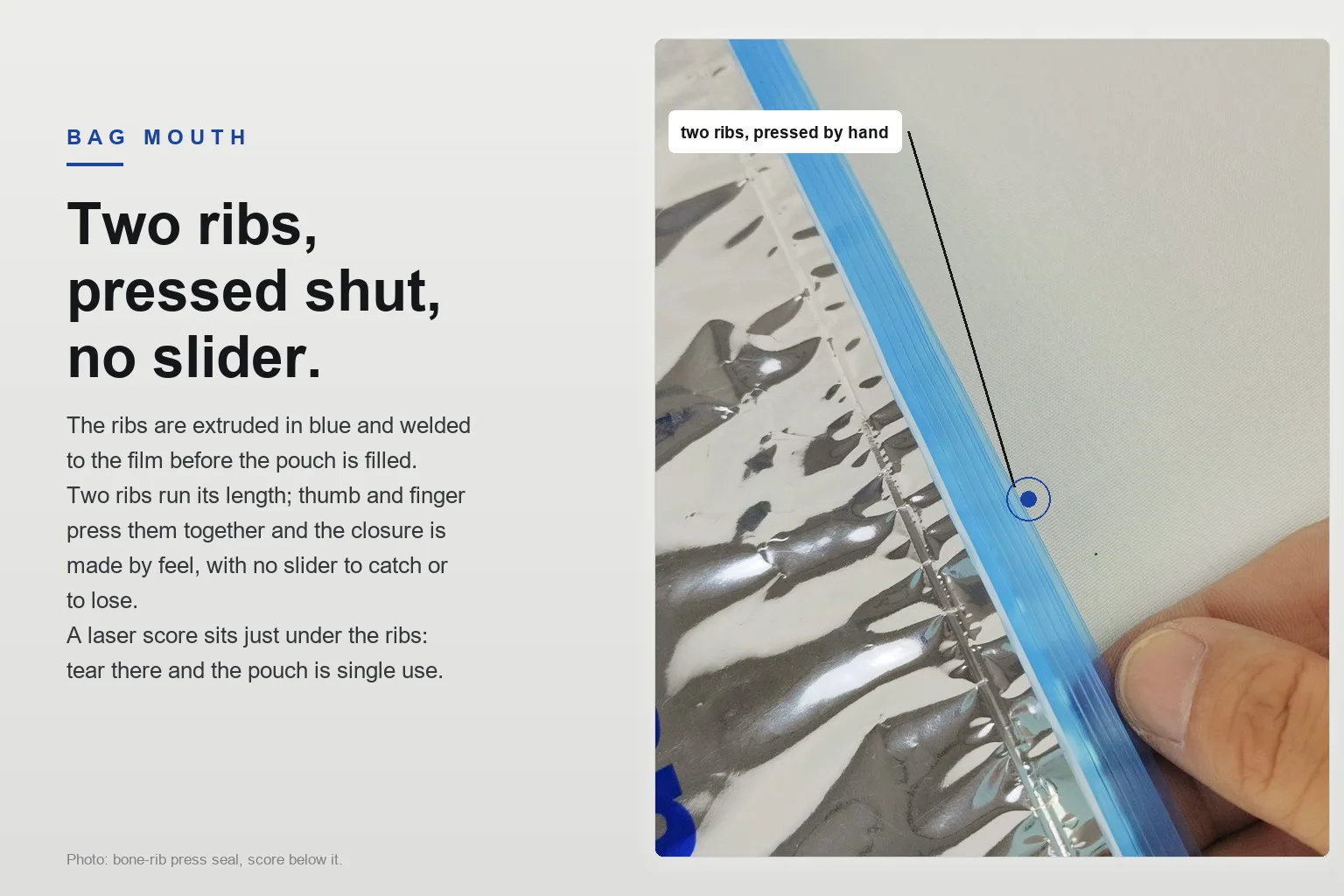
The closure is the part the pharmacy actually handles. It is a bone-rib press seal, not a slider: two extruded ribs run the length of the mouth and close when thumb and finger press them together. There is no puller to catch on a dispensing rack and no slider body to break off in a drawer. A pharmacy that hands a pouch over the counter wants a closure the patient can work without instructions, and a rib does that in one motion.
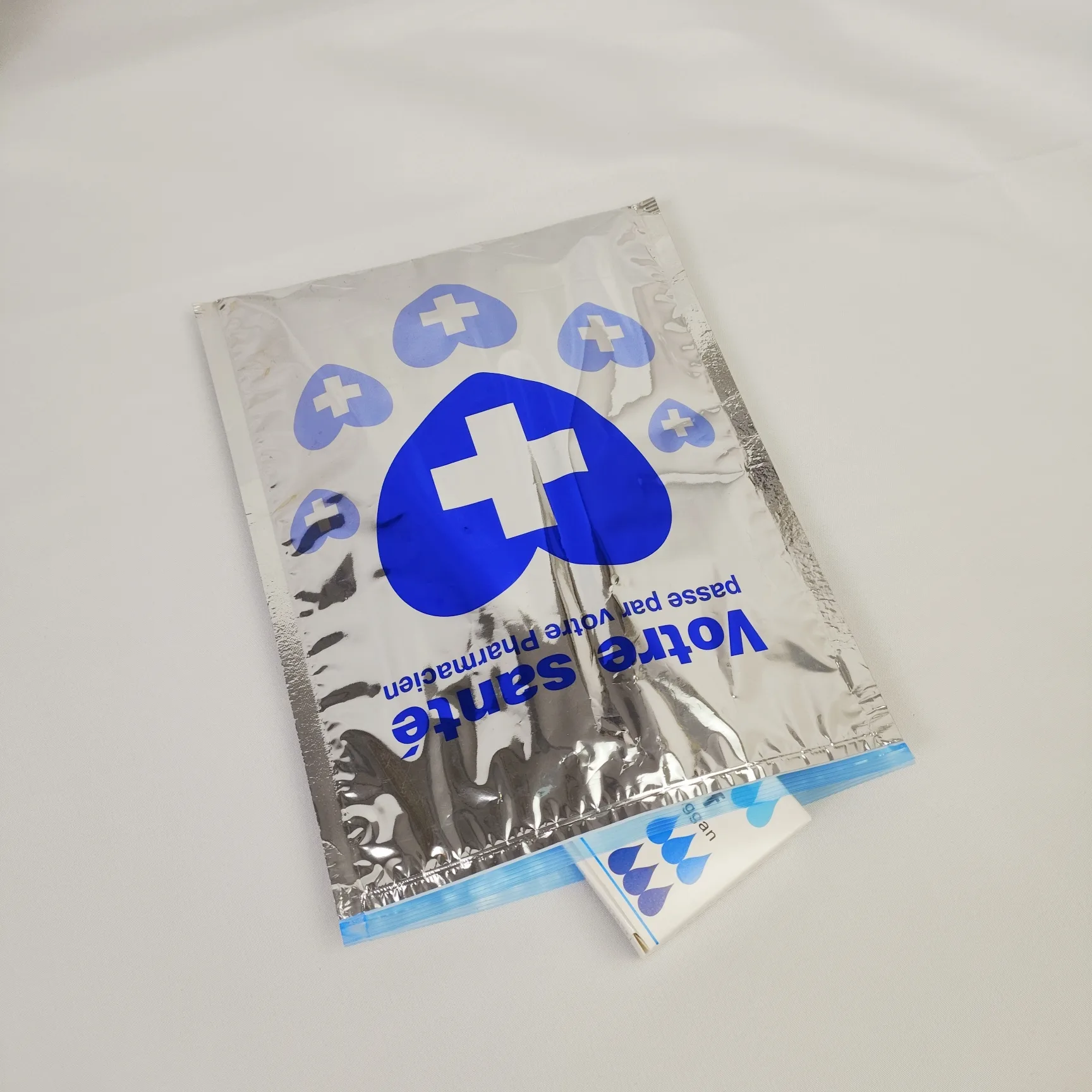
Below the ribs there is a laser score. It gives the pouch a second life: tear at the score and the pouch is opened for single use, with the ribs still intact behind it; work the ribs apart and it closes again. This Reclosable Pharmaceutical Pouch format can be useful for repeat prescriptions – the same pouch goes out, comes back for a top-up and goes out again.
It is at its best where the contents are already packed: blister strips, sachets, a folded prescription, a sample box. It is not a liquid container unless the seal is specified for it, and it is not a child-resistant pack unless a child-resistant slider version is ordered separately. Saying so on a listing is cheaper than saying it after a claim, so it is said here.
A pharmacy pouch is a barrier before it is a bag. What it stops is not heat but water vapour and light, and the ply that does that work is the aluminium in the middle: vapour crosses plastic and it crosses paper, but it does not cross foil, and neither does ultraviolet. Everything else in the build protects that one ply – the PET face outside carries the print, the PE face inside gives the seal something to weld to and the tablets something inert to touch.
The closure is the part the pharmacy actually handles. It is a bone-rib press seal, not a slider: two extruded ribs run the length of the mouth and close when thumb and finger press them together. There is no puller to catch on a dispensing rack and no slider body to break off in a drawer. A pharmacy that hands a pouch over the counter wants a closure the patient can work without instructions, and a rib does that in one motion.
Below the ribs there is a laser score. It gives the pouch a second life: tear at the score and the pouch is opened for single use, with the ribs still intact behind it; work the ribs apart and it closes again. That is what makes the format useful for a repeat prescription – the same pouch goes out, comes back for a top-up and goes out again.
It is at its best where the contents are already packed: blister strips, sachets, a folded prescription, a sample box. It is not a liquid container unless the seal is specified for it, and it is not a child-resistant pack unless a child-resistant slider version is ordered separately. Saying so on a listing is cheaper than saying it after a claim, so it is said here.
Two ribs closed by hand, or a slider that runs the track once — the choice follows how many times the pouch is opened, not which one looks more finished. See press-to-close versus slider zip on a pharmacy pouch.
| Parameter | Specification |
|---|---|
| Item | Specification |
| Construction | Three-ply laminate, three-side seal, press-to-close rib seal on the fourth edge |
| Outer | Printed PET, reverse or surface printed |
| Barrier | Aluminium foil, gauge set per order |
| Contact layer | PE sealant, direct contact |
| Closure | Bone-rib press seal, no slider; slider format quoted separately |
| Opening | Laser score below the ribs |
| Sizes | 12 × 18 to 25 × 35 cm |
| Up to 8 colours, rotogravure | |
| Colour | Custom Pantone; unprinted silver foil available |
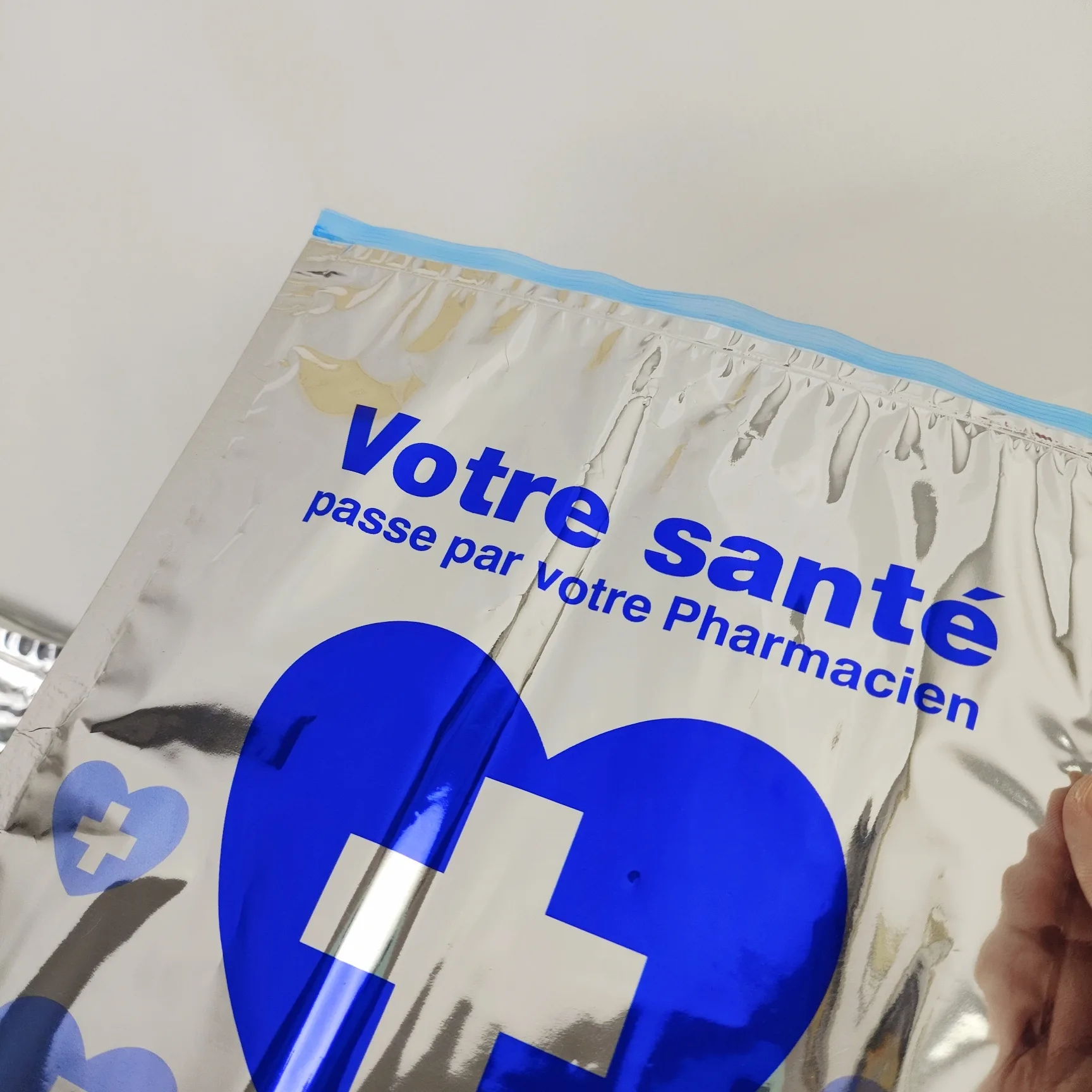
The outer ply is printed before it is laminated, and that order matters. PET takes ink the way a film does – it holds a fine screen and it holds a photograph – so the print is laid down on PET and then bonded to the foil underneath, rather than printed onto metal and lacquered over. The result is a face that can carry a pharmacy’s own logotype at 6 pt and a patient information block at 5 pt without the two filling in.
The score itself is the tightest tolerance in the job. It is cut to a controlled depth – deep enough to open by hand, shallow enough to leave the foil intact until it is torn – and it has to sit clear of both the rib weld above it and the product area below it. A score that drifts into the weld zone produces a pouch that opens at the wrong place; a score that drifts into the print produces a tear that runs sideways.
Batch and expiry blocks are placed, not left to the artwork. The pharmacy prints those at filling, so the layout reserves a clear panel on the face and repeats it on the back for the case where the pouch is filled from either end. Nothing else is allowed into that panel.
Proofs are pulled on the production laminate. A blue that reads correctly on white paper goes darker once it sits on foil through a PET film, and the difference shows up first in the fine print.
Printed PET, aluminium foil and a PE sealant, bonded in one pass, make the wall. The bone-rib closure is welded into the head: two PE profiles that press together and stay shut without a slider. The foil is the layer doing the blocking – light, moisture and vapour stop at the metal – and the PE face inside is the only surface in contact with tablets, capsules or sachets.
North Side Of Nanyi Road, Shiwan Town Science And Technology Park (10th Floor, Building 1, No. 13)
INQUIRY