Hot & Cold Thermal Bags, Insulated Mailers & Cold Chain Delivery Packaging

Fertilizer, Pesticide & Agrochemical Packaging

Cleaner, Laundry & Air Care Packaging

Custom Medical Packaging Solutions

Protective Structures, Inserts and Retail Packs

Custom Protein Powder Pouches, Vitamin Stick Packs & Nutrition Bar Bags

Cosmetics, Fragrance and Skincare Packaging

Takeout, Bakery and Beverage Packaging

Kibble, treat & wet food packaging
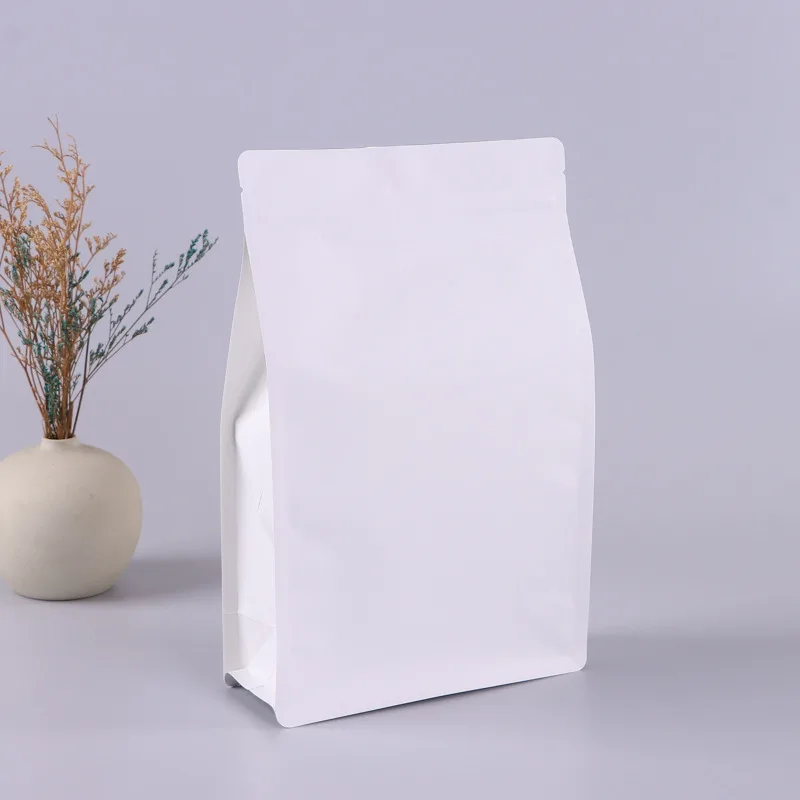
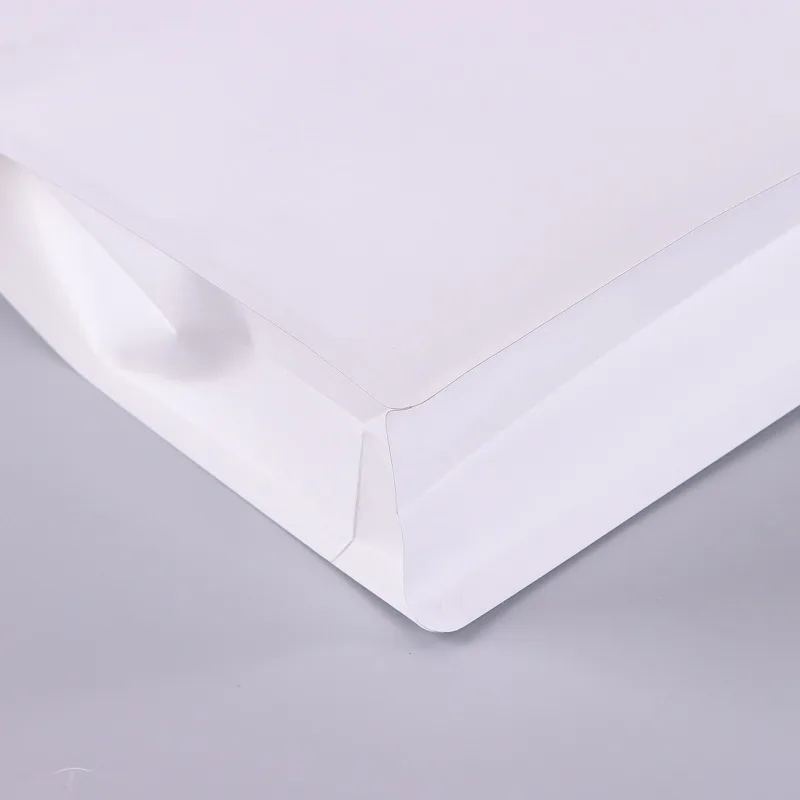
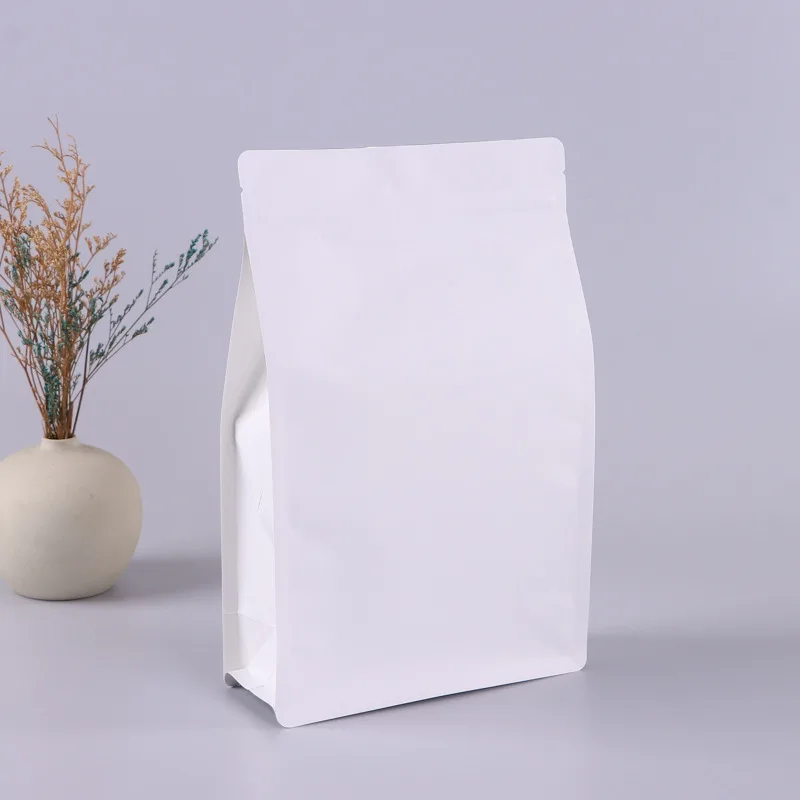
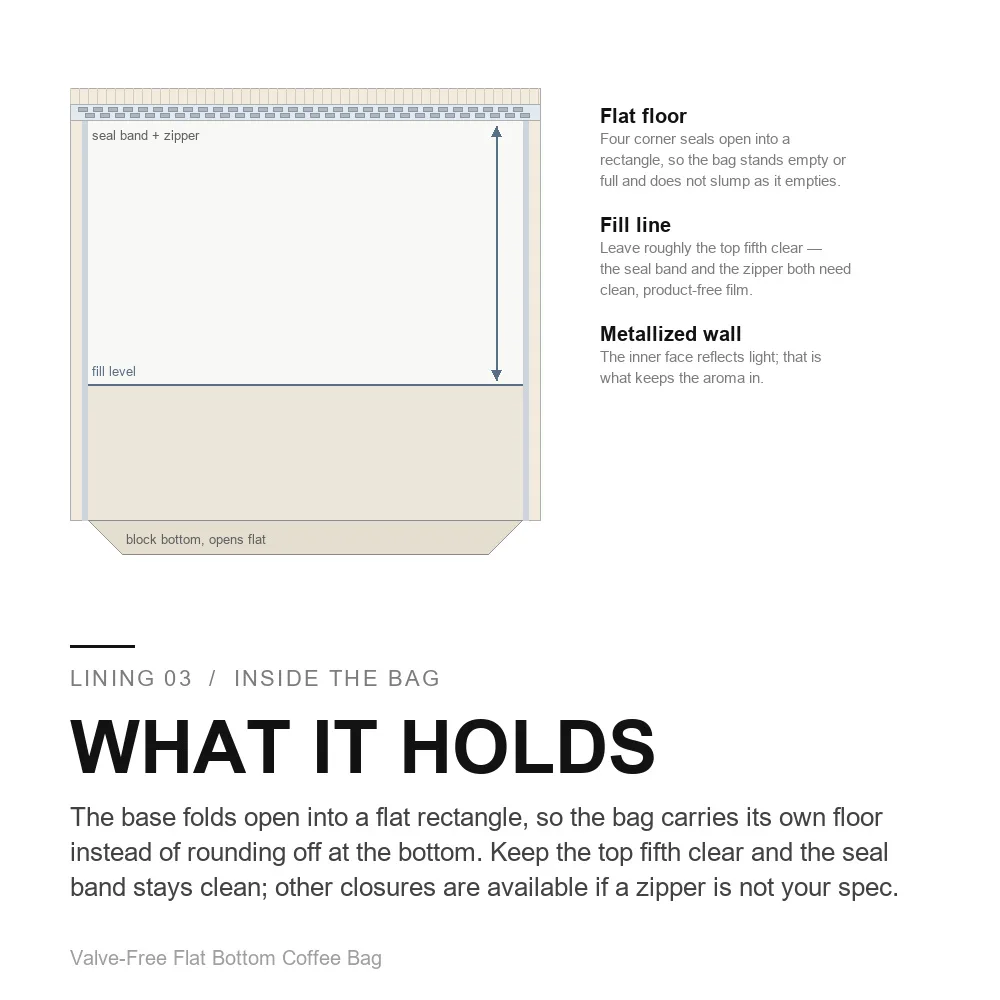
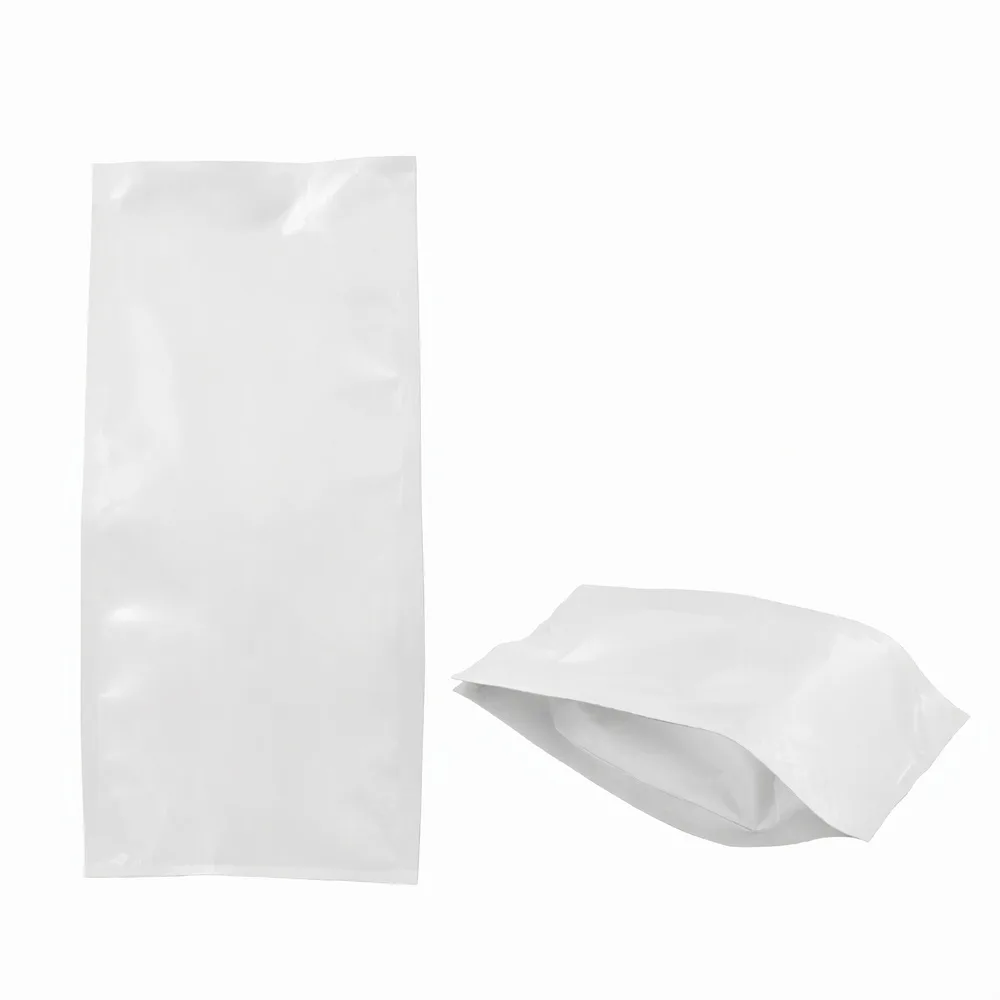
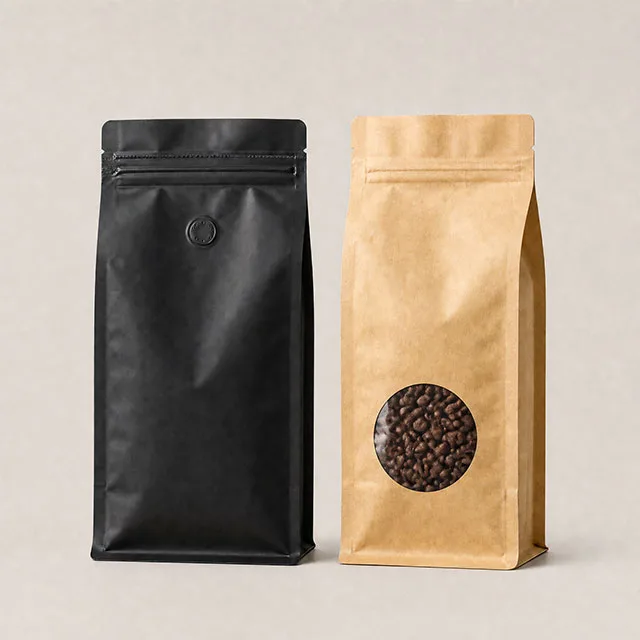
A flat bottom coffee bag with no valve, built for ground coffee and beans that have already given up their gas. The base folds into four corner seals and opens into a flat rectangle, so the bag carries its own floor and stands square on a shelf instead of slumping as it empties. White kraft outside keeps the matte paper look; a metallized barrier and a PE sealant sit behind it. The closure is a press-to-close zipper under a heat-sealed band: the pack opens once at the band, reseals after every use, and needs no valve anywhere on the face. It ships flat, so freight and shelf space before filling cost almost nothing.
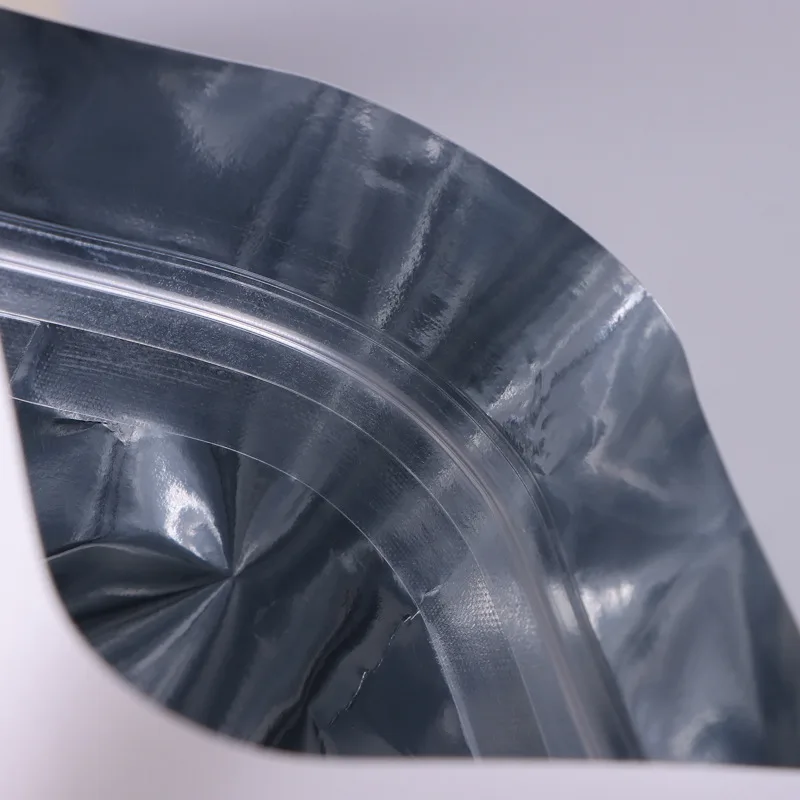
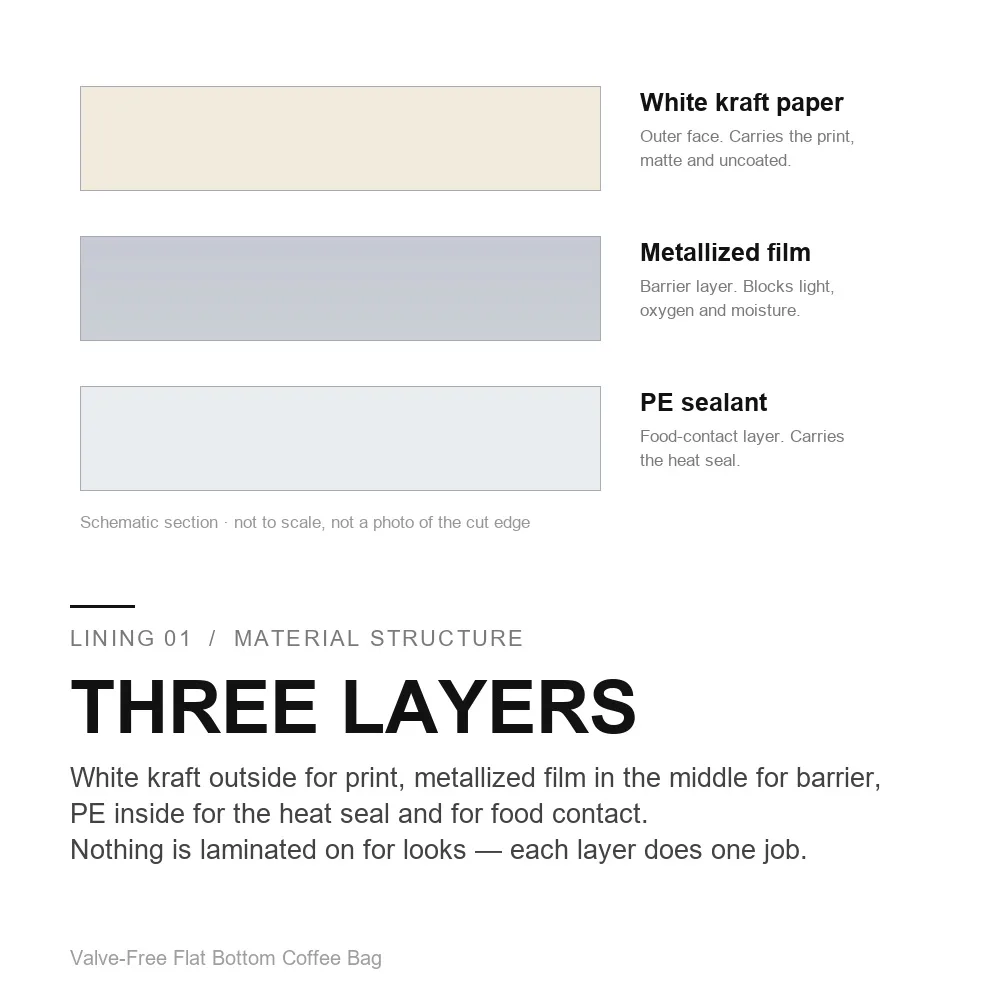
The wall is three layers laminated into one sheet: white kraft on the outside, metallized film in the middle, PE sealant on the inside, 0.12 to 0.18 mm in total. The body is an eight-side seal — front and back panels joined to two side gussets — with the base folded into four corner seals. That base is what keeps the bag upright, and it opens into a flat rectangle rather than a rounded bottom.
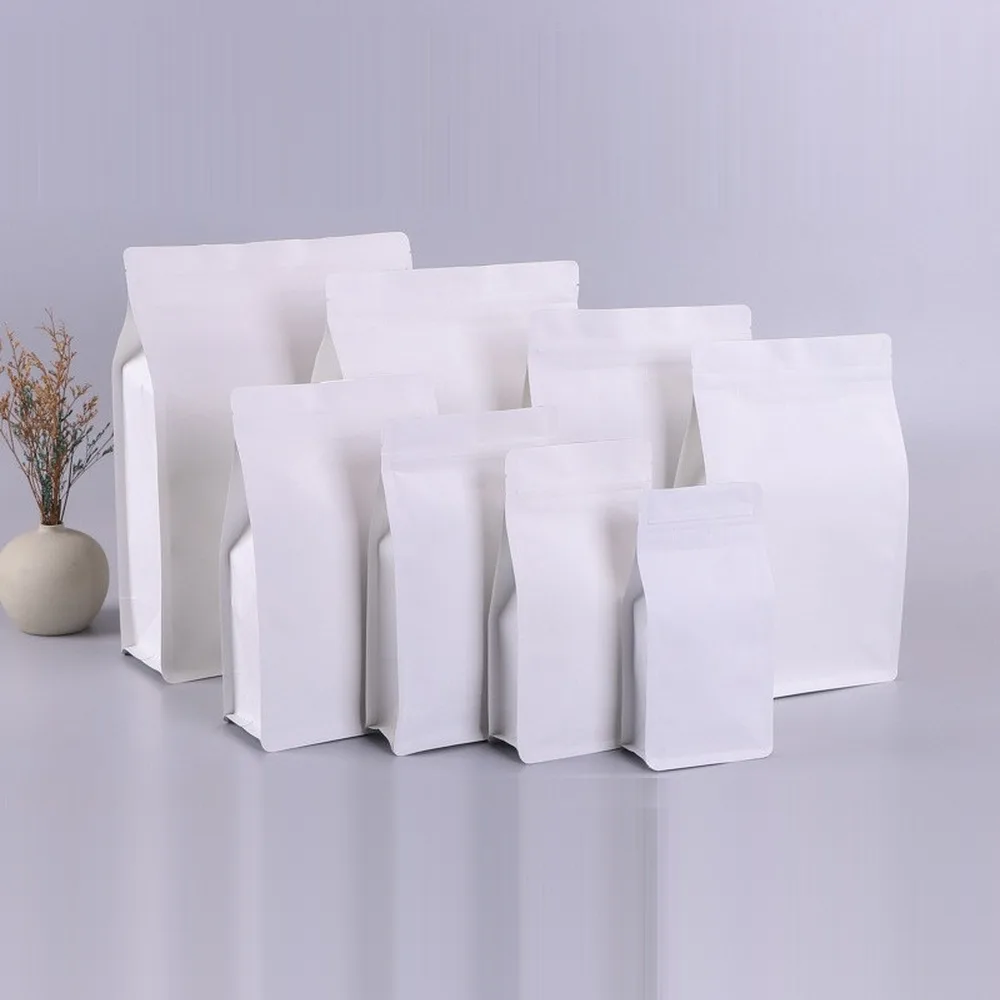
Because the footprint stays rectangular from base to top, several bags line up flush on a shelf edge and the stack holds its shape after handling. Seven stock sizes run from 10×20+6 to 23×33+10 cm on the outer dimensions, and the bottom gusset is what sets how much floor the bag opens. Fill should stop with roughly the top fifth clear, so the seal band and the zipper stay free of product.
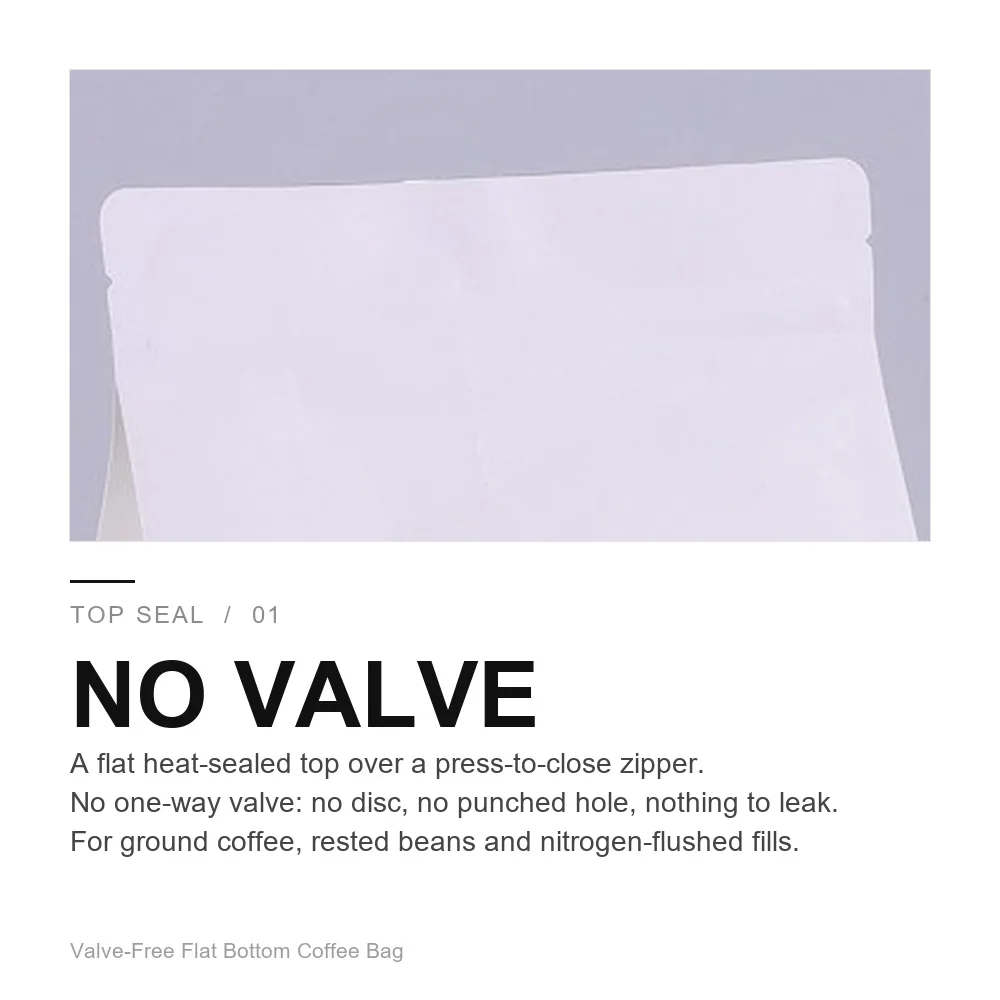
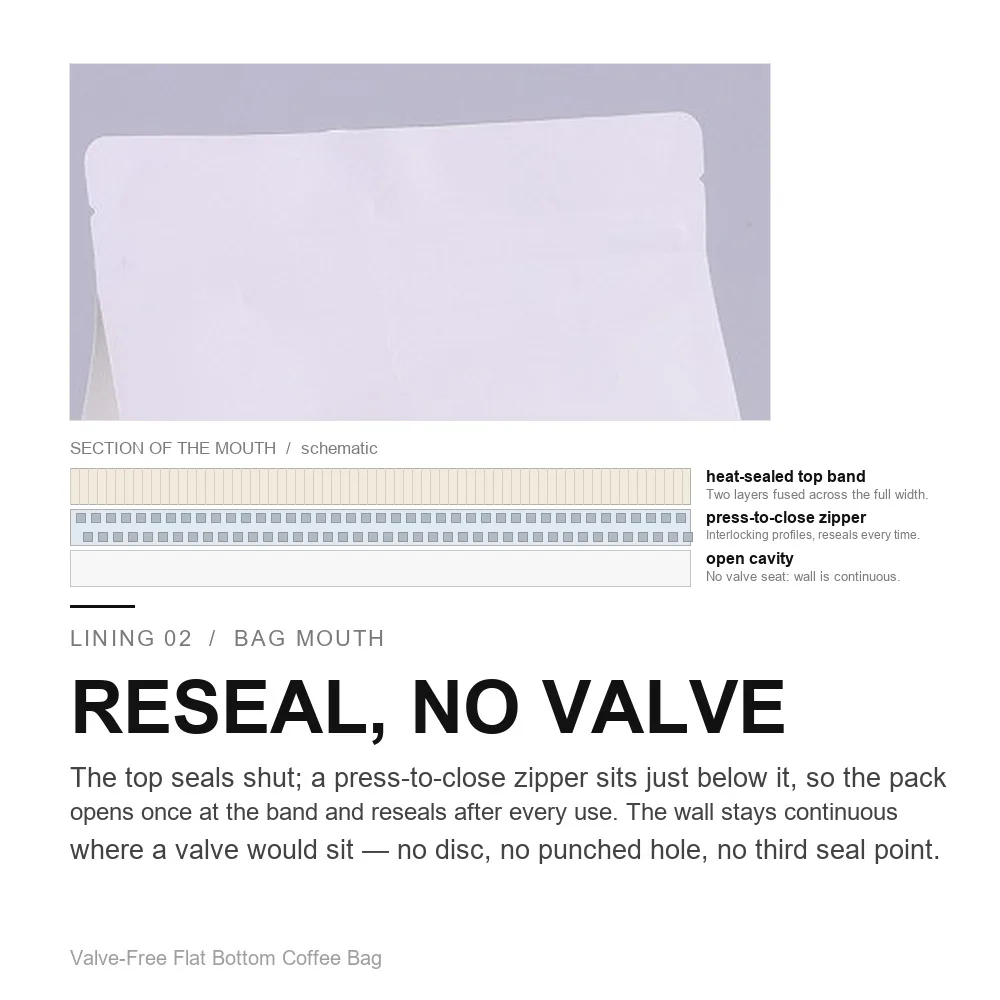
A one-way valve earns its cost by venting carbon dioxide from fresh roast. Ground coffee, and beans rested for several days, have already released that gas, so a valve becomes a hole waiting to leak. This version leaves it out and closes with a press-to-close zipper under a heat-sealed band: the pack opens once at the band, then reseals after every use. Whole bean packed hot still needs a valve, and we say so before quoting.
Nothing here is fixed except the barrier logic. A plain seal, a tin tie, a spout or a degassing valve can take the zipper’s place; base depth, paper shade, size and print follow your artwork, with a proof signed before the run. What we will not do is quote this format for a fill it cannot hold: hot-packed whole bean, or a fill weight that overruns the gusset.
| Parameter | Specification |
|---|---|
| Structure | Eight-side seal flat bottom (block bottom), four corner seals |
| Material | White kraft / metallized film / PE sealant, 0.12–0.18 mm total |
| Valve | None |
| Closure | Press-to-close zipper under a heat-sealed top band |
| Base | Gusset opens flat into a rectangle |
| Available sizes | S–XXL, 10 x 20 + 6 cm to 23 x 33 + 10 cm (outer) |
| Fill range | Approx. 100 g – 1.5 kg, confirmed on samples |
| Barrier | Metallized — light, oxygen and moisture; below foil laminate |
| Printing | Plain white stock; rotogravure up to 12 colours or flexo |
| Customization | Print / size / colour / closure / base depth |
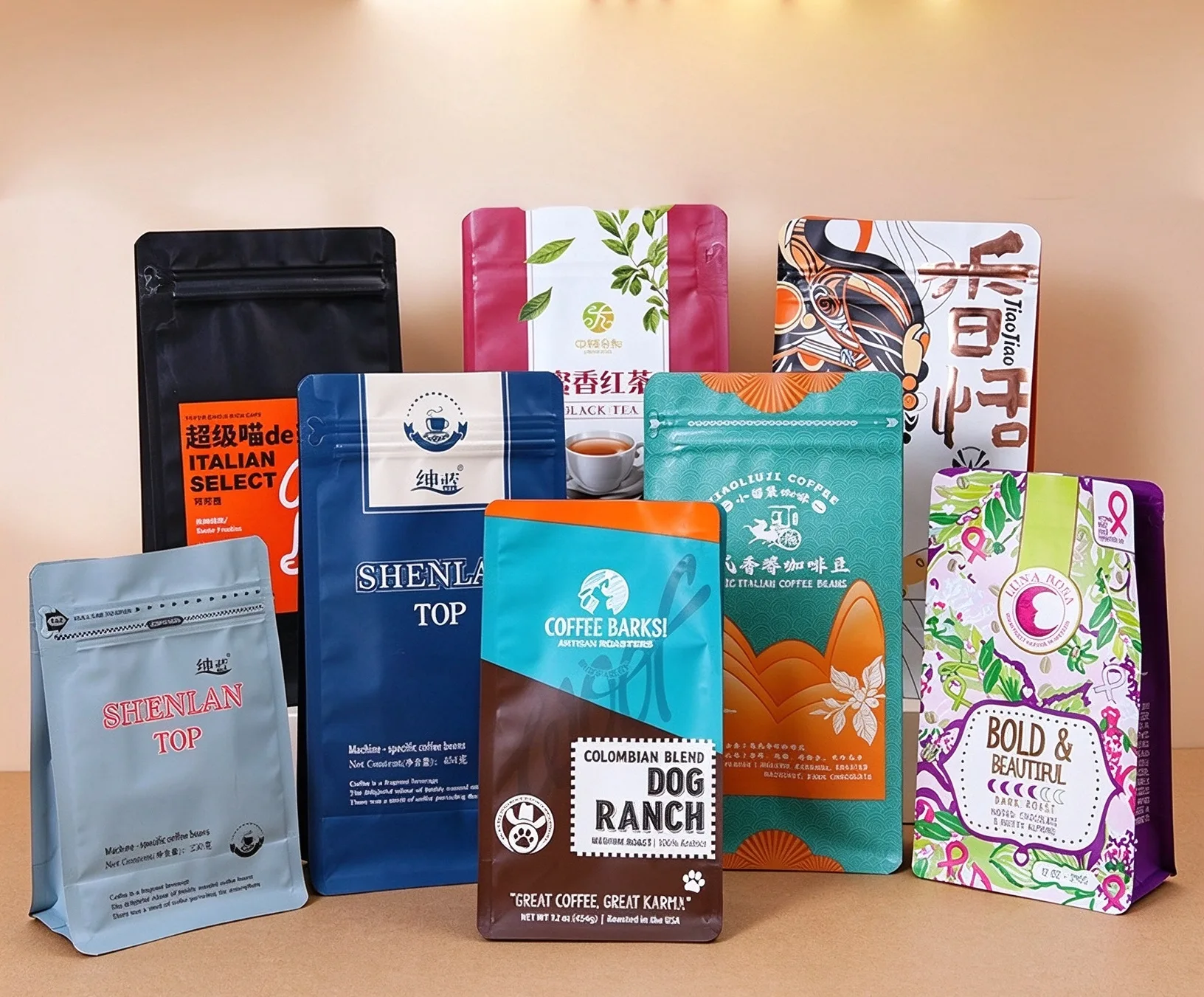
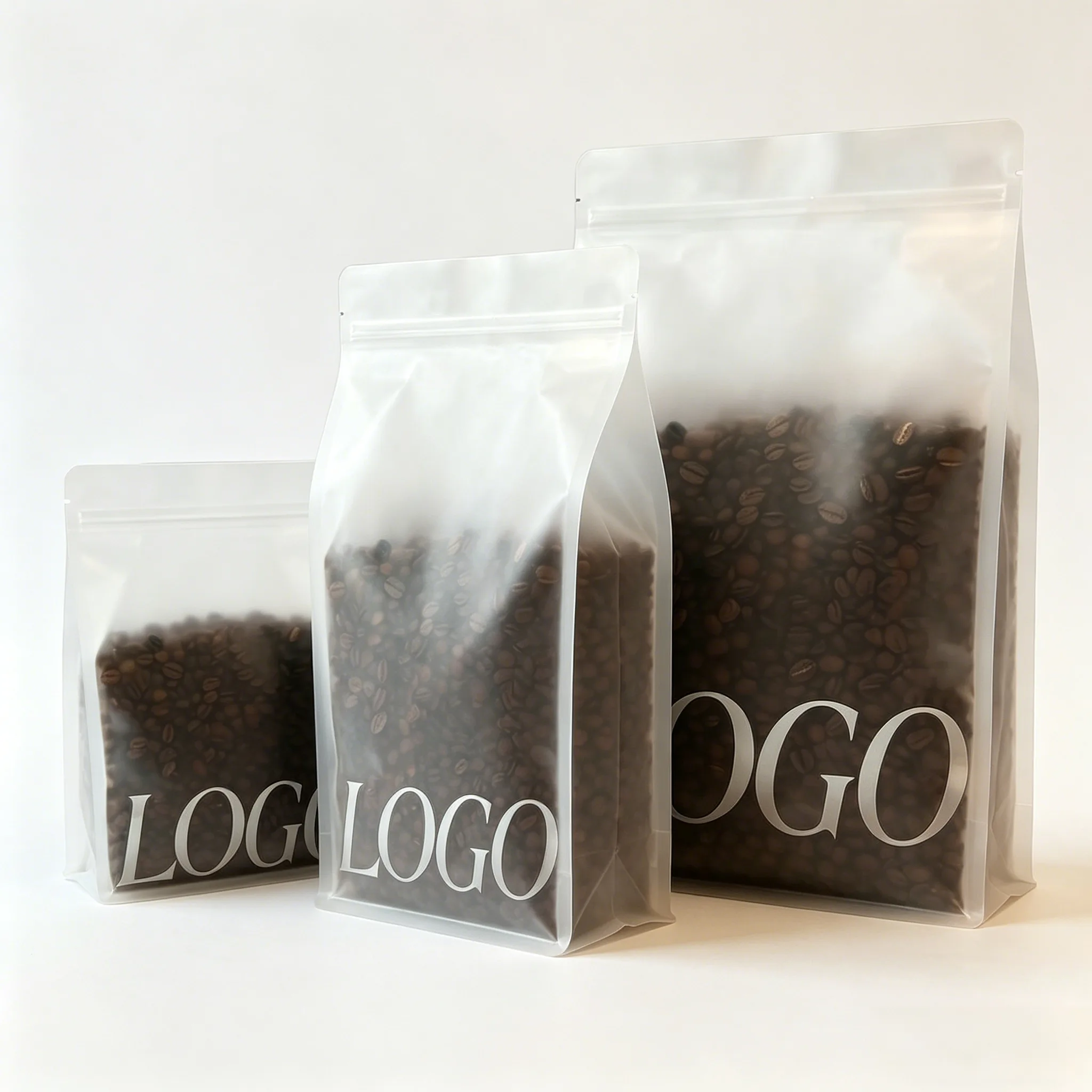
A stock bag ships blank, and that is a real option for a roaster who wants to sticker a small batch. On a custom run the front panel carries the brand and the hero graphic, the back panel takes copy, barcode and batch code, and the two side gussets stay narrow, because type set across a fold reads badly and disappears into the crease.
Printing lands on the kraft face, not on a coated film, so the order of operations decides the result. Rotogravure runs up to twelve colours, or flexo on shorter runs, and a white flood sits under any light tone. Kraft is a warm, absorbent sheet: printed straight onto it, whites turn cream and blues turn green. The proof is judged on paper, never on screen.
The difficulty is the paper. Kraft is rougher than coated PET, so fine reverse type below six points fills in and thin metallic lines break up along the fibre. Large solid areas print unevenly unless the press is slowed, and a matte varnish can lift the surface where the sheet is thinnest. None of this rules the job out; it just has to be priced and proofed honestly.
Proofing settles it. We print a proof on the same stock and sign it off before the run starts, hold colour inside the agreed tolerance, and keep the heat-sealed band and the base fold clear of artwork so no ink lands where the seal has to close. Barcode and batch code sit on the back panel with a clear quiet zone, and we send the final artwork placement back for your check before plates are cut.
There is no lining and no insert: the bag is one laminated wall. White kraft outside takes the print. Metallized film in the middle reflects light and slows oxygen and moisture. PE sealant innermost carries the heat seal and is the only layer touching the coffee.
Nothing sits between plies, so a failure has nowhere to hide. A valve would mean a punched hole and a second seal point in that wall; leaving it out removes both. The only openings left are the zip and the top band.
North Side Of Nanyi Road, Shiwan Town Science And Technology Park (10th Floor, Building 1, No. 13)
INQUIRY