Hot & Cold Thermal Bags, Insulated Mailers & Cold Chain Delivery Packaging

Fertilizer, Pesticide & Agrochemical Packaging

Cleaner, Laundry & Air Care Packaging

Custom Medical Packaging Solutions

Protective Structures, Inserts and Retail Packs

Custom Protein Powder Pouches, Vitamin Stick Packs & Nutrition Bar Bags

Cosmetics, Fragrance and Skincare Packaging

Takeout, Bakery and Beverage Packaging

Kibble, treat & wet food packaging
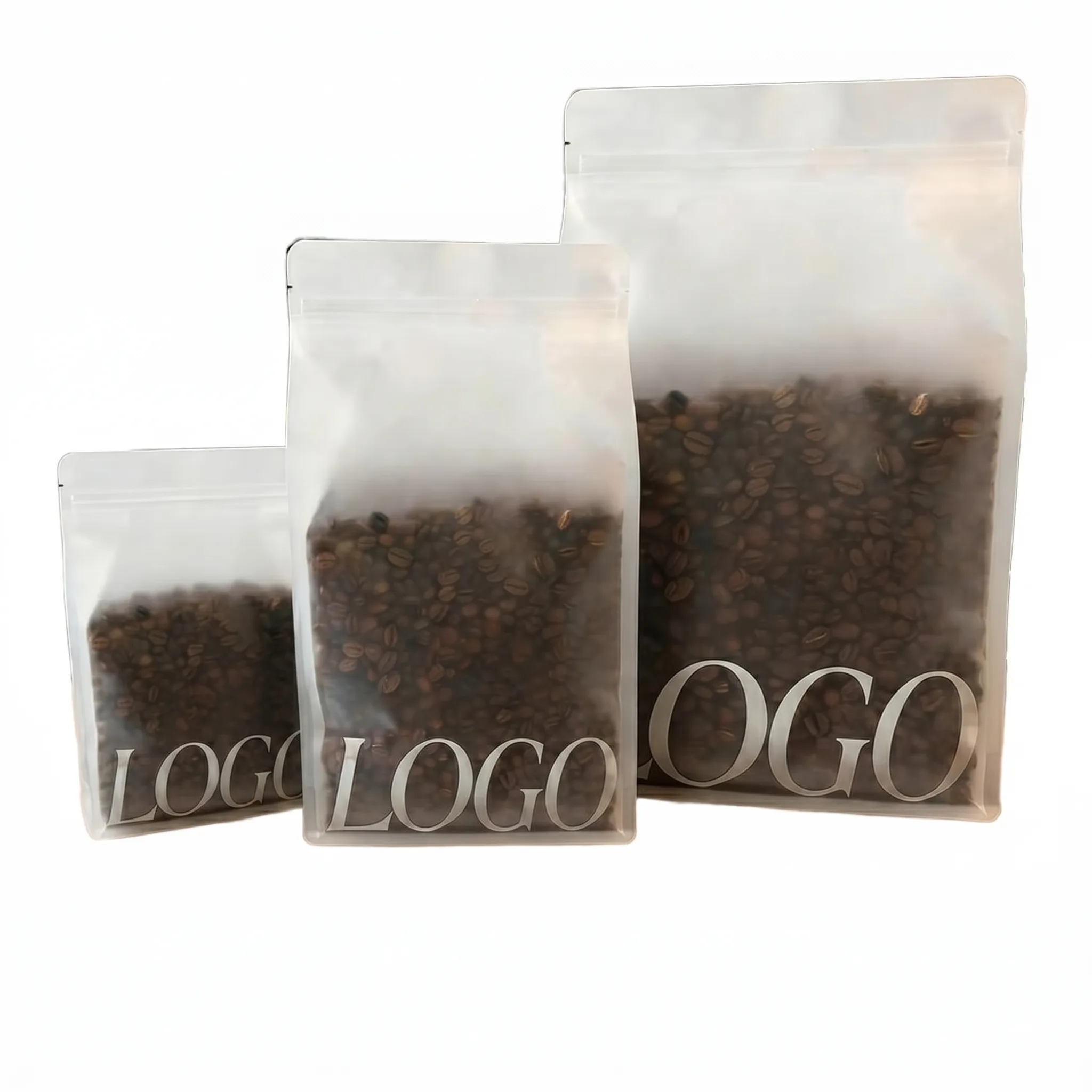
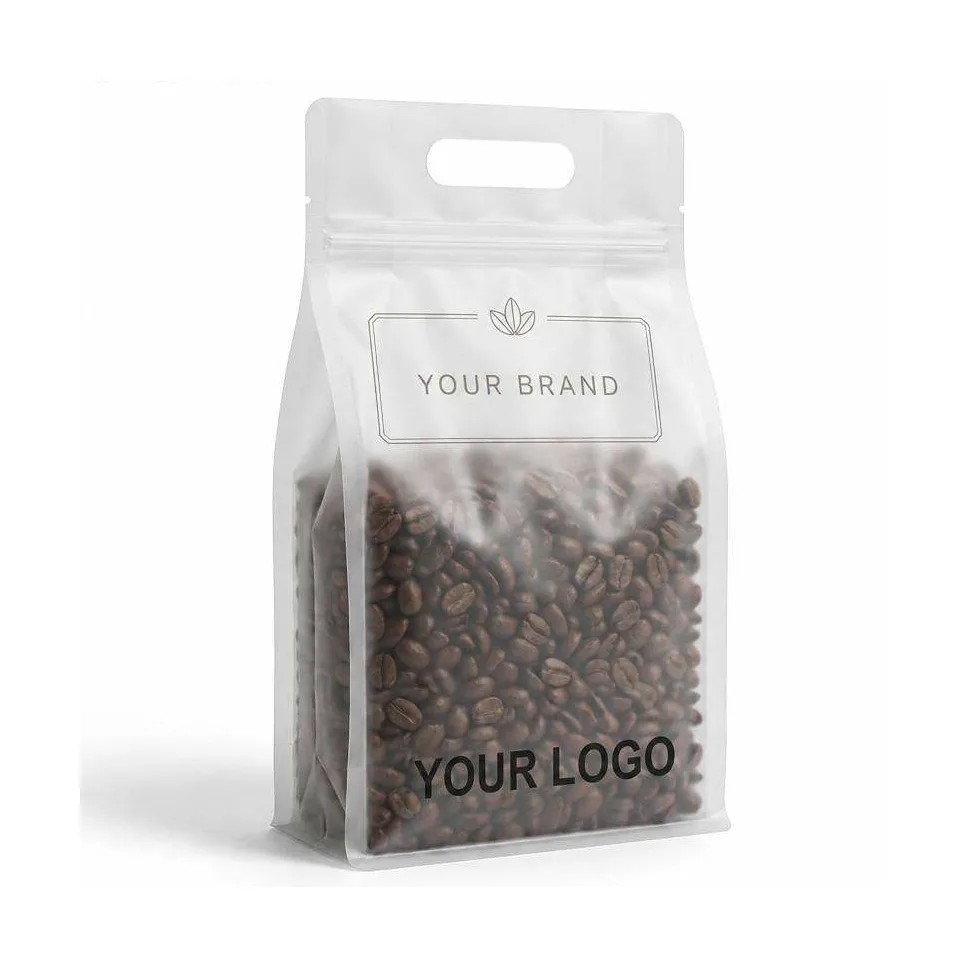
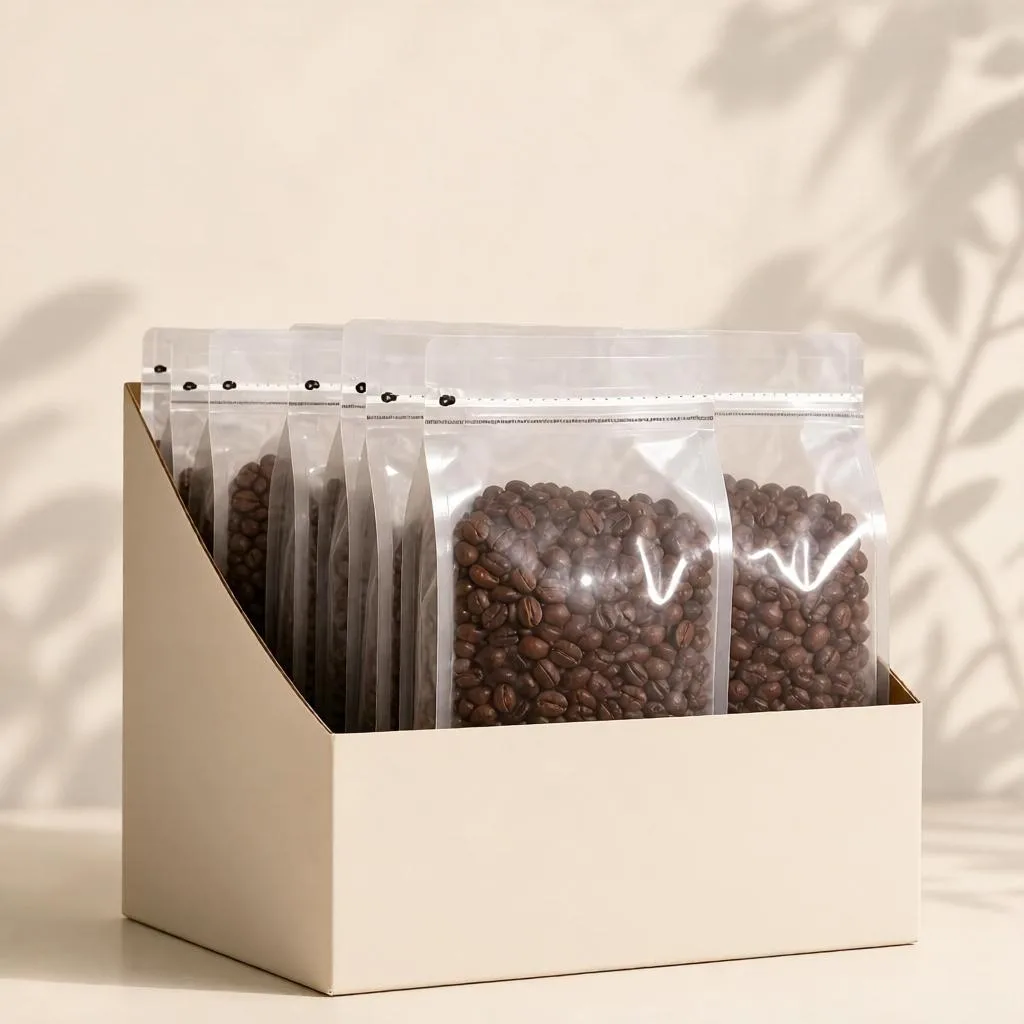
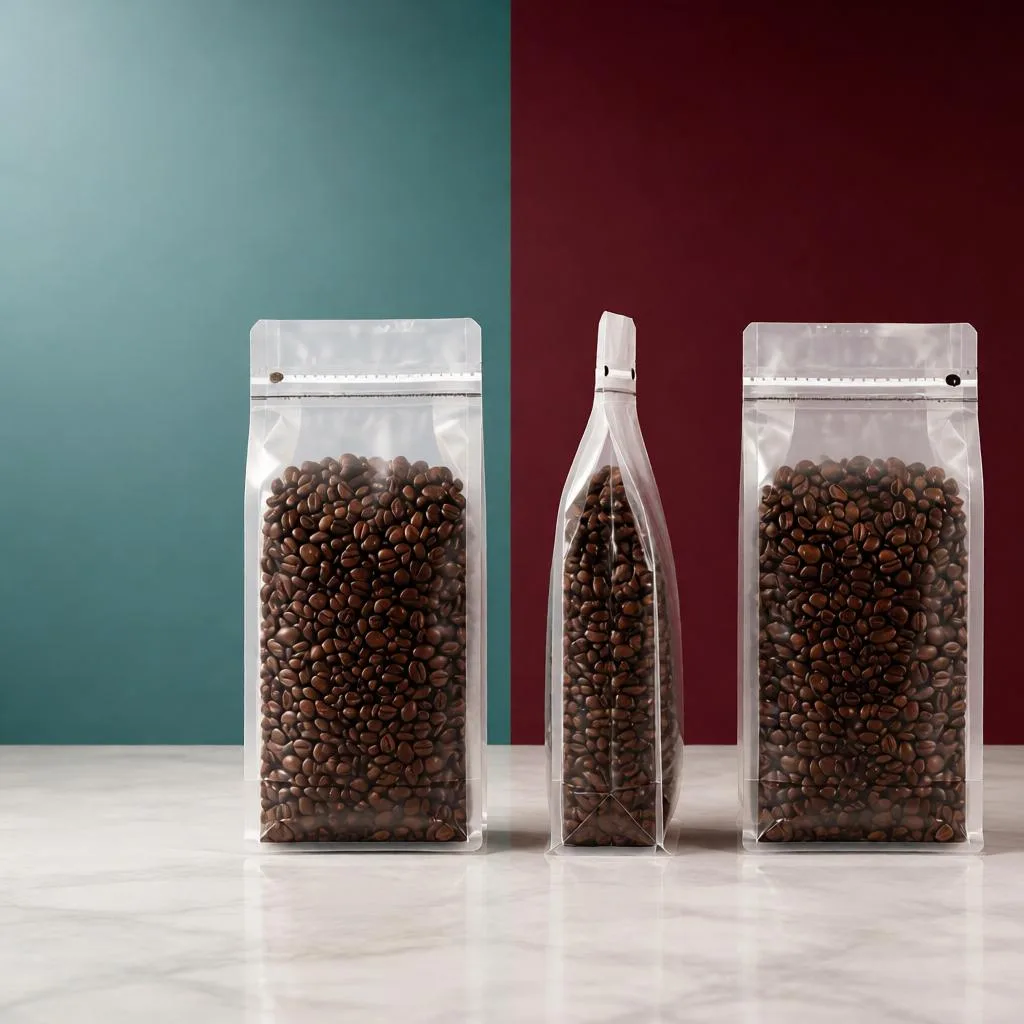
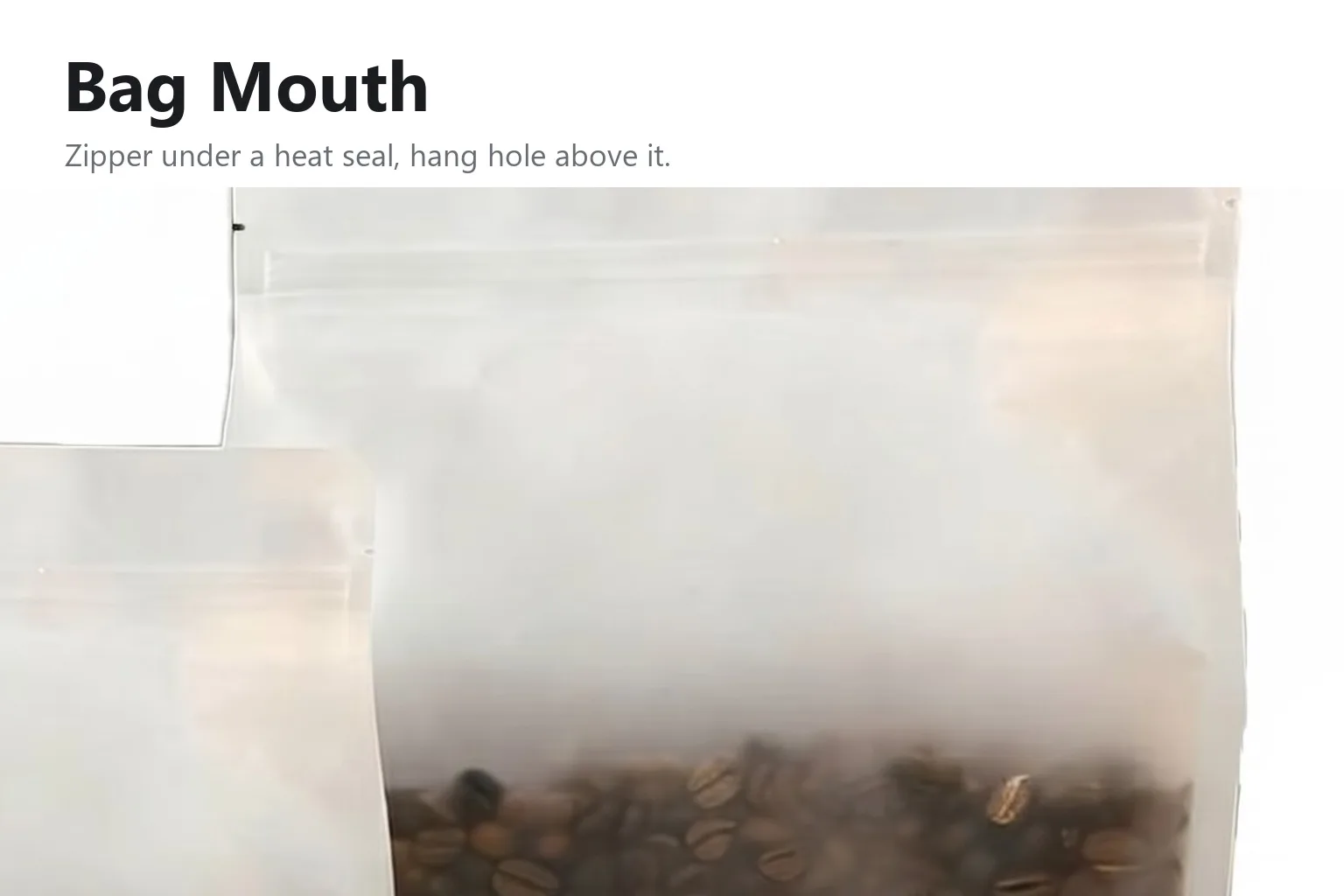
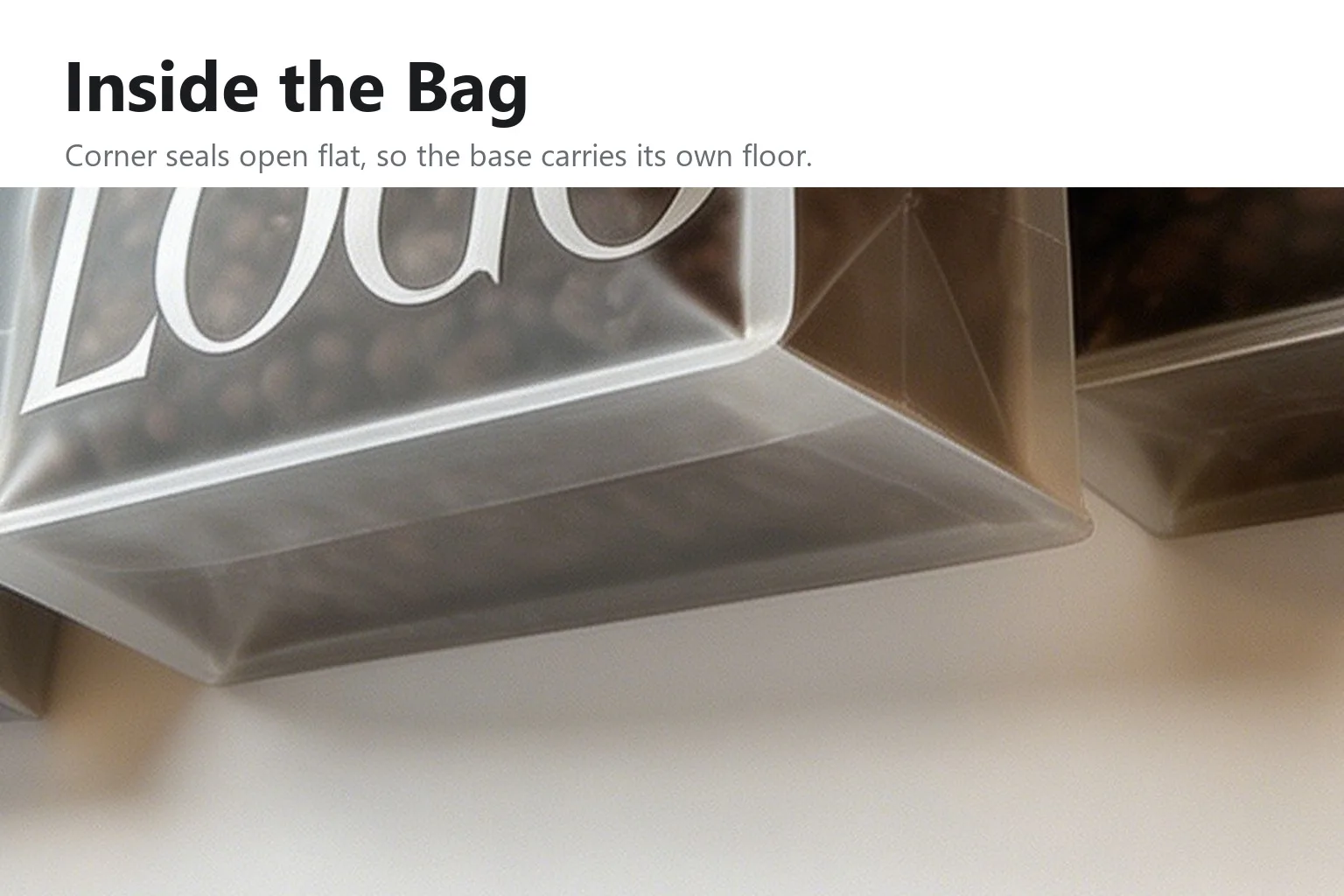
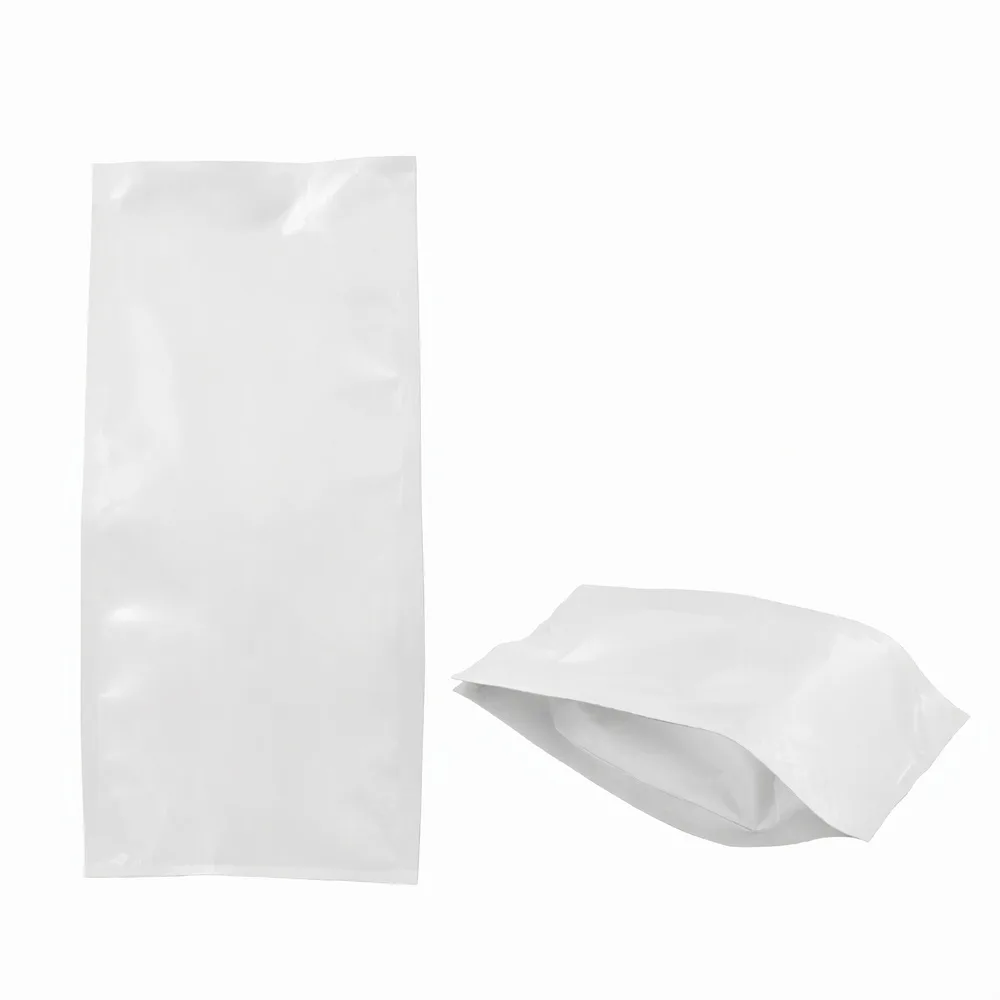
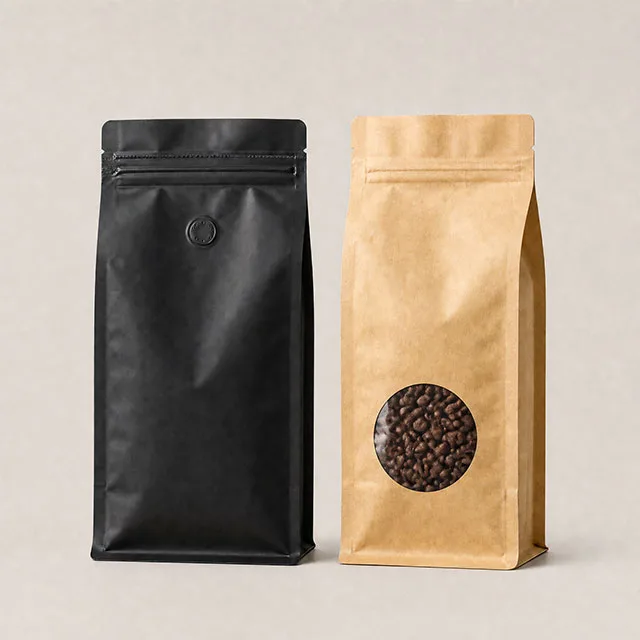
Retail coffee sells on what the buyer can see, and an opaque bag hides it. This pouch is built on a clear or matte film wall instead of foil, so the roast sits in the window rather than behind a print. The base is folded into four corner seals, so the pouch opens a rectangular floor of its own and stands square on a shelf without an insert. A press-to-close zipper sits under a heat-sealed band, and a punched hang hole above it lets a store hang the pack. Dropping the metallized layer is the trade: light comes in, so the format suits rested beans and ground coffee sold fast.
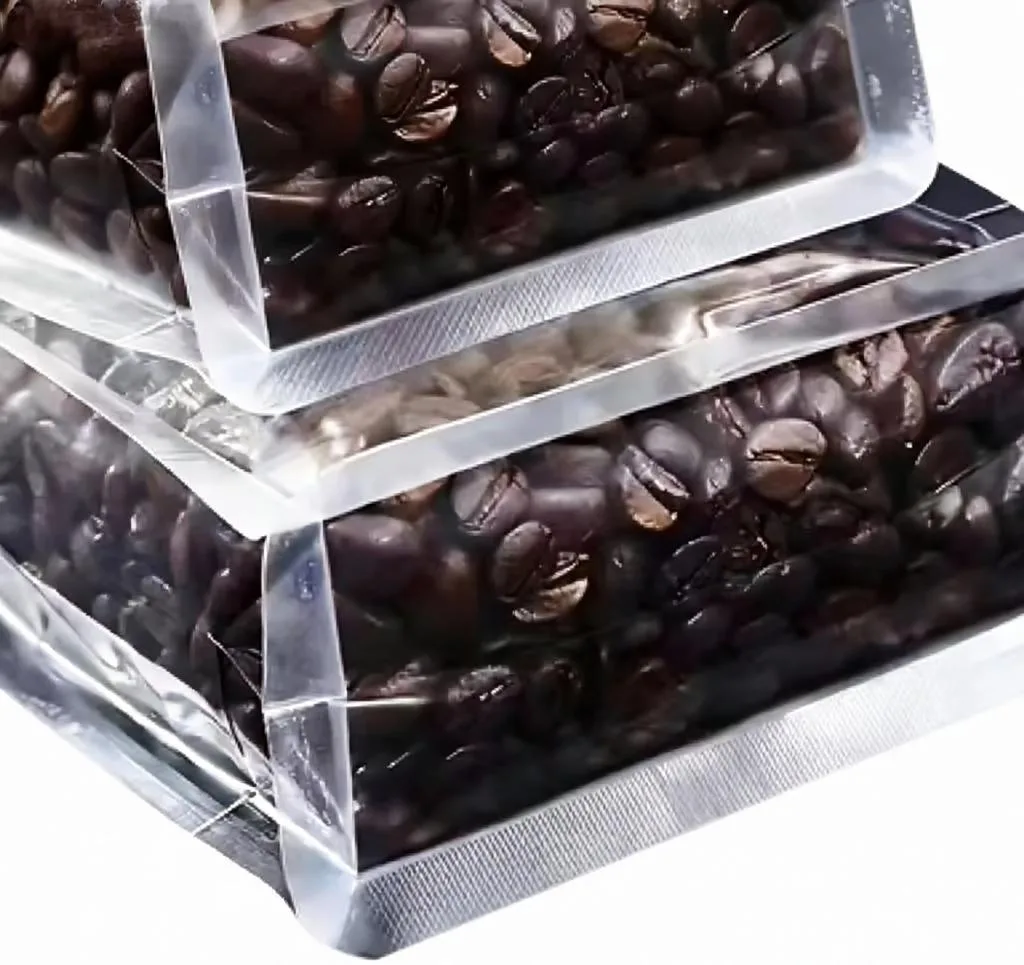
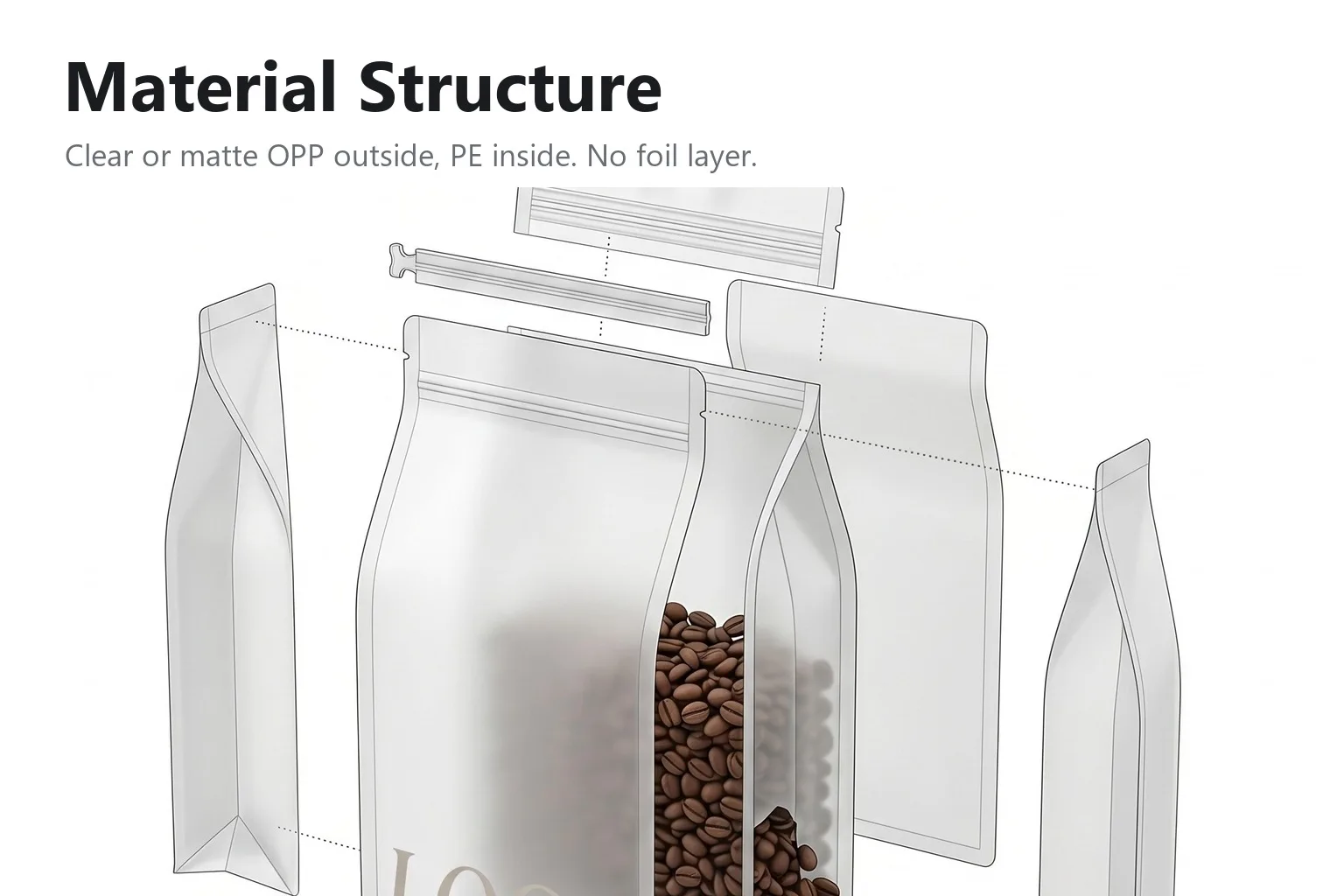
Two finishes share one construction. The outer ply is clear BOPP for full visibility, or matte OPP when the artwork needs a soft non-reflective face; PE sealant inside takes the heat seal. Nothing between them is metal, no foil and no metallized film, so the wall reads transparent at 0.10 to 0.14 mm. Front and back panels join to two side gussets, and the base folds into four corner seals, the same block bottom geometry as our opaque bags.
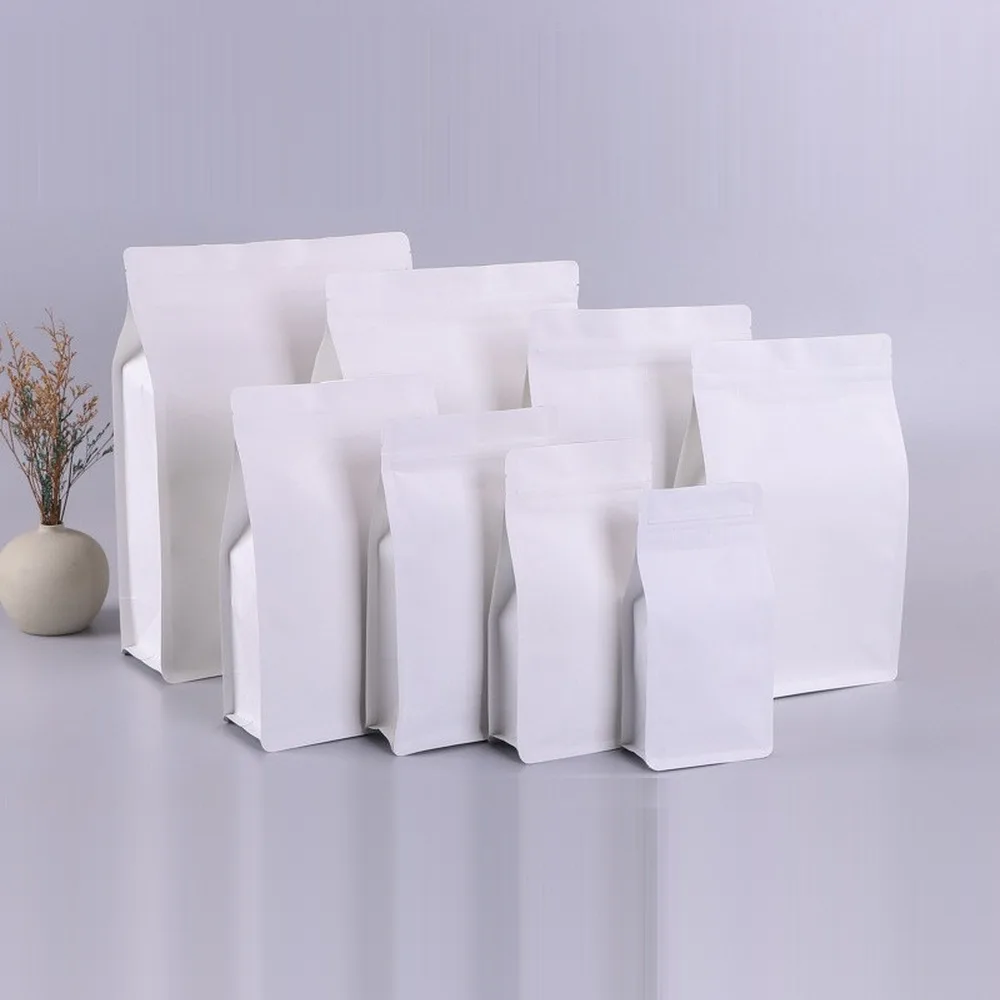
Seven stock sizes run from 10 x 20 + 6 to 23 x 33 + 10 cm on outer dimensions, covering roughly 100 g to 1.5 kg of beans or grounds. Because the footprint stays rectangular, several packs line up flush on a shelf edge and the stack holds after handling. Fill should stop with the top fifth left clear, so the zipper and the seal band stay free of product, and the hang hole punches through that empty band rather than the printed area.
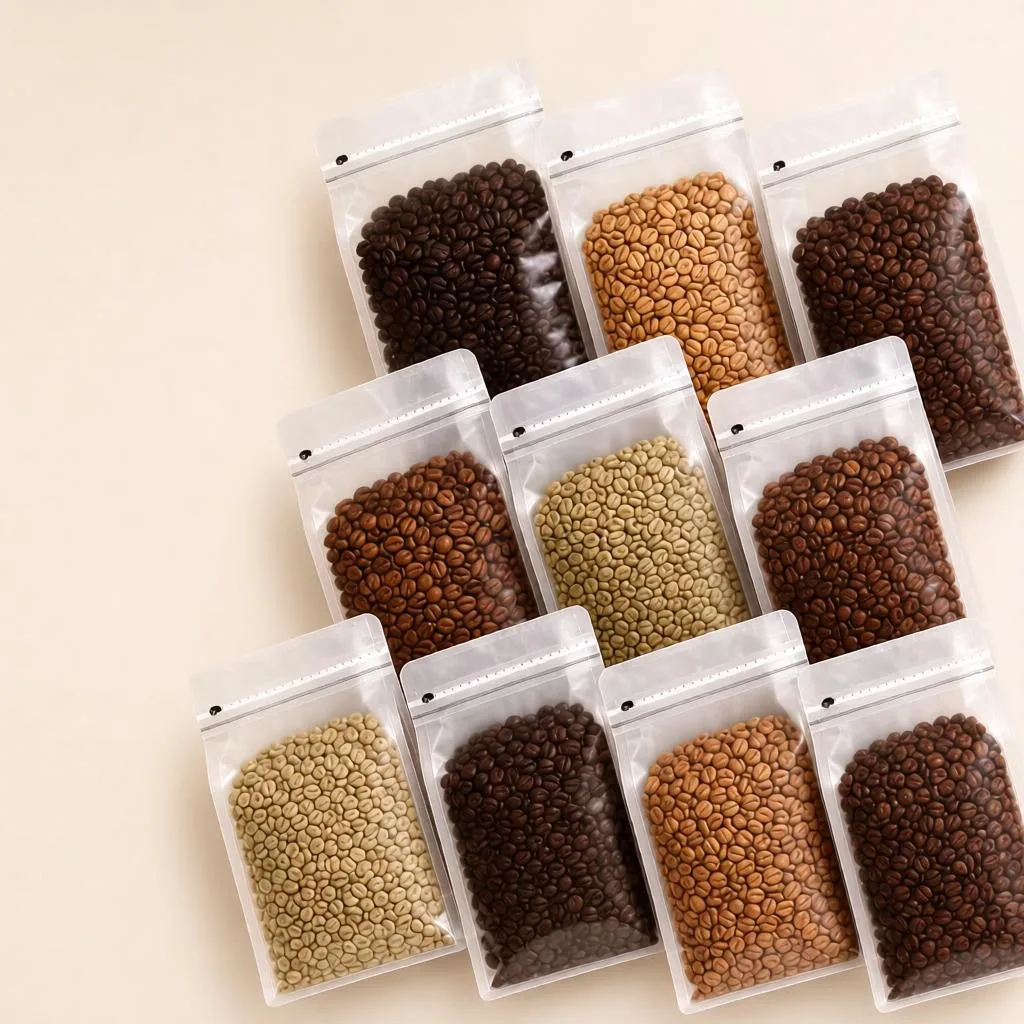
The finish is the real decision. Clear film shows bean colour, oil sheen and roast level at full contrast, which reads as a sample room or specialty pack, but it also shows every fingerprint and scuff on the surface. Matte OPP scatters light, softens the bean into a silhouette and hides surface marks, which suits retail where the pack is picked up and put back. The same artwork prints roughly half a tone darker on matte than on gloss.
Only the wall is fixed. A plain heat seal, a tin tie, a spout or a one-way valve can replace the zipper, and size, base depth, finish and print follow your artwork with a proof signed before the run. What this format cannot carry is a long ambient shelf life: with no metal layer, light and oxygen pass through, so we quote it for fast turnover, cold chain or display rather than months on a warm shelf.
| Parameter | Specification |
|---|---|
| Structure | Eight-side seal flat bottom, four corner seals |
| Wall | Clear BOPP or matte OPP outside, PE sealant inside, 0.10-0.14 mm |
| Metal layer | None; no foil, no metallized film |
| Finish | Clear (full visibility) or matte (diffused frosted) |
| Closure | Press-to-close zipper under a heat-sealed band; plain seal optional |
| Valve | None as standard; one-way degassing valve on request |
| Hang hole | One punched hole in the top seal band |
| Available sizes | 10 x 20 + 6 cm to 23 x 33 + 10 cm, seven stock sizes, outer |
| Fill range | Approx. 100 g to 1.5 kg, confirmed on samples |
| Shelf life guidance | Short cycle only: light and oxygen cross the clear wall |
| Printing | Rotogravure up to 12 colours, reverse printed, white flood where opaque |
| Customization | Print / size / finish / closure / valve / hang hole |
On a clear pack the print is the design, not a cover. Brand, roast notes and legal marks sit on the front and back panels, and every area left unprinted becomes a window; with no paper or foil behind it, a gap in the artwork is something the buyer looks through. The side gussets stay narrow, because type set across the fold disappears into the crease and reads as a smudge from the shelf.
Rotogravure runs up to twelve colours on clear or matte OPP, printed reverse so the ink sits behind the film and cannot be scuffed off the face in transit. A white flood is laid only where the artwork has to be opaque, normally behind the copy block and the barcode. Where the flood stops is the window edge, and that edge has to be drawn as a deliberate line rather than left to whatever the plate happens to do.
Register is the hard part. Without an opaque substrate, half a millimetre of misregister shows as a coloured fringe on every edge, and the boundary between white flood and window has to land exactly where the design says. Fine reverse type below six points fills in on matte film, thin metallic lines break along the grain, and a matte surface absorbs ink so one file prints two different densities on two finishes.
Proofing settles it. We pull a proof on the same film and the same finish, sign it before plates are cut, and keep the seal band, the zipper track and the hang hole clear of ink so nothing lands where the pack must close or be punched. Barcode and batch code sit on a white flood with a clear quiet zone, and the window edge is marked on the artwork for your check before the run.
There is no separate lining and no insert: the pack is one laminated wall. Clear or matte OPP outside carries the print or stays bare, PE sealant inside takes the heat seal and is the only layer touching the coffee. No foil and no metallized film sit between them, which is what keeps the face see-through and what sets the shelf life.
That single wall is also the weak point. Light passes straight through it, and oxygen crosses it faster than through a foil laminate, so a fill that will sit warm for months belongs on an opaque bag.
North Side Of Nanyi Road, Shiwan Town Science And Technology Park (10th Floor, Building 1, No. 13)
INQUIRY