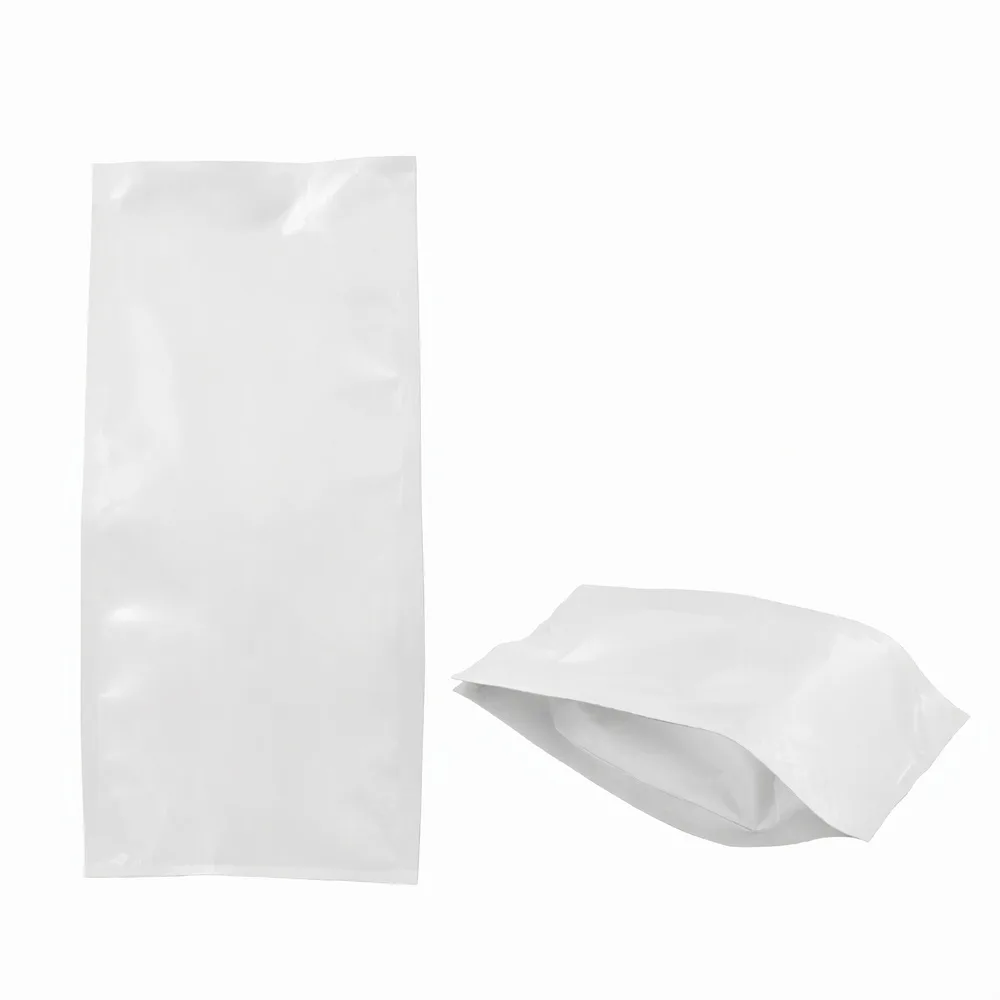
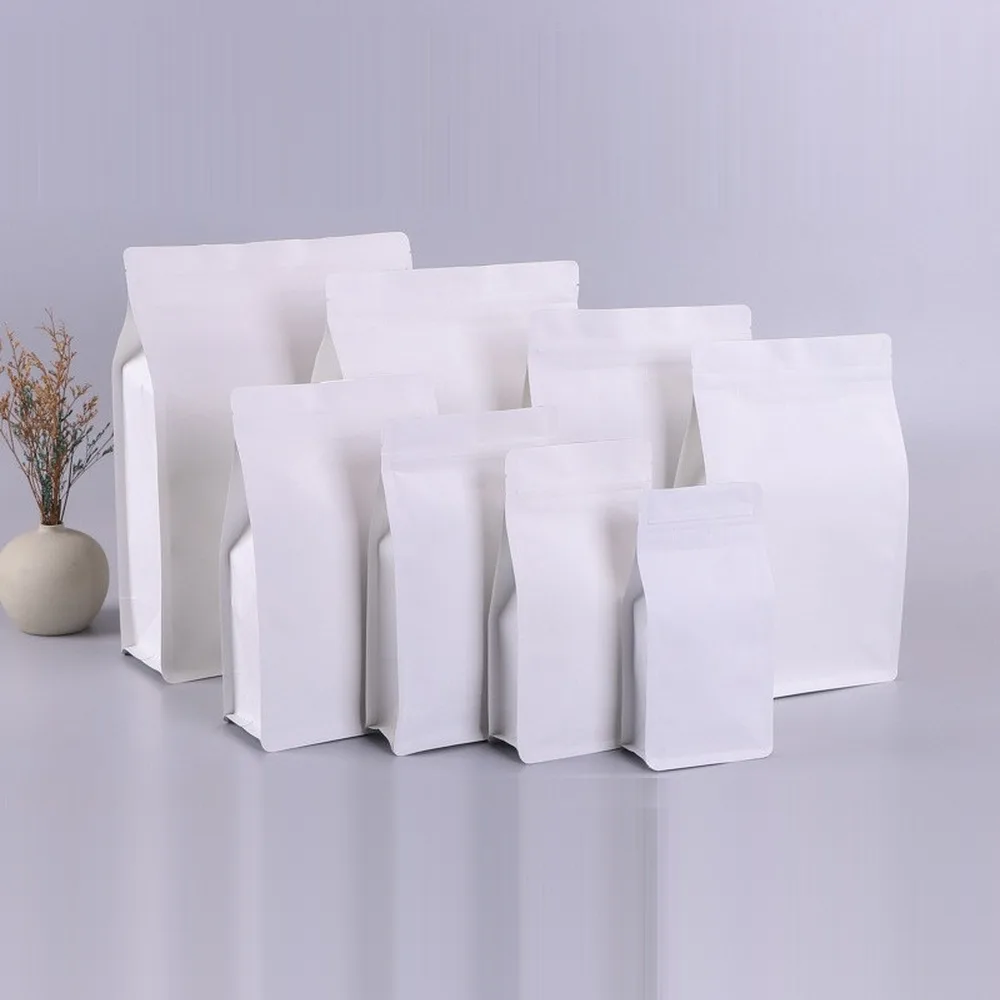
A pharmacy insulated pouch is a barrier before it is a bag. What it stops is water vapour and light, and the ply doing that work is the aluminium in the middle — not the closure at the mouth. That splits the decision in two: the wall, which is the same either way, and the closure, which is not.
One: the wall is the same either way
Both formats are built alike — printed PET outside, aluminium foil in the middle, PE sealant inside. Three-ply, three edges heat sealed, the fourth carrying the closure. On our
press-to-close pharmacy pouch that edge holds two ribs; on the
slider zip version it holds a track and a puller.
So swapping one for the other is not a re-specification, it is a change at the head. Foil gauge, print, size range and sealant stay put. The same logic runs through the rest of the sheet: a size list that stops at width and height leaves out most of what decides the fit, which is the point of
what a size list leaves out.
Two: what a press rib asks of the person closing it
Two ribs are extruded in blue and welded to the film before filling. They run the length of the mouth, and the closure is made by pressing them together between thumb and finger. There is no puller, so nothing catches on a dispensing rack and nothing is lost in a drawer.
Below the ribs sits a laser score, cut to a controlled depth. It gives the pouch a second life: tear at the score and it opens for single use with the ribs intact behind it, or work the ribs apart and it closes again. That is what makes the format workable for a repeat prescription. The score is also the tightest tolerance in the job — it has to clear the rib weld above it and the product area below it. Drift up and the pouch opens early; drift down and the tear runs into the face.
Three: what a slider changes
The puller is a moulded body sitting on the profile. Run it along the mouth once and every tooth has closed behind it. The seal does not depend on pressing evenly by hand — the difference that shows at a counter where one person closes twenty pouches in a row and the twenty-first is closed in a hurry.
At the far end it parks in a stop, and the mouth stays shut until it is pulled back. This build has no separate tear score: the slider is the only way in, and the only way it reopens.
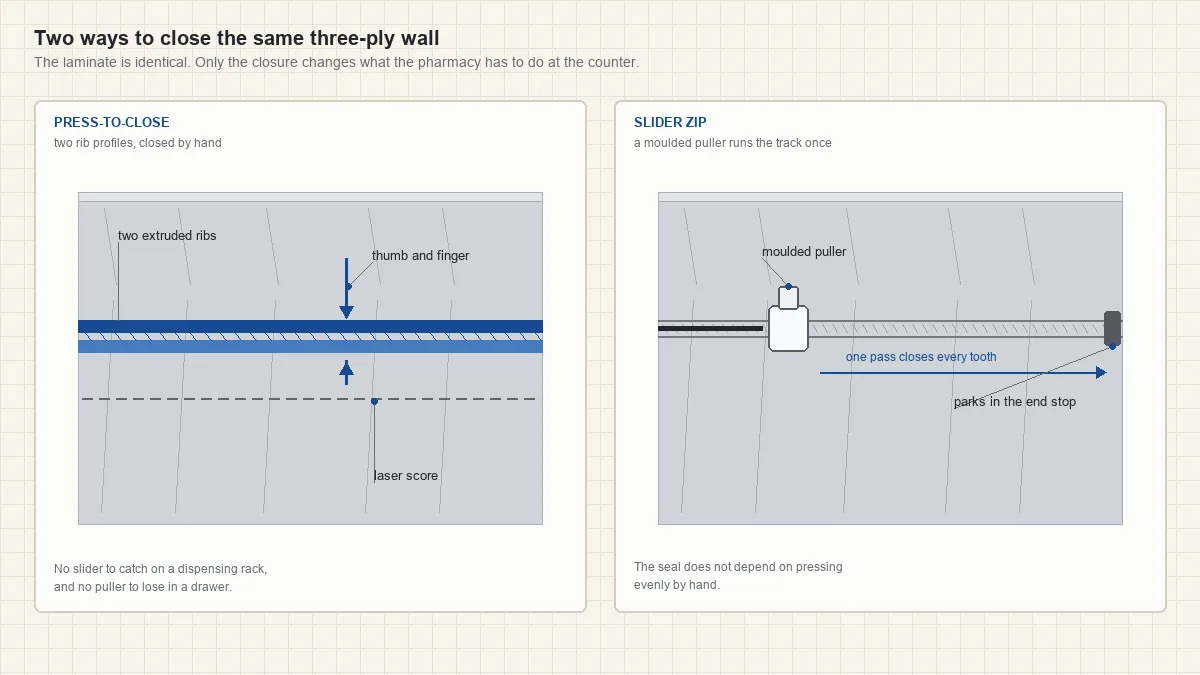 Fig.1 Two closures on the same three-ply wall: two ribs pressed by hand with a score below them, and a puller that closes the track behind it and parks at the stop
Four: pick by how many times the pouch is opened
This is the only test that holds up, and it is one question. Is the pouch opened once, or more than once?
For a pouch filled, sealed, handed over and thrown away after a single opening, the press rib does the same job for less. For a repeat prescription, a course of treatment, or a pack that goes home in a bag and comes back out, the slider wins: it closes in one pass and does not ask the patient to re-press two ribs evenly.
Five: what the slider costs, and where it can fail
A press-to-close pouch is film plus ribs. A slider pouch is film, ribs, a moulded puller and a stop at the end of the track. That lands in tooling and in the unit price, which is the reason to order a slider where the closure is genuinely handled more than once rather than where it looks more finished.
Two production points follow. The track is applied after printing, so the mouth band is left as bare foil — the weld meets film rather than ink, and the artwork has to know where that band falls. And the profile needs a flat substrate: a crease or a trapped bubble under the track shows up as a slider that runs stiff in one place and free in the next. Every puller is run once before packing, and the check is the feel, not the look.
One limit worth stating plainly: neither format is child resistant unless a child-resistant slider version is ordered separately.
Tell us whether the pouch opens once or repeatedly, what goes in — blister strips, sachets, a folded prescription, a sample box — and the tray or box dimensions. That is enough to quote the closure that matches the use rather than the one that is cheaper to draw.
Send us your pack details and we will come back with a pouch built around the answer.