Custom packaging ·7-day sampling - Global delivery support

Biodegradable PLA Stand-up Pouch with Corn-Starch Based Compostable Film and Plant-Derived Soy Ink Printing

Biodegradable PLA Stand-up Pouch with Corn-Starch Based Compostable Film and Plant-Derived Soy Ink Printing

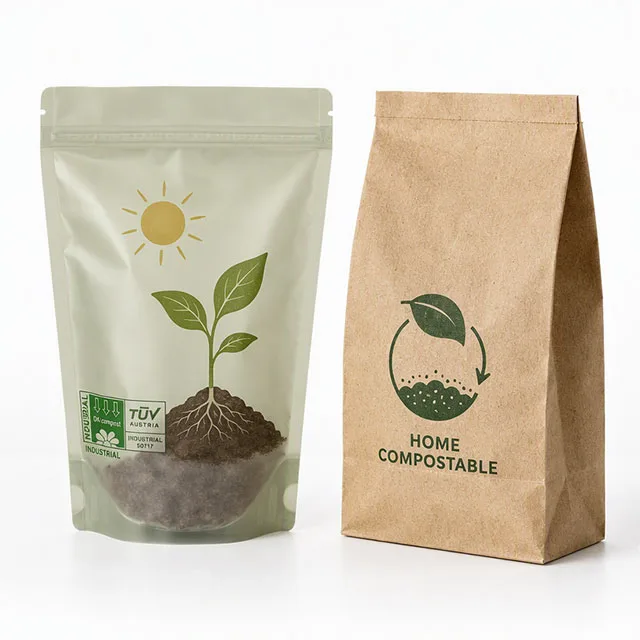
The biodegradable PLA stand-up pouch represents the frontier of sustainable flexible packaging — a format where every component, from the film substrate to the printing ink to the adhesive, is derived from annually renewable plant sources rather than fossil carbon, and where the entire package is designed to return to soil through industrial composting at end of life. This is packaging designed for the circular bioeconomy, and it demands a complete rethinking of materials science from first principles.

Color

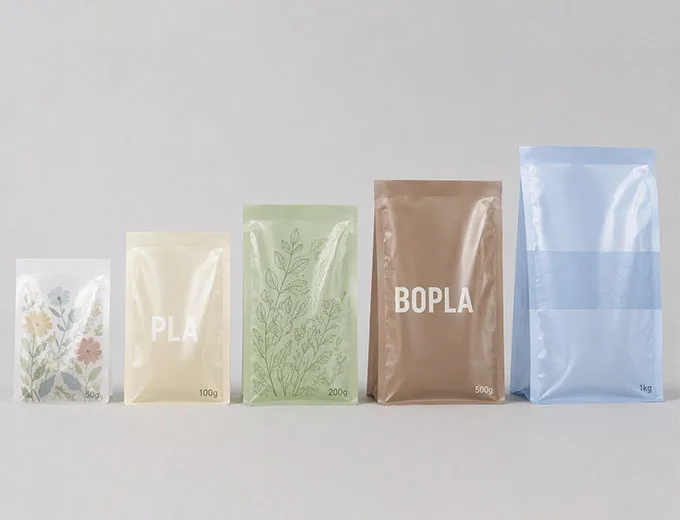
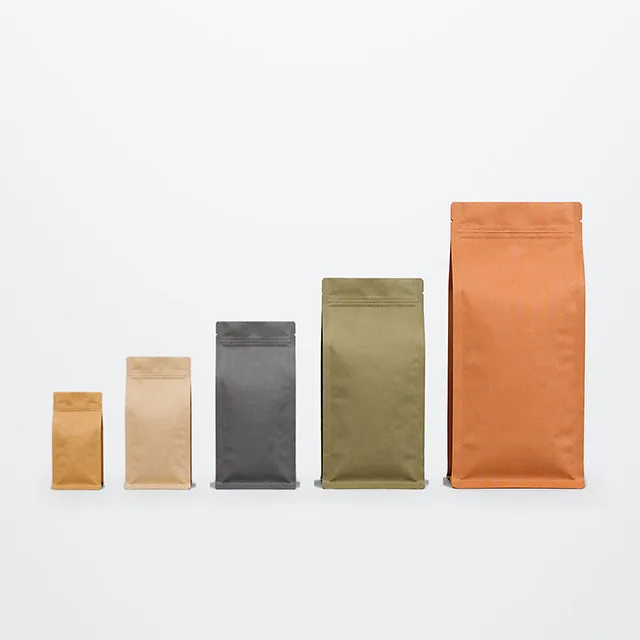
Size

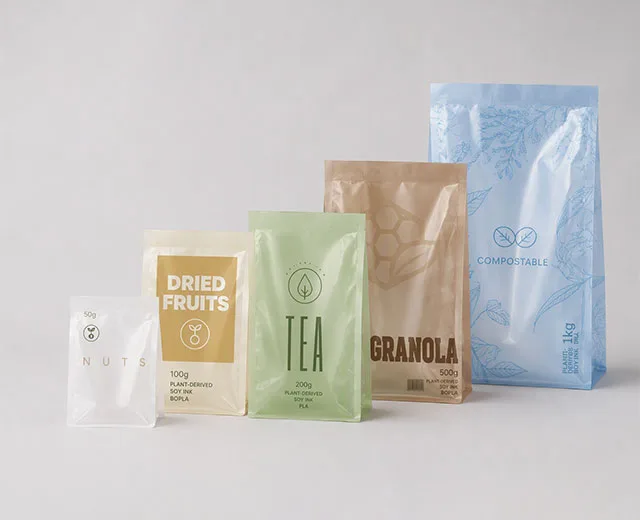
  • 50g
  • 100g
  • 200g
  • 500g
  • 1kg
  • Custom Size Available

Shipping

Express (DHL/FedEx/UPS), Sea Freight, Air Freight

Payment Terms

T/T (Bank Transfer), L/C at Sight, PayPal, Western Union, Alibaba Trade Assurance

Lead Time

Samples: 3-5 working days | Mass Production: 15-25 working days

Samples

Contact us for FREE samples
Contact Us WhatsApp

Product Description

Plant-Derived Performance: Engineered PLA Film for Industrial Composting

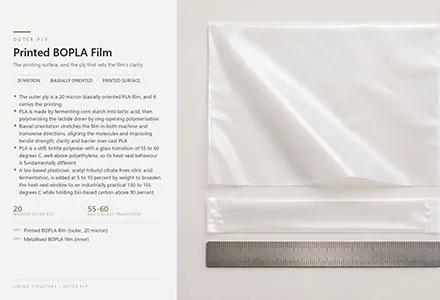
PLA (polylactic acid) is produced through the fermentation of corn starch (or other carbohydrate feedstocks such as sugarcane, cassava, or sugar beets) into lactic acid, which is then polymerized through ring-opening polymerization of the lactide dimer. The resulting polymer is a transparent, stiff, bio-based polyester with a glass transition temperature of 55-60°C — significantly higher than polyethylene, which means PLA films are stiffer and more brittle at room temperature, and their heat-seal behavior is fundamentally different. Standard PE heat-seal equipment operates at 120-160°C, but PLA’s melting point is 150-160°C with a very narrow processing window — overheating by 5-10°C causes the film to shrink and distort before the seal forms, while underheating produces weak seals that fail peel testing.

Our solution uses a modified PLA formulation with a bio-based plasticizer (acetyl tributyl citrate, derived from citric acid fermentation) that lowers the glass transition temperature and broadens the heat-seal window to an industrially practical 130-155°C range. The plasticizer content — typically 5-10% by weight — is calibrated to provide sufficient flexibility for pouch converting and consumer handling while maintaining the >90% bio-based carbon content required for OK Biobased certification. The film is produced through a biaxially oriented PLA (BOPLA) process that stretches the film in both machine and transverse directions during manufacturing, inducing molecular orientation that improves tensile strength, clarity, and barrier properties compared to unstretched (cast) PLA film.

The environmental end-of-life scenario is industrial composting under EN 13432 / ASTM D6400 conditions: 58°C ± 2°C, >90% relative humidity, and aerobic microbial activity. Under these conditions, PLA undergoes a two-step degradation: first, hydrolysis breaks the ester bonds in the polymer backbone, reducing molecular weight from ~100,000 to <10,000 Daltons, at which point the oligomers become water-soluble. Second, microorganisms (bacteria and fungi naturally present in compost) metabolize these oligomers into CO₂, water, and biomass. The complete process — disintegration, biodegradation, and ecotoxicity testing — takes 12-24 weeks, after which the packaging has returned to soil as humus with zero persistent microplastic residue.

Product Description

Specifications

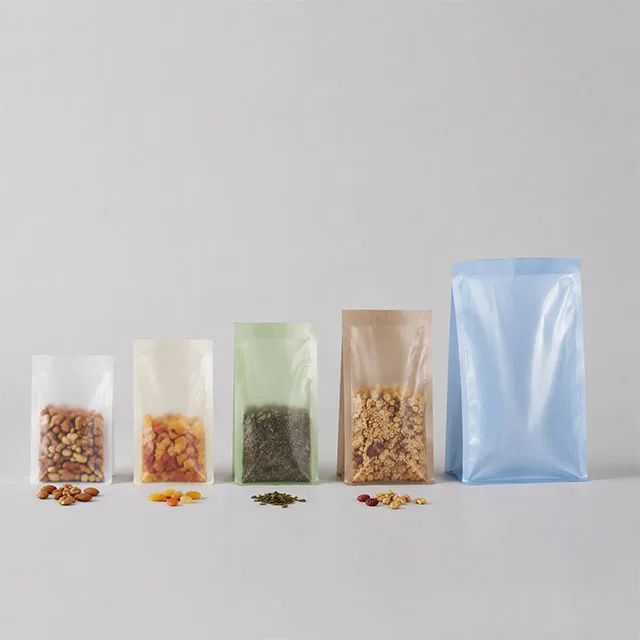
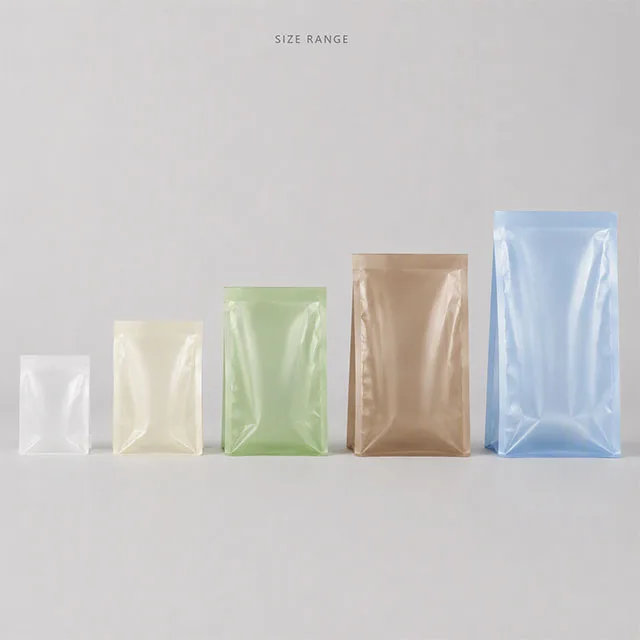
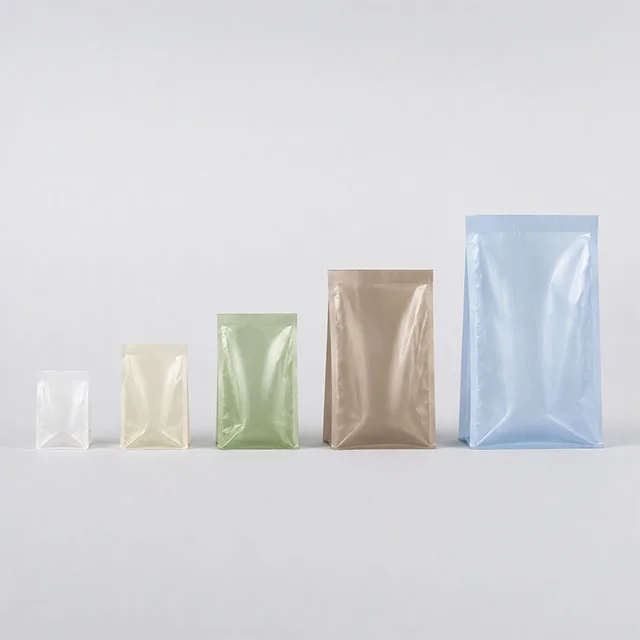
Customizable Color & Size Options for Every Market Need
Color Size
Translucent Natural 50g
Soft Cream 100g
Leaf Green 200g
Earth Brown 500g
Sky Blue 1kg
Custom Color Available Custom Size Available

Printing Process

Plant-Sourced Ink, Earth-First Print: Fully Compostable Printing on PLA Film
Printing Process

Printing on PLA film requires a fundamental departure from the solvent-based and UV-curable ink systems that dominate conventional flexible packaging printing — because if the goal is a fully compostable package, every component including the ink must meet EN 13432 biodegradation and ecotoxicity standards. Conventional nitrocellulose-based gravure inks contain heavy-metal pigments (cadmium, lead, chromium in yellow, red, and green pigments) and cobalt driers that are classified as ecotoxic and would cause the entire package to fail compost certification.

We use a 100% plant-derived ink system based on soy protein binders and organic pigments extracted from natural sources: carbon black from wood char, titanium dioxide from mineral sources, iron oxides for earth tones, and chlorophyll-derived green pigments. The soy binder is chemically modified to improve adhesion to the low-surface-energy PLA substrate, which — like all polyesters — presents a more challenging adhesion surface than polyolefins. The binder modification introduces amine functional groups that form hydrogen bonds with the ester carbonyls on the PLA surface, improving ink adhesion by 40-60% compared to unmodified soy inks. The ink is cured through hot-air evaporation of the water carrier, with no UV photoinitiators (which are synthetic and non-compostable) and no solvent emissions.

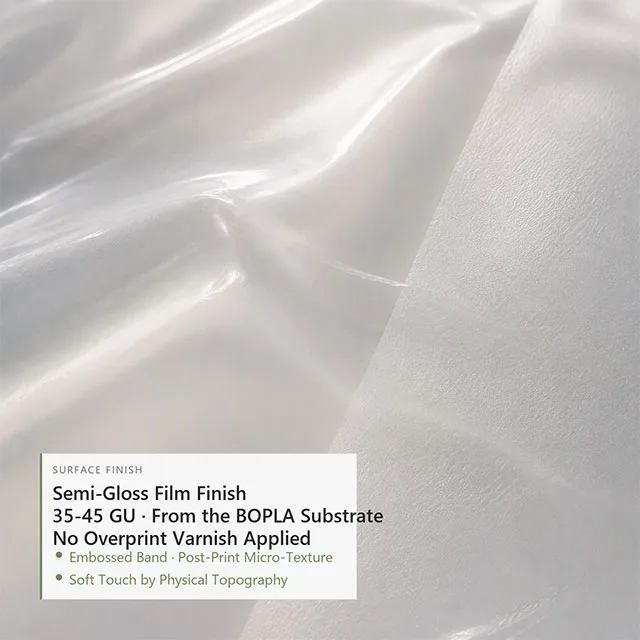
The visual aesthetic of soy-based printing on PLA is distinct from conventional packaging: the colors have a softer, more organic saturation profile — slightly muted compared to petrochemical inks — that aligns with the “natural, plant-based” brand positioning. The surface finish is semi-gloss (60° gloss reading of 35-45 GU), produced by the inherent gloss of the BOPLA film substrate rather than an applied overprint varnish — eliminating another non-compostable component. For brands that want a matte finish, we use a post-print embossing roller that imparts a micro-texture to the film surface, creating a soft-touch effect through physical topography rather than chemical coating.

Lining Decoration

Nano-Sealed Integrity: Compostable Metallized Barrier Engineering for PLA Pouches
Outer Layer

Outer Layer

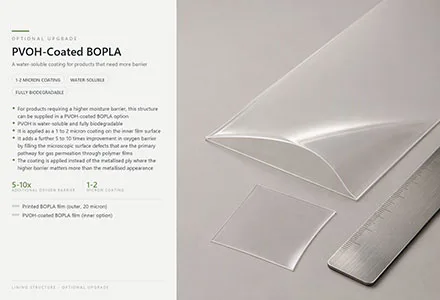
PVOH-Coated BOPLA
Middle Layer

Middle Layer

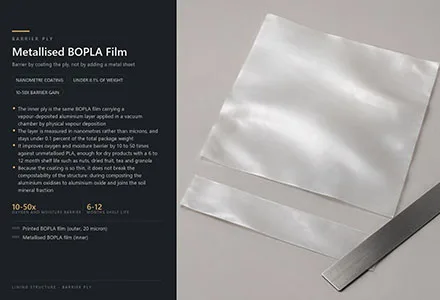
Metallised BOPLA Film
contact layer

Contact Layer

Printed BOPLA Film

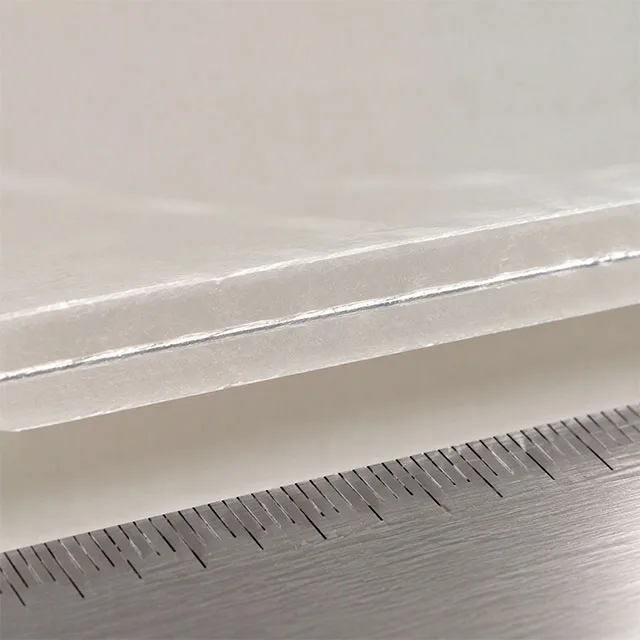
The lining of a PLA stand-up pouch faces a unique constraint: every layer of the structure must be compostable, which eliminates the aluminum foil, EVOH, and nylon barrier layers that conventional composite pouches rely on. Achieving adequate barrier performance — particularly for moisture-sensitive products — requires a different approach to barrier engineering: not adding barrier layers, but modifying the PLA itself.

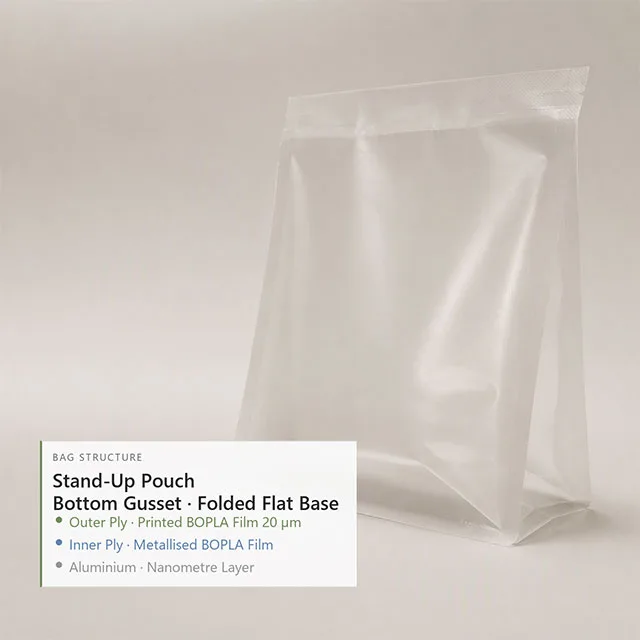
The structure uses a two-ply laminate of BOPLA films: the outer ply is the printed surface (20μm), and the inner ply is a metallized BOPLA film where a vapor-deposited aluminum layer — measured in nanometers, not microns — is applied to one surface of the PLA film through physical vapor deposition in a vacuum chamber. Because the aluminum layer is <0.1% of the total package weight, the entire structure still achieves >90% organic carbon content and passes the EN 13432 disintegration test (the thin aluminum layer oxidizes to aluminum oxide during composting and integrates into the soil mineral fraction — aluminum is the third most abundant element in the Earth’s crust).

The metallized layer provides a 10-50x improvement in oxygen and moisture barrier compared to unmetallized PLA, making the pouch suitable for dry products with moderate shelf-life requirements (6-12 months for nuts, dried fruits, tea, granola). For products requiring higher moisture barrier, we offer a PVOH (polyvinyl alcohol) coated BOPLA option — PVOH is water-soluble and fully biodegradable, and when applied as a 1-2μm coating on the inner film surface, it provides an additional 5-10x improvement in oxygen barrier by filling the microscopic surface defects that are the primary pathway for gas permeation through polymer films.

Get In Touch With Us

Reach out for any inquiries, support, or to discuss how we can meet your industrial needs.
  • Address

    North Side Of Nanyi Road, Shiwan Town Science And Technology Park (10th Floor, Building 1, No. 13)

Contact Me

    You can upload a PDF or an image(max 5MB)

    INQUIRY