Custom packaging ·3-5 day sampling - Global delivery support

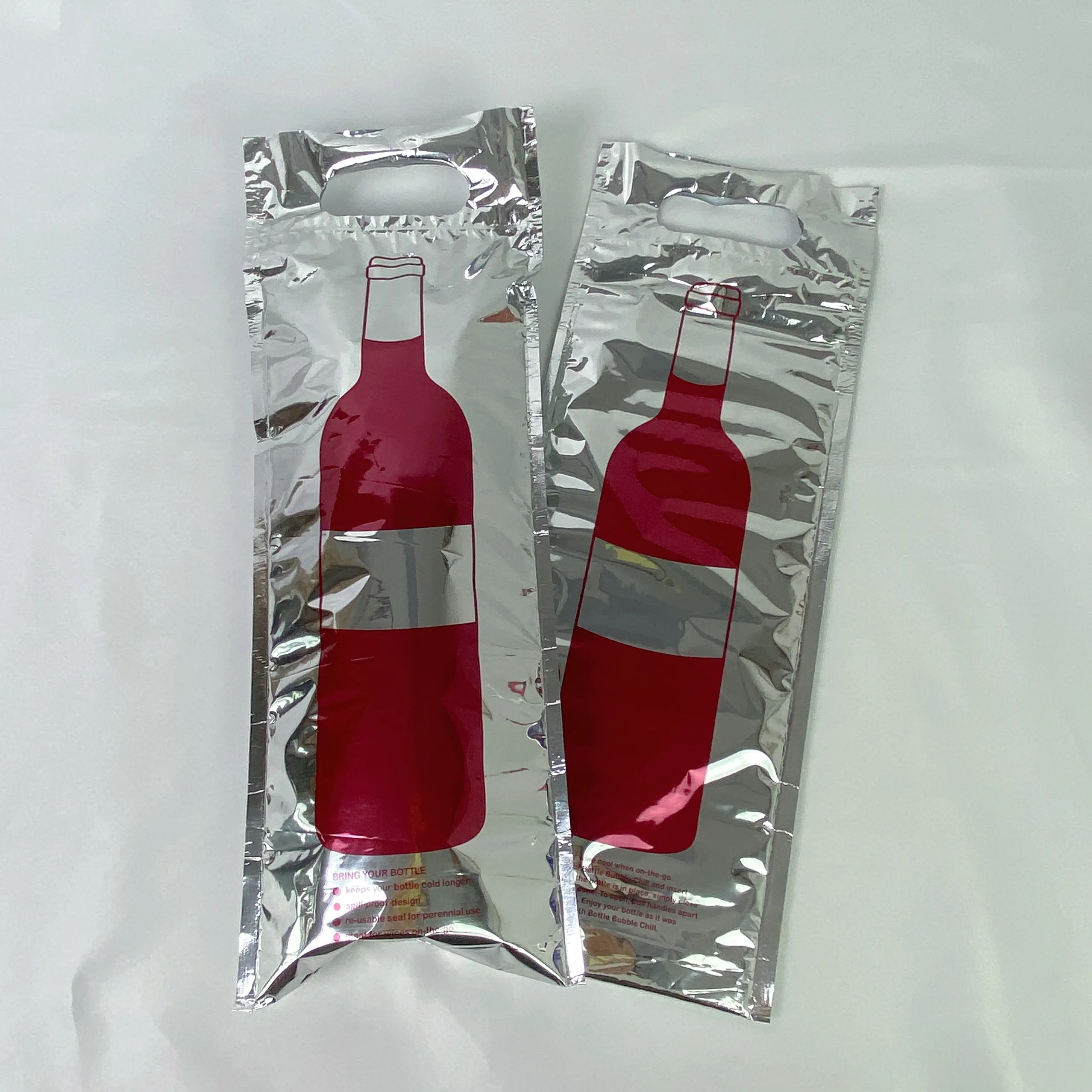
Metallised Foil Insulated Bag for Food Packing, Flat or Square Bottom

Metallised Foil Insulated Bag for Food Packing, Flat or Square Bottom

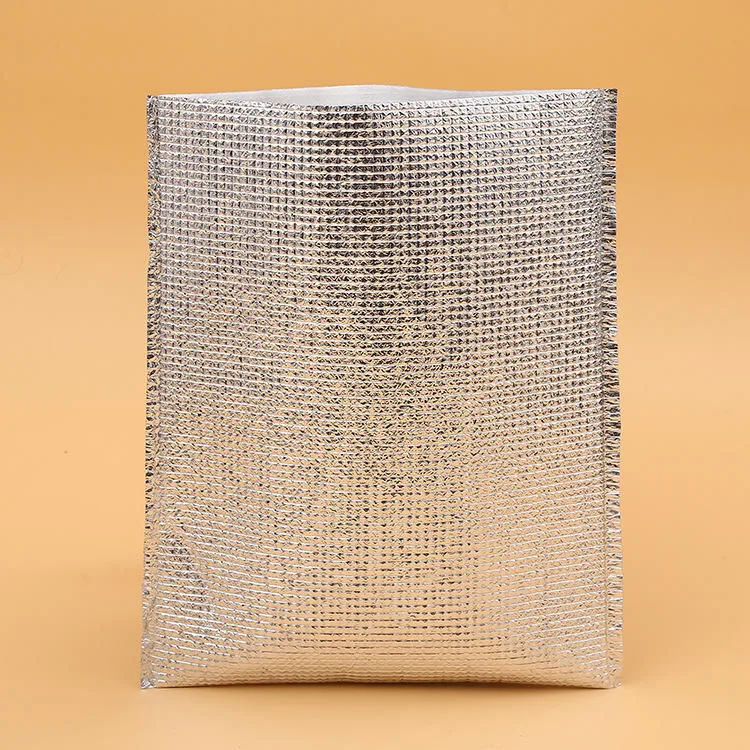
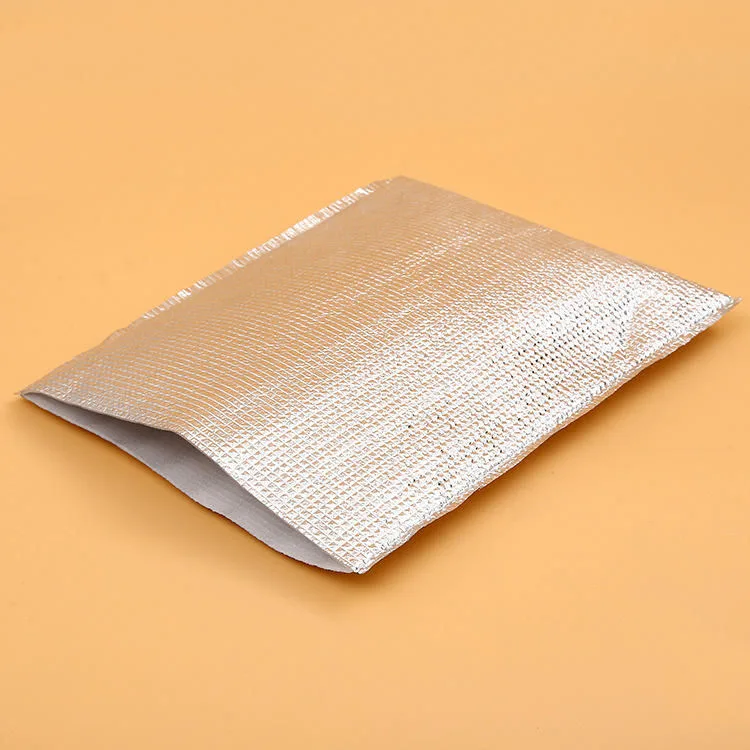
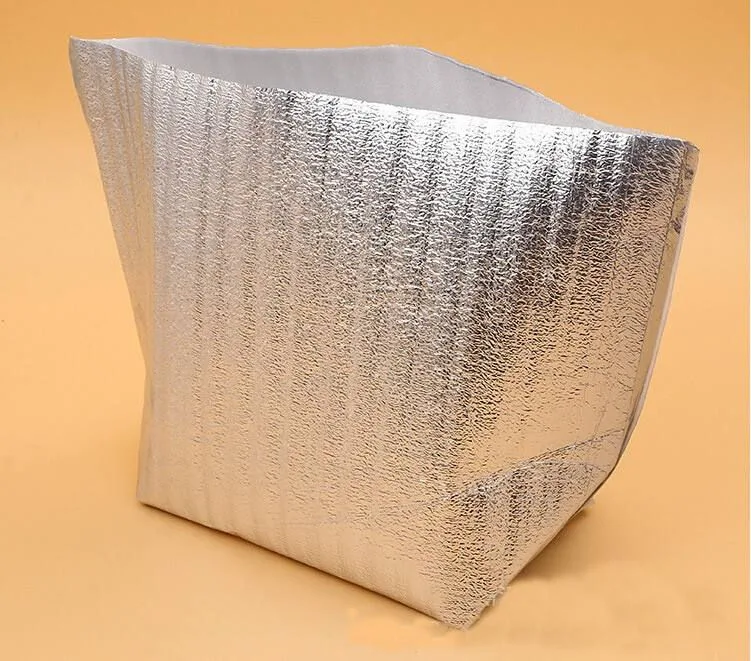
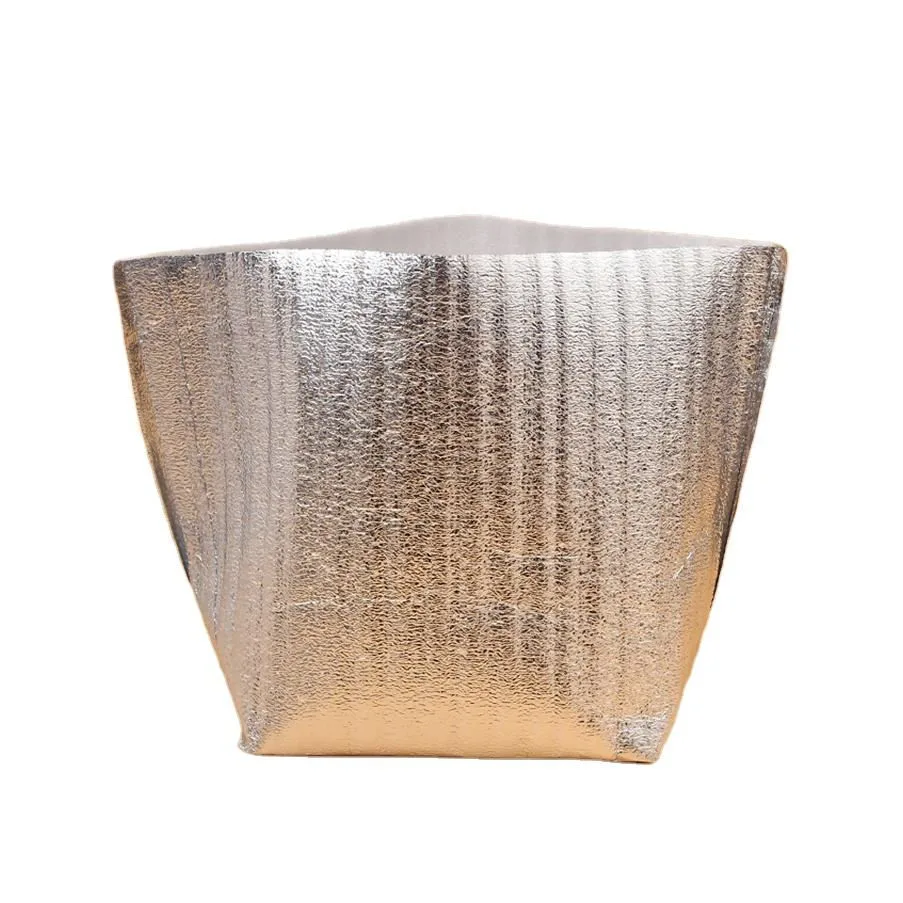
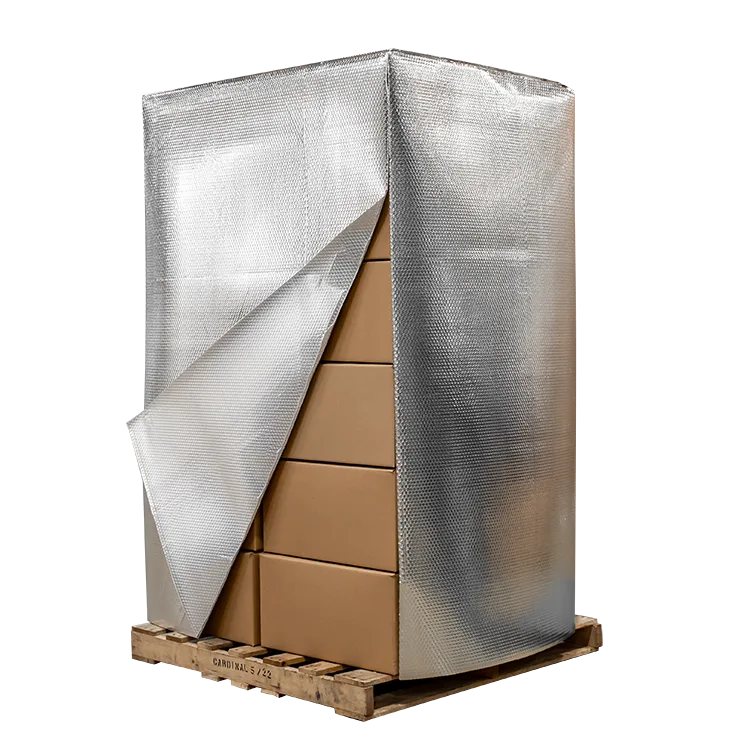
A metallised bag is only as good as its creases. Smooth silver film creases into hard lines the first time it is handled, and a hard crease is exactly where the reflective layer gives up. This bag is embossed in a cross-hatch before anything else is done to it, so the fold that would have been one sharp line becomes a thousand small hinges. The same tooling runs two formats: cut a folded base and the bag stands on a bench, cut it flat and it stacks as a sleeve for courier work. Material, wall build and print stay identical. That means one artwork approval covers a mixed order, and a packer does not have to learn a second product to fill both.

Color

Size

  • S (5L)
  • M (10L)
  • L (15L)
  • XL (20L)
  • XXL (25L)
  • Custom Size Available

Shipping

Express (DHL/FedEx/UPS), Sea Freight, Air Freight

Payment Terms

T/T (Bank Transfer), L/C at Sight, PayPal, Western Union, Alibaba Trade Assurance

Lead Time

Samples: 3-5 working days | Mass Production: 15-25 working days

Samples

Contact us for FREE samples

Bag Format

Square bottom or flat, made to order from the same tooling

Handle

None

Closure

Plain open mouth standard; self-adhesive strip to order

Customization

Format (flat / square bottom) / size / side depth / print / closure
Contact Us WhatsApp

Product Description

One Tooling, Two Formats

Description

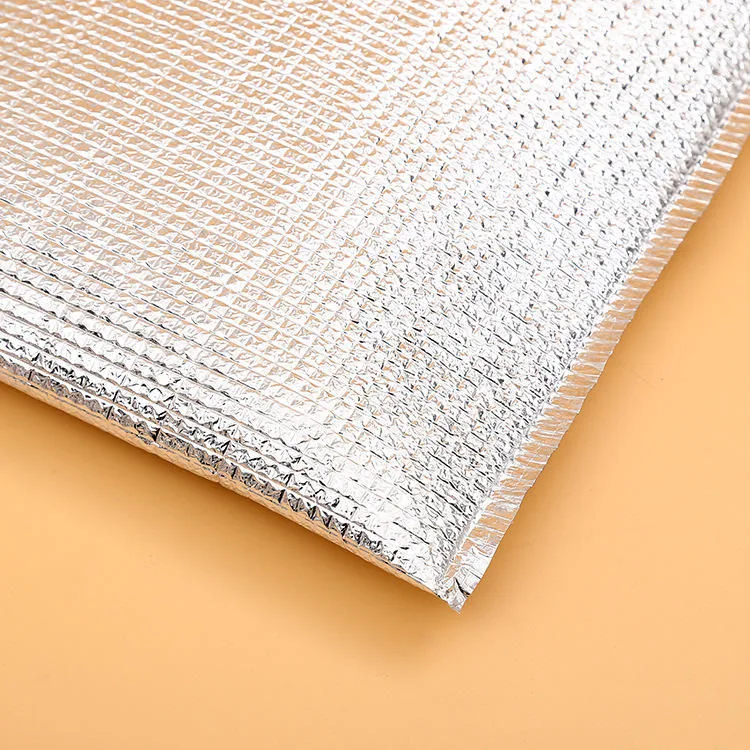
Metallised film, waffle-embossed, over a foam core: that combination is why this bag reads bright silver without the weight of foil. The embossing is not decoration. A flat metallised sheet creases into hard lines the first time it is handled, and a hard crease is where the reflective layer cracks. The cross-hatch puts the folding into thousands of small hinges instead, and the surface keeps its shine after a season of packing.

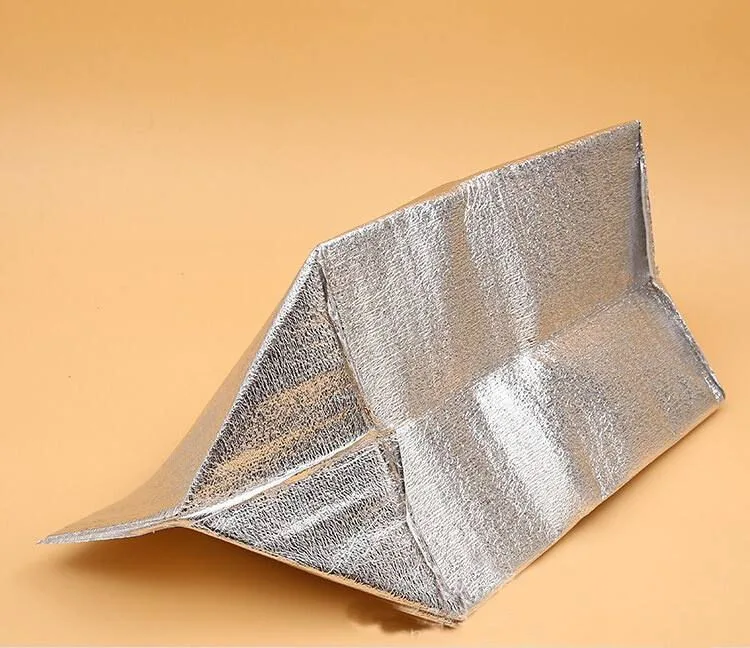
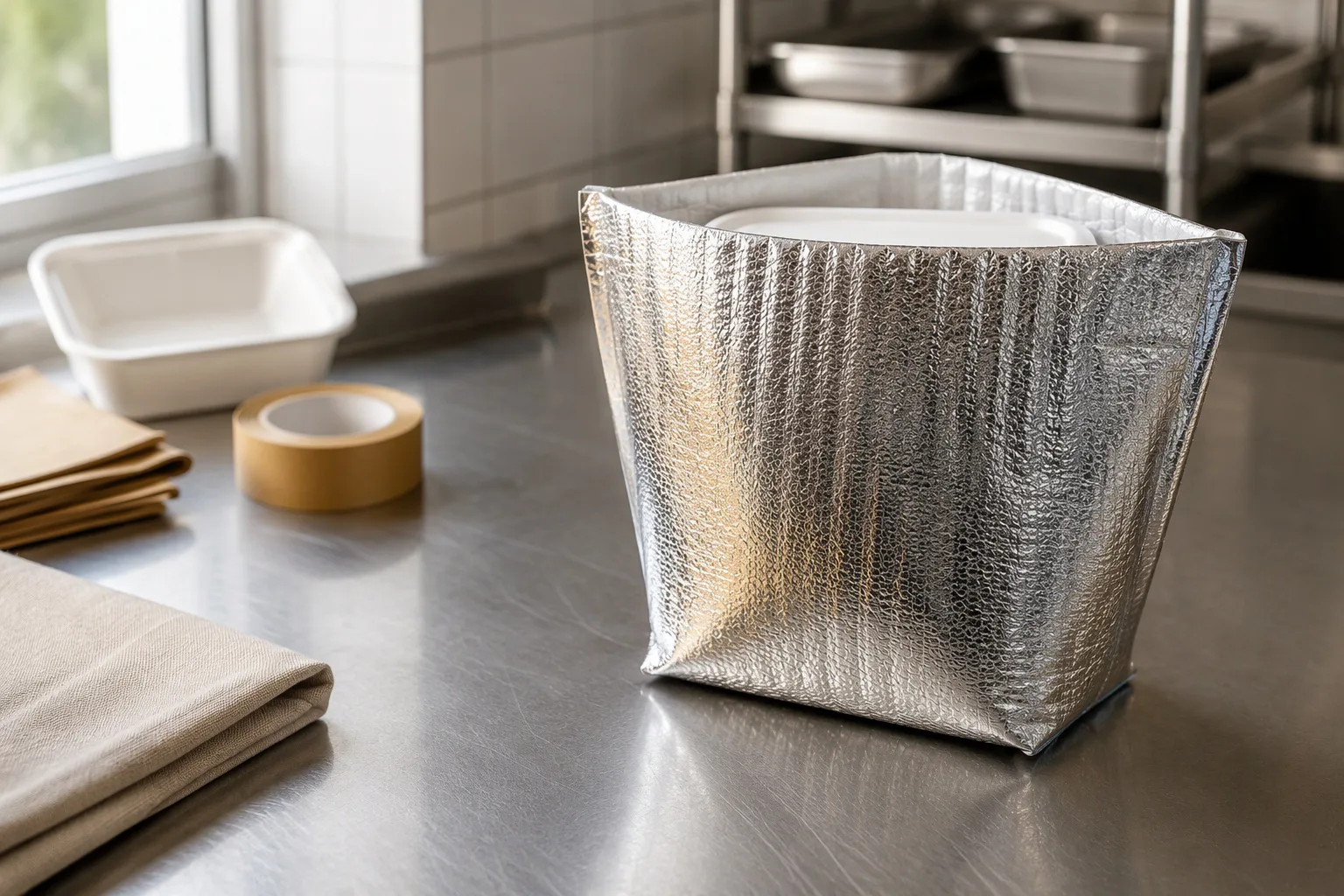
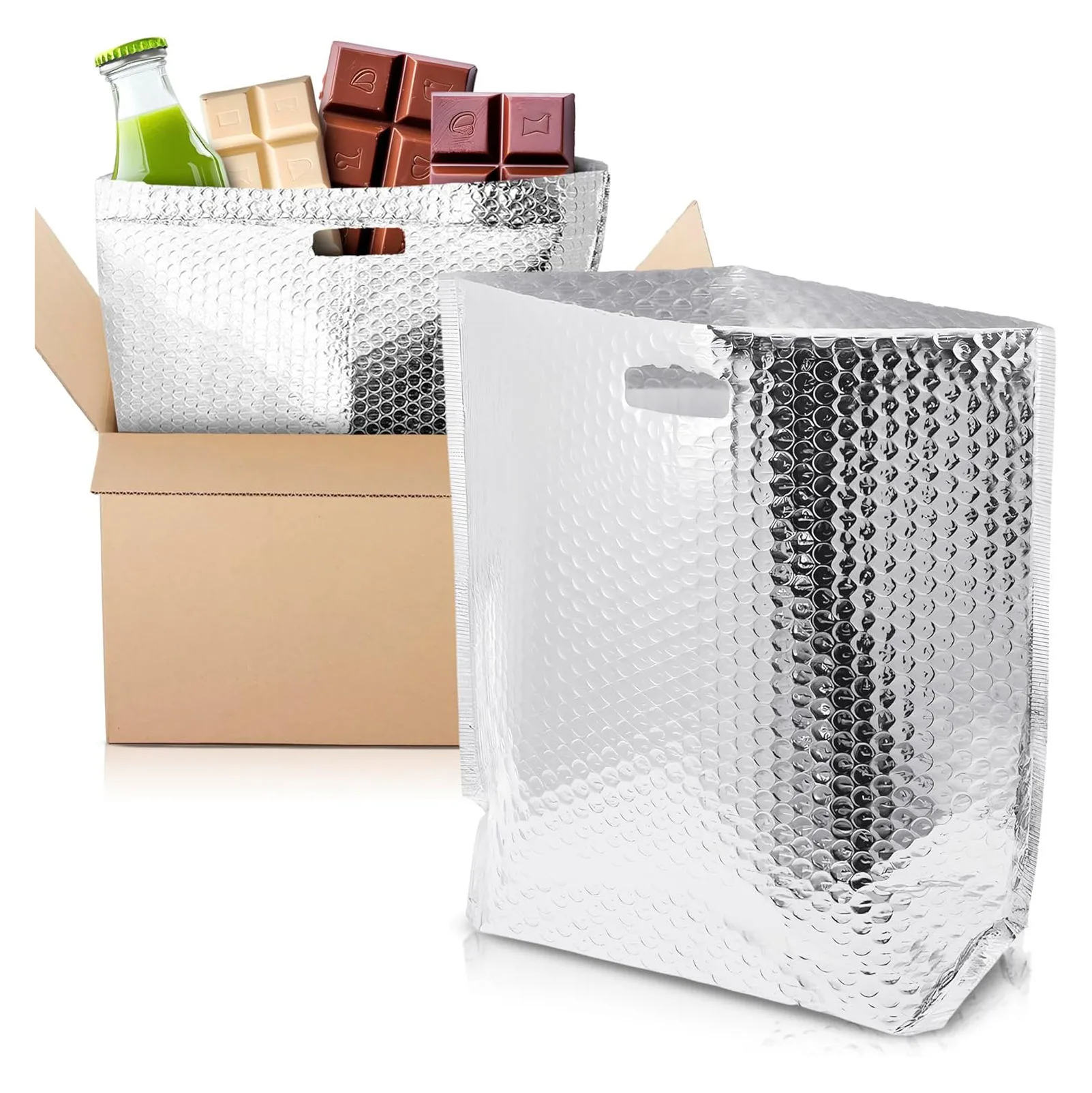
One specification, two formats. Cut with a folded base and the bag stands on a bench; cut flat and it stacks as a sleeve for postal or courier use. The material, the wall build and the print do not change between them, only the base and the side depth. That matters for accounts that buy both, because one artwork approval covers the whole range and the packer does not have to learn a second product.

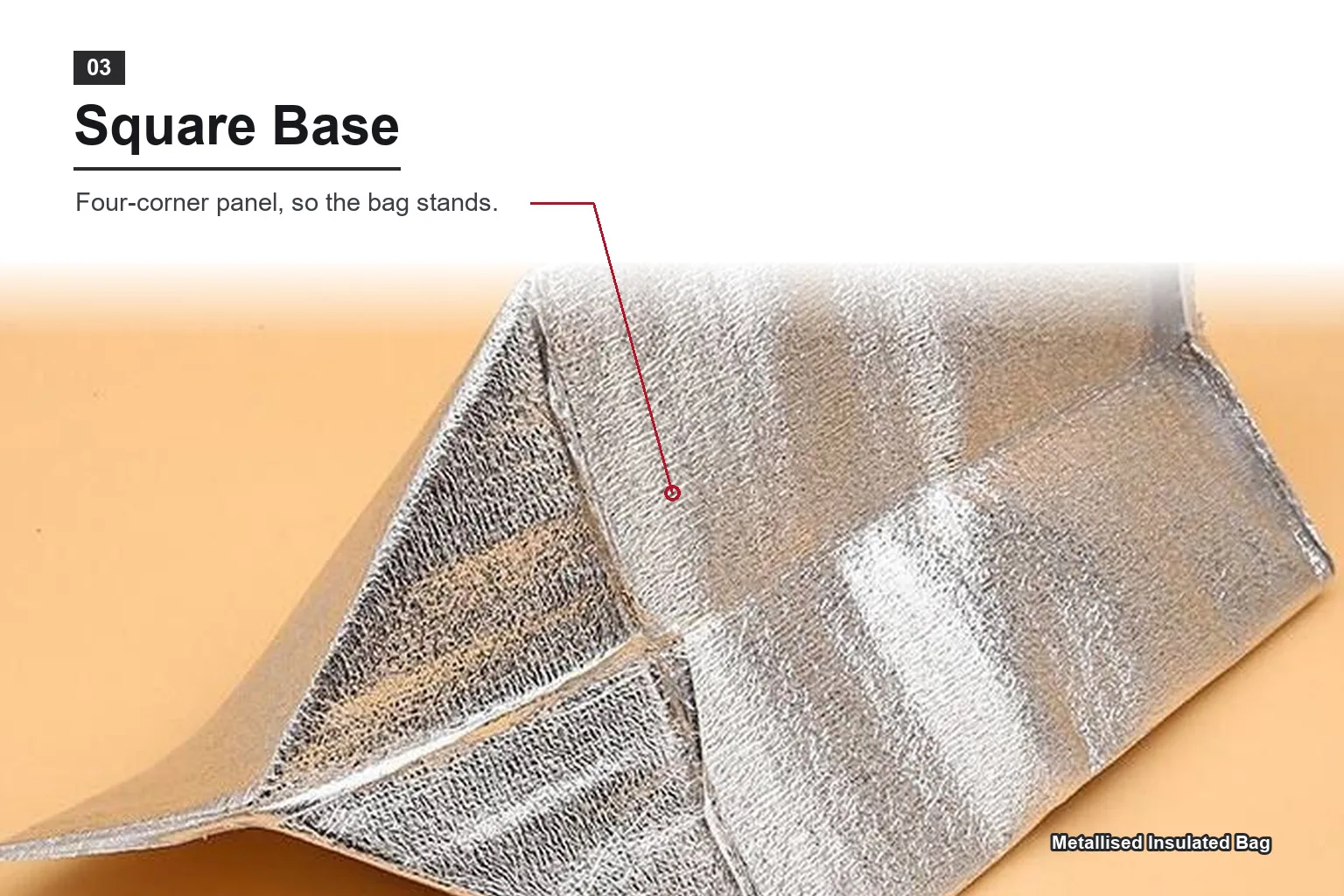
On the square-bottom version the base opens into a panel with four corners, not a single crease. The load sits on that panel rather than hanging from the side seams, which is the difference between a bag that stands as it fills and one that has to be held. Side depth is set per size, the variable worth specifying: too shallow and it will not take a tray, too deep and it collapses when half empty.

The mouth is plain on the standard build; a self-adhesive strip can be added when the pack has to arrive closed. Neither is tamper-evident in the sense of showing a break, and both are chosen for speed at the bench rather than security in transit. Sizes step by volume, and because one tool covers both formats, a mixed order of standing and flat bags is quoted from the same set-up.

Specifications

One Table to Quote Both Formats From
Parameter Specification
Structure Flat or square bottom, same tooling; no side gusset
Outer face Metallised film (VMPET), cross-hatch embossed, printed
Insulation core EPE foam, 2 / 3 / 4 mm
Contact layer LDPE sealant, heat-sealed seams
Closure Plain open mouth standard; self-adhesive strip to order
Handle None
Base Square panel on the standing format, four-corner fold
Reflective behaviour Passive metallised face; hold depends on load mass and handling
Printing Gravure or flexo on the embossed face
Origin Guangdong, China

Printing Process

Printing on a Surface That Fights Halftones

Print sits on an embossed surface, and the embossing wins. Any half-tone finer than about two millimetres reads as noise across the waffle, because the highlight and shadow of each cell compete with the dot. Practical artwork here is line work, bold type and solid blocks: a brand mark, a weight or fill line, a short instruction. Fine print goes on a paper label or a plain patch, not on the pattern.

Metallised surfaces need a ground coat before colour, and an embossed one needs it thicker, so the ink does not thin over every cell edge. Gravure handles the long runs and holds registration across the repeat; flexo is cheaper on short runs but the pattern shows through more. Either way the first pull on silver will not match a screen, and that is expected rather than a fault.

Three places cause trouble. The base fold: it crosses the full width and takes a second crease, so colour through it will craze. The side seam: the embossed film is thicker at the weld, and a dark solid laid over it will read lighter there. The cut edge: film is slit after printing, and a heavy ink film chips at the slit while a thin one feathers. Each needs a keep-clear band rather than a patch-up afterwards.

Proof on the production embossed film, and proof both formats from the same artwork if both are ordered. A flat bag proof tells you very little about a standing one, since the fold and the base change where the light lands. Approve on a filled sample under the kind of light the buyer uses, and keep it as the reference for reorders rather than judging the next run on a monitor.

Lining Decoration

Why the Surface Is Embossed

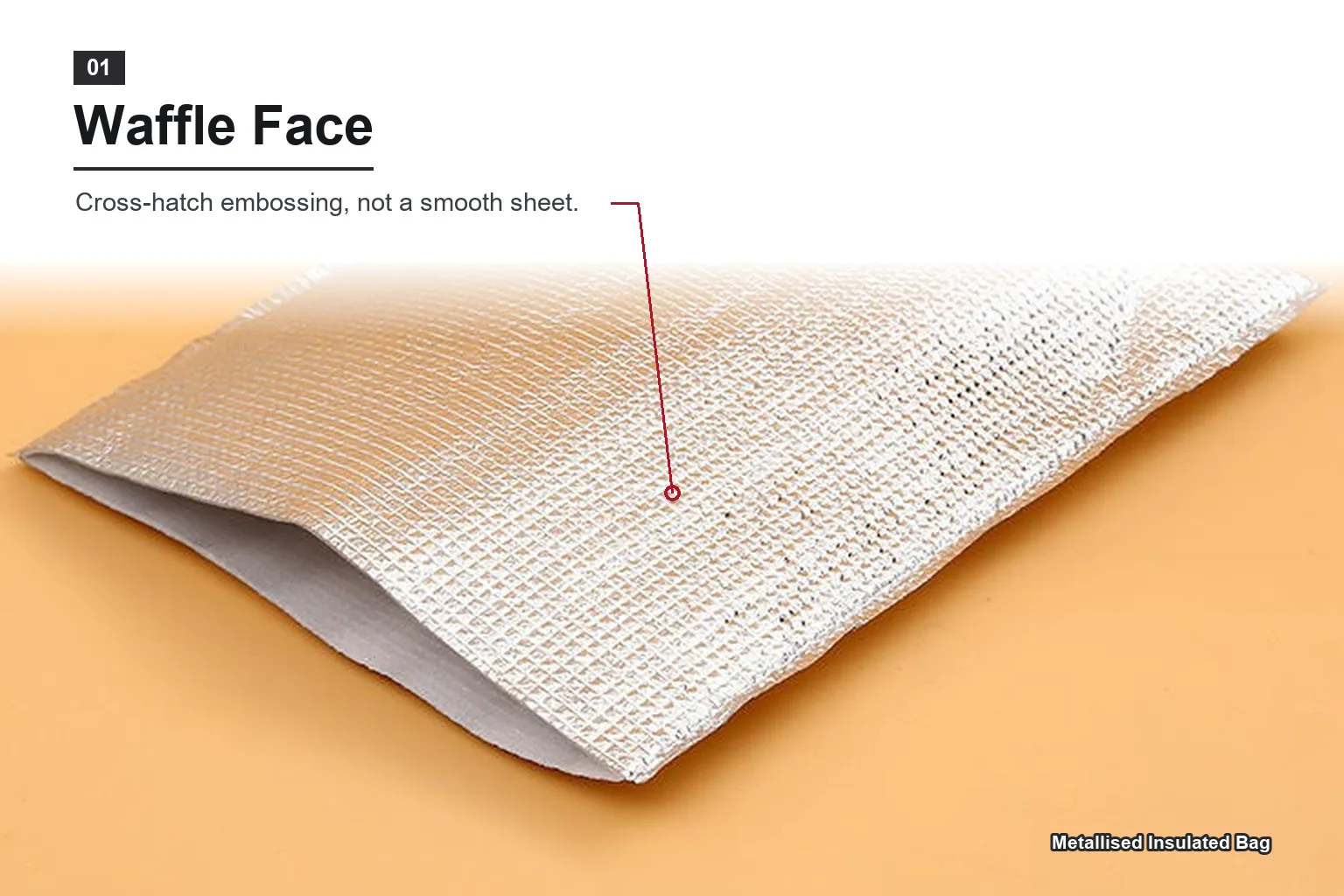
Waffle Face

Cross-hatch embossing, not a smooth sheet.

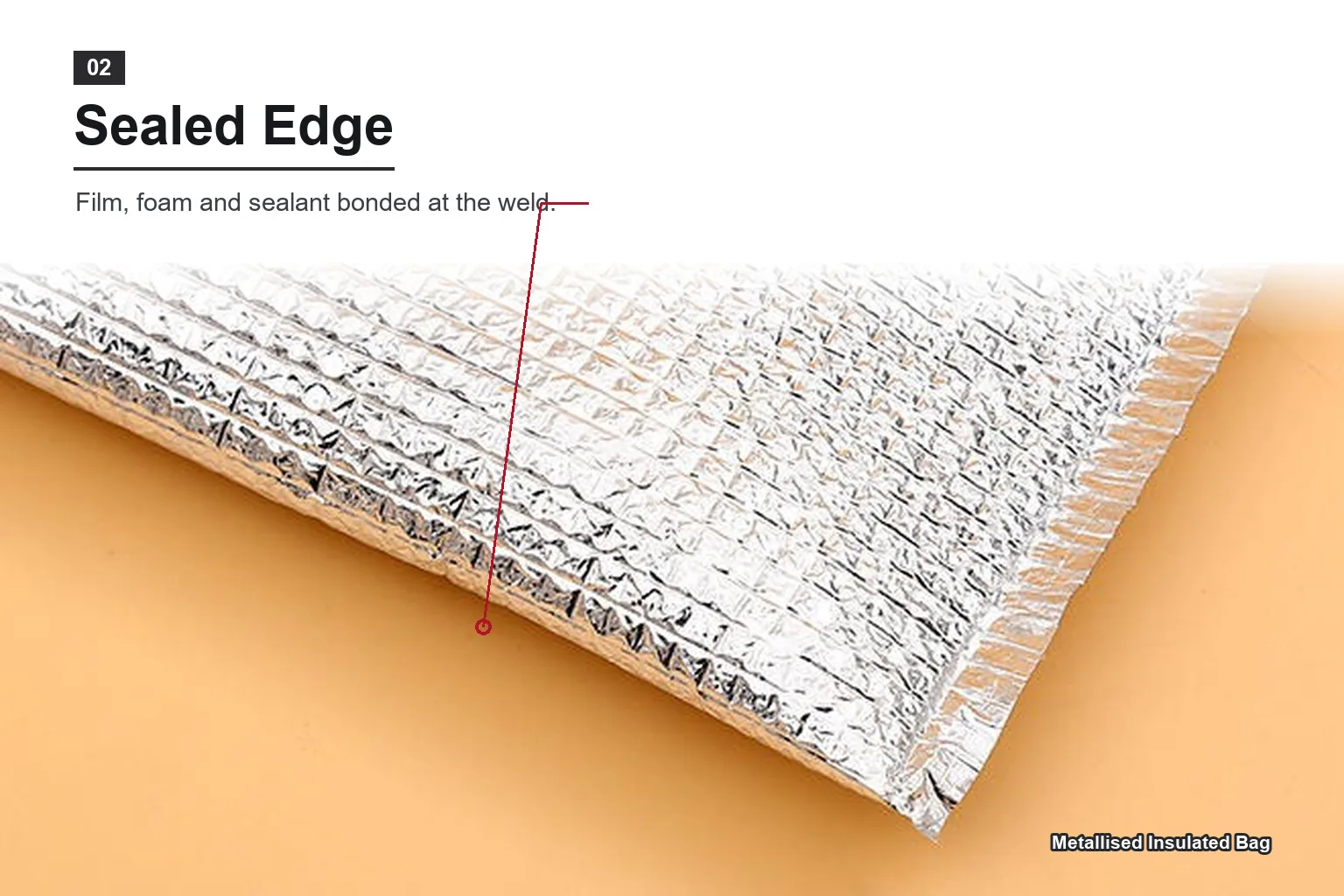
Sealed Edge

Film, foam and sealant bonded at the weld.

Square Base

Four-corner panel, so the bag stands.

Three layers: metallised film outside, EPE core, LDPE sealant inside. The outer film is embossed in a cross-hatch, and that pattern does more work than the barrier itself. A smooth metallised sheet creases sharply and the reflective layer cracks along the crease. The hatch spreads the same bend over a thousand small folds.

The weak point is the base, where two creases meet at a corner. On a smooth film that corner is the first place to turn white; on this build the hatch carries the strain through the panel instead of concentrating it at the point.

Get In Touch With Us

Reach out for any inquiries, support, or to discuss how we can meet your industrial needs.
  • Address

    North Side Of Nanyi Road, Shiwan Town Science And Technology Park (10th Floor, Building 1, No. 13)

Contact Me

    You can upload a PDF or an image(max 5MB)

    INQUIRY