Hot & Cold Thermal Bags, Insulated Mailers & Cold Chain Delivery Packaging

Fertilizer, Pesticide & Agrochemical Packaging

Cleaner, Laundry & Air Care Packaging

Custom Medical Packaging Solutions

Protective Structures, Inserts and Retail Packs

Custom Protein Powder Pouches, Vitamin Stick Packs & Nutrition Bar Bags

Cosmetics, Fragrance and Skincare Packaging

Takeout, Bakery and Beverage Packaging

Kibble, treat & wet food packaging
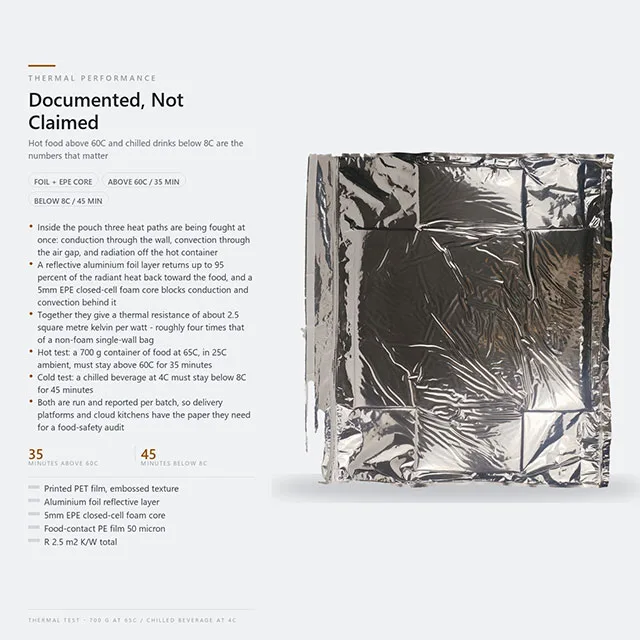
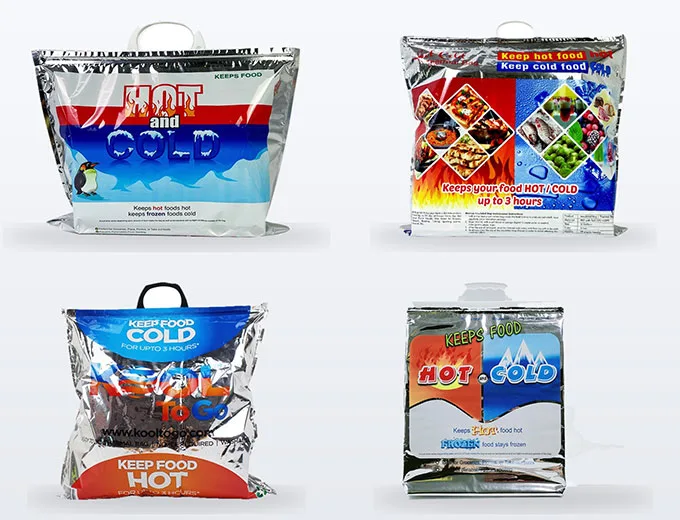
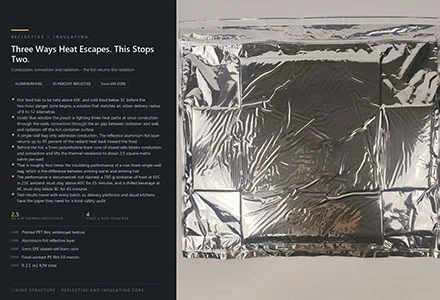
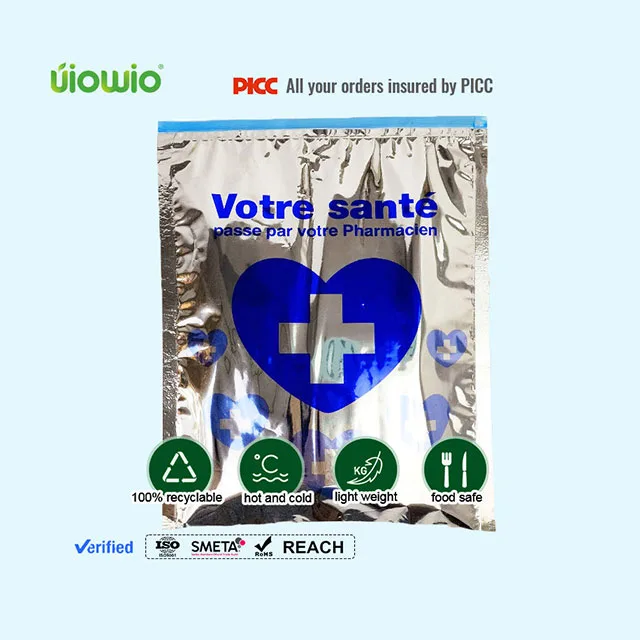
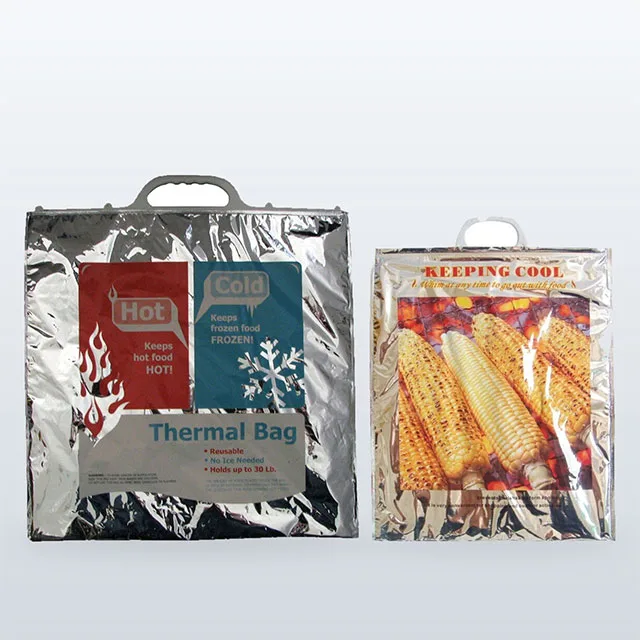
The insulated food delivery foil pouch is engineered around a single number: 30 minutes. Public health guidelines in most jurisdictions require hot food to be held above 60°C and cold food below 5°C before the two-hour danger zone begins — a window that matches the average urban delivery radius of 8-12 kilometers. Within that window, the pouch must slow three simultaneous heat-transfer mechanisms: conduction through the pouch walls, convection through the air gap between food container and wall, and radiation from the hot container surface. Standard single-wall bags address only conduction; our radiant-reflective aluminum layer addresses all three by reflecting thermal radiation back toward the food while the insulating core blocks conduction and convection.
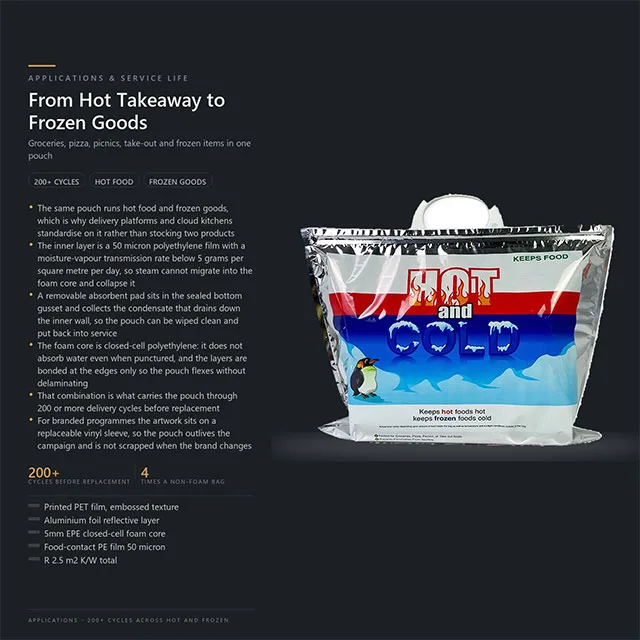
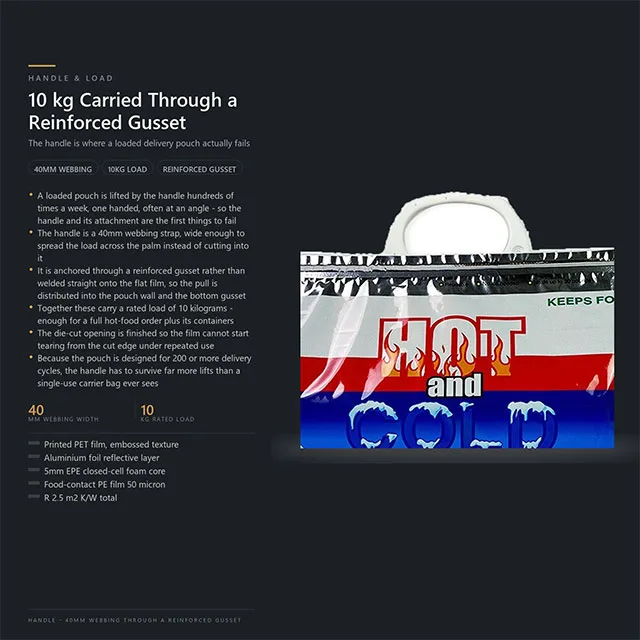
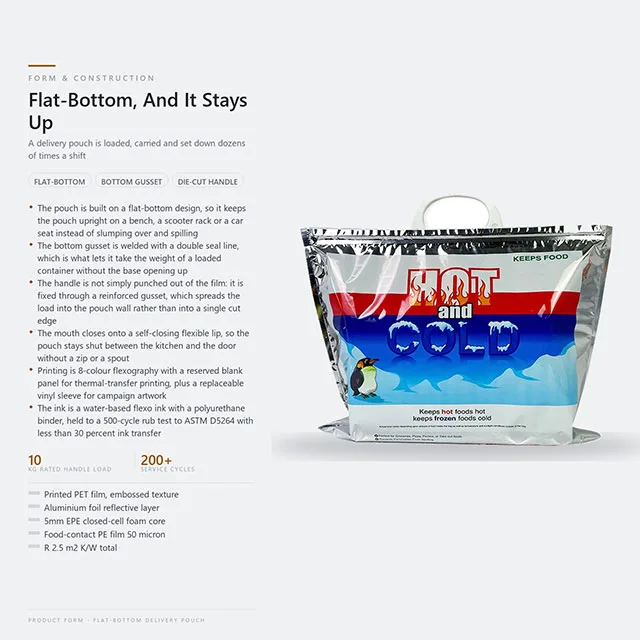
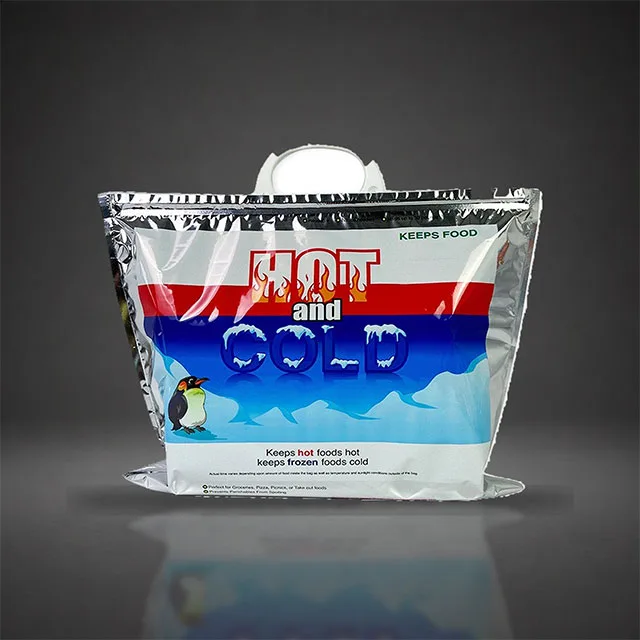
The structure is a three-zone thermal system. The outer layer is a printed PET film that protects the graphics and sheds rain; the middle zone is a reflective aluminum foil layer that returns up to 95% of radiant heat back to the food, backed by a 5mm polyethylene-foam (EPE) insulating core that raises the thermal resistance (R-value) to approximately 2.5 m²·K/W — roughly four times the insulating performance of a non-foam single-wall bag; the inner layer is a food-contact PE film that contains condensation and prevents moisture migration to the insulation. The carry handle is anchored through a reinforced gusset that distributes a full 10kg delivery load across a 40mm-wide strap, and the mouth is self-closing with a flexible stay that keeps the opening accessible for one-handed packing while maintaining a closed thermal envelope during transit.
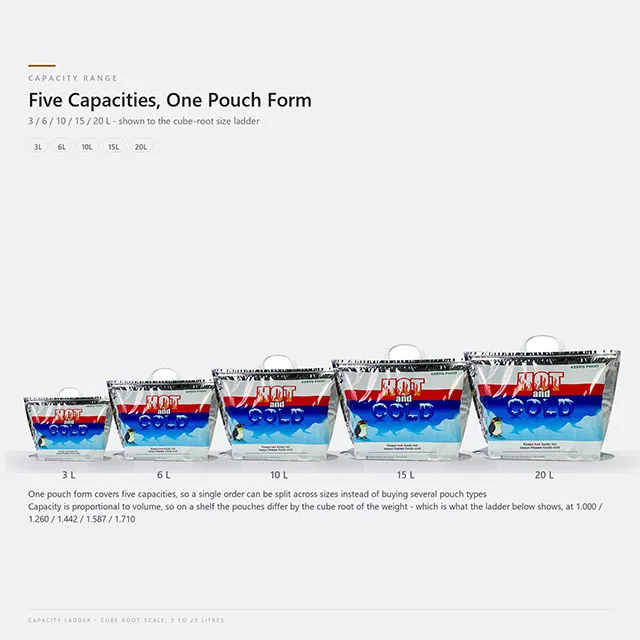
The pouch is tested against a documented thermal protocol: a 700g container of food at 65°C placed inside at ambient 25°C must remain above 60°C for 35 minutes (hot test), and a chilled beverage at 4°C must remain below 8°C for 45 minutes (cold test). Test results are provided with every batch, giving delivery platforms and cloud-kitchen operators the documentation they need for food-safety audits. Sizes range from 3L single-meal pouches to 20L family and catering formats, and the flat-bottom design keeps the pouch upright on delivery scooters and in courier backpacks.
| Color | Size |
| Silver Matte | 100g |
| Pearl White | 200g |
| Amber Transparent | 500g |
| Military Green | 1kg |
| Industrial Grey | 2kg |
| Custom Color Available | Custom Size Available |
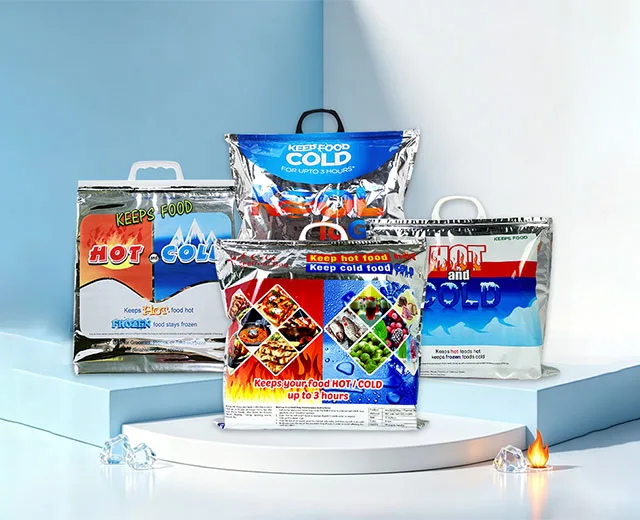
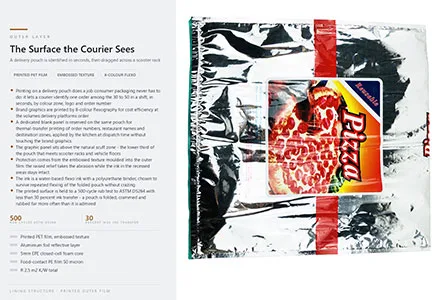
Printing on delivery pouches serves an operational function that consumer packaging does not: order identification under time pressure. A courier handling 30-50 orders per shift identifies each bag in seconds by color zone, logo, and order number. We print brand logos and marketing graphics with 8-color flexography for cost efficiency across the high volumes delivery platforms order, and reserve a dedicated blank panel for thermal-transfer printing of order numbers, restaurant names, and destination zones — applied by the kitchen at dispatch time without touching the brand graphics.
The graphic panel is positioned above the natural scuff zone (the lower third of the pouch that contacts scooter racks and vehicle floors) and protected by the embossed texture of the outer film, which takes abrasion while the printed ink in the recessed areas stays intact. Inks are water-based flexo inks with a polyurethane binder that withstands repeated flexing of the folded pouch without crazing, and the printed surface passes a 500-cycle rub test (ASTM D5264) with less than 30% ink transfer. For restaurant chains running seasonal campaigns, the same pouch body carries a replaceable vinyl graphic sleeve, avoiding the cost of reprinting the entire pouch stock.
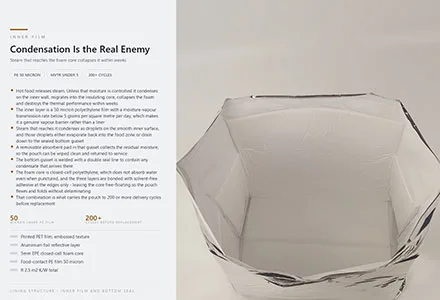
The lining of a delivery pouch is a condensation battlefield: hot food releases steam that condenses on the inner wall, and unless the moisture is controlled, it migrates into the insulating core, collapses the foam, and destroys the thermal performance within weeks. Our inner PE layer is a 50-micron film with a moisture-vapor transmission rate below 5 g/m²/day that acts as a vapor barrier — steam condenses as droplets on the smooth inner surface and either evaporates back into the food zone or drains to the sealed bottom gusset, where a removable absorbent pad collects residual moisture.
Between the reflective aluminum and the inner film sits the EPE foam core, manufactured from closed-cell polyethylene that does not absorb water even when punctured. The three layers are bonded with solvent-free adhesive at the edges only — leaving the core free-floating so the pouch can flex, fold, and compress without delaminating the insulation. The bottom gusset is welded with a double seal line to contain any leaked condensate, and the interior is designed to be wiped clean between uses, extending pouch life to 200+ delivery cycles before replacement.
North Side Of Nanyi Road, Shiwan Town Science And Technology Park (10th Floor, Building 1, No. 13)
INQUIRY