Hot & Cold Thermal Bags, Insulated Mailers & Cold Chain Delivery Packaging

Fertilizer, Pesticide & Agrochemical Packaging

Cleaner, Laundry & Air Care Packaging

Custom Medical Packaging Solutions

Protective Structures, Inserts and Retail Packs

Custom Protein Powder Pouches, Vitamin Stick Packs & Nutrition Bar Bags

Cosmetics, Fragrance and Skincare Packaging

Takeout, Bakery and Beverage Packaging

Kibble, treat & wet food packaging
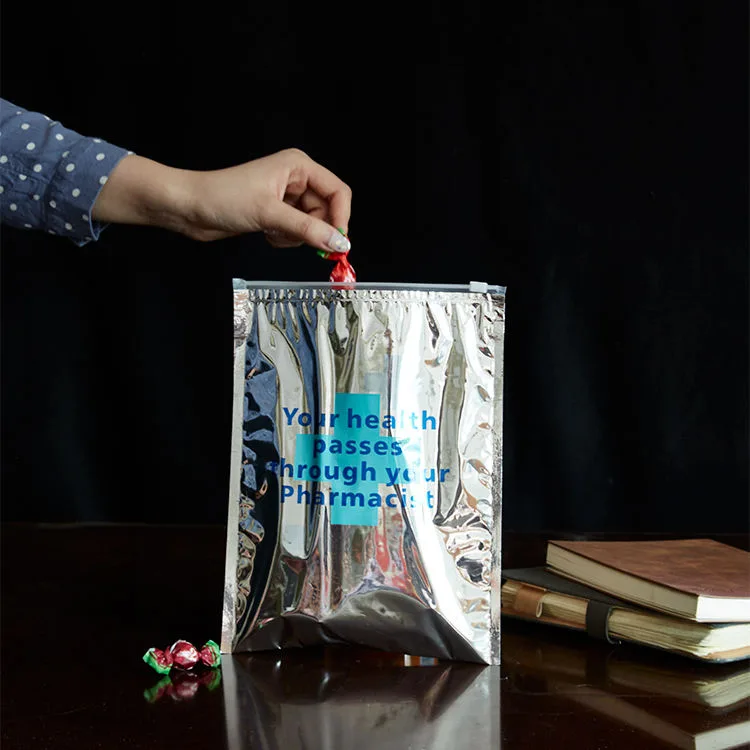
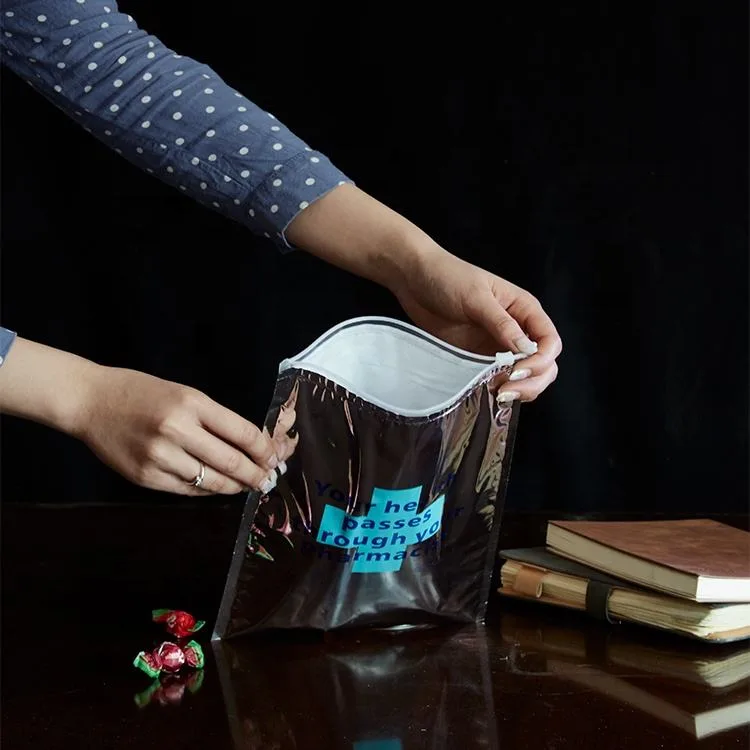
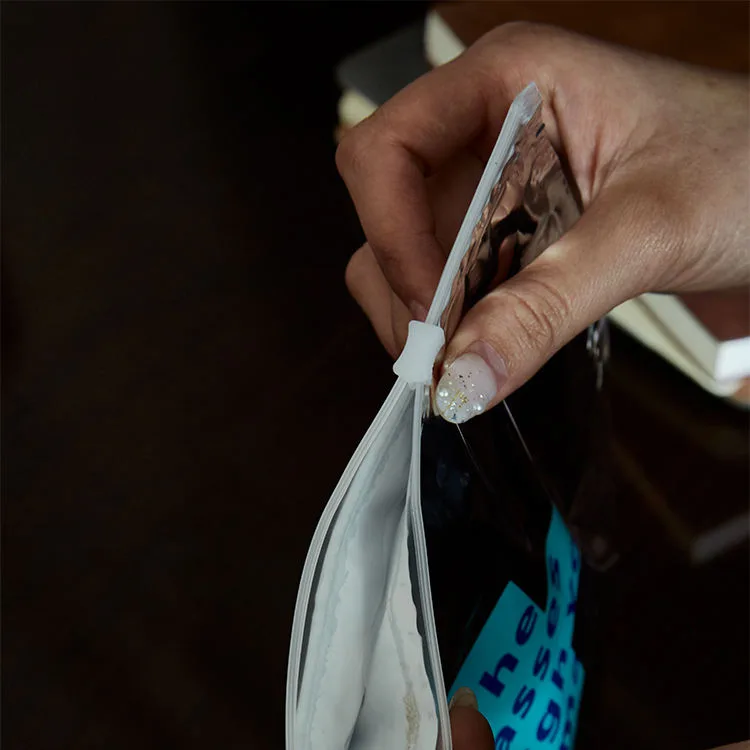
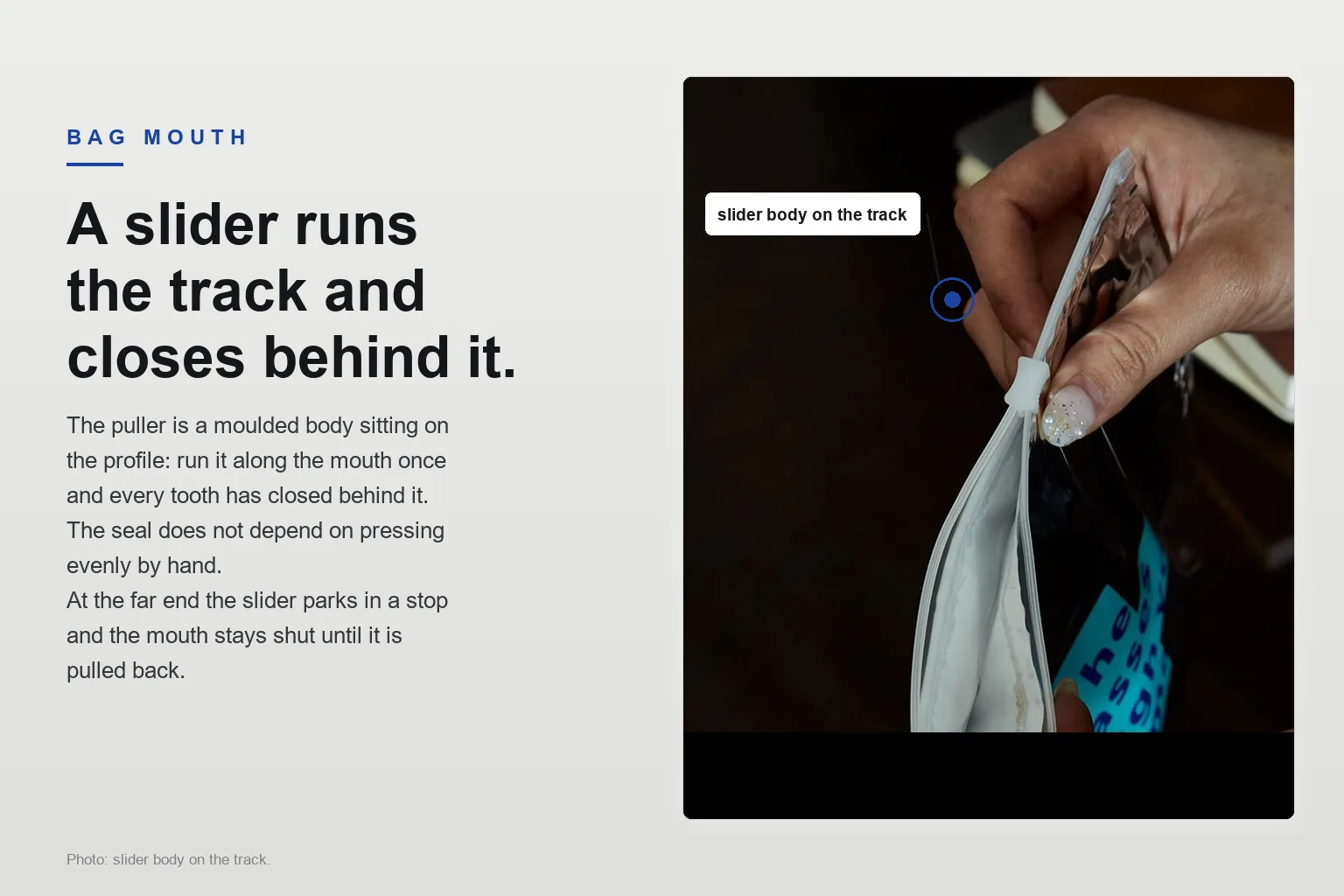
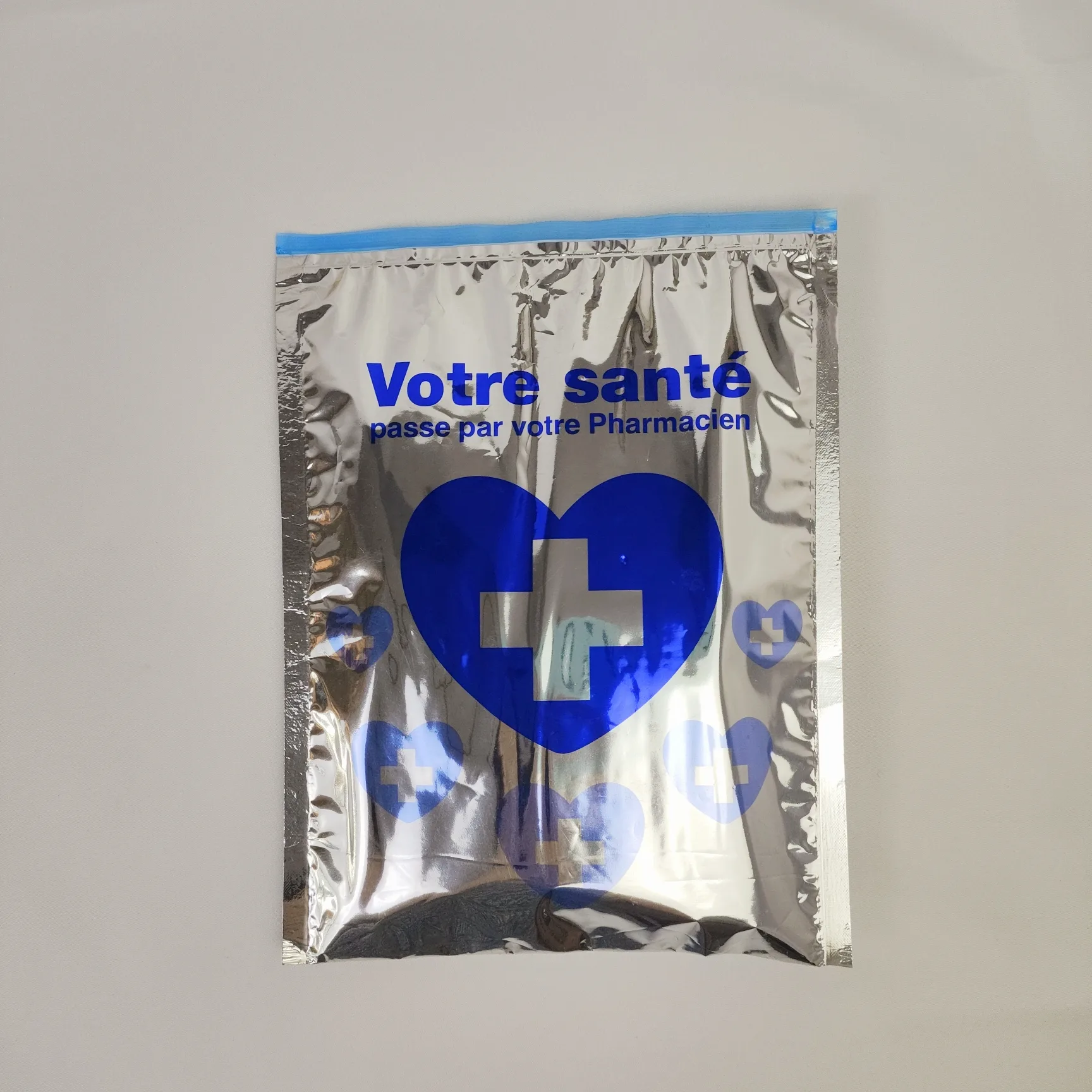
A slider does the same job as a press rib, with one difference that matters at the counter: it closes along its length in a single pass. The puller is a moulded body riding the profile, so the pharmacist runs it from one end to the other and the mouth is shut behind it. Nothing depends on thumb pressure being even, and nothing has to be re-pressed after the pouch has been picked up. What it costs is a part and a second operation, which is why a slider is ordered where the closure is handled by people other than the ones who packed it.
A slider does the same job as a press rib, with one difference that matters at the counter: it closes along its length in a single pass. The puller is a moulded body riding the profile, so the pharmacist runs it from one end to the other and the mouth is shut behind it. Nothing depends on thumb pressure being even, and nothing has to be re-pressed when the pouch is lifted off the bench.
What it costs is a part, and a second operation. A press-to-close pouch is film plus ribs; a slider pouch is film, ribs, a moulded puller and a stop at the end of the track. That lands in the tooling and in the unit price, and it is the reason a slider is ordered where the closure is handled by someone other than the person who packed it.
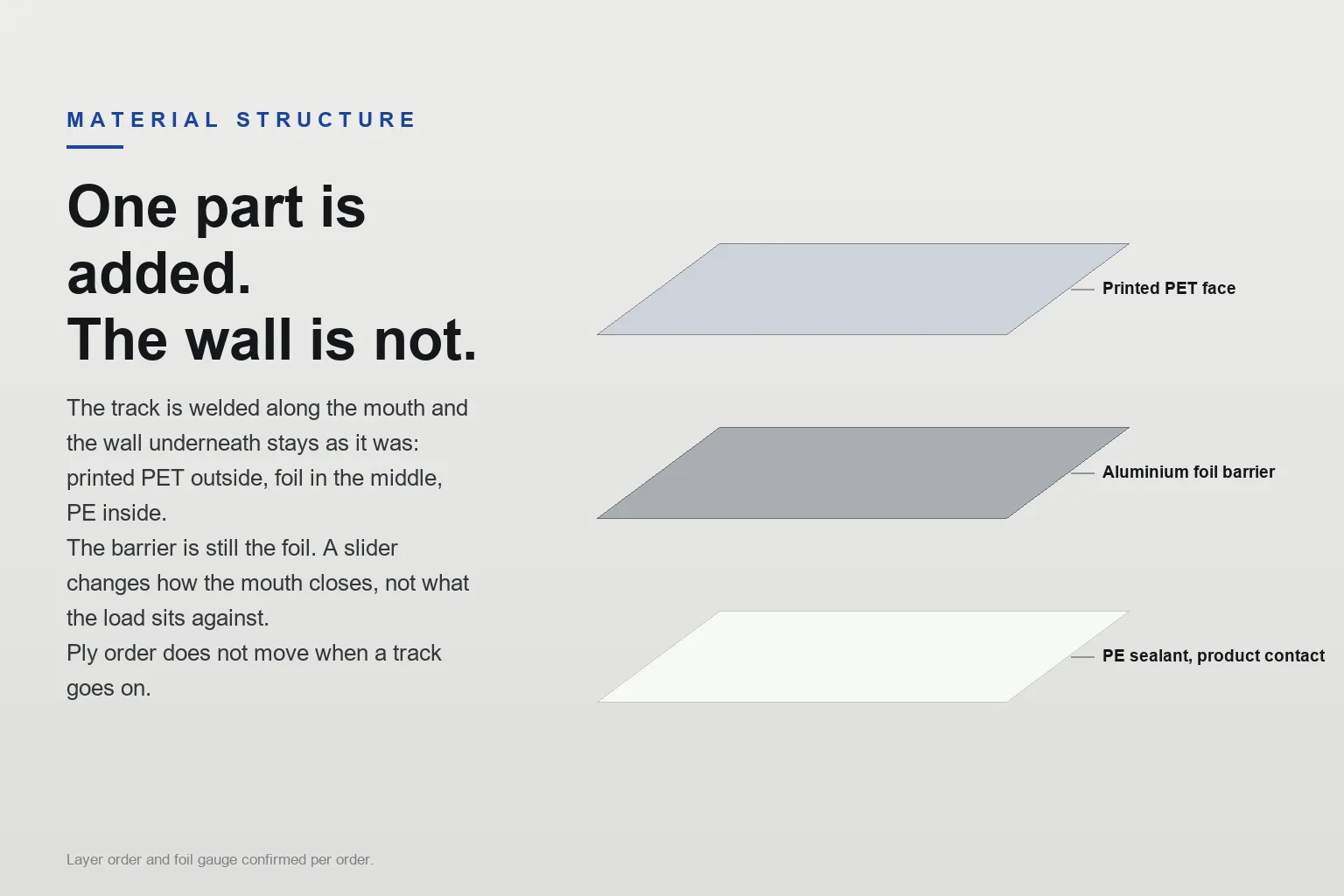
The wall is unchanged. The profile is welded to the outer face along the mouth, outside the barrier, so the foil is still the only ply doing the blocking and the PE inside is still the only surface the product meets. A slider does not open a path through the laminate; it only decides where the mouth closes.
The format suits a pouch that will be opened more than twice: a repeat prescription, a course of treatment, a pack that goes home in a bag and comes back out. Where the pouch is opened once and thrown away, the press rib does the same job for less.
| Parameter | Specification |
|---|---|
| Construction | Three-ply laminate, three-side seal, slider zip on the fourth edge |
| Material | Printed PET / aluminium foil / PE sealant |
| Closure | Slider zip, moulded puller, parks at the end stop |
| Barrier | Aluminium foil, opaque to light, blocks water vapour |
| Opening | Slider only; no separate tear score on this build |
| Sizes | 12 × 18 to 25 × 35 cm |
| Colour | Custom Pantone; unprinted silver foil available |
| Customization | Ply order, foil gauge, size, print, puller colour |
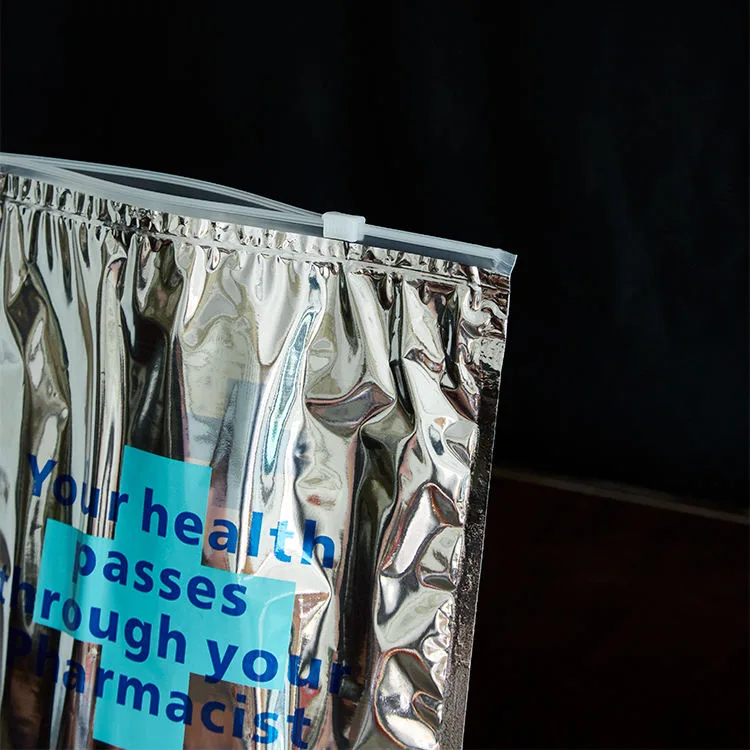
The track is applied after the print, not with it. Printing is a web operation; welding a profile and seating a puller are separate passes, and the artwork has to be laid out knowing where those passes land. The mouth band is left as bare foil so the weld meets film rather than ink, and the band is measured from the trim edge, not from the design.
The profile needs a flat substrate to sit on. A crease, a wrinkle or a trapped air bubble under the track will show up as a slider that runs stiff at one point and free at the next, so the web is tensioned and checked at the mouth before the profile goes down. A printed roll that has been wound tight will take a set that the profile then follows, so rolls are unwound and relaxed before the track is applied.
Every puller is run once before packing. The check is not the look of the closure but the feel of it: the slider should travel the full length and park in the stop without being forced. A puller that has been seated off-centre will not do that, and the defect cannot be seen from the outside. First-off samples are bagged with the slider closed, so the same check can be repeated after the carton has travelled.
Warning copy is printed where it stays readable after opening. On this pouch the safety block sits just under the mouth, on the face that is exposed when the slider is pulled back, so it cannot be hidden by the product once the pouch is in use.
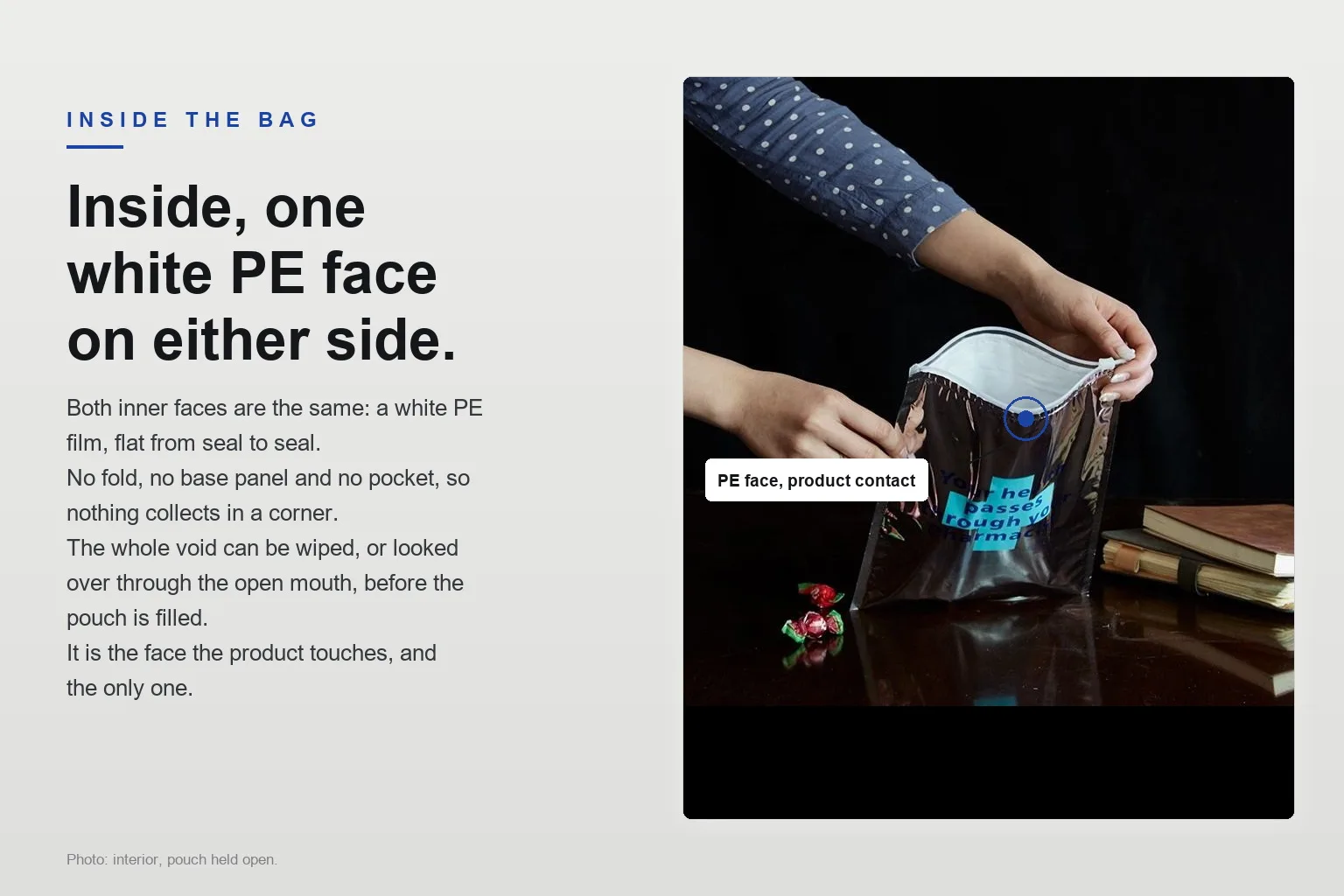
The wall is a three-ply laminate – printed PET outside, aluminium foil in the middle, PE sealant inside. The slider track is welded into the head above the seal, and it is an addition rather than a change: the profile closes on PE that is bonded to the same foil, so the barrier is the same as the press-to-close version. The PE face is the only layer that touches the product, which is what makes the pouch suitable for tablets and sachets.
North Side Of Nanyi Road, Shiwan Town Science And Technology Park (10th Floor, Building 1, No. 13)
INQUIRY