Hot & Cold Thermal Bags, Insulated Mailers & Cold Chain Delivery Packaging

Fertilizer, Pesticide & Agrochemical Packaging

Cleaner, Laundry & Air Care Packaging

Custom Medical Packaging Solutions

Protective Structures, Inserts and Retail Packs

Custom Protein Powder Pouches, Vitamin Stick Packs & Nutrition Bar Bags

Cosmetics, Fragrance and Skincare Packaging

Takeout, Bakery and Beverage Packaging

Kibble, treat & wet food packaging
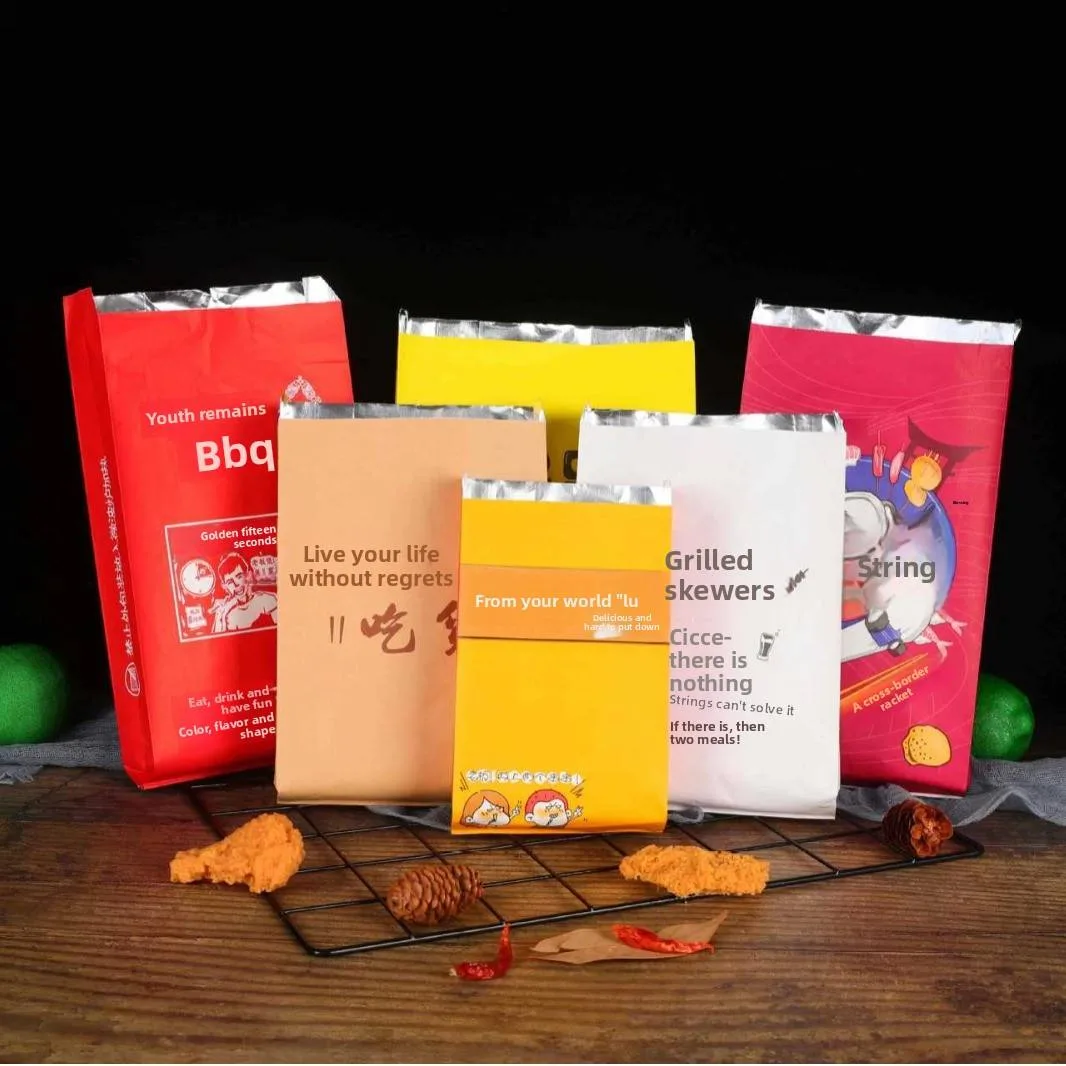
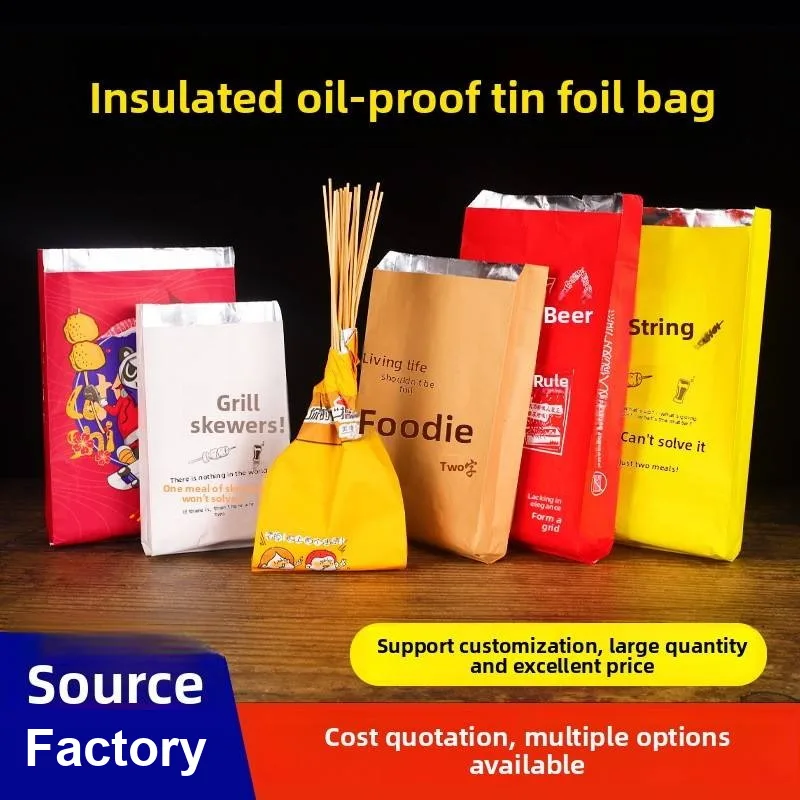
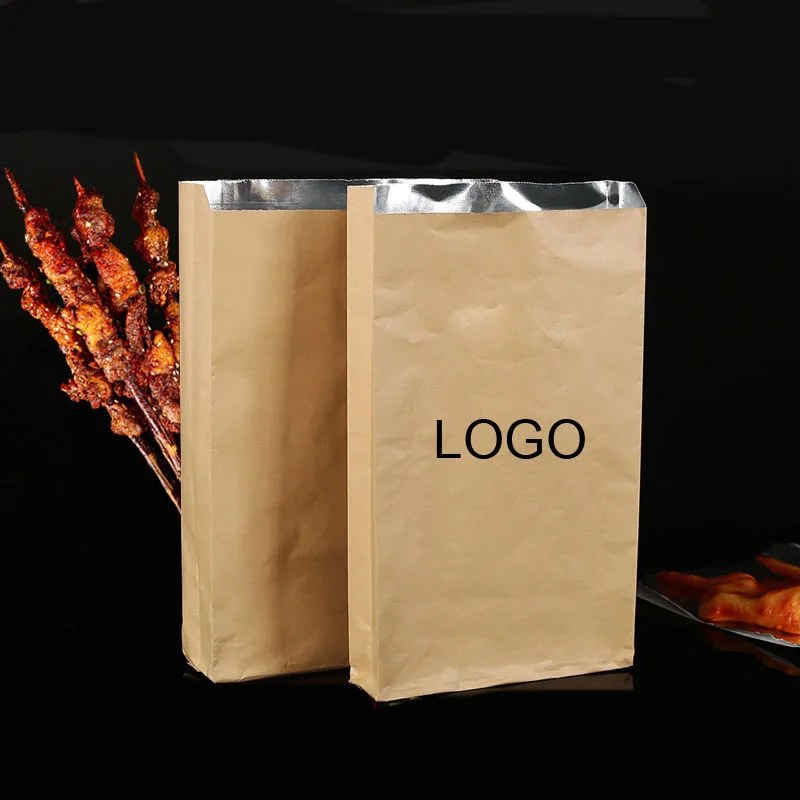
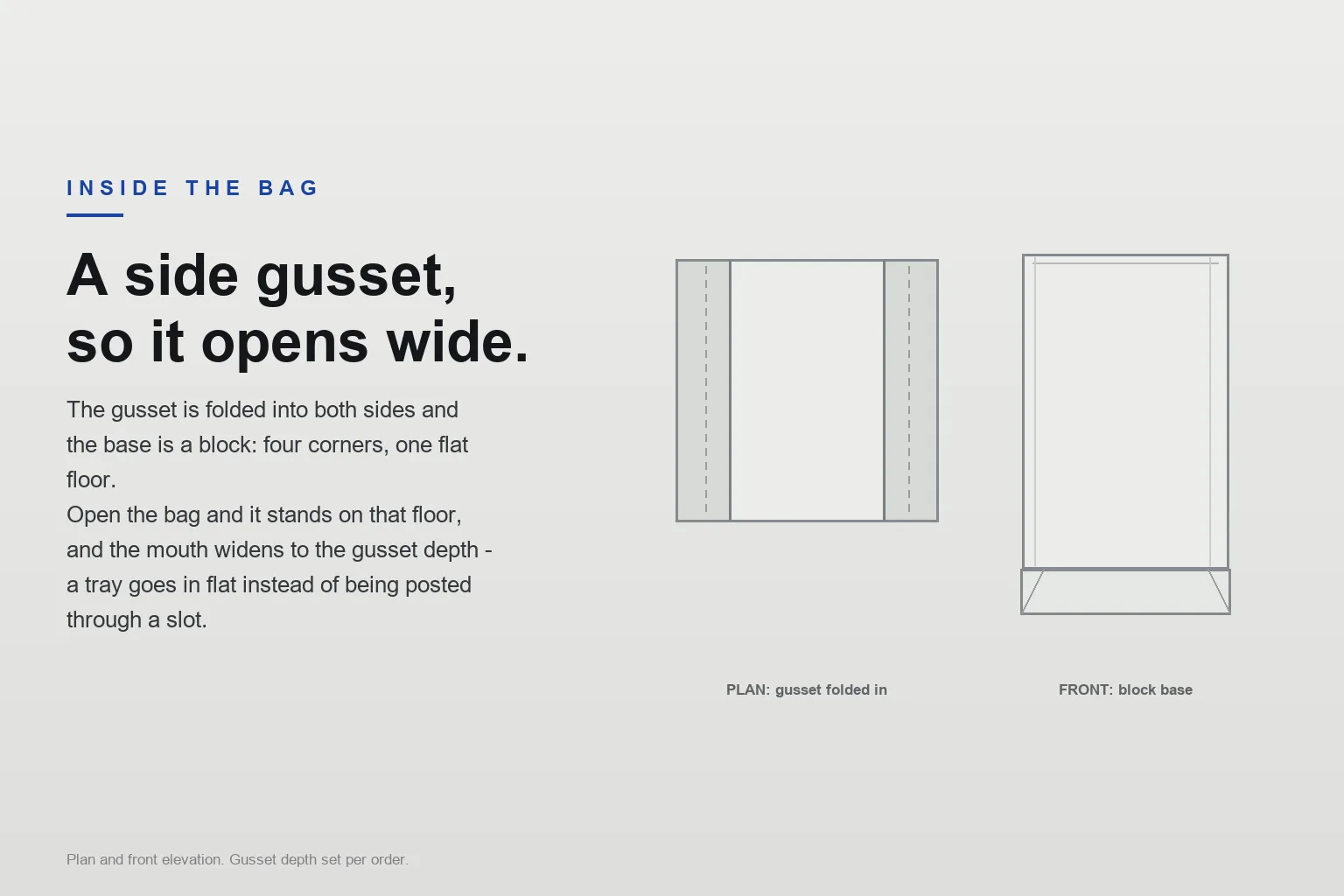
Barbecue leaves the grill greasy and hot, and plain paper is the wrong answer: it wicks, it goes translucent, and by the time the order reaches the door there is a stain on the outside. This bag is kraft paper laminated to tin foil, so the fat meets the lining and stops there while the printed face stays dry. The base is a block folded into four corners, and a gusset runs down each side, so the mouth opens wide enough to take a tray flat. It is bought by the hundred by shops that fill them every night.
Barbecue leaves the grill greasy and hot, and paper is the wrong answer: it wicks, it goes translucent, and by the time the order reaches the door the bag has a stain on the outside. This one is lined with tin foil behind a printed film, so the fat stays inside the liner and the print stays dry. It is a bag for skewers, ribs and grilled vegetables, sold by the hundred to shops that fill them every night.
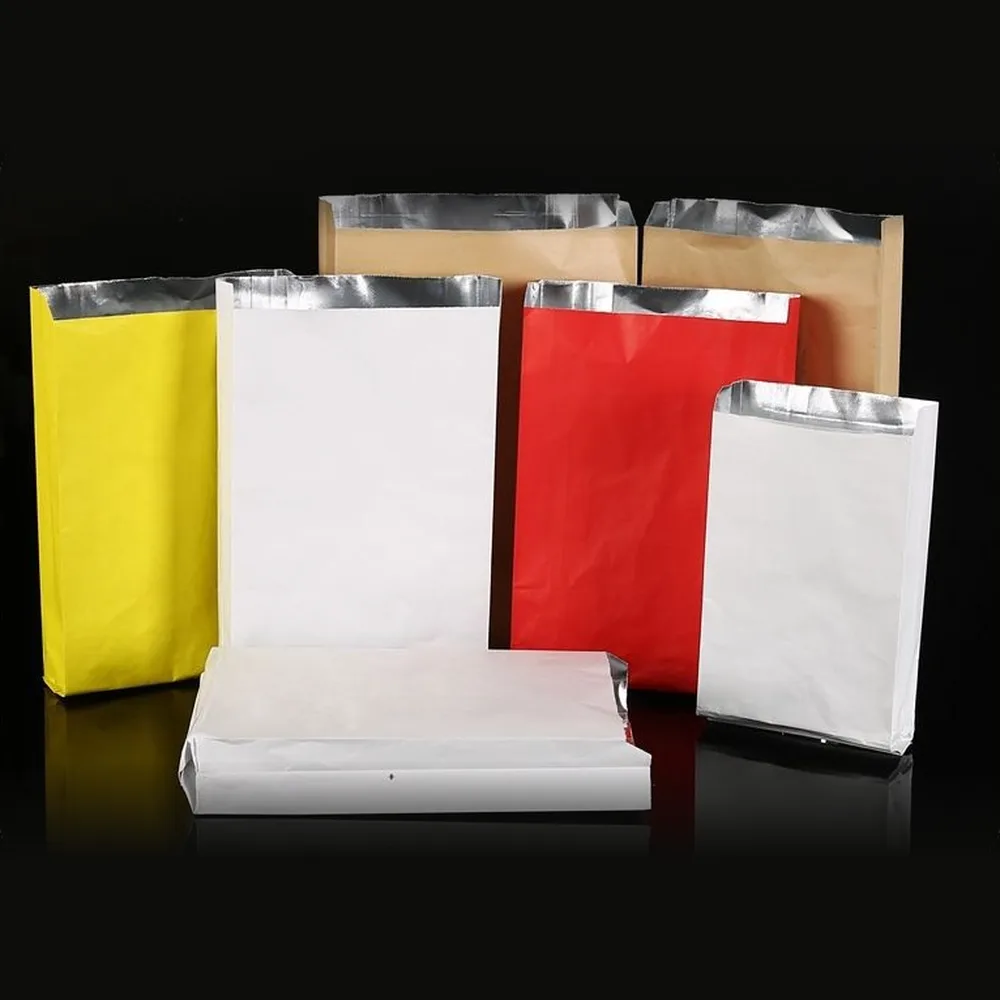
The body is a block bottom: the base is folded into four corners so the bag stands square on a counter, and a gusset runs down each side so the mouth opens wide enough for a tray to go in flat. Nothing has to be held open while it is filled, which is the difference between a bag that gets used and one that gets fought with.
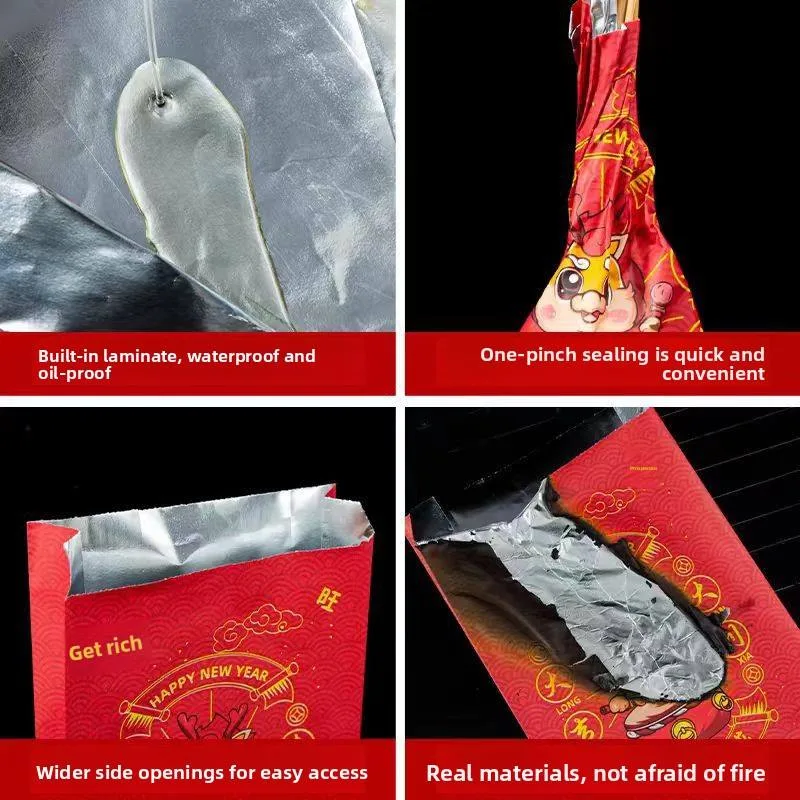
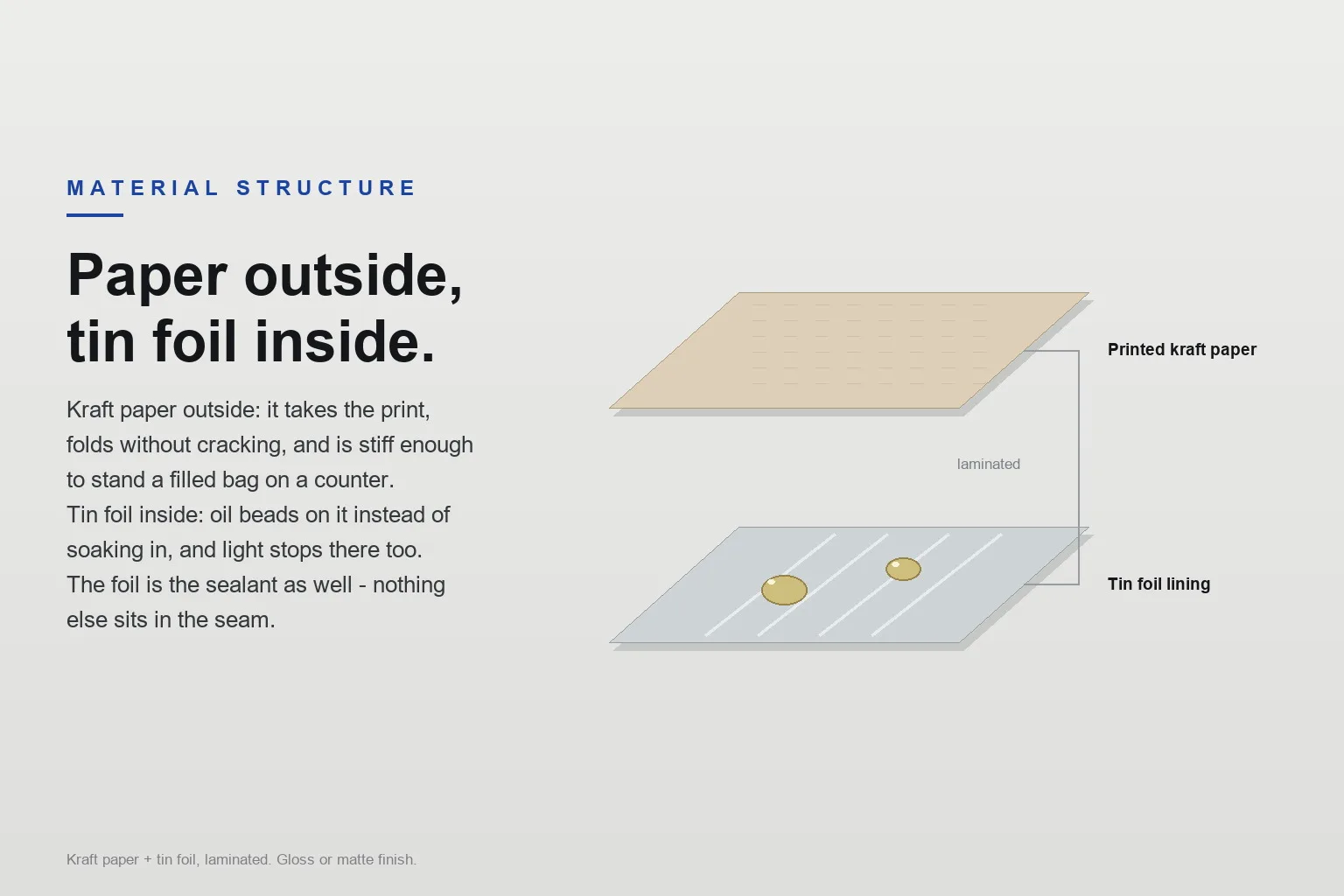
Two layers, one job each. The kraft paper is the body: it takes the print, it creases, and it keeps a full bag standing. The tin foil inside is the barrier: oil beads on it instead of soaking in, so the sauce collects on the liner and not in the paper, and light stops there too. Laminated together they behave like one sheet, which is why the bag folds flat and still does not go translucent at the corner.
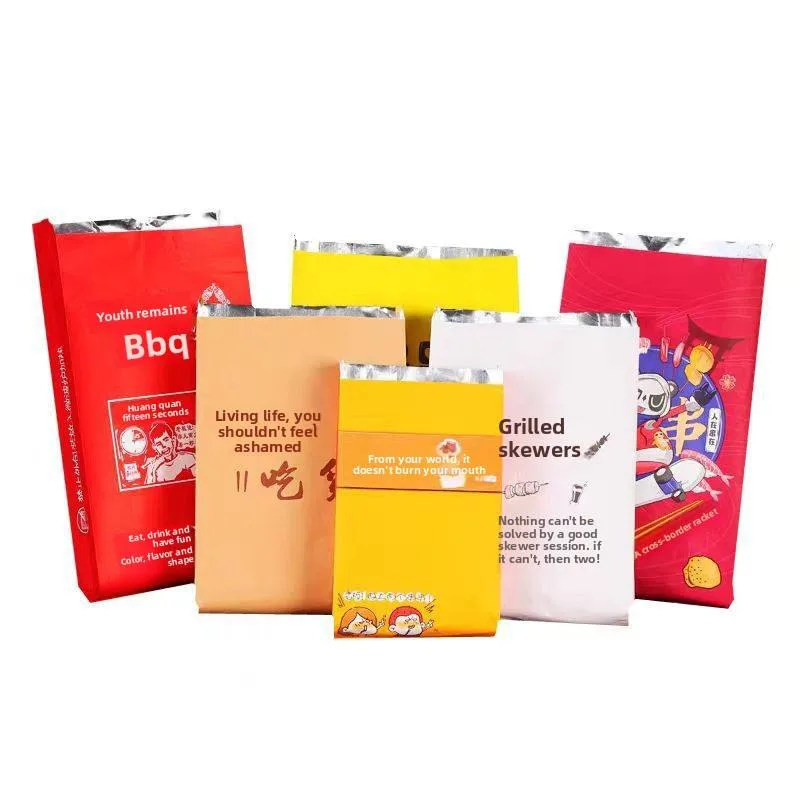
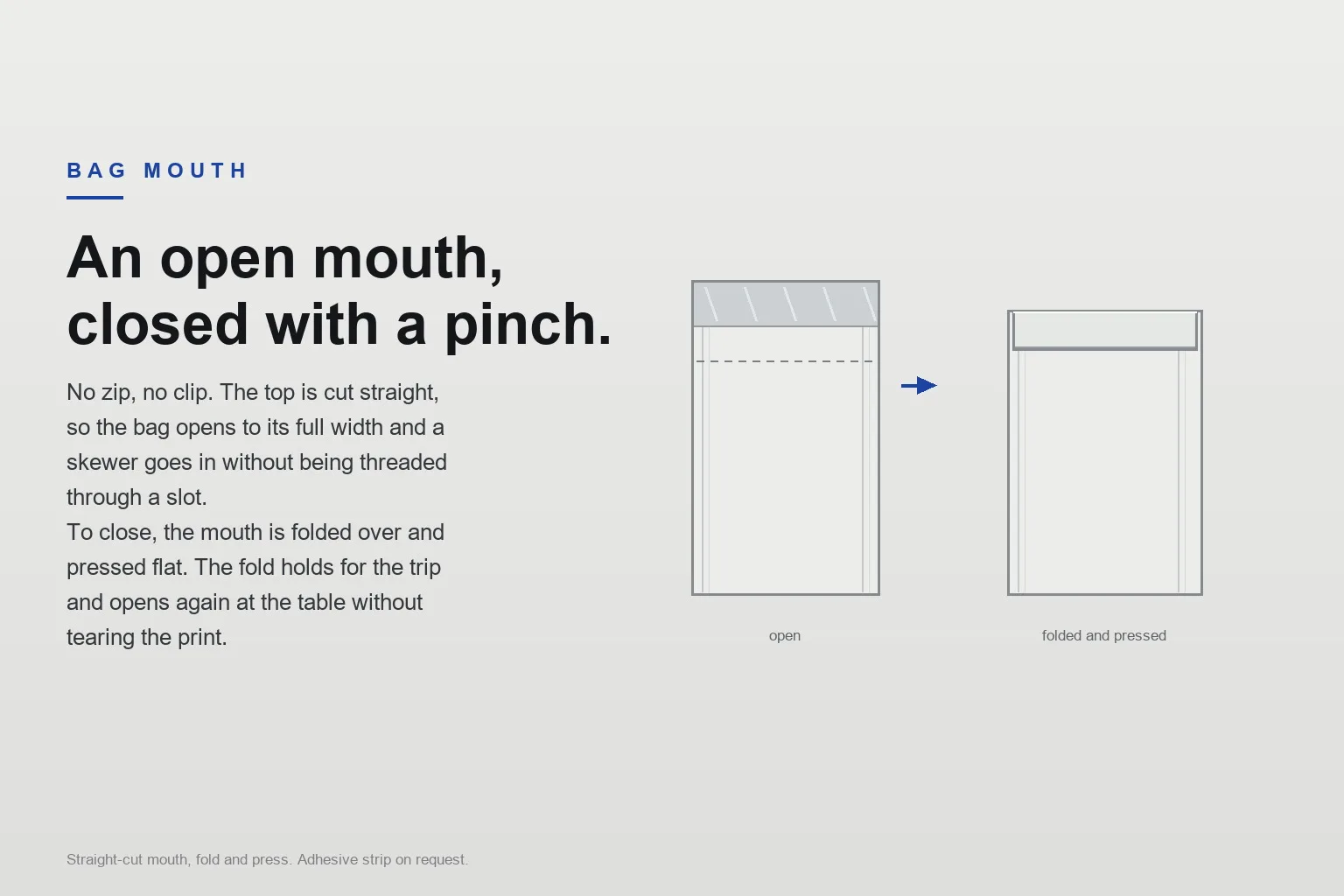
The top is cut straight – no zip, no clip. Fold the mouth over twice and press, and it holds for the ride; open it at the table and the print is still intact. Sizes follow the tray, the gusset follows the load, and the print is yours: one colour or six, on a kraft, white or coloured face.
| Parameter | Specification |
|---|---|
| Format | Block bottom bag with side gussets, straight-cut open mouth |
| Face sizes | 18×23 to 28×38 cm, plus custom |
| Side gusset | 6-10 cm, set per order |
| Base | Block bottom, folded into four corners |
| Outer face | Printed kraft paper, 80 / 100 / 120 gsm |
| Finish | Gloss or matte varnish; unvarnished kraft on request |
| Lining | Tin foil (metallised film), heat-sealable |
| Closure | Fold and press; adhesive strip on request |
| Up to 6 colours, white base coat under light inks | |
| Colour | Print to artwork; kraft, white or coloured face |
| Packing | Bundled flat, counted per hundred |
| Customization | Size, paper weight, gusset, print, closure, hanger |
Printing starts with the paper, not the film. Kraft drinks ink, so every pale colour needs a white base coat to sit on, and an uncoated kraft will always read a shade darker than the proof. That is settled at sample stage, because no amount of ink fixes a substrate that was the wrong colour to begin with.
Register is set from the fold lines, not from the sheet edge. The gusset fold and the base crease are where a printed band has to line up, and a millimetre of drift shows as a stripe that steps at the corner. So the plate is registered to the crease positions the bag machine will use, and the artwork is drawn to those same lines.
Lamination is where the two layers become one: paper outside, tin foil inside, bonded so the sheet does not separate when the bag is opened and shut all shift. Bond strength is tested by peeling a strip off a finished bag rather than a flat sample, because the gusset fold is where it fails first. Nothing else goes into the seam: the foil is the sealant.
Forming is where the sheet becomes a bag: it is tubed, the side gussets are pushed in, the base is opened into four corners and sealed, and the mouth is left open and square. Every bundle is checked for a square base and an even gusset, because a bag that stands crooked on the counter is the first thing a buyer notices. Bundles are then counted, strapped and packed flat, so a carton holds several hundred and arrives square rather than slumped.
Kraft paper outside carries the print and gives the bag its body; tin foil inside is the barrier, so oil beads on the liner instead of wicking into the paper. The two are laminated, not coated, and the foil is also the sealant, so nothing else sits in the seam. The base is a block bottom with a gusset down each side, and each side fold is a single crease, which is what lets the bag open wide and stand square.
North Side Of Nanyi Road, Shiwan Town Science And Technology Park (10th Floor, Building 1, No. 13)
INQUIRY