Hot & Cold Thermal Bags, Insulated Mailers & Cold Chain Delivery Packaging

Fertilizer, Pesticide & Agrochemical Packaging

Cleaner, Laundry & Air Care Packaging

Custom Medical Packaging Solutions

Protective Structures, Inserts and Retail Packs

Custom Protein Powder Pouches, Vitamin Stick Packs & Nutrition Bar Bags

Cosmetics, Fragrance and Skincare Packaging

Takeout, Bakery and Beverage Packaging

Kibble, treat & wet food packaging
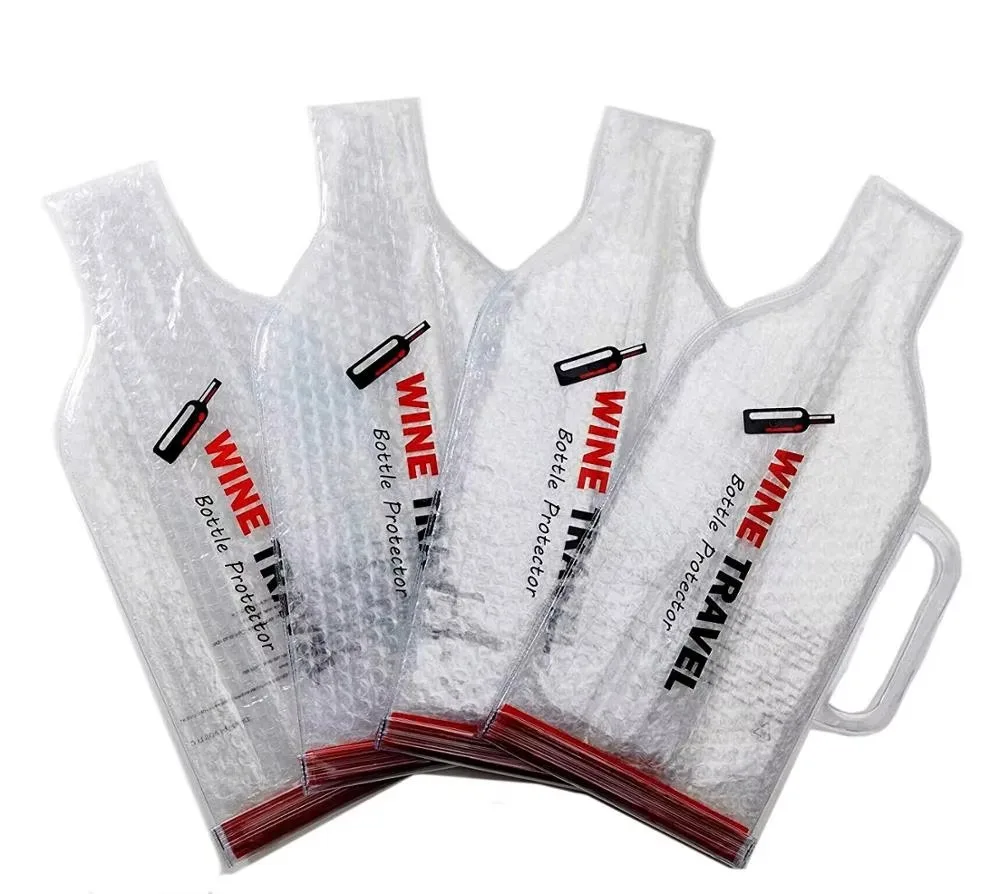
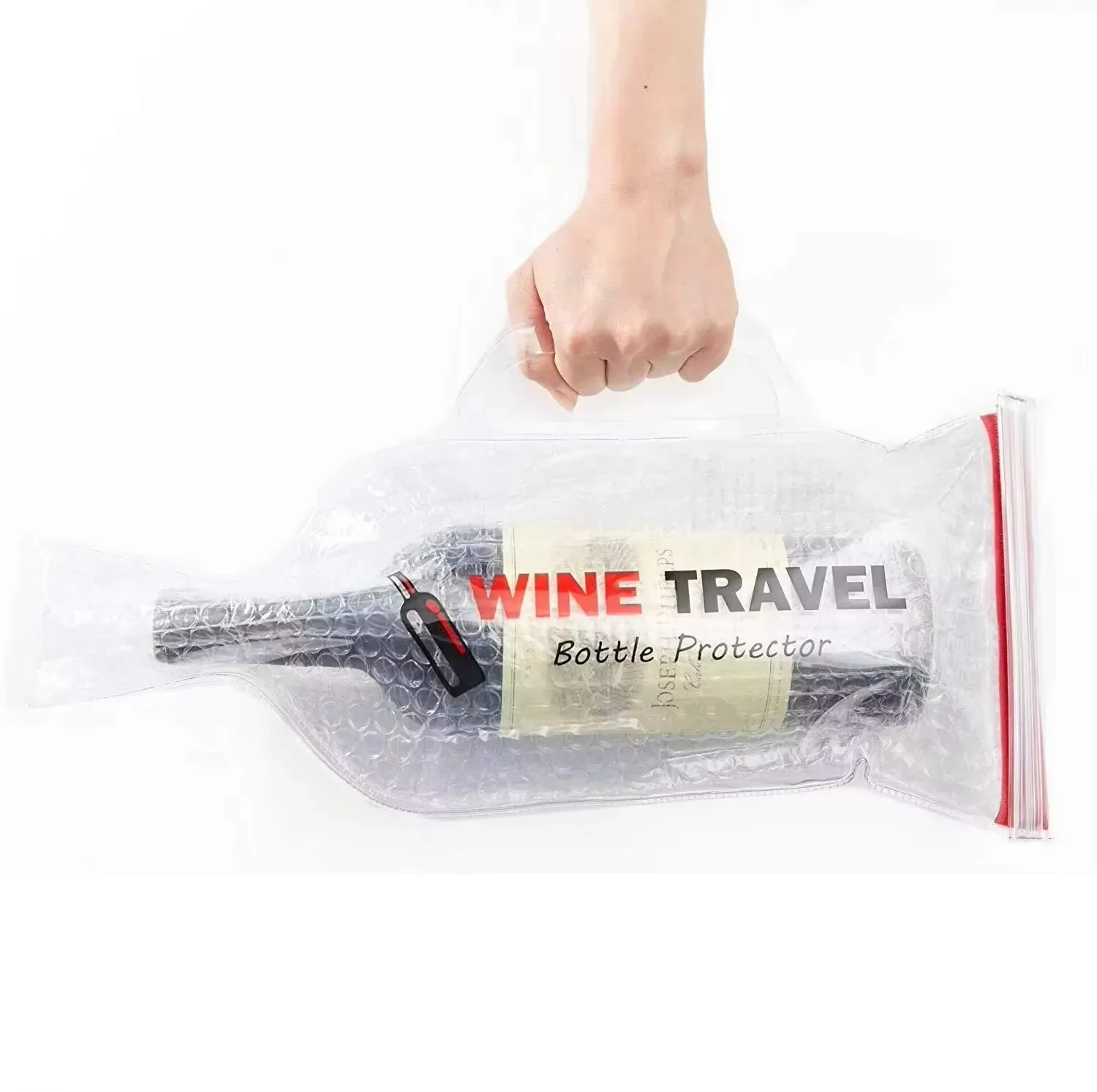
A bottle that survives a baggage hold is not a bottle that was wrapped carefully; it is one that had something between it and the next hard object. This sleeve is that something: clear PVC outside, a bubble layer inside, cut to a bottle outline so the shoulder and neck are covered rather than just the body. The bottle goes in at the bottom, the dual zip shuts, the flap folds over and its velcro holds the fold flat. The film is clear, so a label stays readable and a leak stays visible before it reaches anything else in the case.
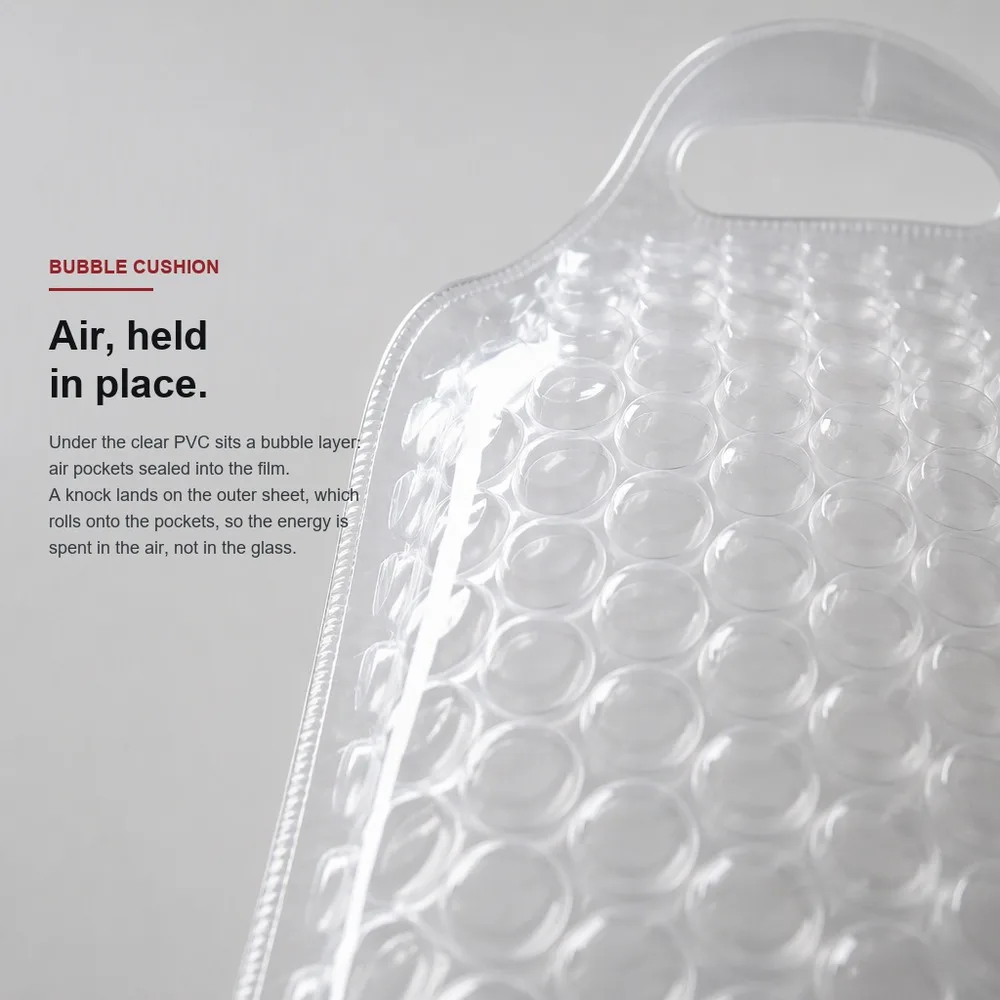
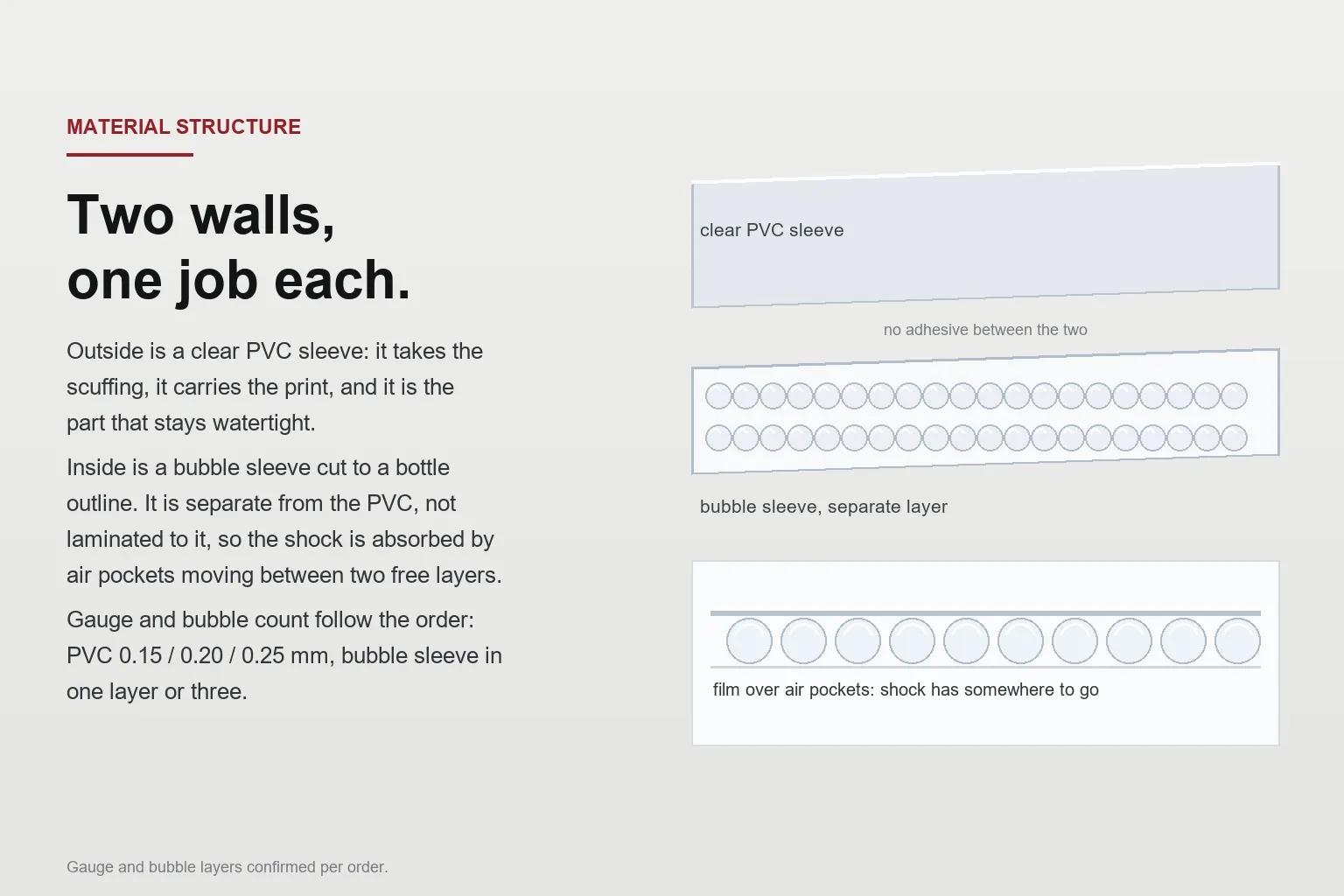
Outside is a clear PVC sleeve, and it does three jobs at once: it takes the scuffing, it carries the print, and it is the layer that stays watertight if a bottle does let go. Inside is a bubble sleeve cut to a bottle outline. The two are not laminated, which is the point – a bonded pair cracks and clouds at the fold, while two free layers let the air pockets move and do the absorbing.
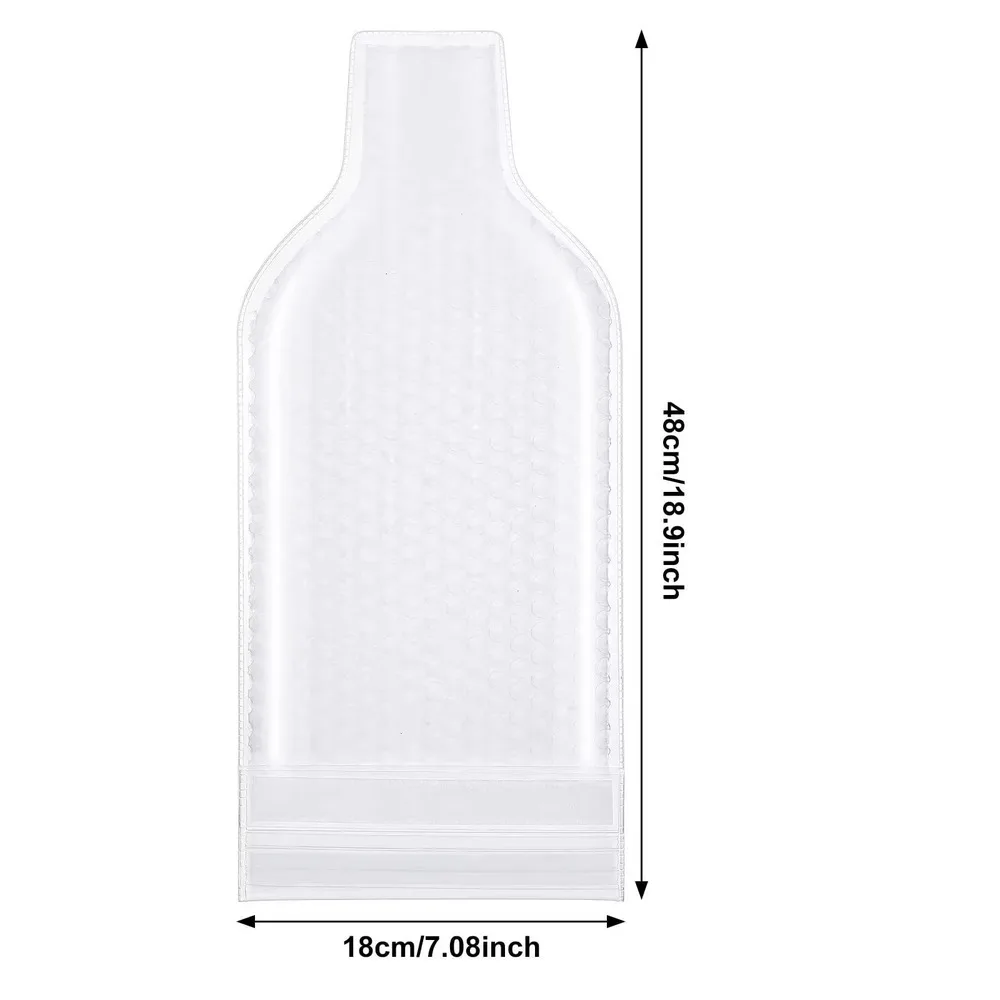
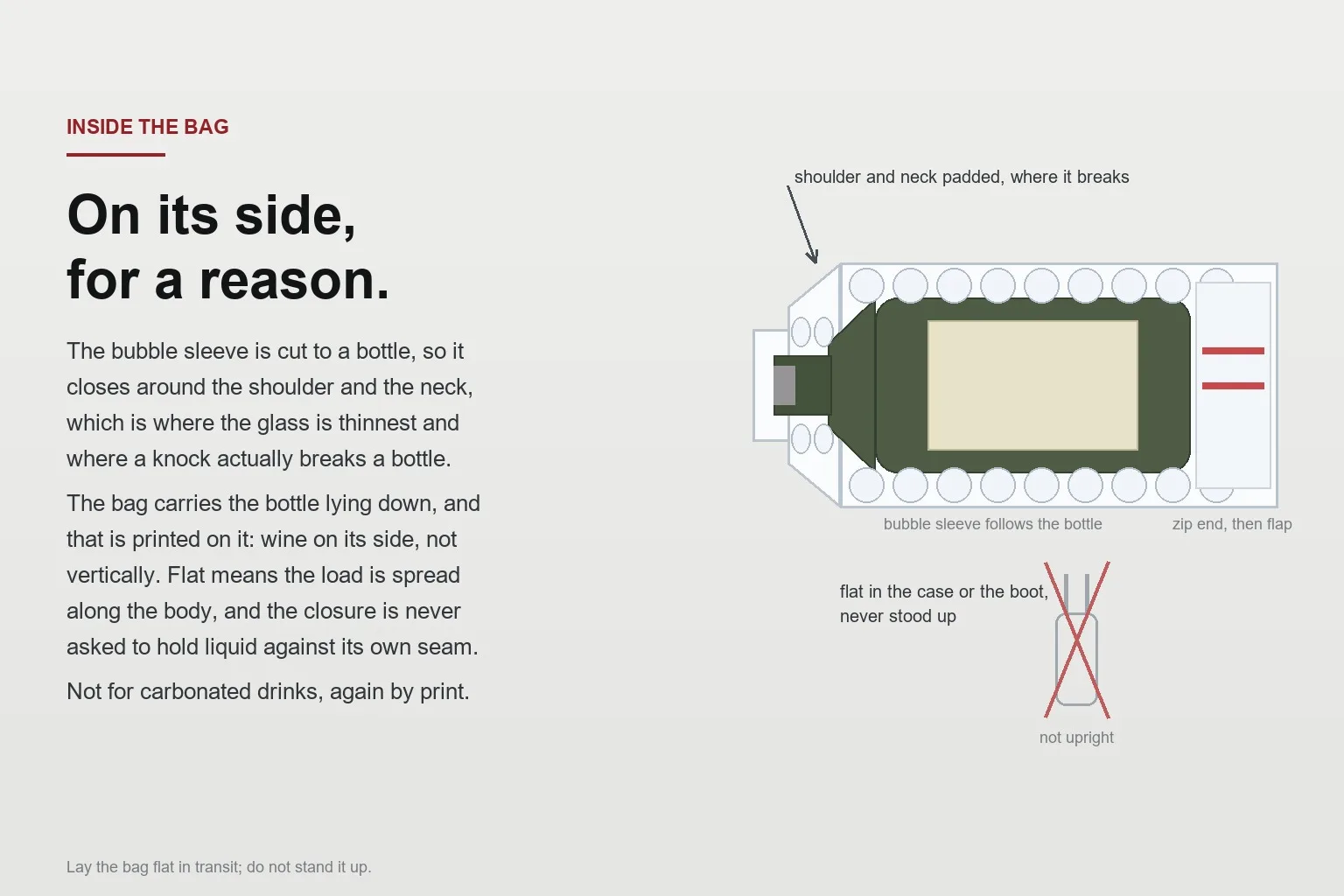
The shape is the second half of the protection. A sleeve cut straight across only covers the body, and the shoulder and neck are where glass is thinnest and where a knock actually breaks a bottle. This one narrows with the bottle, so the taper and the neck sit inside the bubbles too. Length follows the bottle: 48 cm by 18 cm takes a standard 750 ml Bordeaux with room at both ends.
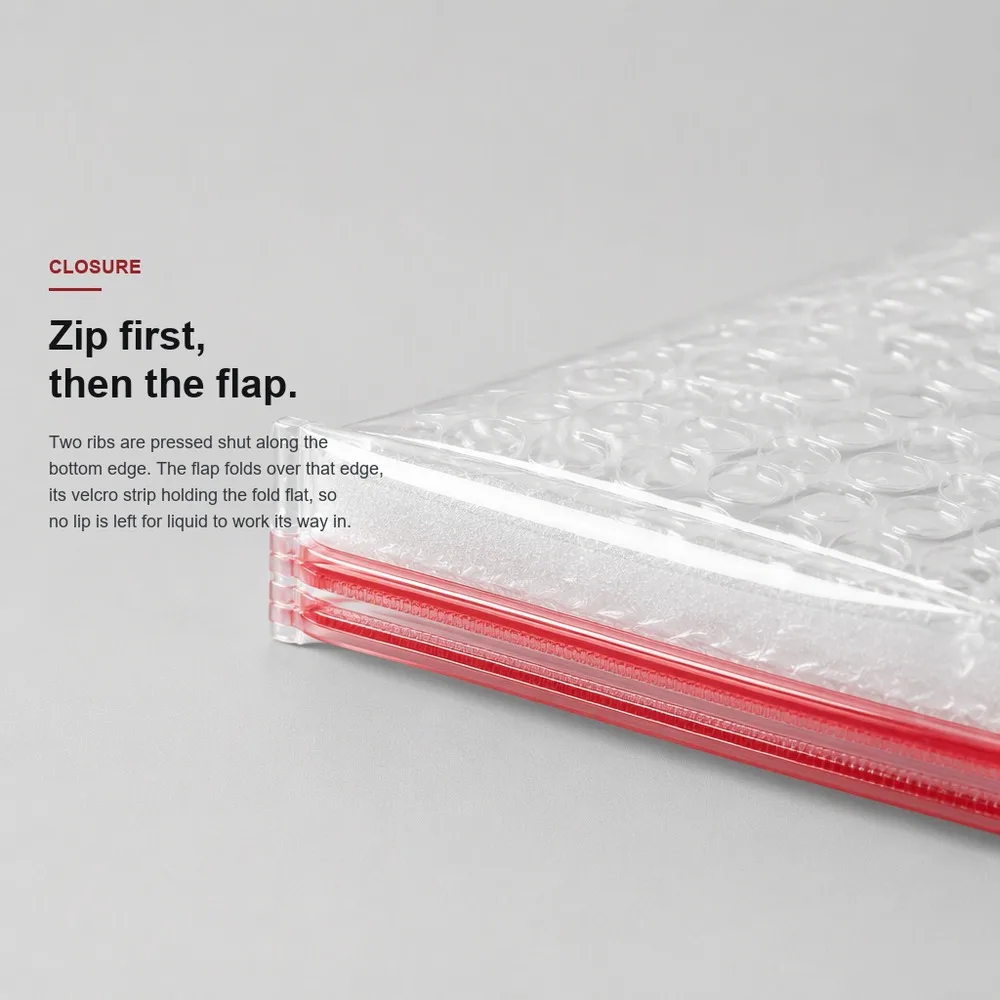
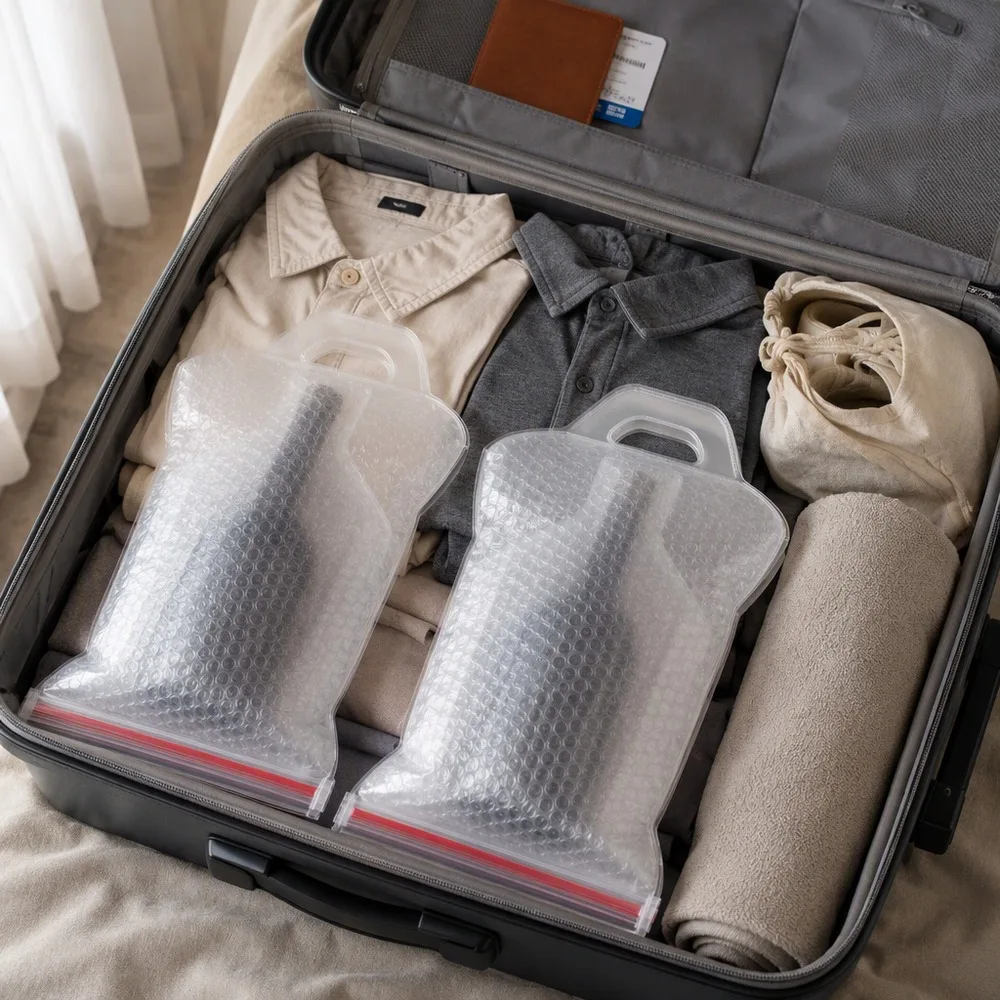
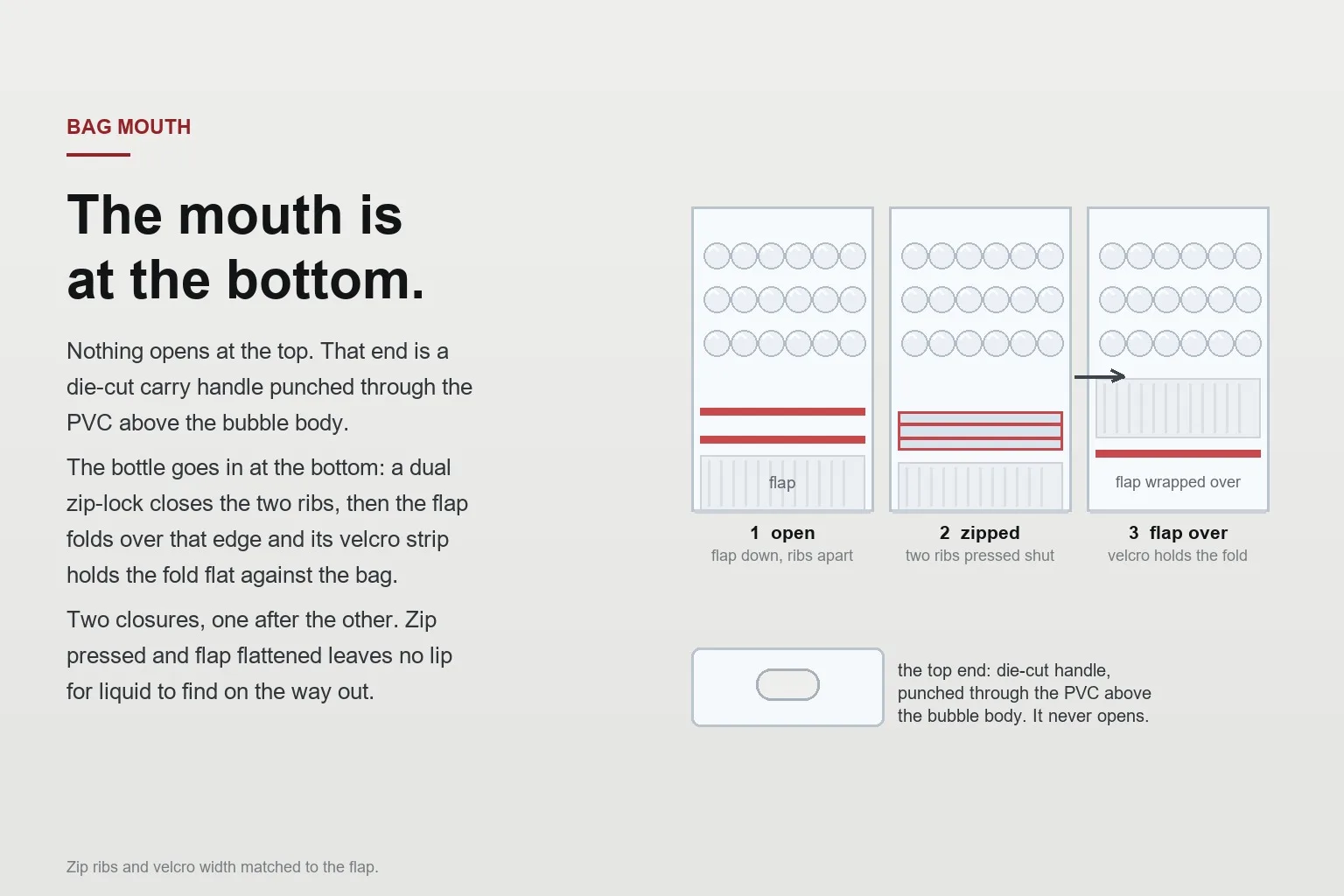
The closure is at the bottom, not the top. The top end is a die-cut carry handle punched straight through the PVC above the bubble body, so nothing opens where the weight is carried. At the bottom, two zip ribs are pressed shut, then the flap folds over that edge and its velcro strip holds the fold flat against the bag.
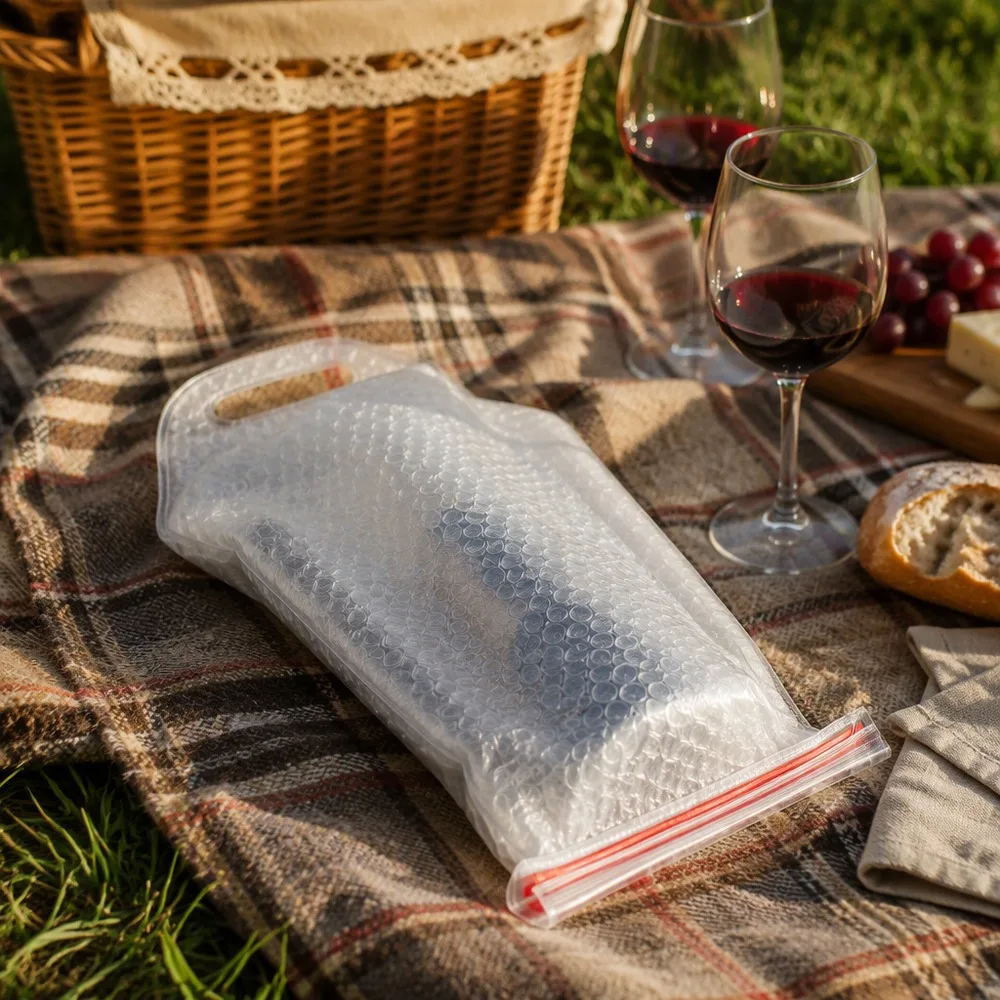
The bag is meant to be carried flat: printed on it are the two rules that matter, wine on its side and not vertically, and not for carbonated drinks. Sizes run from a half bottle to a magnum, the film can be plain or printed with your logo in one or two colours, and the bag is emptied, rinsed and used again.
| Parameter | Specification |
|---|---|
| Format | Bottle-shaped sleeve, bottom-loading, carried flat |
| Outer wall | Clear PVC film, 0.15 / 0.20 / 0.25 mm |
| Inner wall | Bubble sleeve, 1 layer or 3 layer, bottle-cut |
| Closure | Dual zip-lock, fold-over flap with velcro strip |
| Handle | Die-cut opening through the PVC above the body |
| Size | 48 × 18 cm for 750 ml; S / M / L plus custom |
| Plain, or 1-2 colour logo on the film | |
| Use | Wine carried on its side; not for carbonated drinks |
| Reuse | Empty, rinse, dry, reuse |
| Packing | Flat-packed, counted per carton |
| Customization | Size, gauge, bubble layers, print, zip colour |
The print sits on clear film, and clear film has no background to hide behind: whatever is printed is read against the label of the bottle inside. So the artwork is kept to line work and a wordmark, in one or two colours, with the middle of the panel left open. Dense blocks, gradients and photographs turn the bag into a blind sleeve and take away the one thing a clear protector is bought for, which is a glance at the label without opening anything.
Printing runs on the PVC before the sleeve is welded, either on the face or reversed so the ink sits inside the wall. Reversed print survives washing and condensate, which matters on a bag that is rinsed and reused; surface print gives a crisper edge and a slightly glossier mark. Either way the film is printed flat, before any bubble layer goes near it.
The difficulty is the seam. The bubble sleeve is welded in along the bag outline, and that weld runs a few millimetres inside the edge, so artwork is pulled back from every weld line, from the zip band and from the punched handle. Ink under a hot weld bar crazes and lifts, and a crazed mark cannot be repaired on a finished bag.
Sampling is judged on the finished sleeve held against a dark bottle, not on a flat printed sheet: the mark has to read at arm’s length through the film and the bubble layer behind it, the colour has to hold where the film is stretched over a pocket, and the margin has to be clear all the way round the weld.
The sleeve is clear PVC on the outside, and inside it a bubble layer cut to a bottle outline, the two left separate so the pockets of air can move and absorb instead of being locked into a laminate. The mouth is at the bottom: two zip ribs shut the edge and a flap folds over it, held by a velcro strip, so the bag is closed twice. Above the bubble body the PVC carries a die-cut handle. The bag is built to be carried flat, with the bottle lying on its side, and the film is printed with that instruction and with the warning against carbonated drinks.
North Side Of Nanyi Road, Shiwan Town Science And Technology Park (10th Floor, Building 1, No. 13)
INQUIRY