A meal kit is not a bag of loose food. By the time it reaches your pouch, every item is already in something: a sealed tray, a vacuum pack, a bottle with its own cap. That single fact changes what the pouch has to do. It is not there to give the load a shape or to hold it together. It is there to put a wall around something already packed, and to keep the cold in while it waits.
One: everything in a meal kit is already contained
Look at what actually goes into one delivery: a protein tray, a portion of vegetables, a sauce sachet, a dessert, a cold pack. Each one is sealed. None of them needs the pouch to support it, and none will settle into the corners the way loose grain would.
That is why a flat pouch suits this load and a
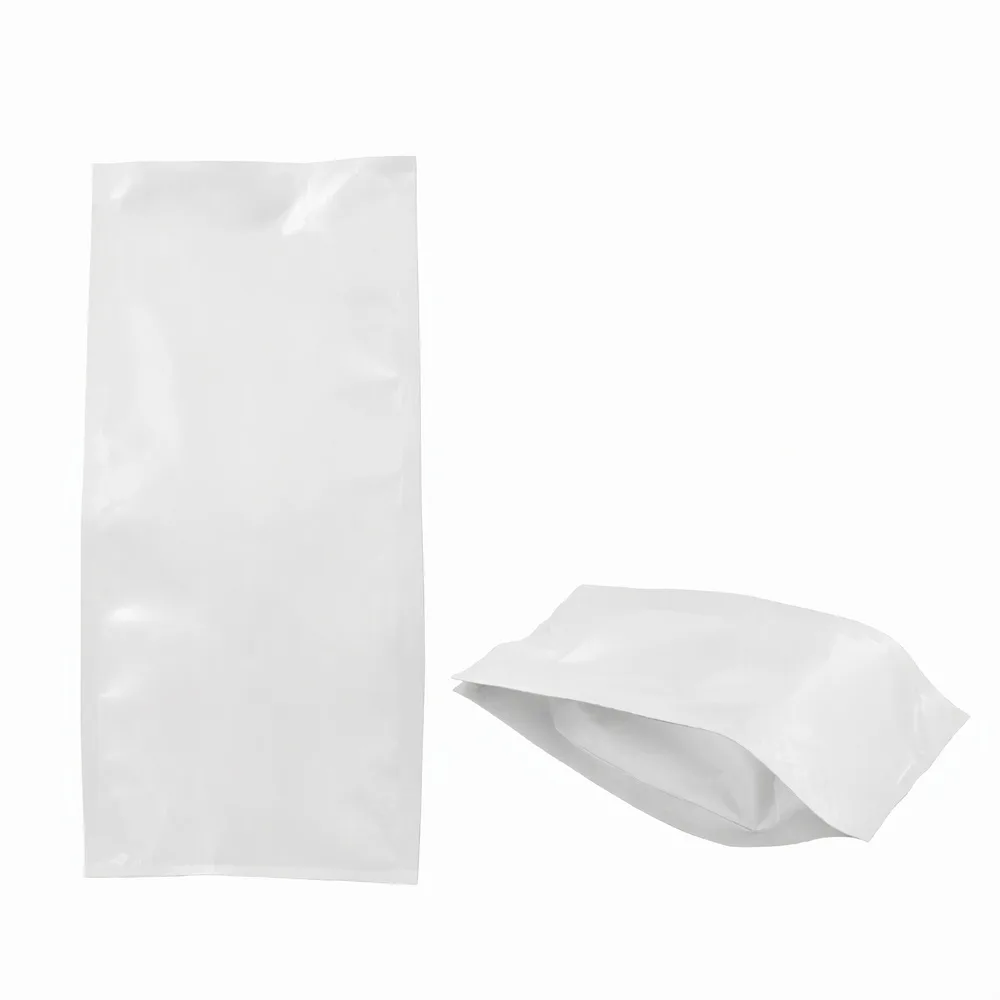
gusseted cooler bag often does not. A three-side seal flat pouch has no bottom fold and no side fold to open out, so it lies flat until you fill it, then takes the shape of what you put in. On our
flat cooler pouch, three sides are sealed and the fourth is the mouth. There is no crease to trap a tray corner, and no fold to give a false sense of room.
Two: a flat pouch has no volume of its own
This is the part that catches buyers. A gusseted bag stands up empty, so you can see roughly how much it holds. A flat pouch shows you nothing. Its capacity is whatever the load pushes it into.
Size therefore stops being a comfort margin and becomes the specification. Two failures come from getting it wrong, and both stay quiet at the packing bench:
- Too small: the tray goes in at an angle, a corner rides over the seal band, and the seam that looked fine is tested by the sharpest thing in the box.
- Too large: the load sits at the bottom, and the top half of the pouch becomes a pocket of free air above the goods.
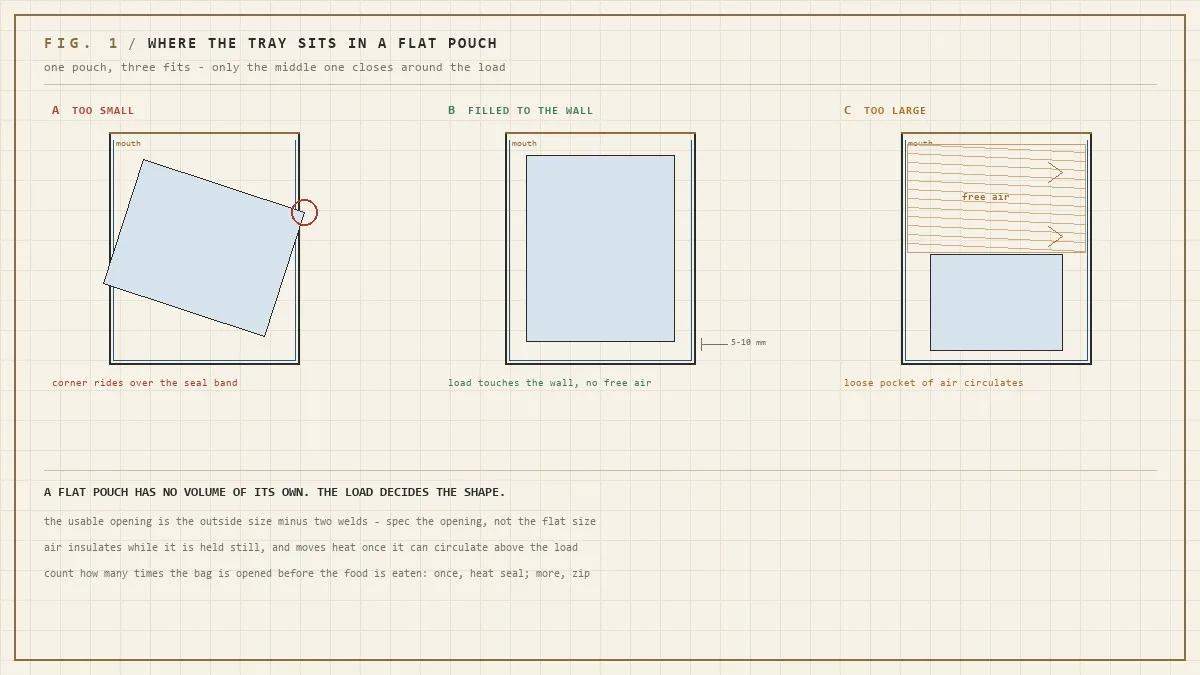 Fig.1 Three ways a tray sits in a flat pouch: jammed across the seal band, filled to the wall, and floating under a pocket of free air
The second case is the one people underestimate. Air is a good insulator while it is held still, and a poor one once it can move. A loose pocket above the load gives cold air somewhere to circulate, and circulation is how a pouch loses what it started with. The mechanism is the same
three paths heat takes into a parcel, only here the third one is doing the damage from the inside.
Three: where the cold pack sits
Put the pack against the load, not against the mouth. The mouth is the last thing you close and the first place a seal gets worked loose in transit. A pack sitting under the opening spends its capacity chilling air that is about to escape.
In a meal kit, the pack usually goes on top of the trays in a single layer, or between two trays when the box is deep. Either way it should touch the goods. Contact does the work. Distance only adds air for the pack to chill first.
Four: closure is decided by who opens the bag
Both closures are available on the same pouch, and the choice is not about strength.
- A heat-sealed mouth is permanent. It is the right answer when the bag is opened once, by the customer, at the end of the trip. Nothing to align, nothing to reseal badly.
- A zip is the answer when the bag is opened mid-route, a driver pulling one tray out, a store adding an item. It costs a strip of the mouth, and it comes back open if whoever closes it is in a hurry.
Count how many times the bag is opened before the food is eaten. Once, heat seal. More than once, zip.
Five: the grip takes strength from the top seal
A meal kit is carried by hand, often two at a time, often at arm’s length. The moulded grip on these pouches is welded through the top seal rather than punched above it, so the load hangs under the handle instead of from a hole. What it costs is a band of the mouth that can no longer be printed edge to edge, so the artwork has to be laid out with that band kept clear.
Tell us the tray dimensions, the number of items per bag, whether the bag is opened once or repeatedly, and where the cold pack sits. That is enough to quote a fit rather than a size.
Send us your payload details and we will come back with a pouch that closes around the load instead of around air.