Hot & Cold Thermal Bags, Insulated Mailers & Cold Chain Delivery Packaging

Fertilizer, Pesticide & Agrochemical Packaging

Cleaner, Laundry & Air Care Packaging

Custom Medical Packaging Solutions

Protective Structures, Inserts and Retail Packs

Custom Protein Powder Pouches, Vitamin Stick Packs & Nutrition Bar Bags

Cosmetics, Fragrance and Skincare Packaging

Takeout, Bakery and Beverage Packaging

Kibble, treat & wet food packaging
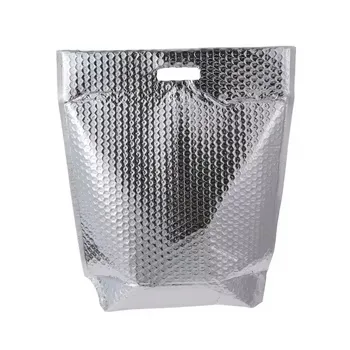
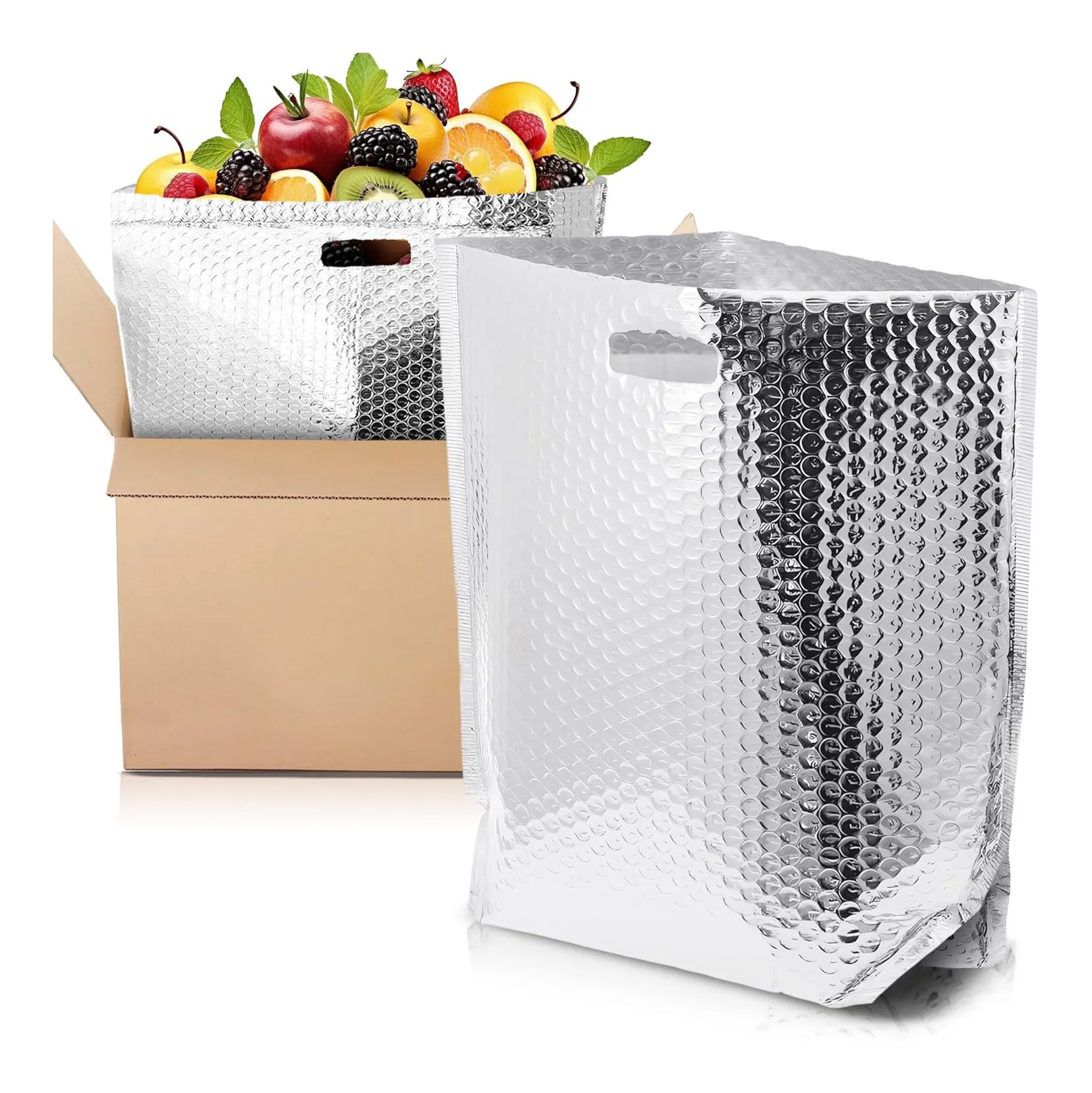
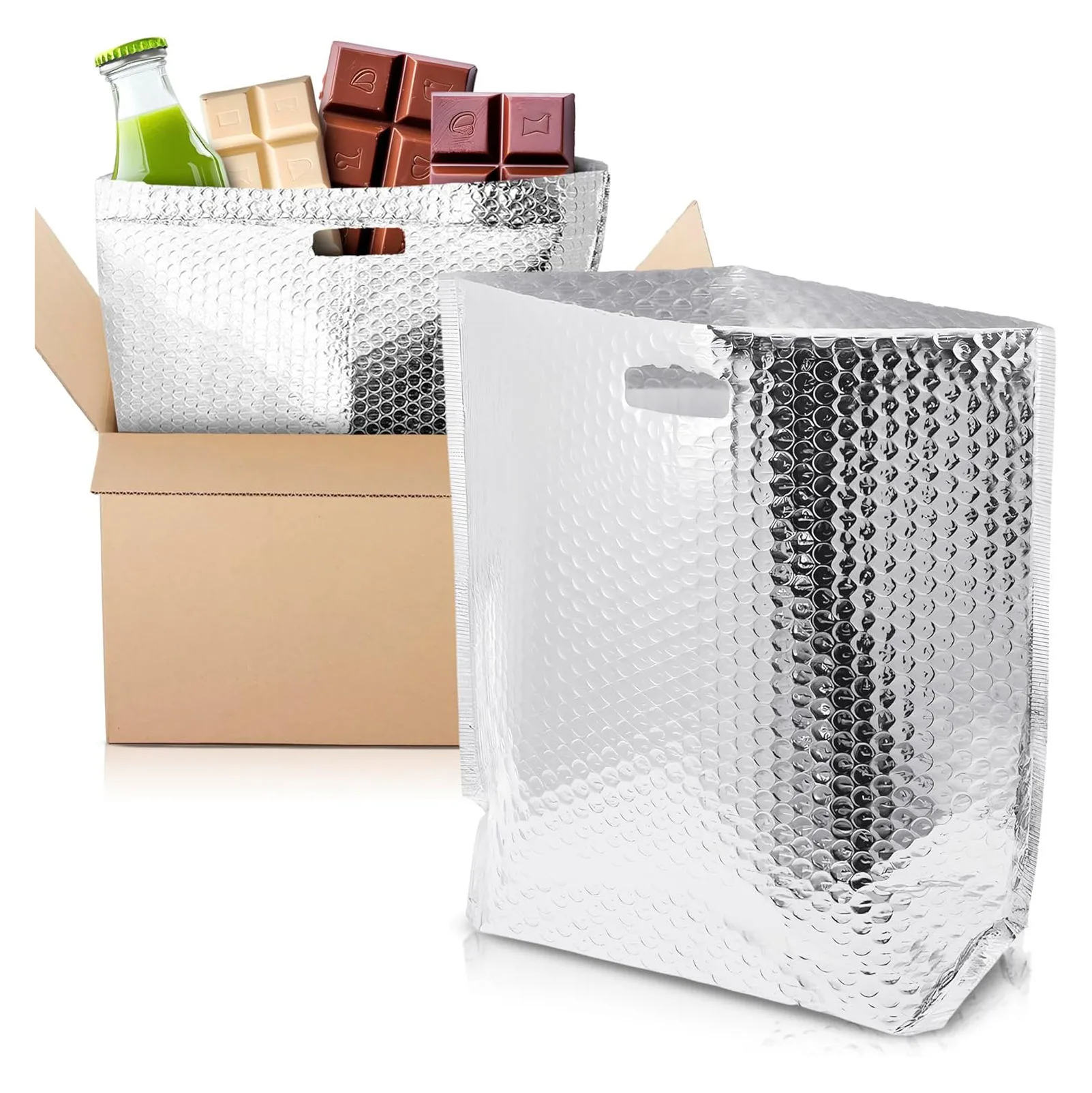
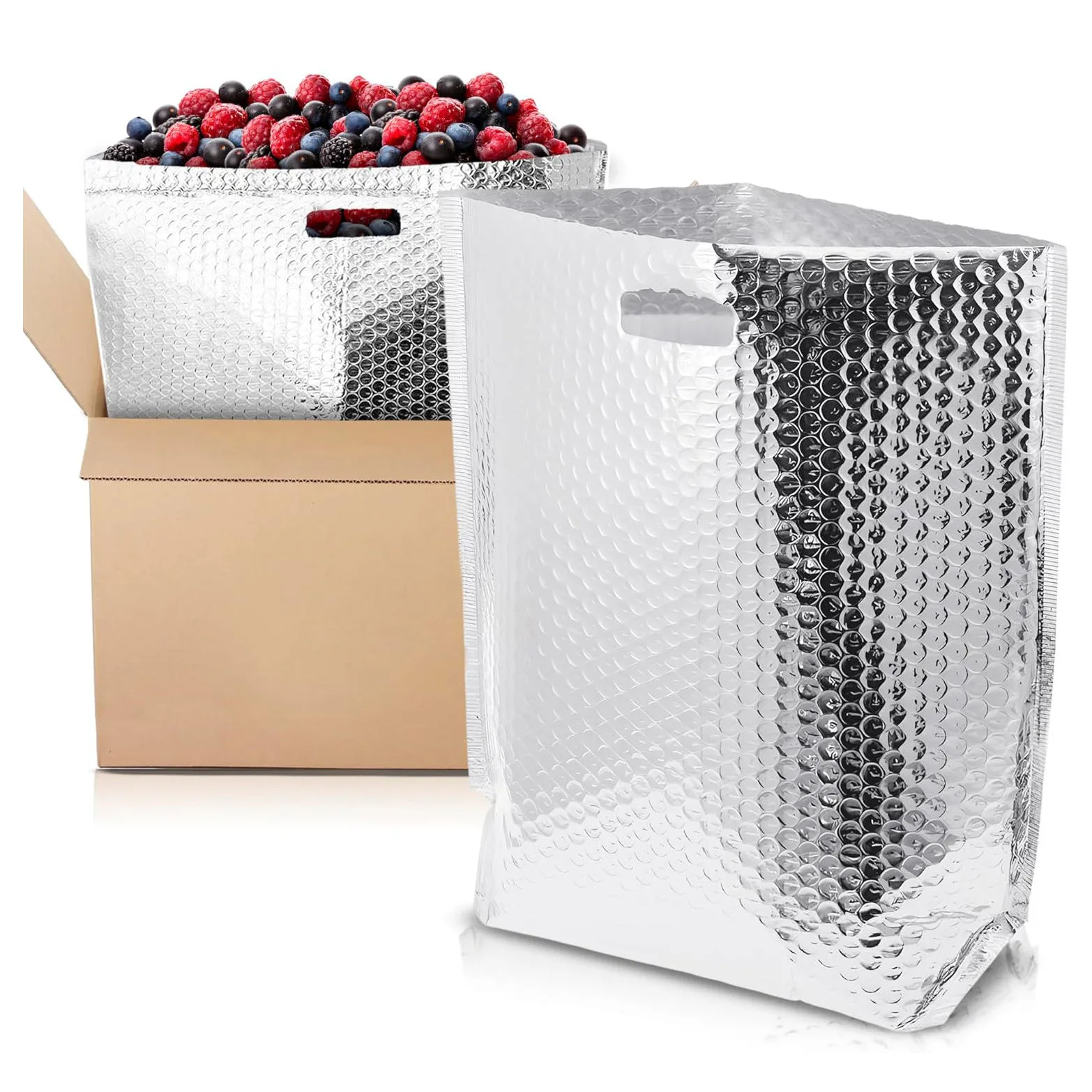
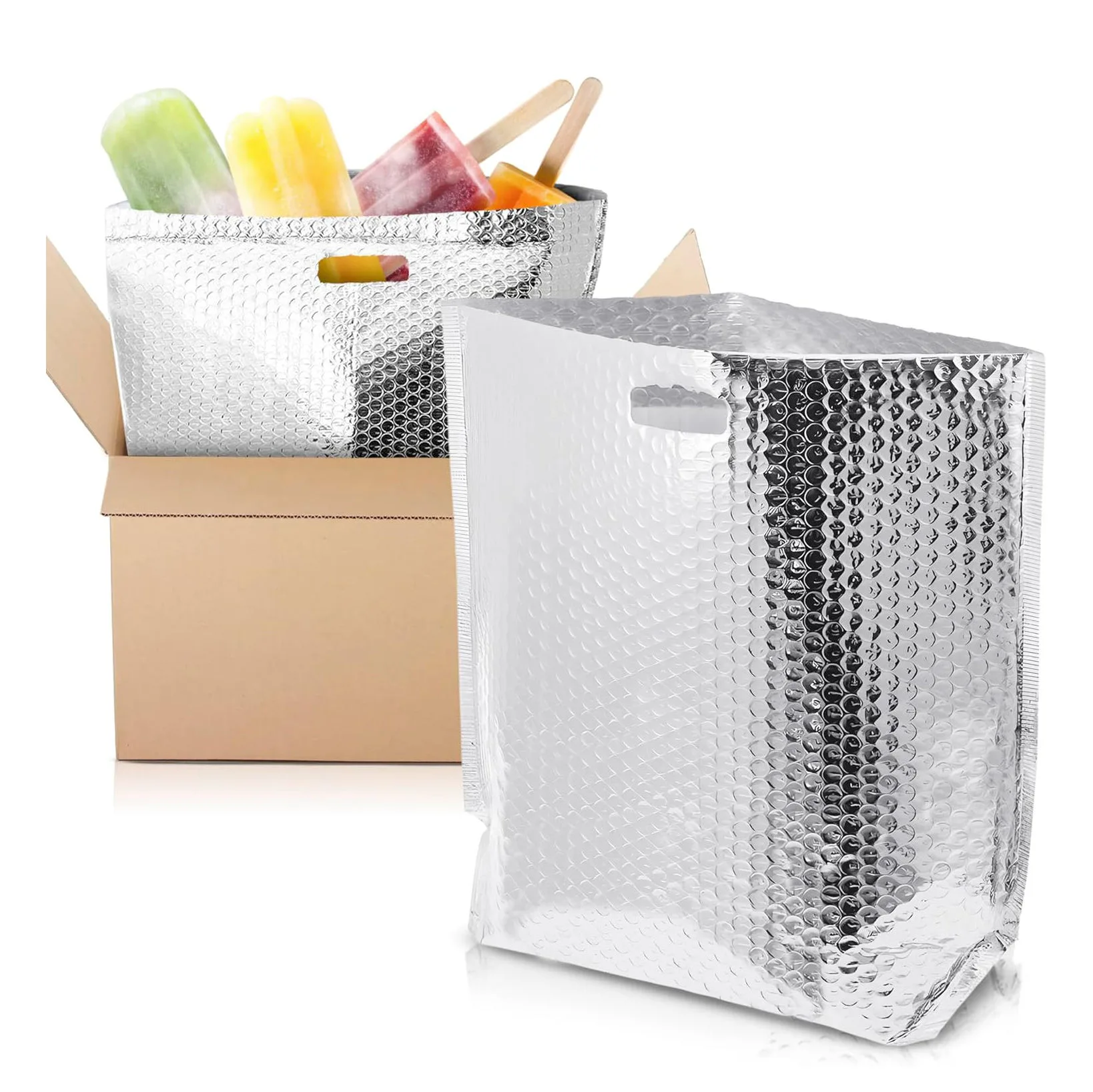
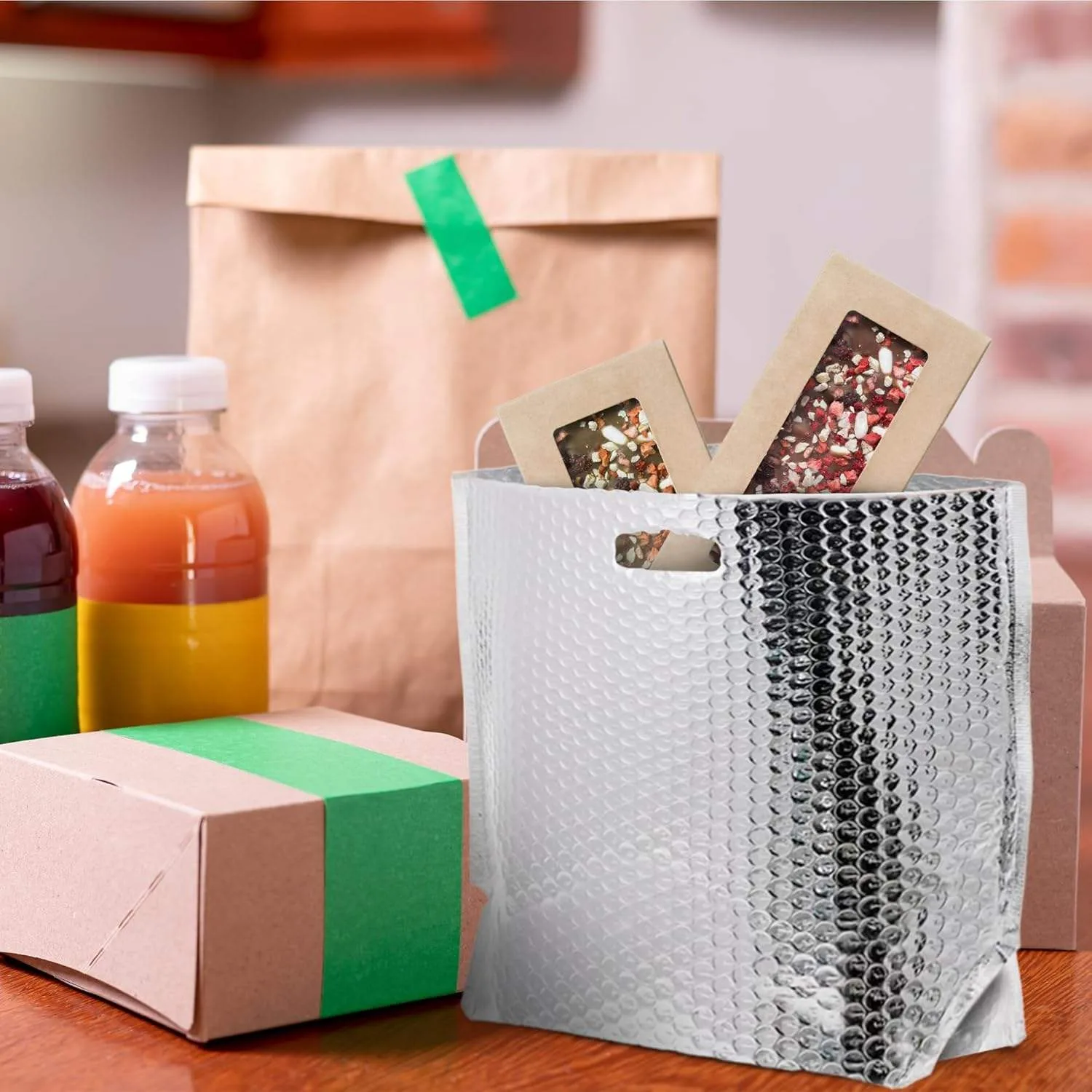
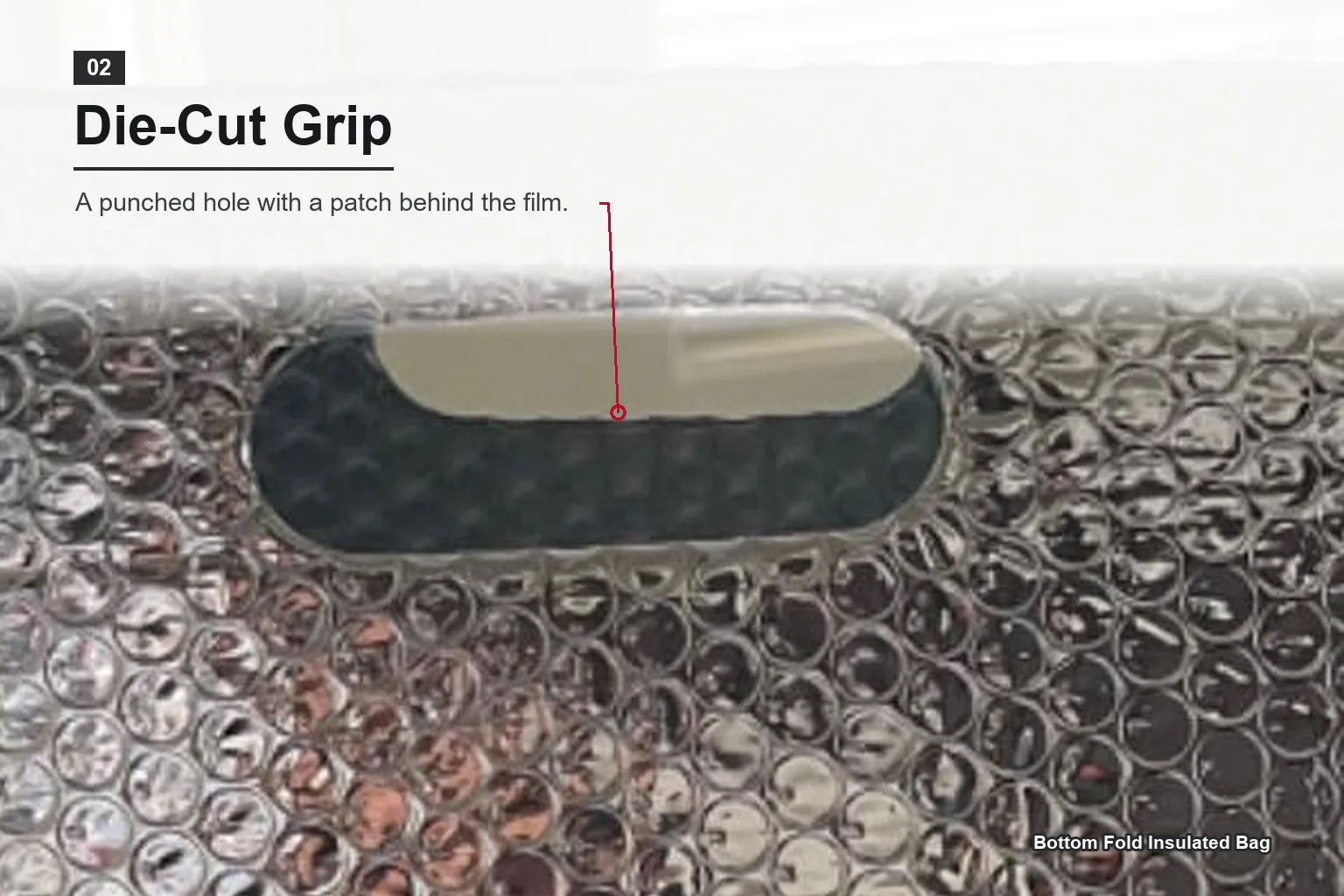
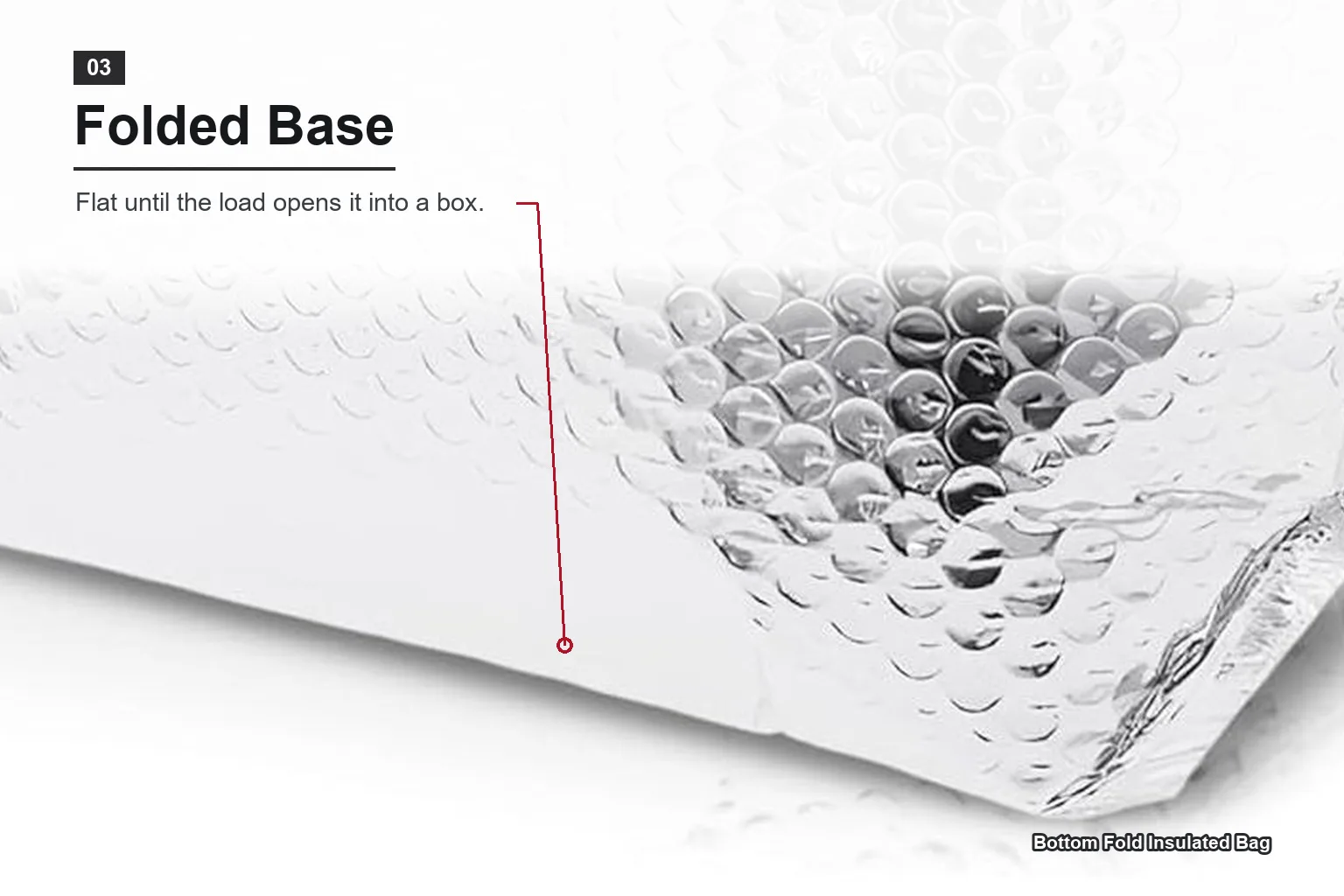
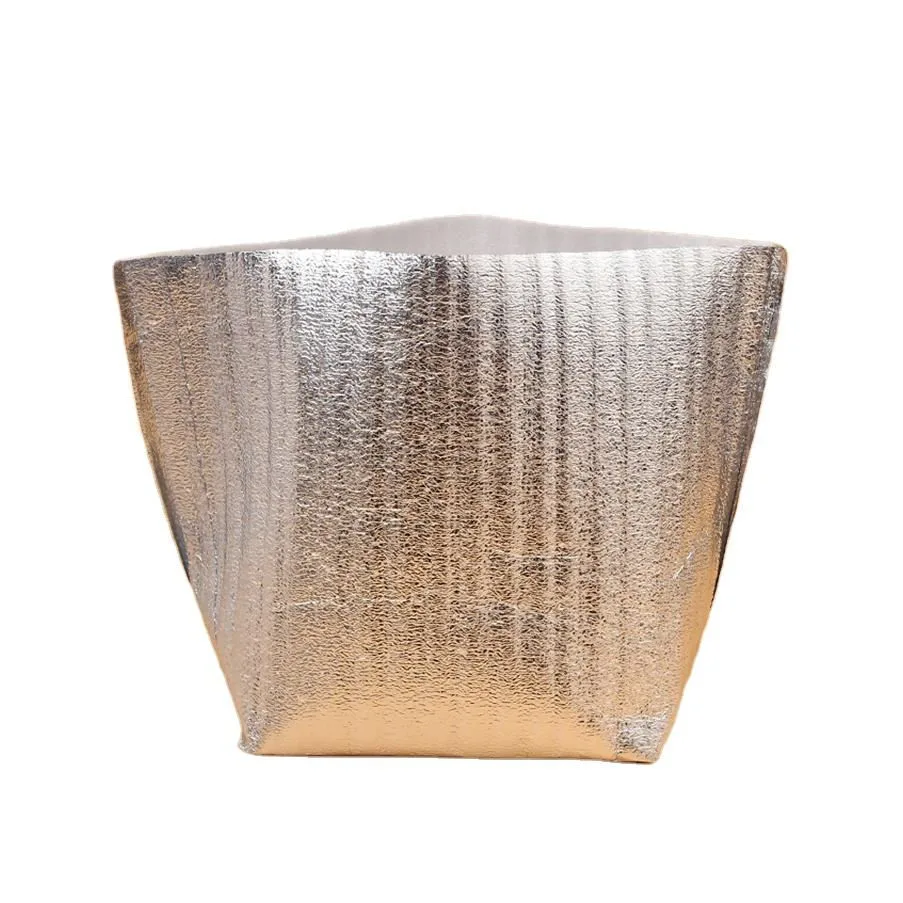
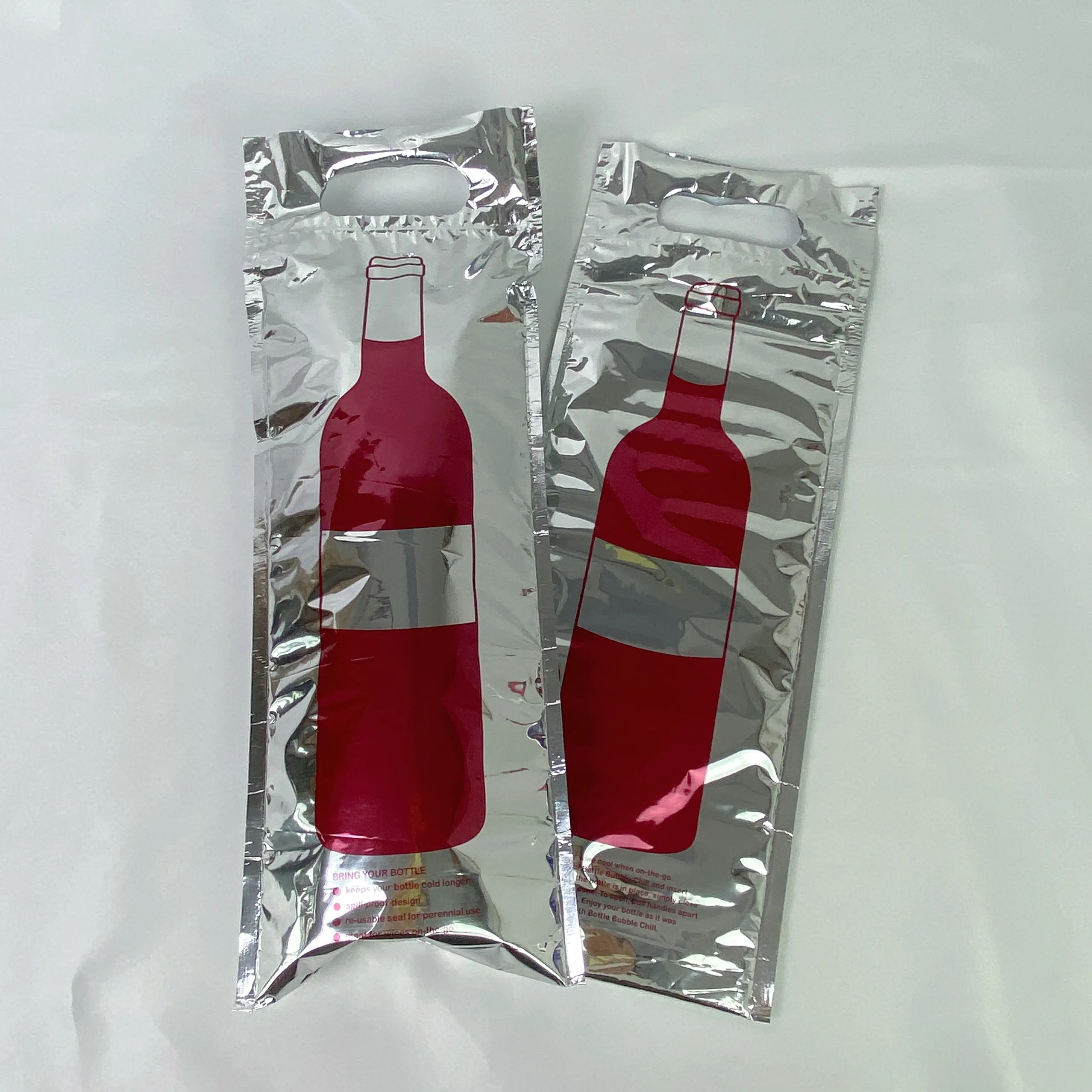
A pouch that only holds its shape once it is full is the cheapest way to ship a small insulated order, and the cheapest way to get it wrong is to assume it stands on its own at the packing bench. This bag arrives flat. It is a fold at the base and no gusset up the sides, so the two faces open into a box shape only after the load goes in, and an empty one stacks like a sheet of card. The wall is foil face, foam core, sealant in. A die-cut hole at the head carries the finished pouch, with a patch set behind it so the film does not tear at the grip. Tape closes the mouth.
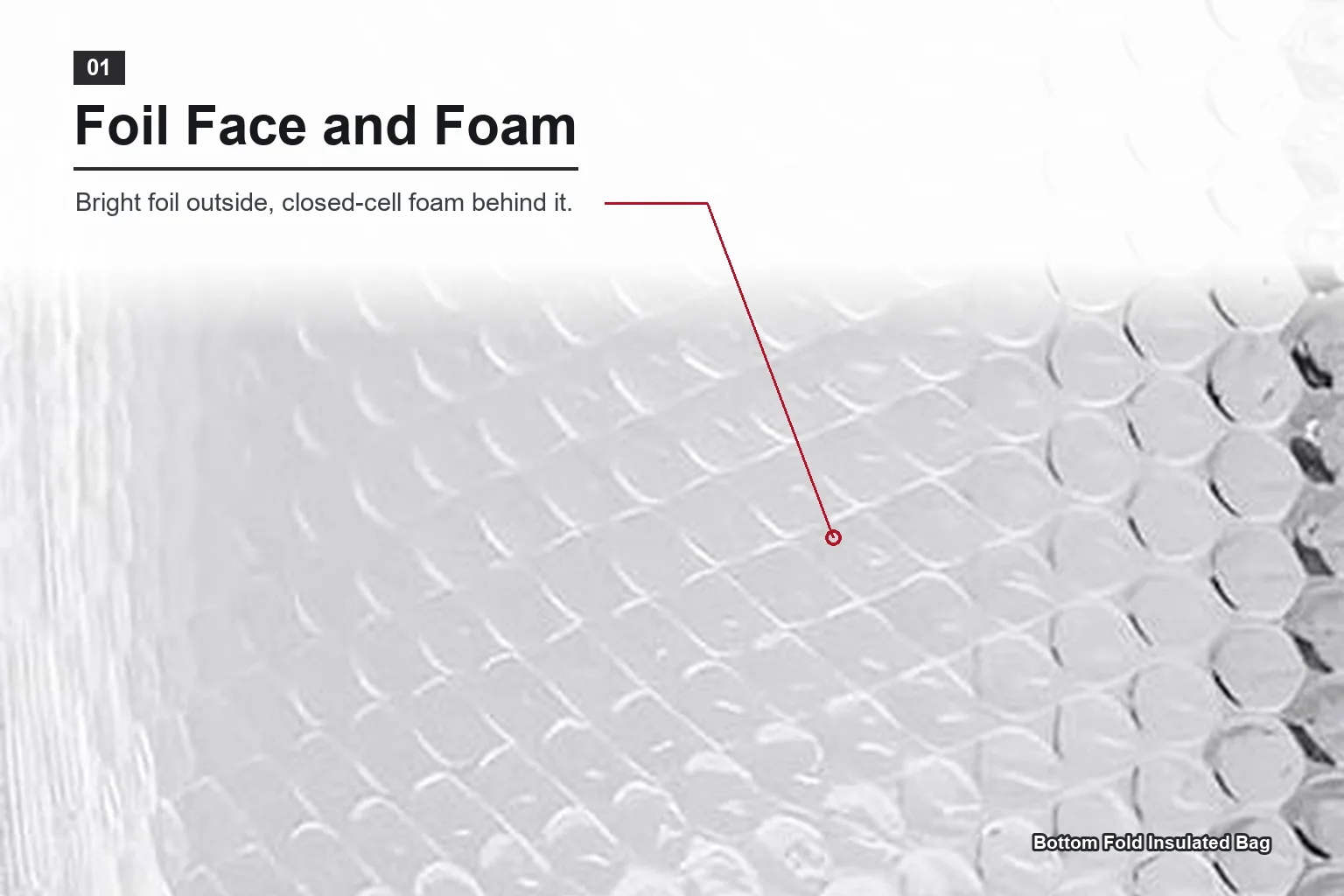
Three layers, outside in. An aluminium foil laminate on the outer face, the bright side, and the face that gets printed. Behind it, closed-cell EPE foam at two, three or five millimetres depending on the gap the load needs. Inside, a food-grade PE sealant, the only layer touching the goods and the layer that takes the heat seal at the mouth and down both side seams.
The base is a single fold, full width, no gusset up the sides. That is deliberate. A side gusset has to be held open by the load and pinched flat again by hand before packing, and on a busy bench nobody does it. Here the fold opens by itself as the pouch fills, the faces part into a box, and the finished bag stands while the next is packed. Empty, it stacks like card.
The carry hole is punched through the head, centred, with a reinforcing patch behind the film. Foil laminate tears at a bare punch once a loaded bag is swung, so the patch spreads the load first. The mouth closes on a tape strip: peel, fold, press. For accounts that reopen the same bag, hook-and-loop or a zip track is fitted instead, with the head deepened to carry the hardware.
Stock sizes run six to twenty-five litres, which covers a lunch box, a chilled meal kit and a small produce order in one format. Anything between is cut to order, since the fold and the punch are tooled per size. Print is gravure on the foil face, and artwork has to leave the fold line and the punch margin clean; ink across either will crack long before the film does.
| Parameter | Specification |
|---|---|
| Structure | Bottom fold, no side gusset, four-edge seal |
| Outer face | Aluminium foil laminate, bright side out, printed |
| Insulation core | Closed-cell EPE foam, 2 / 3 / 5 mm |
| Contact layer | Food-grade PE sealant, heat-sealed seams |
| Closure | Adhesive tape strip standard; hook-and-loop or zip on request |
| Handle | Die-cut carry hole, reinforcing patch behind the film |
| Base | Full-width fold, opens flat under load |
| Reflective behaviour | Passive foil face; hold depends on load mass, pack mass and handling |
| Printing | Gravure on the foil face, up to 8 colours |
| Origin | Guangdong, China |
The foil face is the printed face, the only face a buyer sees. Layouts that work here keep to a front panel, a repeat mark on the reverse, and one identification block near the head where the punch sits. A meal kit shipper usually wants a brand panel, a fill or weight box and a short preparation note; the head is the natural place for the last two, because it stays visible when the pouch stands.
Printing goes onto a film, not paper, and the surface is reflective. Metallised and foil faces need a white flood or a primer under colour, or the silver eats the ink: a red comes out brown, a blue goes grey at an angle. Once the ground is laid, gravure carries the job for long repeats and tight registration, since any drift shows up twice, on the front and again across the fold.
Two features make this pouch harder to print than a flat one. The fold at the base crosses the full width, so artwork running colour through it cracks the moment the pouch opens under load; the press sheet keeps type and fine detail clear of a band about ten millimetres wide. The punch is the second: the die cuts film already printed, and colour laid to the cut edge will feather or flake at the rim.
Proofing follows the goods. Print the exact laminate that will ship, in the exact build, because a proof pulled on white film tells you nothing about how a colour sits on silver. The sample is checked at arm length on a standing, loaded pouch rather than flat on a table, since that is how the buyer first sees it. Hold that pouch as the reference, and judge the next order against it, not against a screen.
Three layers run the full height of the wall. Aluminium foil laminate sits outside, bright side out, reflecting radiant heat away from the load. Behind it, closed-cell EPE foam holds a still air gap and slows conduction. The inside is a food-grade PE sealant, smooth, weldable, and the only surface touching the goods.
The weak point is the last mile, not the long haul. The base is where a pouch sits flat against a shelf and where the fold leaves the wall thinnest, so foam continues across it rather than stopping at the seam.
North Side Of Nanyi Road, Shiwan Town Science And Technology Park (10th Floor, Building 1, No. 13)
INQUIRY