A cushioned mailer is mostly air, and international carriers bill for space before they bill for weight. Pressing the foam flat at the factory cuts the volume you pay for without changing the protection wrapped around your product.
What carriers actually charge for
Every parcel is priced twice: once by actual weight, once by volumetric weight, and the higher number wins. Volumetric weight is length times width times height divided by the carrier’s divisor, commonly 5,000 for cubic centimetres per kilogram, or 139 for cubic inches per pound in the United States. Confirm the divisor with your own carrier, because the same carton can price differently on two lanes.
The consequence is simple. A carton full of light, bulky goods is charged as if it were heavy. Any millimetre you remove from the outside of a carton is paid for once per shipment, on every shipment, for as long as the product ships.
Where the volume goes
Bubble mailers arrive inflated, and they have to: the air inside the bubbles is the cushion, so the bag cannot be pressed without collapsing the thing that protects the goods. Foam-faced mailers are no thinner by nature. Ours are built with 20 mm of expanded polyethylene on each face, which is 40 mm of cushioning in total once the pack is closed.
Forty millimetres of foam per bag is a good number for the product and a poor number for the carton. Fill a case with inflated mailers and most of what you are stacking is air, which shows up in the freight invoice as chargeable kilos that never existed.
What compression changes, and what it does not
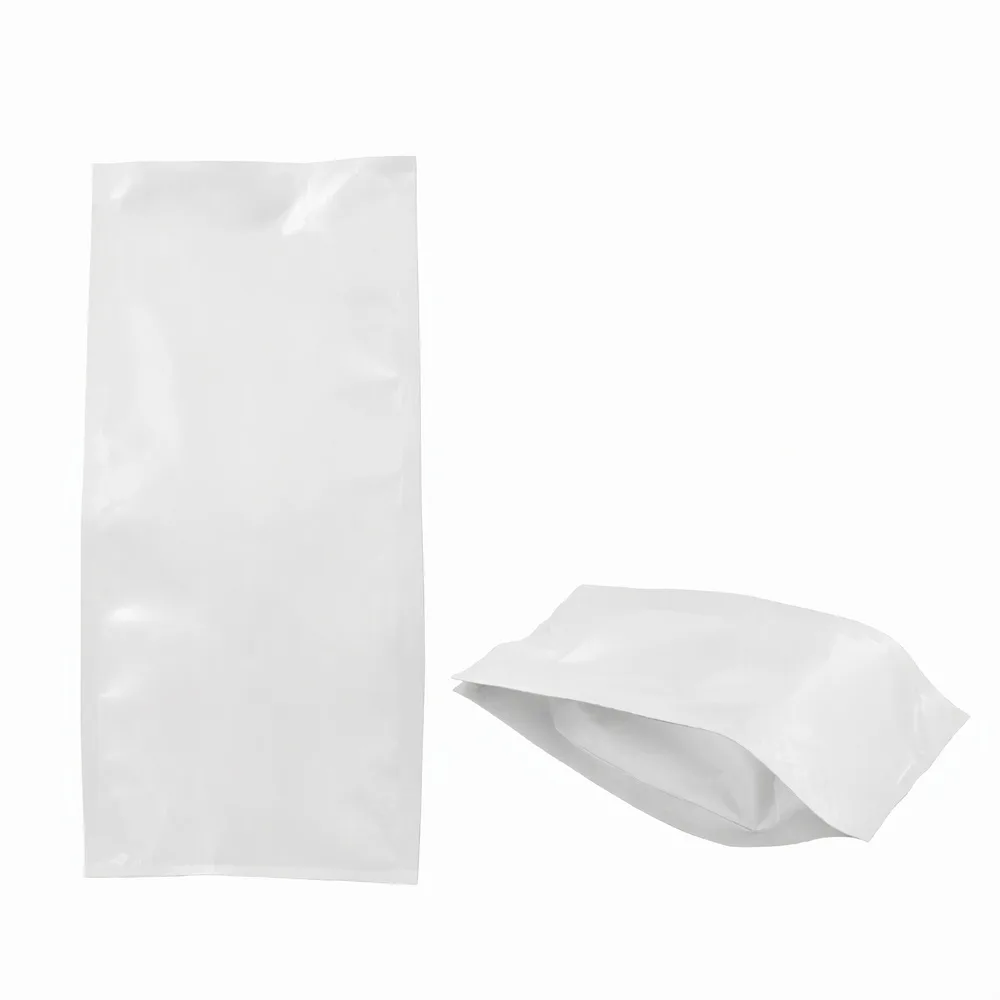
In a vacuum-compressed EPE foam mailer the panels are pressed flat at the works and sealed into the outer skin. The same bag leaves the factory at roughly a quarter of its bulk and opens back out when the film is broken.
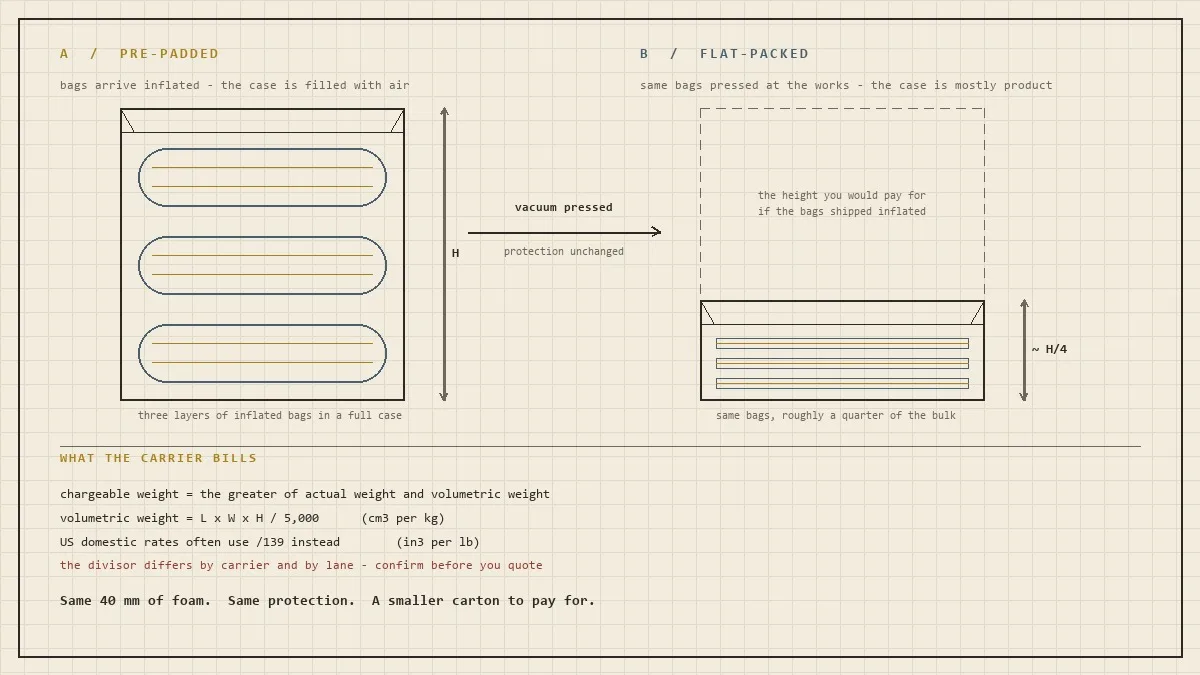
Fig.2 The same panel in two shipping states: pressed flat at the works, back to full thickness at the customer’s end
Nothing about the protection is reduced, because no foam is removed. The panels return to full thickness before the pack is used, and the cushioning measured after opening is the cushioning that was always there. What changed is only the state the bag travels in between our line and your packing table.
That distinction matters when you compare suppliers. A flat-packed bag is not a thinner bag, and a supplier quoting 20 mm who ships 20 mm has given you a carton problem, not a material advantage.
The trade-offs worth checking before you switch
Compression buys volume and costs you time, and the time is real. Opened bags need a few minutes to reach full thickness, so a line that opens bags as it consumes them will feel the difference. Plan for that by opening stock ahead of the shift rather than at the packing station.
Ask three questions of any compressed format. How long does recovery take in your ambient conditions, since cold rooms slow it down? Does the bag come flat or on a roll, and does that suit your dispenser? And does the mouth still run through your existing sealer once the panels are back at thickness? Where a reflective face matters more than volume, a metallised foil mailer keeps the radiant barrier while giving up some of the compression.
How to compare two quotes properly
Unit price alone will mislead you. Two suppliers can quote the same bag at different prices and land at different total costs once freight is applied, because the carton that holds 200 compressed bags may hold only 60 inflated ones.
Compare on cost per shipped bag: take the carton dimensions and the bag count per carton, work out the volumetric weight, and divide the freight by the number of bags inside. If temperature is the constraint rather than freight, the three paths heat takes into a parcel is the better place to start.
Send us your carton length, width and height, the bag count per carton, and the destination country. We will run both formats through the same volumetric calculation and send the comparison with the samples, so the decision is made on landed cost rather than on unit price.
Send us your carton dimensions