Hot & Cold Thermal Bags, Insulated Mailers & Cold Chain Delivery Packaging

Fertilizer, Pesticide & Agrochemical Packaging

Cleaner, Laundry & Air Care Packaging

Custom Medical Packaging Solutions

Protective Structures, Inserts and Retail Packs

Custom Protein Powder Pouches, Vitamin Stick Packs & Nutrition Bar Bags

Cosmetics, Fragrance and Skincare Packaging

Takeout, Bakery and Beverage Packaging

Kibble, treat & wet food packaging
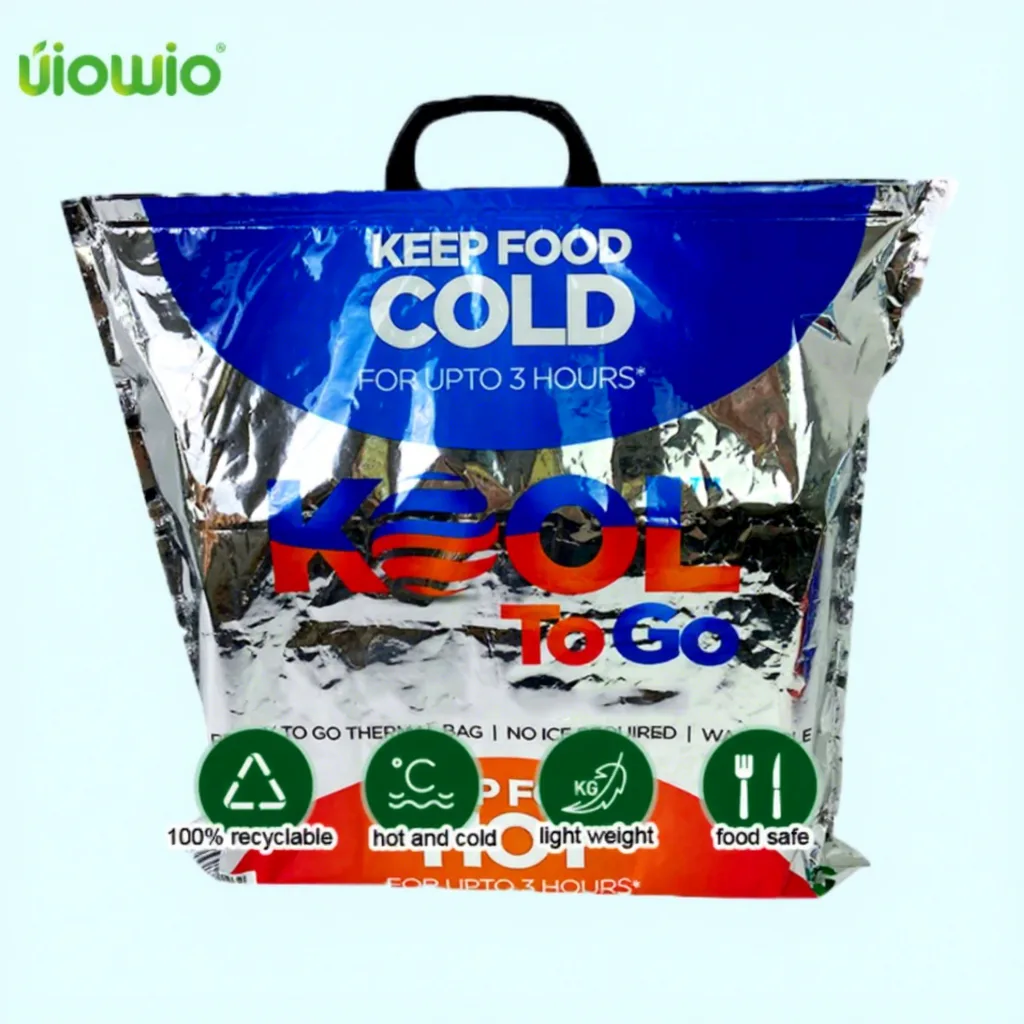
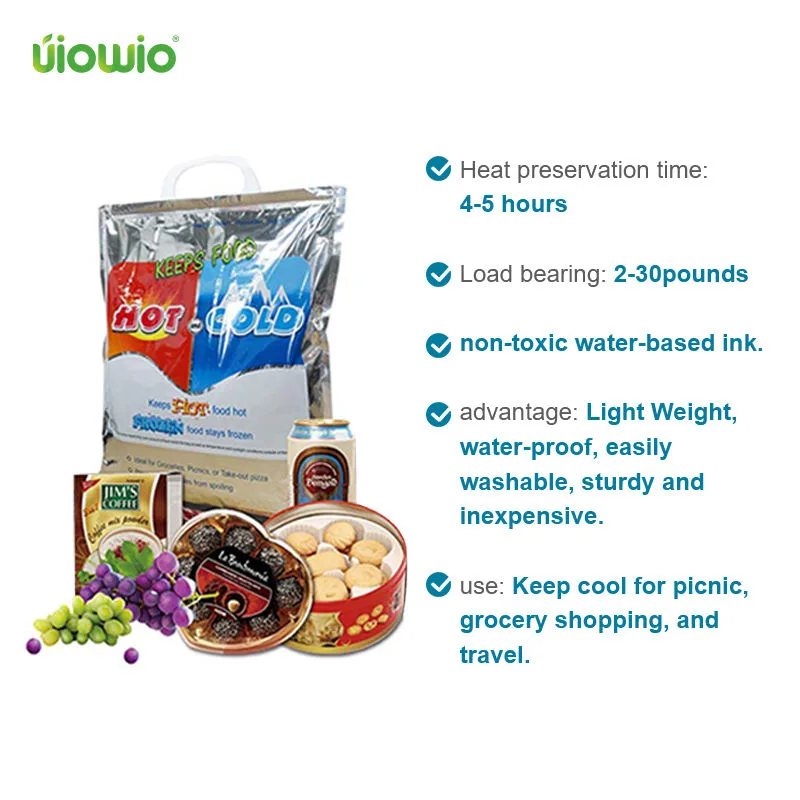
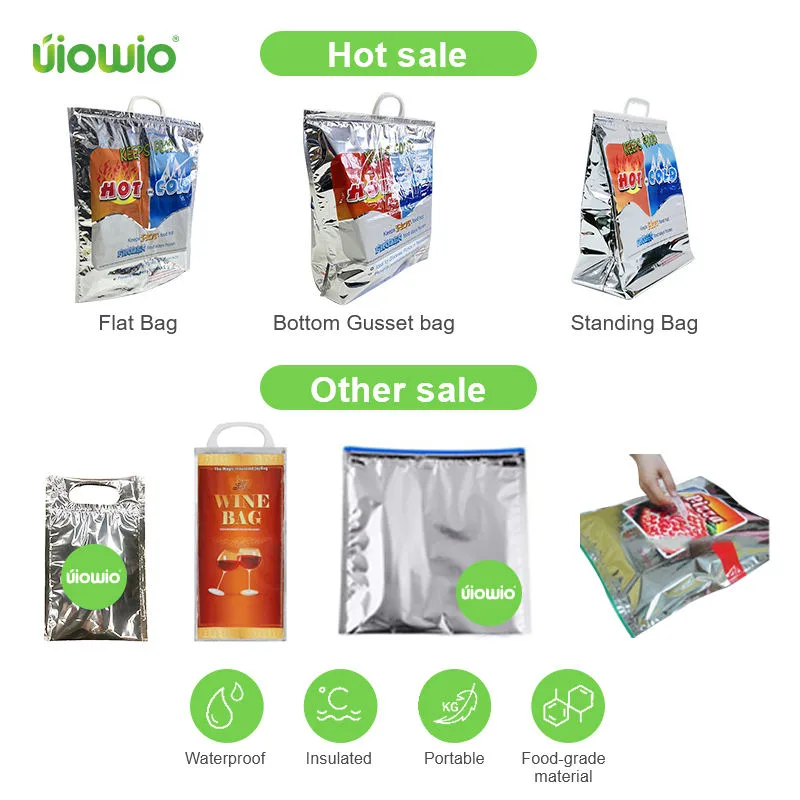
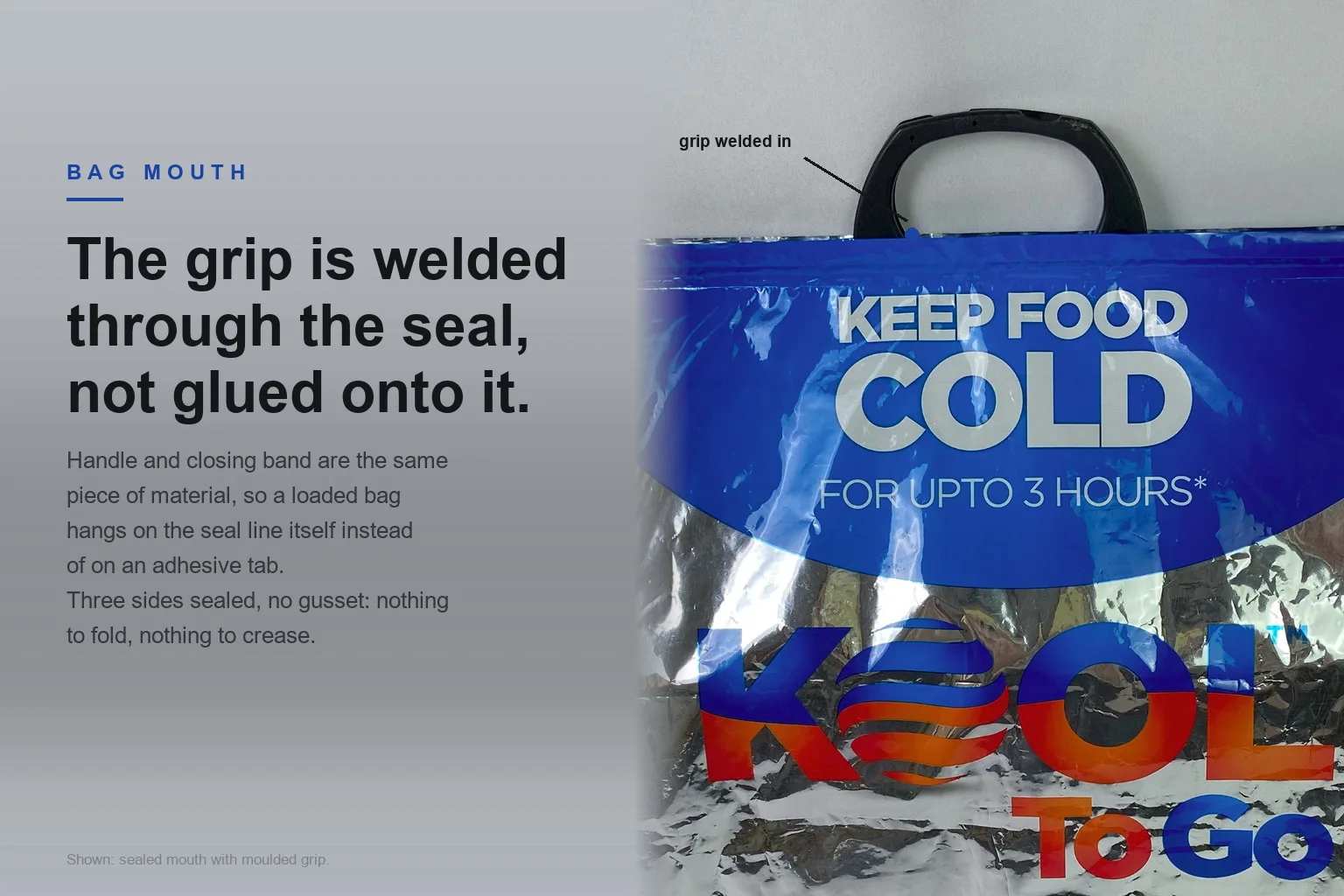
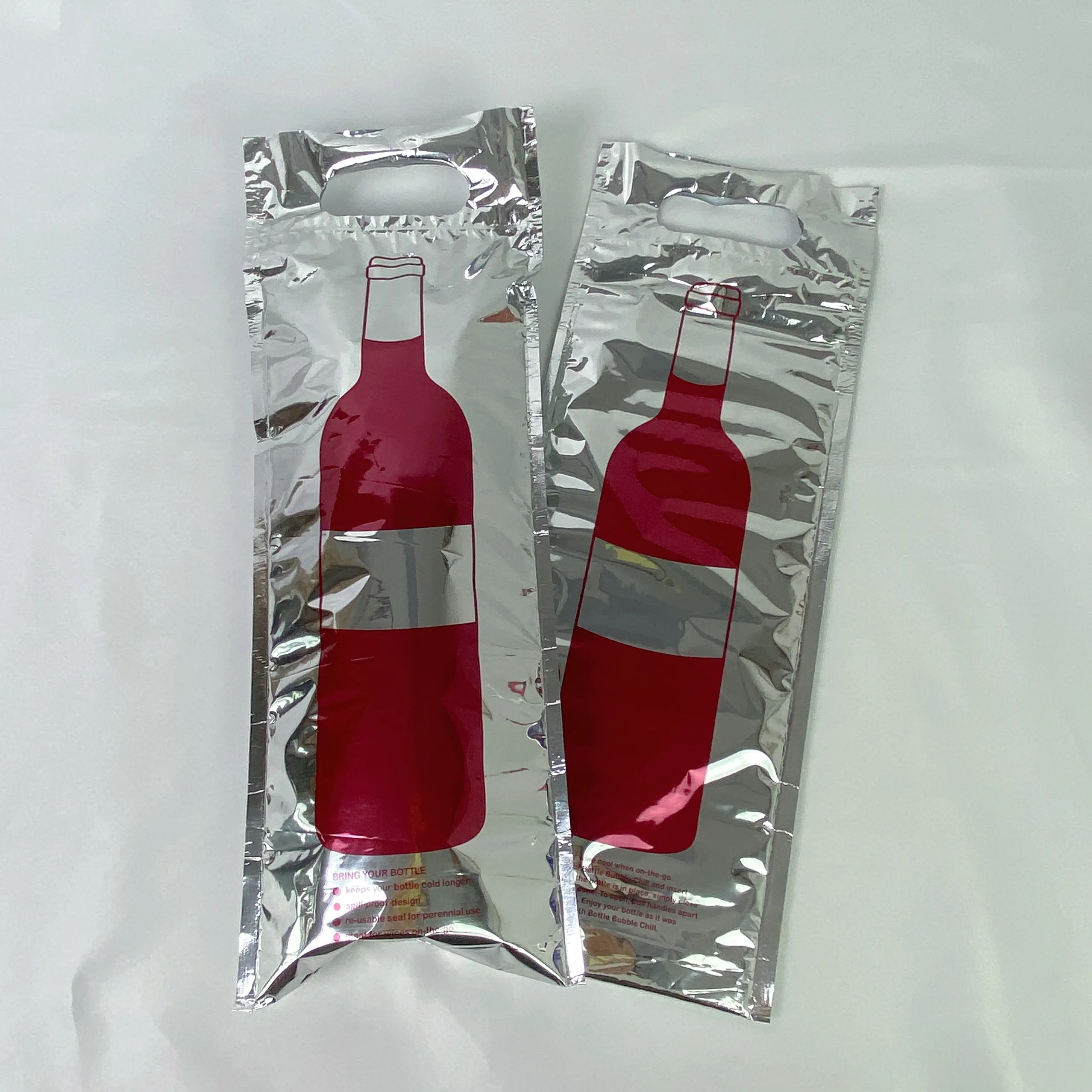
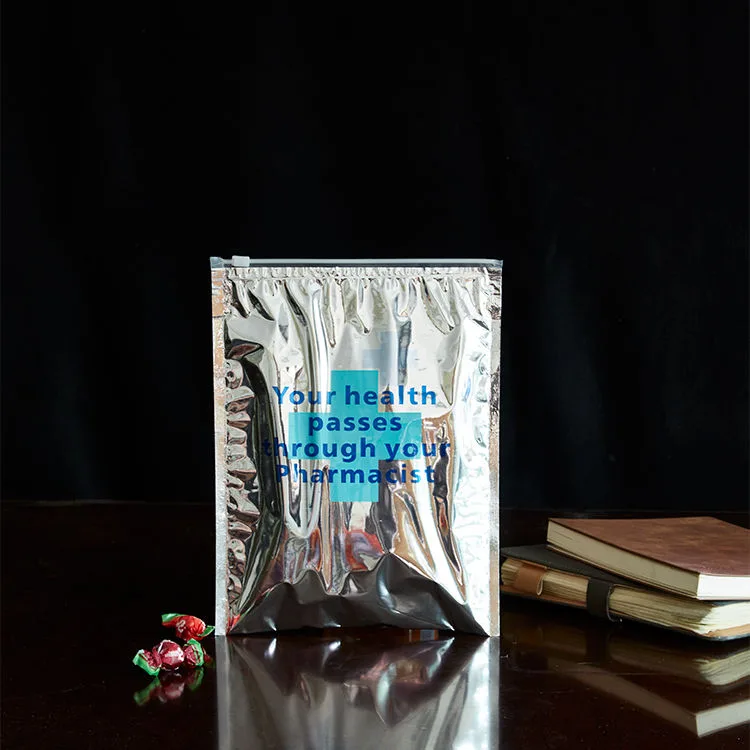
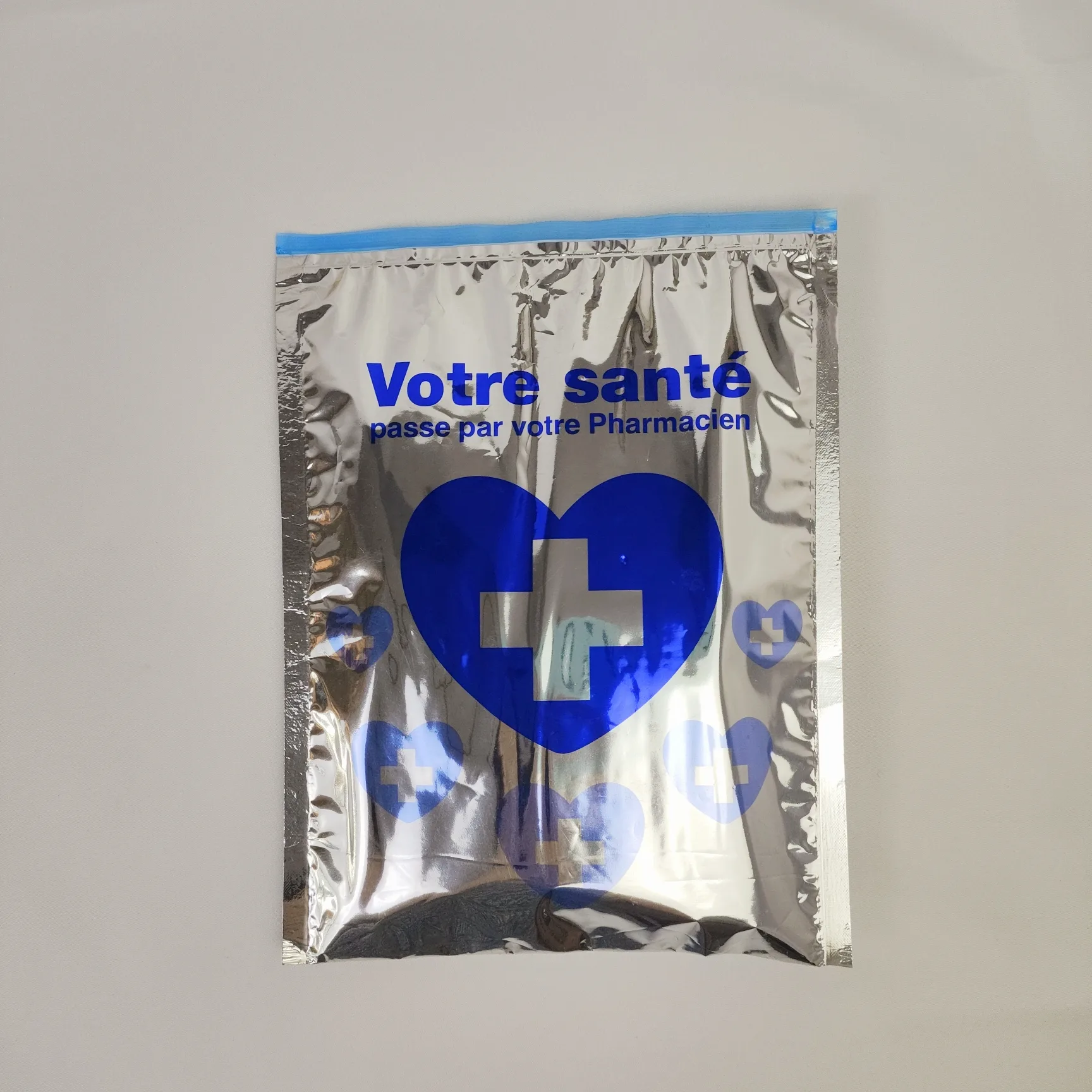
A flat cooler pouch solves a storage problem before it solves a thermal one. With no bottom gusset and no side gusset, the bag is two panels and three seals: it stacks flat by the thousand, costs the least per unit to convert, and opens into a single cavity at the moment food is handed across the counter. The aluminium foil face carries the brand and reflects radiant heat at the same time. A moulded grip is welded through the top seal, so the loaded weight goes into the handle rather than into the seal line. It suits meal-kit assembly, pharmacy and grocery pickup, and any counter that hands a temperature-sensitive order to a customer instead of shipping it for days.
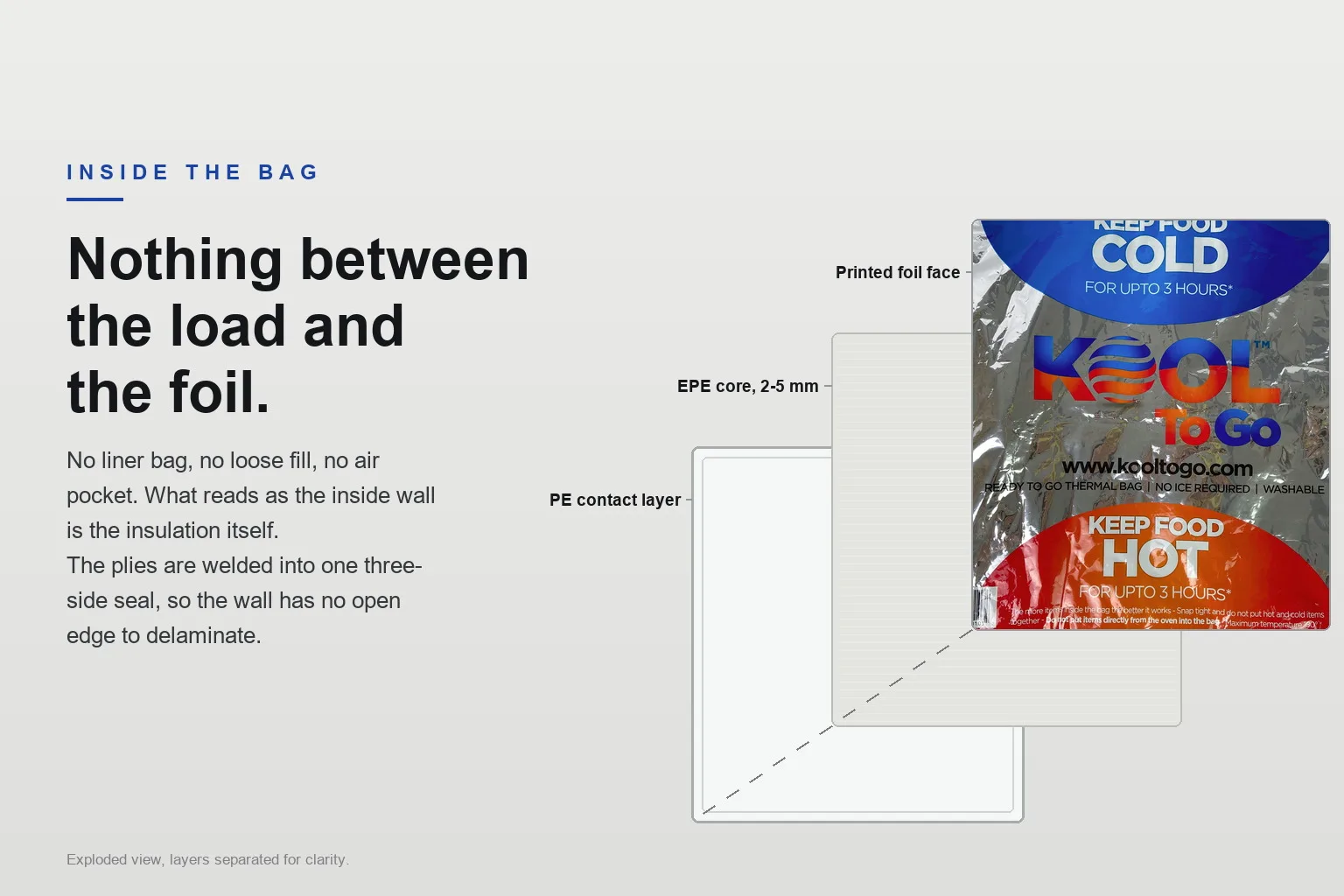
A flat pouch has only two things to get right: the seal and the face. The seal runs on three sides, so there is no gusset fold to crease, no corner where four plies meet, and no place for a leak to start. The top edge takes the handle and the opening at once, which is why the grip is welded through the same band rather than glued onto the face.
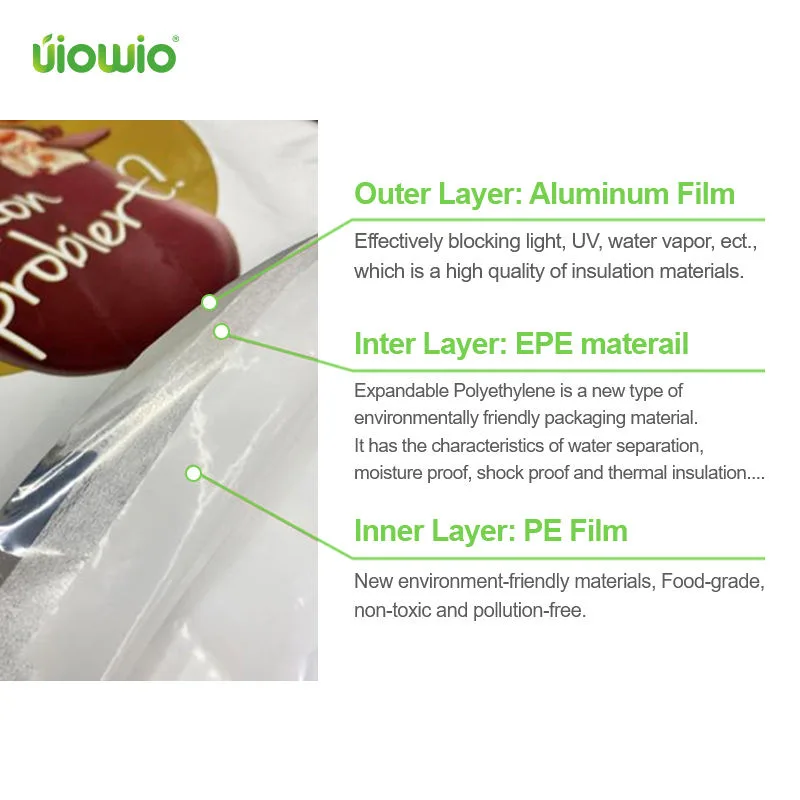
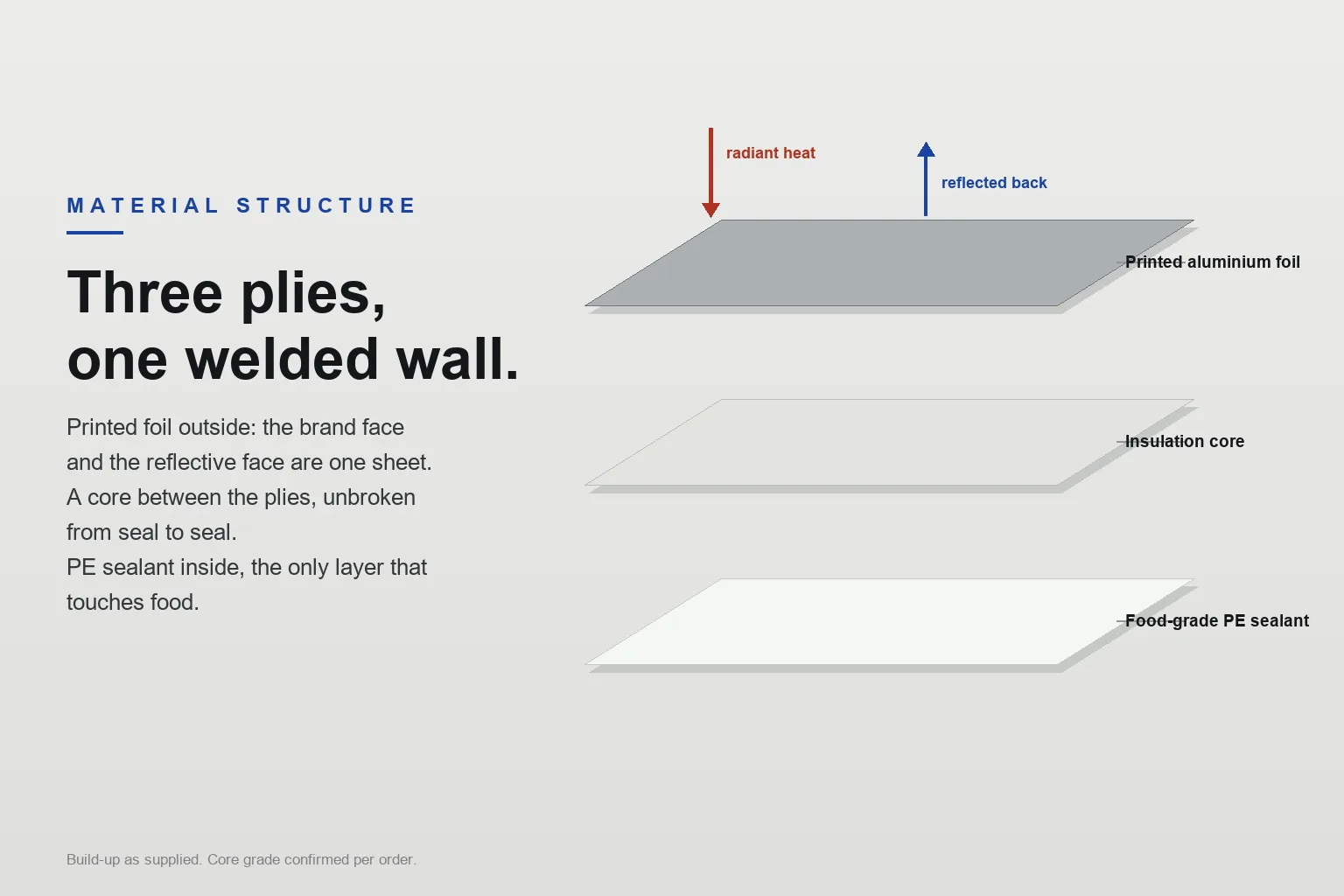
A 2–5 mm closed-cell EPE foam core slows heat transfer through the pouch wall. The pouch has an aluminum foil laminate face and is available with either a zip or a heat-sealed opening. Its flat profile suits meal-kit packing and grocery pickup.
It is at its most useful where the load is already contained: a sealed meal tray, a wrapped sandwich, a bottle that has its own cap. Loose items settle into the bottom and the foil creases against them, which is cosmetic rather than structural – the seal is not carrying the shape of the load. Anything with a cut corner, a bone end or a wire closure belongs in a secondary wrap first, because a foil laminate punctures before it tears.
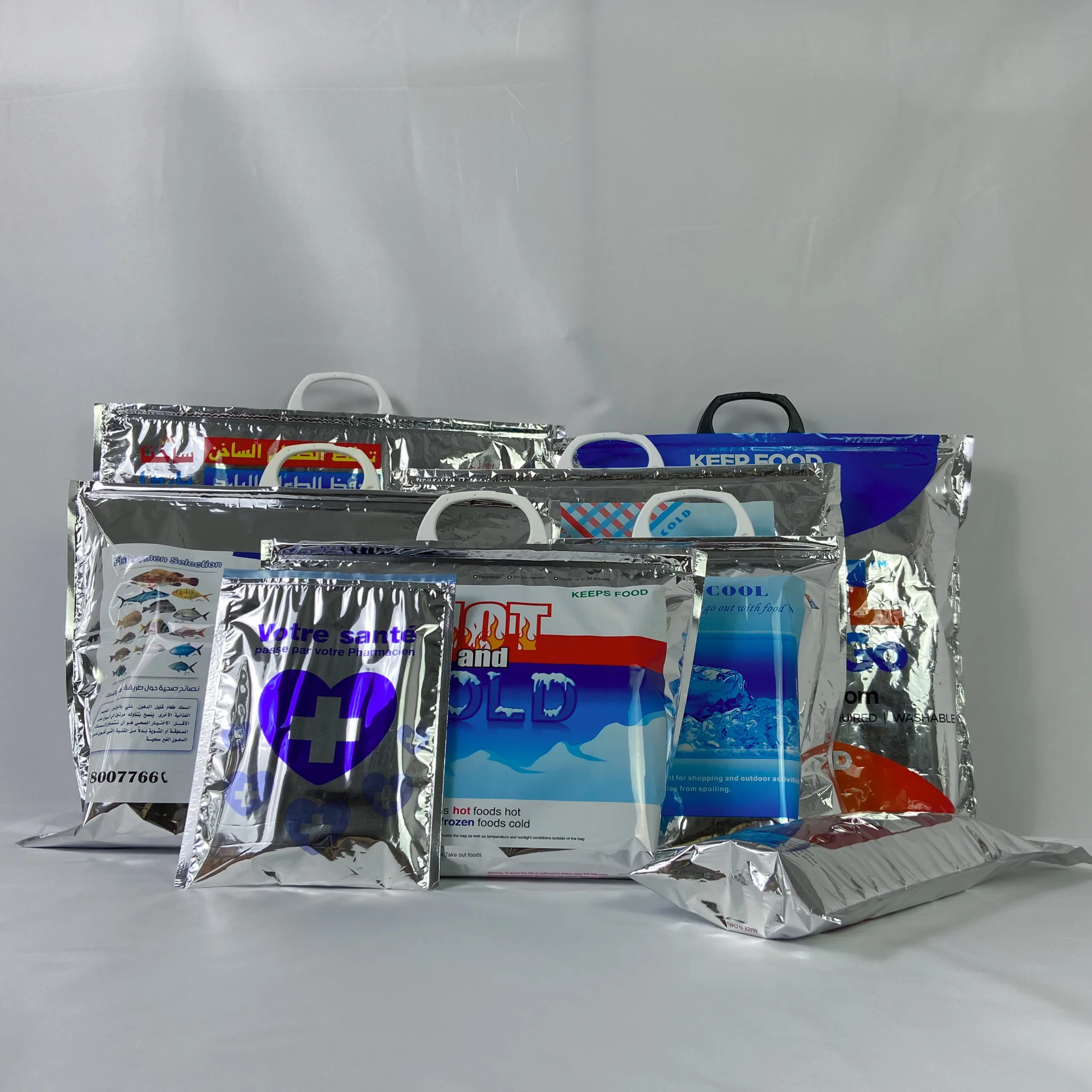
Size matters more here than on a gusseted bag, because the pouch has no volume of its own. Too large, and the customer is left pressing an air pocket out at the top; too tight, and the mouth will not close over the load at all. The five sizes above run from a single meal tray to a family order, and a size that falls between them is a die change rather than a new structure. See how insulation layers and closures work together when choosing packaging for food delivery and pickup.
A meal kit pouch is specified by the opening, not the flat size. See why the empty space decides how cold the tray arrives.
| Parameter | Specification |
|---|---|
| Format | Flat pouch, three-side seal, no gusset |
| Outer face | Aluminium foil laminate, full-colour print |
| Core | Closed-cell EPE foam, 2-5 mm (air bubble on request) |
| Contact layer | Food-grade PE sealant |
| Closure | Zip or heat-sealed mouth — both available |
| Handle | Moulded plastic grip, welded through the top seal |
| Sizes | 30×18 to 49×51 cm |
| Customization | Structure, size, core, print, colour, logo |
| MOQ | 5,000 pcs |
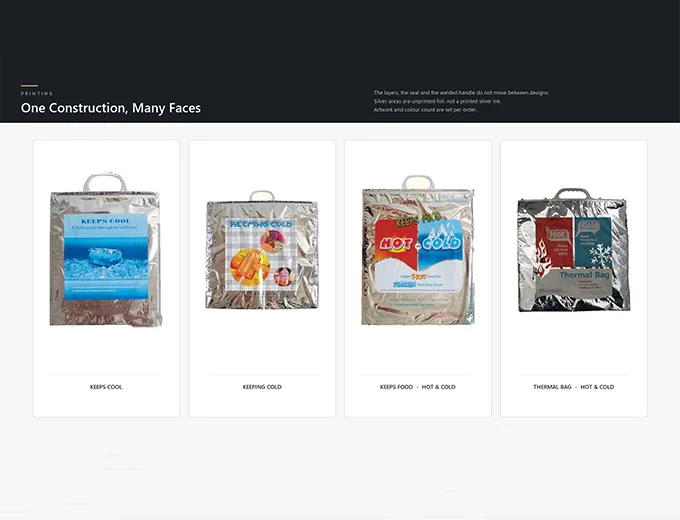
A flat pouch is printed before it is sealed, and there is no gusset to absorb a millimetre of drift. The design is laid out so that the blue and red fields stop short of all three seal lines, because a seal that lands on a heavy ink film bonds ink to ink instead of film to film. The barcode and the small compliance block sit in the dead zone below the print, clear of both the seal band and the handle weld.
The print itself is surface work on foil: the ink sits on a non-absorbent metal face, so every colour is held by an adhesion layer rather than soaked into the sheet. That is why the same face can carry a photographic gradient and a solid block without the two reading differently – and why scuffing shows up on foil faster than on paper, so the outer face is the one part of this bag that has to be handled with care in the warehouse.
Short runs and production runs are set up differently. A trial order is printed from a plate set that is already mounted, which is why a sample set comes back in three to five working days; a production run with a new design needs its own cylinders cut, proofed and approved first. The proof is pulled on the foil the job will actually run on, never on white paper – a design that reads correctly on paper can go dull or shift a shade once the same ink sits on metal.
Artwork arrives with the seal lines marked on it. We place the design so that no heavy ink field crosses a seal band, and we return a layout drawing for approval before any cylinder is cut; that drawing is where a logo set too close to the top edge gets caught, not the printed roll three weeks later.
Three plies make the wall: printed foil outside, closed-cell EPE core, food-grade PE sealant inside. The core runs unbroken from seal to seal, so the wall does not conduct at the edges the way a single film does. The bag itself is a flat pouch with a three-side seal and no gusset, which is why it folds down to a sheet and takes the shape of whatever is put inside.
North Side Of Nanyi Road, Shiwan Town Science And Technology Park (10th Floor, Building 1, No. 13)
INQUIRY