Hot & Cold Thermal Bags, Insulated Mailers & Cold Chain Delivery Packaging

Fertilizer, Pesticide & Agrochemical Packaging

Cleaner, Laundry & Air Care Packaging

Custom Medical Packaging Solutions

Protective Structures, Inserts and Retail Packs

Custom Protein Powder Pouches, Vitamin Stick Packs & Nutrition Bar Bags

Cosmetics, Fragrance and Skincare Packaging

Takeout, Bakery and Beverage Packaging

Kibble, treat & wet food packaging
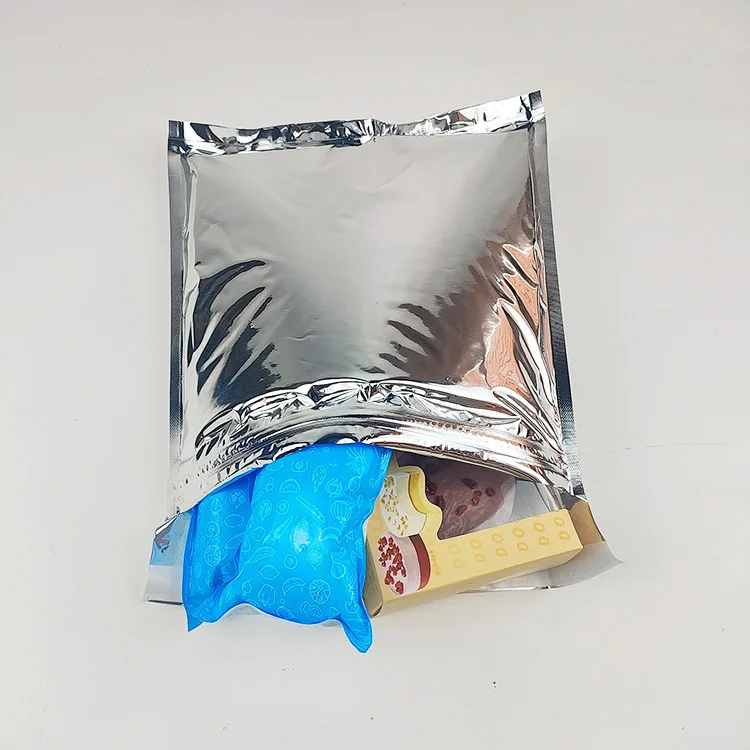
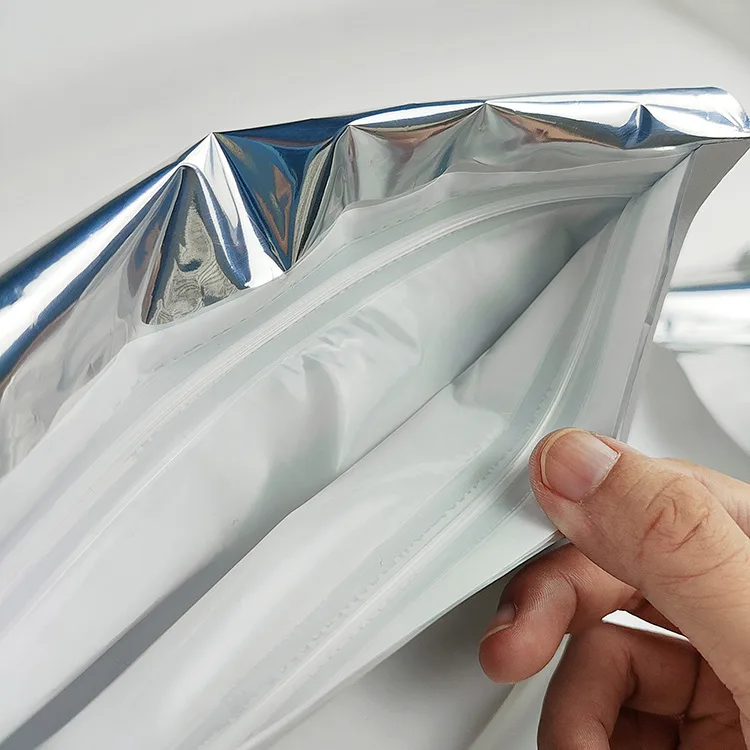
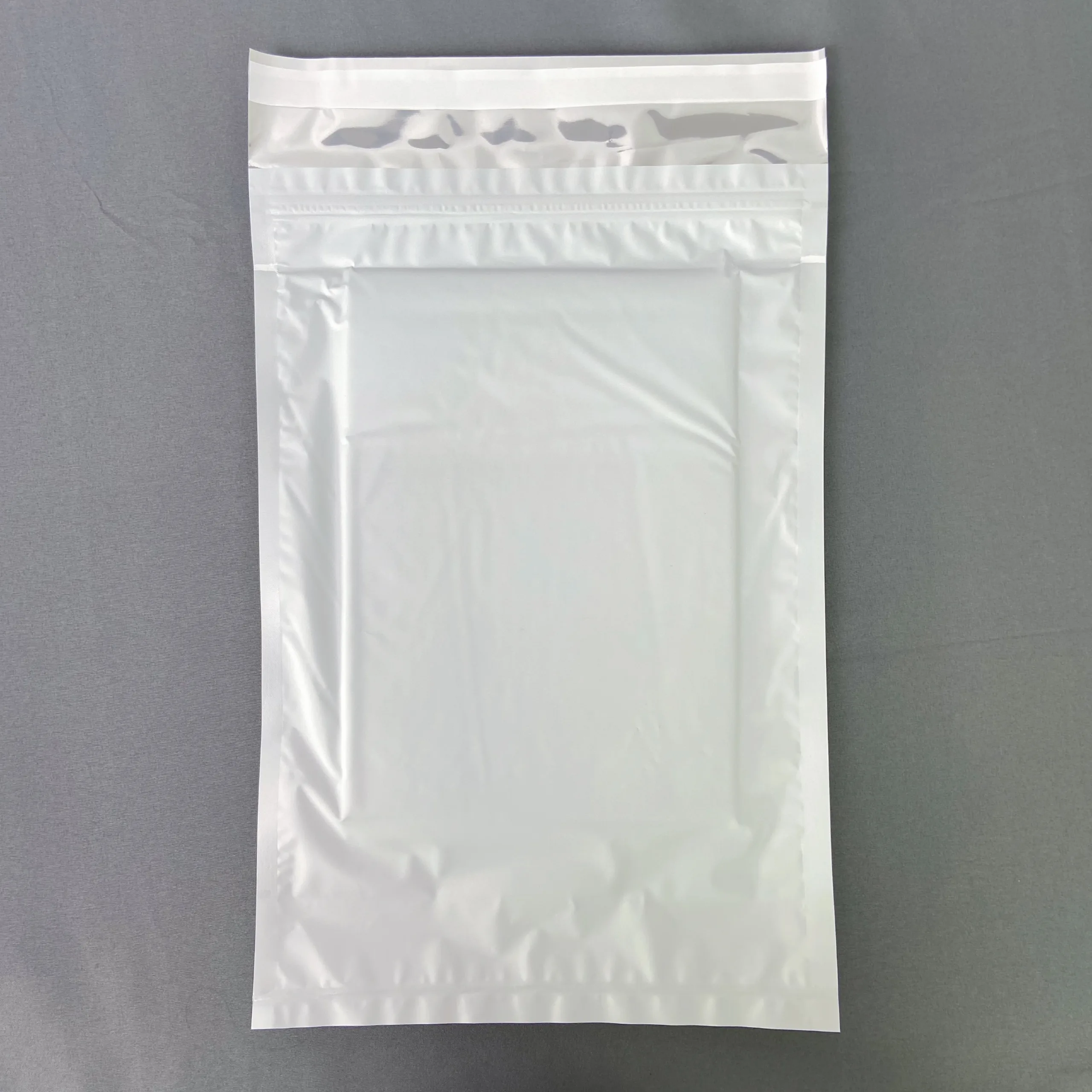
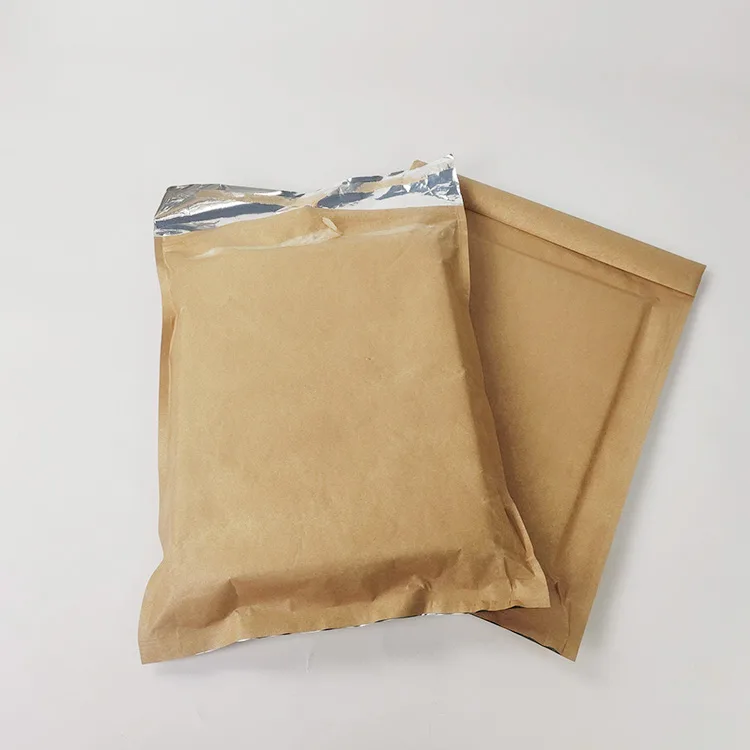
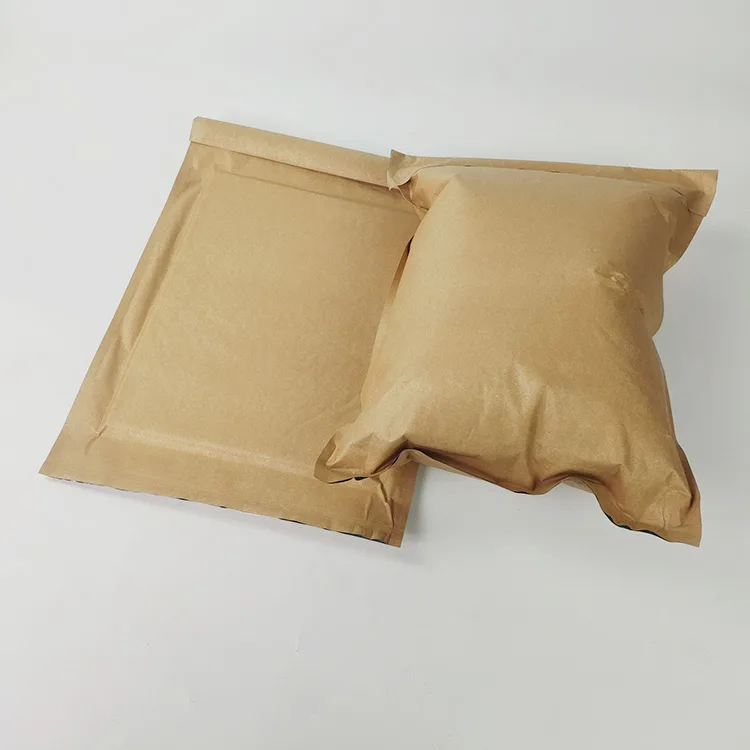
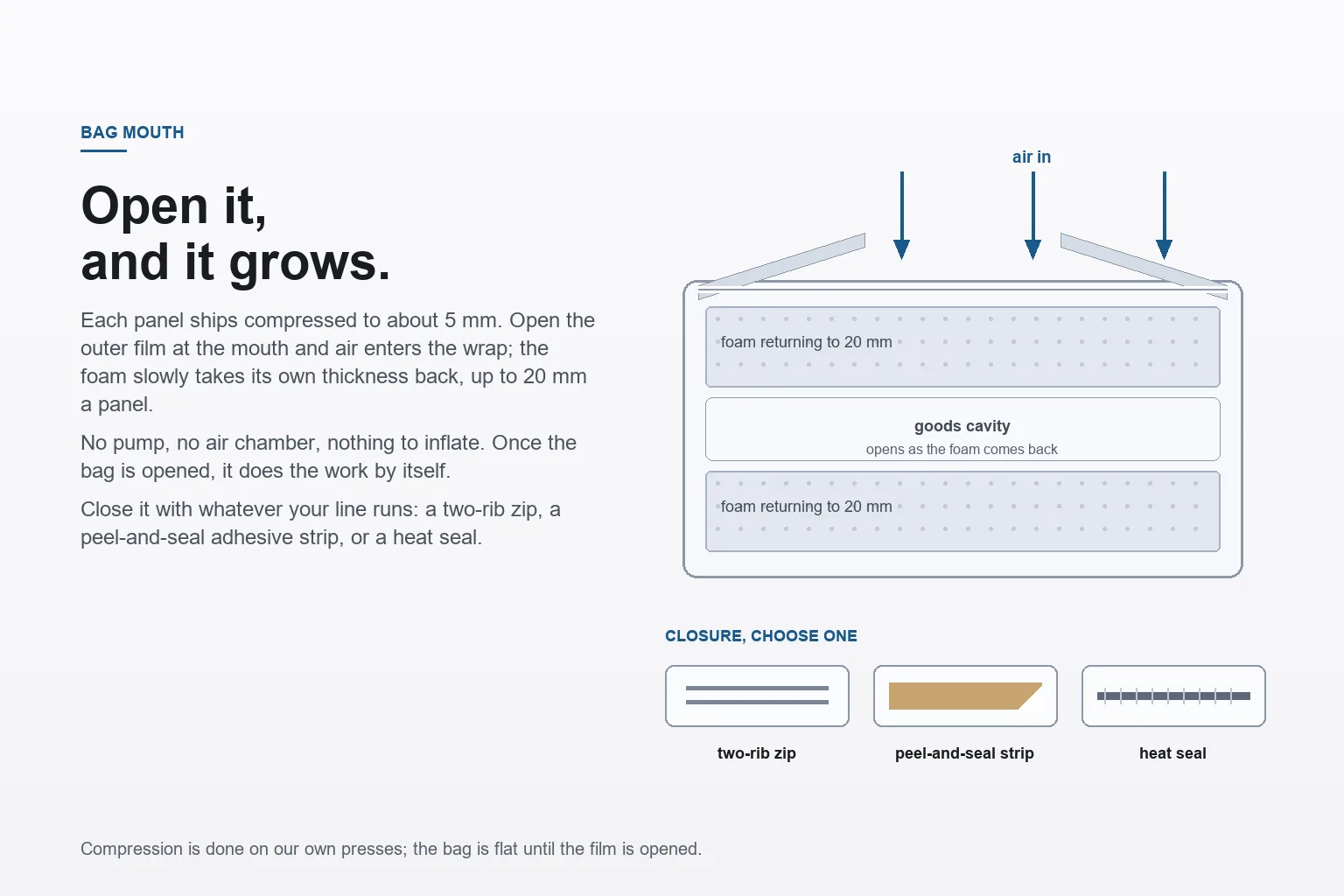
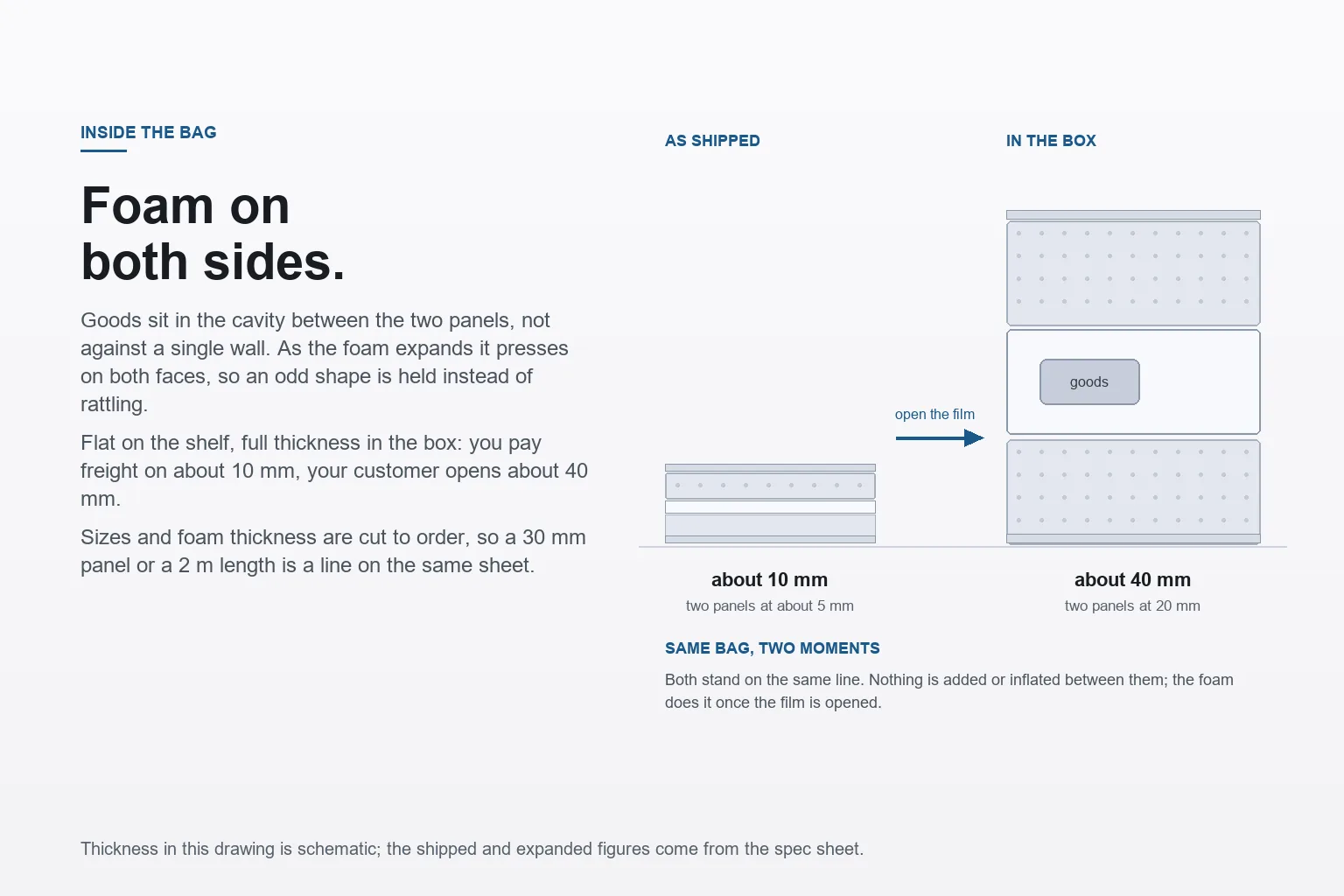
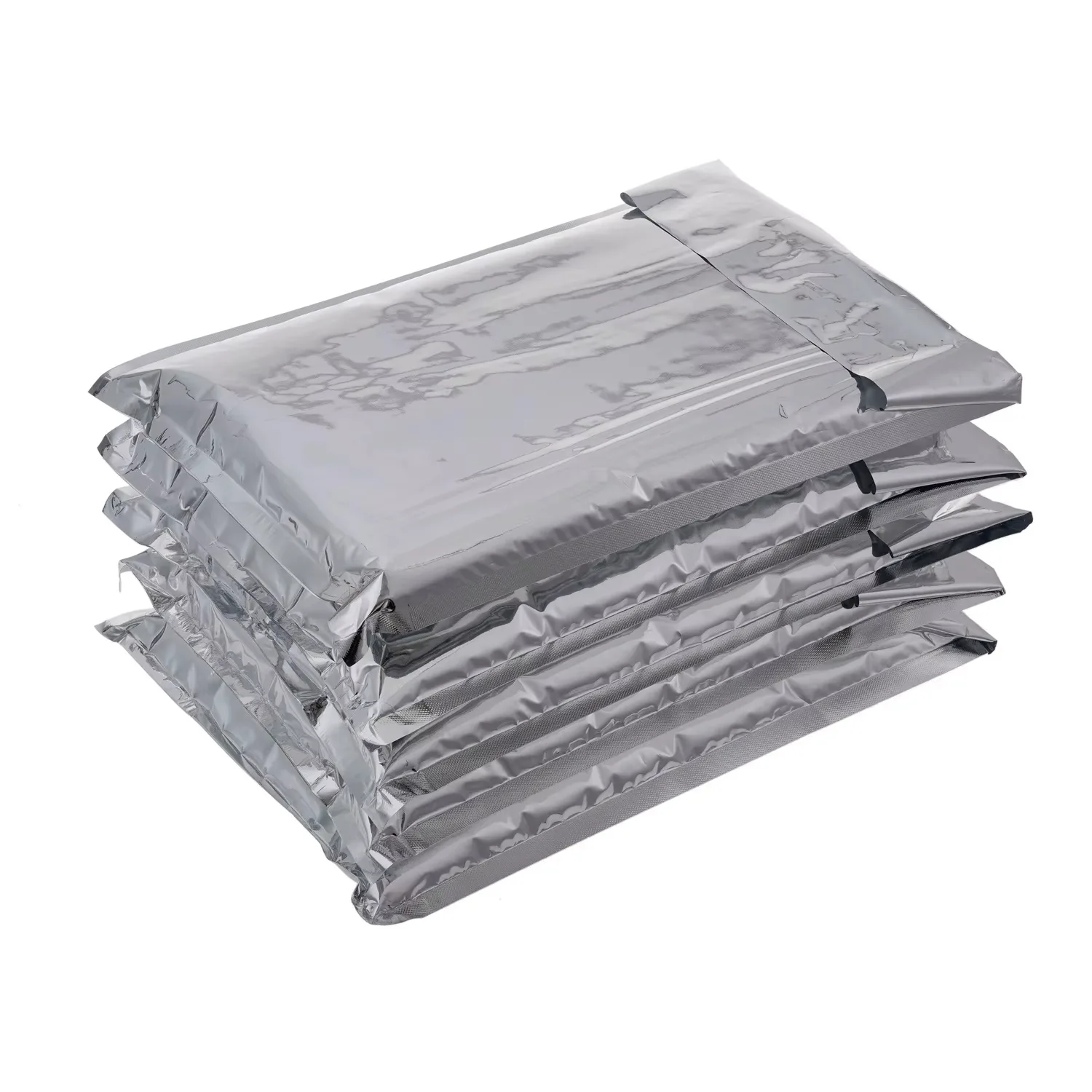
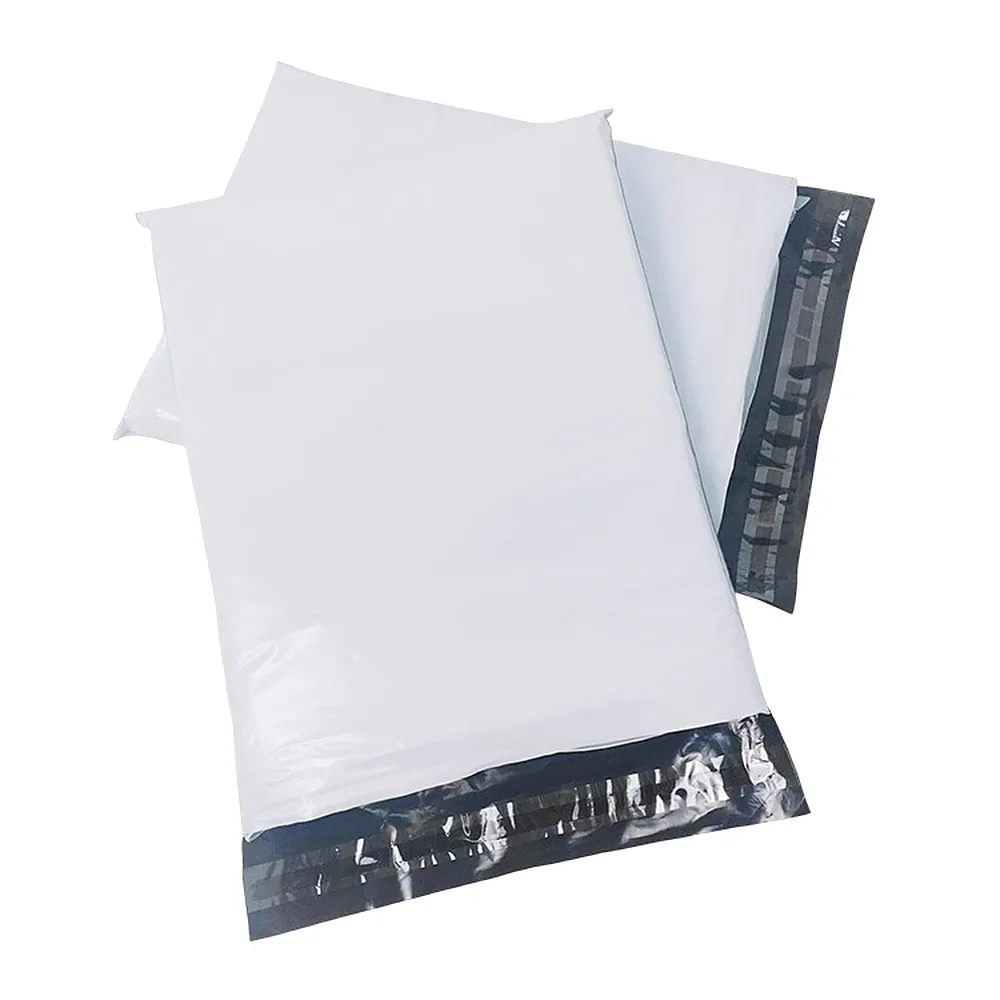
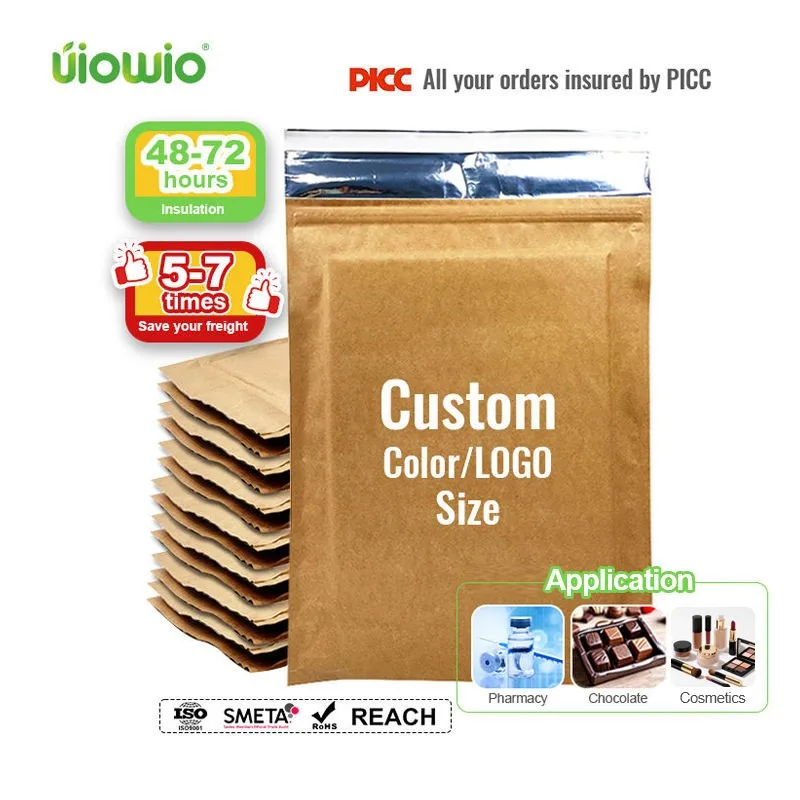
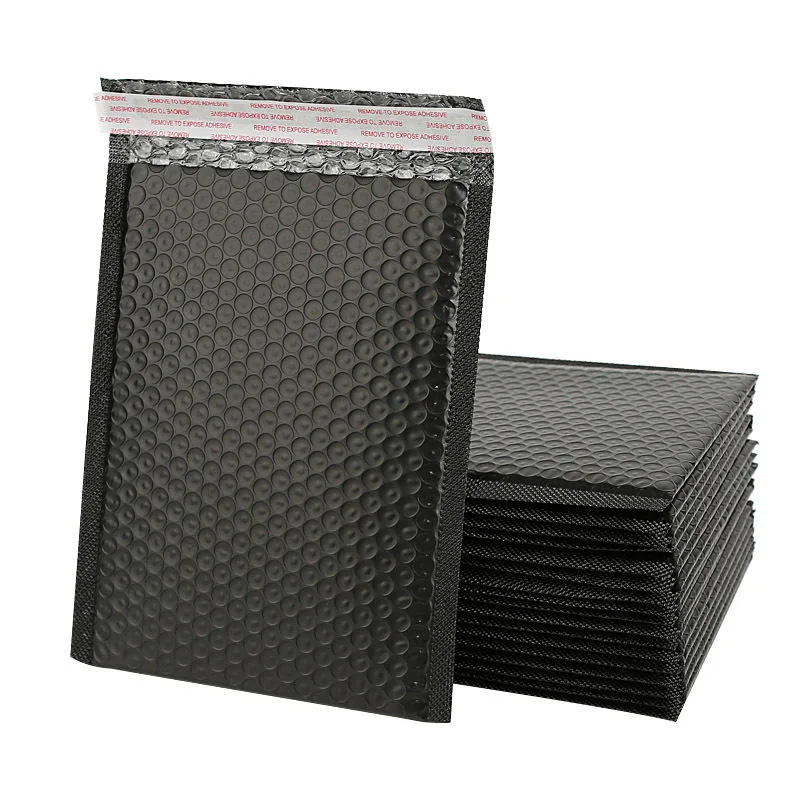
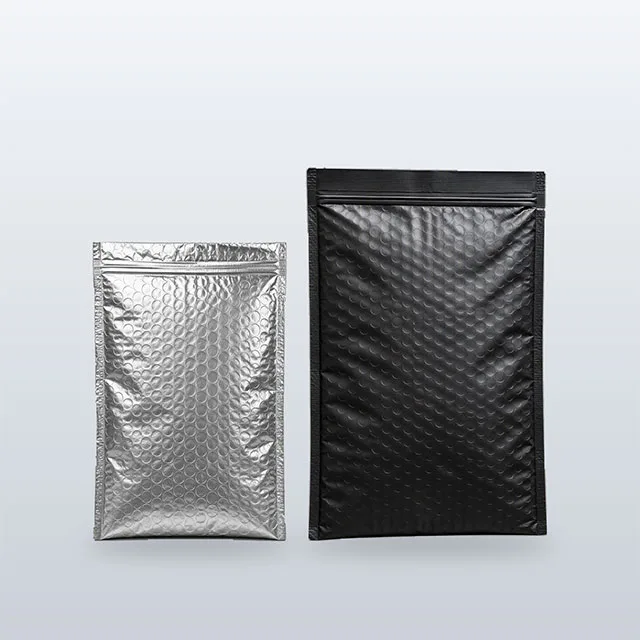
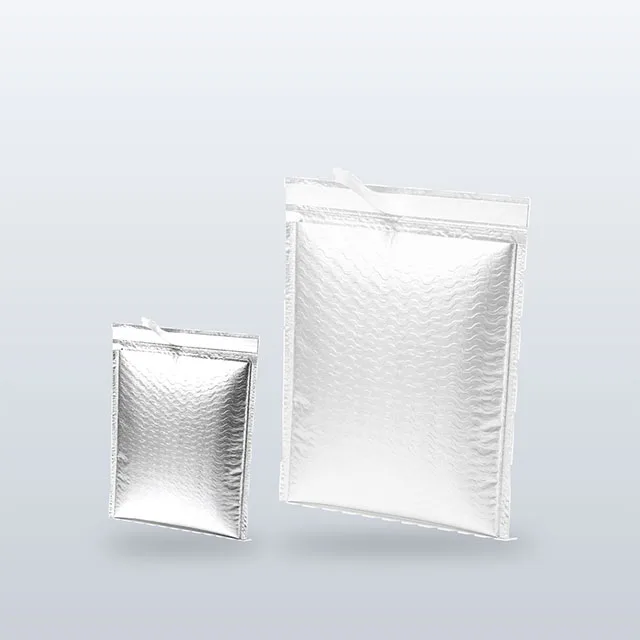
The bag ships flat. Two EPE foam panels sit inside it, one on each side, and the works presses the air out of them before packing, so a 40 mm mailer leaves us at about 10 mm. Open the outer film at the mouth and air goes back in; the foam takes its own thickness back and closes in on both faces of the goods. Nothing to inflate, no pump, no air chamber that punctures. Each panel is wrapped in its own film and the cavity between them is where the load sits. Order it with a mirror aluminium foil skin, a kraft paper skin, or a plain white waterproof film; the core is the same in all three.
The point of this bag is what happens before it is used. A padded mailer is mostly air, and you pay to ship that air across an ocean. Here the foam is pressed flat at the works, so the same protection leaves the factory at roughly a quarter of its bulk and opens out again at the customer’s end.
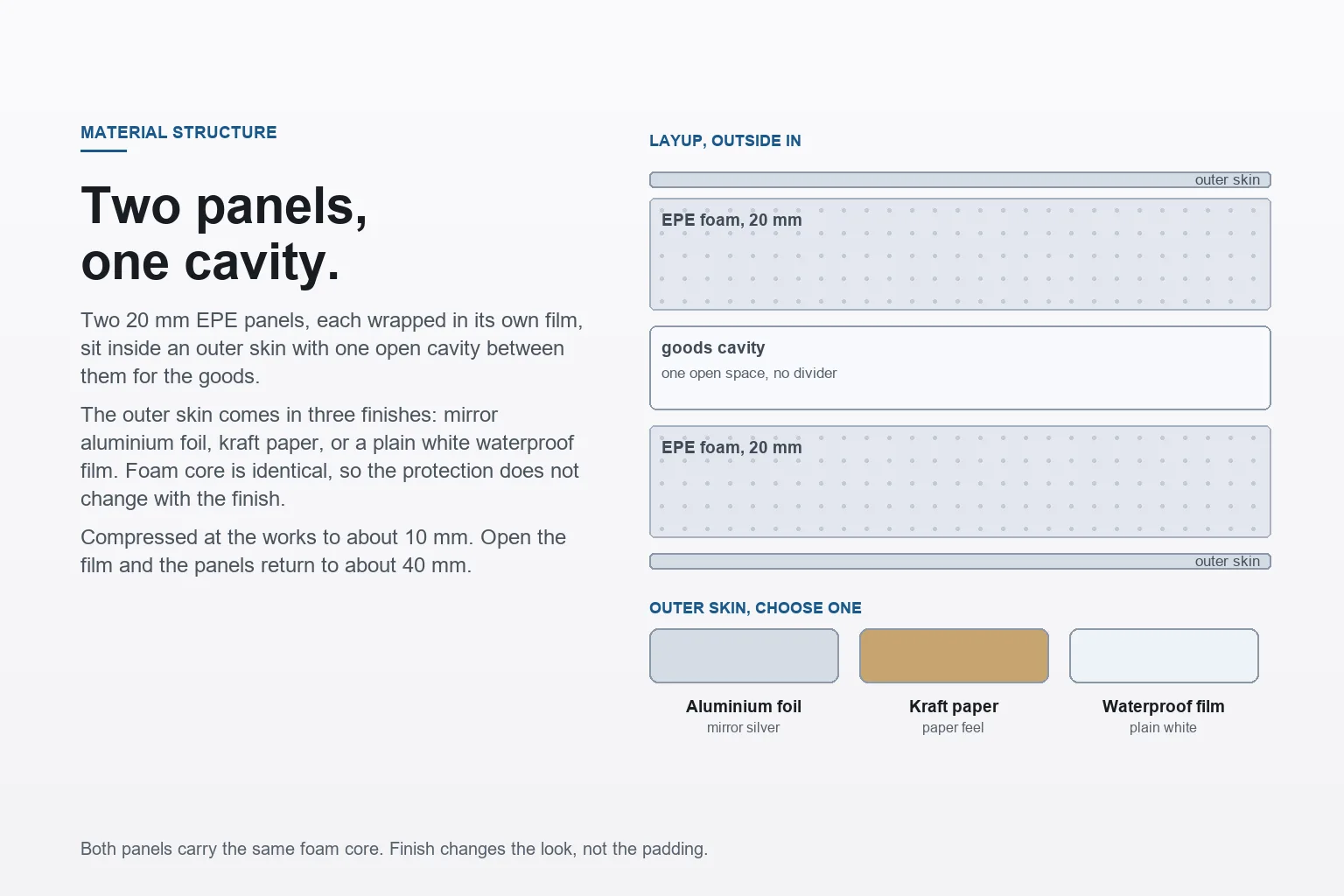
Both panels are EPE, 20 mm each when relaxed, wrapped in their own film and sealed into the outer skin. The load sits in the cavity between them rather than against a single wall, so a bottle or a circuit board is pressed from both faces once the foam comes back. Twenty millimetres either side is forty millimetres of cushioning in total, which is more than a bubble bag puts behind a screen.
Closing is up to your line. A two-rib zip, a peel-and-seal adhesive strip under a release liner, or a plain heat seal: all three run on the same bag. Tell us which one your packers already have and the mouth is built for it, rather than making them buy a heat sealer before they can start.
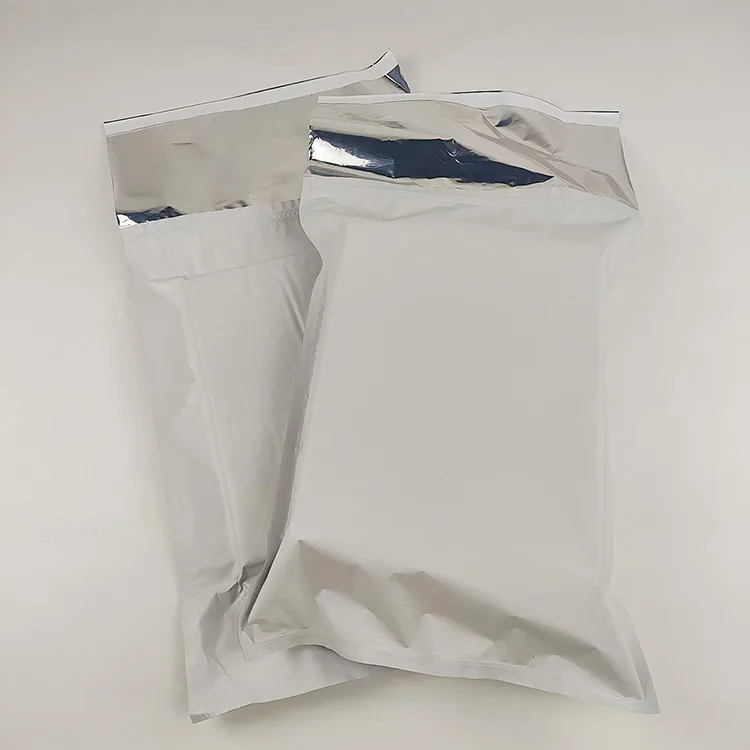
The skin is your choice as well. Mirror aluminium foil reflects and reads technical; kraft paper takes a matt ink and looks like paper; white waterproof film is the quietest of the three and prints clean. Foil and film both hold a fine logo; kraft takes a heavier mark and hides a scuff better. The foam and the compression are identical whichever you pick.
Wondering whether the foam or the foil does the work? Read how a compressed foam mailer holds temperature.
Shipping cost starts with carton volume, not bag weight. See how flat-packing changes what you pay to ship.
Foil, kraft or white film – the face on the outside decides reflection, print and wet strength. See the three tests that decide the face.
| Item | Detail |
|---|---|
| Outer finish | Aluminium foil / kraft paper / white waterproof film |
| Foam core | EPE, standard density |
| Panels | Two, one each side of the load |
| Thickness, relaxed | About 40 mm in total (2 x about 20 mm) |
| Thickness, shipped | About 10 mm in total (2 x about 5 mm) |
| Compression | About 4 : 1, varies with foam recovery |
| Closure | Two-rib zip / peel-and-seal strip / heat seal |
| Printing | One or two colours on the outer face |
| Sizes | 20 x 30 to 35 x 45 cm, custom cut to order |
On foil and on film the plate runs on the outer face, and the ink sits on a smooth skin, so a small logo holds its edge. On kraft the ink goes into the fibre instead, which is why a matt finish reads better there than a gloss one, and why fine reverses are avoided on that version.
The press is the step that decides the finished thickness. Panels are laid up, wrapped, sealed, then pressed with the air drawn out, and the bag leaves at roughly a quarter of the thickness it will have in use. Printing is checked after pressing, because a skin that has been drawn down can shift a register line by a millimetre.
Tolerances are set from the foam, not the film. A panel comes back within a millimetre or two of its nominal figure, and the relaxed bag is measured against that: a 20 mm panel normally opens to between 19 and 21 mm, and anything outside that is held back rather than shipped. Printed areas keep a clear margin from the welds, from the zip and from the adhesive strip, so no ink is trapped in a seal and no film is welded straight onto ink.
Artwork is approved flat first, then a pressed sample goes out, because the bag a buyer judges by hand is the thin one that arrives, not the drawing. That pressed sample is also what the shipped thickness is measured on, so the figure on the page and the bag in the carton agree.
Three outer skins, one core. Aluminium foil gives a mirror face that reflects light and prints a sharp logo; kraft paper gives a matt paper face that takes ink into the fibre; white waterproof film gives the plainest surface and the cleanest print. Under all three sit two EPE foam panels, one either side of the load, pressed flat at the works and opened out by the customer. The mouth is built for the closure your line already runs.
North Side Of Nanyi Road, Shiwan Town Science And Technology Park (10th Floor, Building 1, No. 13)
INQUIRY